
Coffee Bean Origins Explained: How Region Shapes Flavor
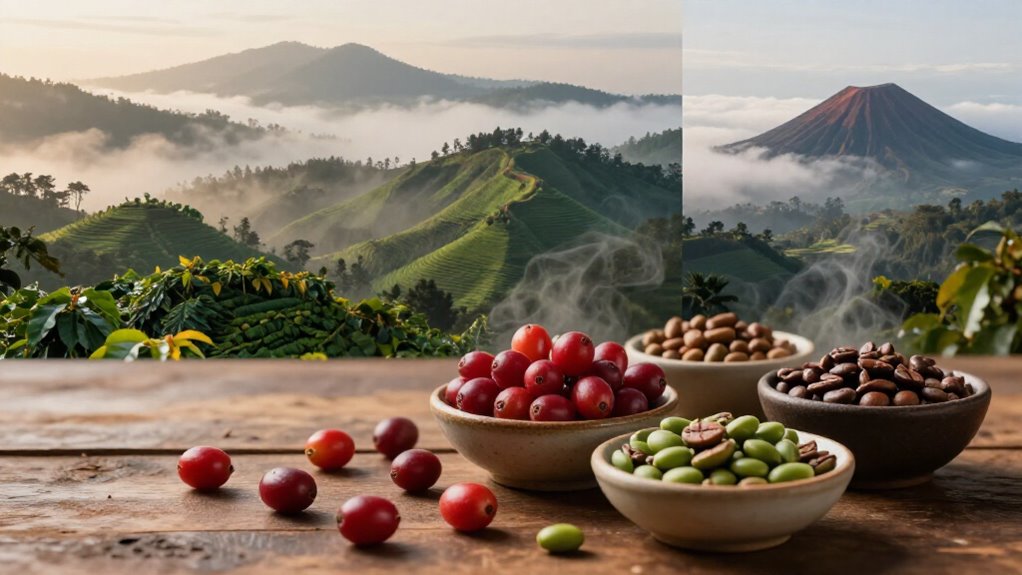
A coffee’s origin shapes flavor through climate, altitude, cultivar, shade, and processing.
At high elevations, slower ripening often gives you denser beans, crisp acidity, and citrus or floral clarity; lower sites may produce softer acidity and nuttier, chocolate-like notes.
Bourbon can bring round body and brown-sugar sweetness, while Typica often tastes cleaner and more tea-like.
Washed coffees emphasize transparency, naturals amplify fruit, and honeys bridge both.
Compare farms, adjust grind and water to learn more.
Varietals Shape Regional Flavor
When terroir is similar, coffee varietals still shape the cup because their genetics influence sugar development, acidity, and aroma intensity. As you evaluate an origin, you may detect how cultivar selection redirects its sensory profile: some genotypes produce floral, tea-like aromatics, while others emphasize chocolate, nuts, or caramel. In East Africa, high elevation can combine with varietal traits to intensify crisp acidity and citrus or berry fragrance.
In Central America, cultivars supporting even maturation can strengthen clean sweetness and structured acidity, especially through washed processing. Processing doesn’t erase genetic effects; it modifies their expression by changing clarity, body, and fruit intensity. Compare coffees from one region across cultivars, and you’ll often find distinct flavor balance, aroma concentration, and year-to-year consistency across different harvest years.
Bourbon Versus Typica
When you compare lots, expect Typica to show clean sweetness, balanced structure, and delicate floral or tea-like clarity. Bourbon typically gives you rounder body, stronger brown-sugar sweetness, and sometimes fruit, chocolate, or syrupy texture.
Processing, terroir, and post-harvest handling can outweigh lineage, so treat these notes as tendencies, not guarantees.
Altitude’s Effect on Acidity
As elevation rises, cooler temperatures slow cherry maturation, allowing sugars and organic acids to develop more fully. When you taste coffee from farms above roughly 1,500 meters, you’ll often notice brighter, pronounced acidity: citrus, berry, or floral notes with a crisp, lively structure rather than flat sharpness.
Cooler conditions also improve flavor clarity, while slower development increases bean density and supports layered acid profile with better balance.
At lower elevations, warmer temperatures accelerate ripening. You’ll typically find softer acidity and a fuller, earthier, nuttier, or more chocolate-forward cup. In highland regions spanning about 1,000 to 2,000 meters, even modest elevation changes can shift perception from mild to distinctly vibrant.
Altitude doesn’t determine flavor alone, but it shapes how intensely acidity appears in your cup.
Washed, Natural, and Honey
When you choose washed coffee, you’ll find clean structure, bright acidity, and transparent origin character. Natural processing preserves the whole cherry, producing fruit-forward sweetness, wine-like aromatics, and fuller body.
Honey processing leaves some mucilage on the bean, giving you balanced sweetness, clarity, and moderate fruit intensity.
Washed: Clean And Bright
By removing the fruit before drying, washed processing produces a clean, bright cup with defined acidity and distinct flavor separation. You’ll taste origin more transparently because fermentation and drying contribute fewer dominant fruit-derived tones. Expect a crisp structure, pronounced but controlled acidity, and clear progressions between aroma, sweetness, and finish.
In Central American coffees, including Colombian lots, you may detect citrus-like brightness, defined sweetness, and a tea-like clarity. Higher elevation can intensify this effect: slower cherry maturation generally increases bean density and preserves acid structure, while larger day-night temperature swings support complexity.
Your brewing method also matters. Use a pour-over at home to emphasize washed coffee’s lifted acidity and fine flavor separation; choose espresso when you want greater concentration without losing its origin signal.
Natural: Fruity And Full
Washed coffee emphasizes clarity, while natural processing keeps the whole cherry around the seed during drying. As you taste a natural coffee, expect sugars and fruit compounds to remain with the bean longer. That contact can produce strawberry, blueberry, or dried-fruit aromas, wine-like acidity, and a heavier, fuller body.
Fermentation intensity depends on drying speed, temperature, cherry condition, and microbial activity, so clean fruit and overripe notes can differ sharply. Higher elevations may add density and acidity, while regional climate and cultivar shape the baseline profile. You’ll preserve these origin signals with a lighter roast; excessive heat can flatten acidity and emphasize roast flavors.
| Feature | Sensory effect | Technical cause |
|---|---|---|
| Fruit | Berry-like aroma | Cherry contact |
| Body | Dense texture | Retained compounds |
| Risk | Fermented notes | Drying variability |
Honey: Sweet And Balanced
Honey processing dries coffee with some or all of the cherry’s mucilage left on the bean, placing its profile between washed coffee’s clean brightness and natural coffee’s fruit intensity. As you taste it, expect rounded sweetness, a sticky body, and acidity that’s usually gentler than in washed lots. Washed honey, often called yellow or red honey, keeps less mucilage, giving you a lighter body and fruit.
Black honey retains more, producing caramel tones and a fuller texture. Drying requires control: excessive humidity or slow airflow encourages fermentation, shifting sweetness toward overripe fruit. In Costa Rican lots, this method can preserve cup clarity while adding caramel-like sweetness and structured acidity. Choose honey processing when you want origin character with added sweetness, moderate acidity, and intensity.
Shade Trees Influence Ripening
When you examine shade-grown coffee, you’ll find that cooler canopy microclimates slow cherry ripening. This extended maturation gives sugars and organic acids more time to develop, supporting denser beans and clearer, more complex flavors.
You’ll also see that canopy structure and elevation regulate light and temperature, influencing acidity and flavor balance.
Slower Cherry Ripening
Under shade trees, coffee cherries develop in a cooler, more stable microclimate that slows maturation and gives sugars and organic acids more time to accumulate. When you compare shaded plots with fully sun-exposed rows, you can measure a longer interval between flowering and harvest. Shade moderates heat and moisture stress during key developmental phases, so cherries progress at a steadier biochemical rate.
This slower pace often supports denser beans, because the seed builds structure under less thermal pressure. You may also see more even color progression across a lot, with fewer green, underdeveloped cherries entering harvest. That consistency helps processors separate ripe fruit more accurately and reduces harsh, grassy notes associated with immature beans. In comparisons, altitude can reinforce shade’s cooling effect, extending maturation.
Extended Flavor Development
Shade trees filter sunlight and moderate canopy temperature, extending the period in which cherries develop sugars, organic acids, and aromatic compounds. As you evaluate a shaded lot, you’re examining a longer biochemical timeline. Reduced light exposure slows sugar accumulation and organic-acid changes, allowing sweetness, acidity, and body to develop in greater balance.
Aromatic precursors also develop, so your cup may show layered fruit, floral, or spice impressions instead of one dominant note. Diverse shade systems produce different ripening responses, making shade management part of terroir. Uniform maturity supports consistent harvesting and fewer contrasts between under-ripe and ripe cherries.
However, shade doesn’t guarantee quality: cultivar, elevation, rainfall, soil nutrition, crop load, and processing still control the final sensory result. These factors matter to you, too.
Cooler Canopy Microclimates
The same canopy that extends sugar and acid development also creates a cooler, steadier microclimate around each cherry.
Under shade, reduced direct sunlight and narrower daytime temperature swings slow cherry growth, so you’ll give sugars and organic acids more time to accumulate gradually during ripening. That slower pace often produces denser beans with more balanced acidity and greater flavor complexity rather than simply lower acidity.
Tree height, leaf density, and spacing regulate airflow and humidity, affecting how uniformly cherries mature and how consistently your lot expresses itself in the cup. Mountain fog and forest humidity can further moderate heat stress, preserving flavor clarity in sites exposed to intense sun. You may notice cleaner separation among fruit, floral, and sweet notes, while maturation reduces variation between beans.
Adjust Grind for Density
Because high-altitude coffee develops more slowly, its beans are typically denser and resist water penetration during brewing. When you brew a dense lot, you’ll grind slightly finer for V60/Kalita, so particles saturate and extraction reaches its acidity. Lower-altitude beans are less dense; grind them slightly coarser to limit over-extraction and harsh bitterness.
Use the cup as your gauge: weak or sour means finer, while bitter or dry means coarser. Density can shift between harvests, even within one origin, so adjust rather than relying on a fixed setting.
| Coffee structure | Starting adjustment | Sensory cue |
|---|---|---|
| Dense, high elevation | Slightly finer | Bright acidity |
| Less dense, low elevation | Slightly coarser | Harsh bitterness |
| Very dense | Finer | Slow saturation |
| Variable lot | Recheck | Adjust incrementally |
Measure consistently, then change one step at a time only.
Water Quality Alters Flavor
Although coffee’s flavor starts with the bean, water chemistry controls how efficiently acids, aromatics, and soluble compounds enter the cup. When you brew, calcium and magnesium in hard water can increase perceived body but mute brightness. Very soft water may produce a thin texture or exaggerated sharpness. Choose slightly acidic, well-buffered water to support balanced extraction; extreme pH can push the cup toward sourness or bitterness.
You’ll taste chlorine, chloramine, or other contaminants, which can mask regional characteristics with medicinal or dull notes. Filter your water, then keep its mineral level consistent so the same coffee performs predictably across brew days. By controlling chemistry alongside temperature and contact time, you can evaluate origin-driven acidity, sweetness, and aroma without introducing a variable that distorts them.
Confusing Country With Farm
On a coffee bag, a country name identifies a broad growing area, not a uniform flavor profile. You should treat it as geographic context, not a tasting guarantee.
- Farm or estate: site’s altitude, shade, soil, and weather shape cherry maturation and bean density.
- Region/sub-region: Yirgacheffe often tastes tea-like, citrusy, and floral, while Guji may show peach-like sweetness and velvety body.
- Processing: washed lots can emphasize clarity, whereas natural or wet-hulled lots can increase fruitiness, body, or earthy fermentation notes.
- Harvest: yearly rainfall and ripening timing can shift sweetness, acidity, and body, even when the country remains unchanged.
When you’re choosing beans, read the farm, region, processing method, and harvest details; those fields predict sensory variation more accurately than country labels.
Brew Ethiopia Beside Sumatra
Farm and region details become most useful when you taste their effects side by side: brew an Ethiopian coffee beside a Sumatran lot to contrast Ethiopia’s bright acidity, jasmine-like florals, citrus, bergamot, and possible blueberry sweetness with Sumatra’s lower perceived brightness, heavy syrupy body, and earthy notes of spiced chocolate, cedar, and tobacco shaped by wet-hulling.
Use comparable roast and brew ratios so origin, not roast, drives comparison. In Ethiopian cup, note tea-like structure, aromatics, crisp finish; Yirgacheffe shows citrus and florals, while Guji adds peach-like fruit and velvety texture.
In Sumatra, assess viscosity, earthy depth, and restrained acidity. Humid conditions and wet-hulling help preserve its weight. You’ll taste each region as an interaction of altitude, climate, varietal diversity, and processing, not a country-wide guarantee.
Conclusion
When you taste coffee by origin, you’re tasting climate, genetics, cultivation, processing, and brewing together. Compare Ethiopia’s floral acidity with Sumatra’s heavier body, but don’t treat country labels as guarantees; farms and lots vary. Use origin as a starting hypothesis, then adjust grind for bean density and water for extraction balance.
As you brew, note aroma, acidity, sweetness, body, and finish. That disciplined comparison turns geography into sensory evidence. You can refine decisions with practice.