Grind Size for Espresso Explained
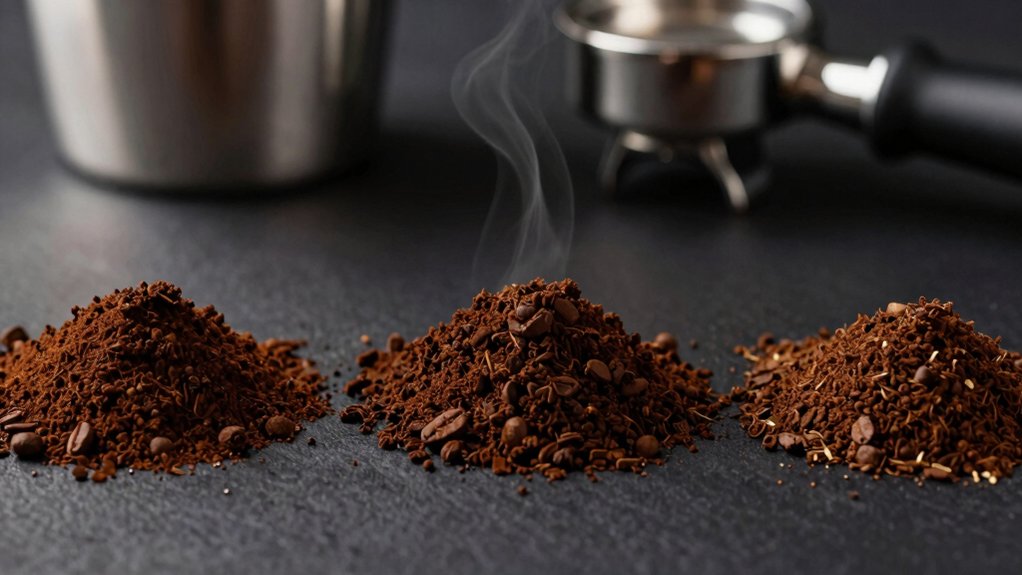
You need a finer-than-drip grind so water slows, contact time rises, and extraction balances. Finer particles boost surface area and resistance; coarser ones speed flow and underextract. Make tiny dial tweaks to adjust shot time: aim for ~25–30 seconds and change only one variable at once.
Even, level dose distribution before tamping prevents channeling. Use taps, funnels, or WDT for clumps. Use consistent technique and small adjustments. The next section explains practical steps to refine your shots.
Quick Overview
- Espresso requires a fine grind: smaller particles increase surface area for fast, high-extraction brewing under pressure.
- Slight grind adjustments (one small dial step) markedly change flow and shot time; change only one variable at once.
- Aim for a 25–30 second shot time with a straight pull. Faster means finer; slower means coarser.
- Even dose distribution (tapping, funnel, or WDT) before tamping prevents channeling and ensures uniform extraction.
- Choose distribution tools to match your grinder: needle tools for clumpy fines, flat or calibrated distributors for repeatable spread.
Grind Size vs Extraction Time
How quickly your espresso extracts comes down mostly to grind: Finer particles raise surface area and resistance, slowing flow and increasing yield; Coarser particles cut resistance, speed flow, and lower extraction. You’ll notice shot time shifts as you change grind: Finer results in longer shot time (target ~25–30s); Coarser results in shorter shot time. Use Dial setting tweaks in small increments; Tiny moves change puck resistance and yield noticeably. Watch for under- or overextraction signs and adjust grind before changing dose.
| Grind | Flow | Result |
|---|---|---|
| Fine (200–400µm) | Slower, higher resistance | Higher yield, risk bitter |
| Coarse (>400µm) | Faster, low resistance | Underextracted, sour |
Keep changes minimal and monitor shot time.
Dial Setting + Shot Time
Wondering which dial move will shave a few seconds off your shot time? You’ll use dial setting changes to fine-tune flow and reach your target shot time without altering dose or distribution. Make small, consistent moves and note how each click affects extraction.
- If shots run fast (under target), tighten the dial setting one small step to make the grind finer; that increases resistance and lengthens shot time.
- If shots drag (over target), open the dial setting slightly to coarsen the grind; that reduces resistance and shortens shot time.
- Adjust only one variable at a time. Test a straight pull and record shot time so you can correlate dial setting with results precisely.
Dose Distribution Technique
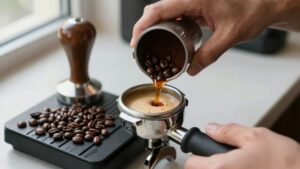
Before you tamp, the bed needs to be as even and consistent as your grind. Use tapping, leveling, or a distribution funnel to remove clumps and low spots.
Compare tools like the WDT needle technique, distribution funnels, and calibrated levelers to pick what matches your workflow and dose size. WDT shines with clumpy, finer grinds but takes time; funnels speed repeatability.
Small, deliberate taps and a final visual check will save you from channeling and let your grind adjustments show in the cup.
Evenness Before Tamping
Why should you care about dose distribution before tamping? You want evenness because grind uniformity directly affects flow and extraction. Uneven piles create channels that make tamp pressure inconsistent across the puck. Before you press, level the dose, break clumps, and settle fines so water meets a consistent matrix.
Aim for a flat, homogenous surface that lets your tamp apply uniform force; that way tamp pressure compresses equally, avoiding fast lanes and bitter spots. You don’t need fancy tools here; use gentle taps, a distribution rake, or palm-leveling to smooth the bed while preserving particle distribution. Consistent pre-tamp technique reduces puck variability, makes dialing-in grind adjustments reliable, and yields steadier shots with predictable extraction.
Distribution Tools Comparison
After you’ve leveled and settled the dose, the tool you pick for distribution determines how evenly water will first meet the puck. You’ll choose between a simple distribution tool, a calibrated distributor, or a needle technique depending on speed and precision needs.
A flat tamper-top distributor gives quick, repeatable spread with modest evenness distribution; it’s fast for busy workflows. Calibrated distributors rotate to align and reduce channeling, offering tighter control when dialing in fine espresso grinds.
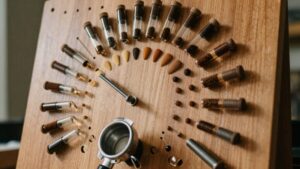
Needle tools let you break clumps and re-arrange particles for maximum micro-level evenness distribution, though they take time and technique. Match the tool to your grinder consistency and shot goals: more uniform particle size needs less intervention, while uneven grinders benefit most from active distribution.
WDT: When To Use
When should you pull out a WDT needle set? Use WDT when your tamped puck shows visible clumps, channeling, or inconsistent pre-infusion flow. You’ll especially benefit if your grinder produces uneven particle distribution at fine espresso ranges (200–400 microns) or when you’re dialing in a new bean variety that behaves differently: oily, very fresh, or irregular in size.
WDT breaks up micro-clumps, improving rolling efficiency of water through the puck and reducing blind spots without changing grind size. Don’t reach for WDT every shot; if your grinder and technique already yield uniform particles and steady 25–30 second extractions, it’s unnecessary.
Apply WDT deliberately during troubleshooting or when switching beans to speed consistent dialing-in.
Distribution Funnels Benefits
How do distribution funnels actually help your dose consistency? You use distribution funnels to guide ground coffee straight into the basket, reducing clumps and edge buildup that cause channeling. By centering the stream and limiting scatter, they make initial bed geometry predictable. This predictability allows your puck to form uniformly before any further distribution work.
Distribution funnels support even distribution by simplifying repeatable dosing; this is especially useful when adjusting grind within the narrow espresso range. They cut mess and speed setup, letting you focus on grind size and dose rather than compensating for uneven piles. While they do not replace precise leveling or WDT when needed, funnels provide a reliable baseline that reduces variability shot-to-shot. This reduction in variability makes dialing in faster and more consistent across similar grinder settings.
Tapping And Leveling
With your grounds centered and scatter minimized by a distribution funnel, tapping and leveling becomes the next simple, high-impact step to even out the puck. You tap the side of the portafilter with controlled, repeatable motions to settle fines and collapse pockets. Then, you use a flat leveling tool or a gentle finger swipe to create a uniform surface. That consistency gives you clearer tamping feedback and reduces channeling risk.
Assess the puck after tamp; if extraction runs too fast or uneven, a small grind adjustment and a repeat of tapping/leveling will narrow variability. Tapping is a low-effort technique that complements precise grind selection, helping you reach target extraction time and a balanced shot.
Frequently Asked Questions
Can Grind Size Differ Between Single and Double Shots?
Yes, grind size differences can matter between single and double shot grind. You’ll often use the same grind setting; however, you might tweak finer for a single to maintain extraction time with a lower dose. Alternatively, you may coarsen slightly for a double if it pulls too slow.
Small adjustments (one click or so) balance dose, yield, and 25–30 second extraction targets to keep flavor consistent and avoid under/over-extraction.
How Does Humidity Affect Espresso Grind Over Time?
Humidity impacts your grind stability by making beans absorb moisture, swelling and clumping over time. You’ll notice fins and larger tail particles; this causes slower flow and over-extraction if you don’t adjust.
To maintain consistent shots, you’ll grind slightly coarser in humid conditions. Purge stale grounds, store beans airtight, and recalibrate settings daily. Small tweaks keep extraction time and flavor balanced despite changing humidity levels.
Can Espresso Grind Be Used for Moka Pot Occasionally?
Yes, you can use espresso grind for a moka pot occasionally; however, expect espresso compatibility limits and grind flavor tradeoffs. You’ll get a richer, sometimes bitter cup because the very fine particles increase extraction under heat and pressure.
If you try it, coarsen slightly from true espresso to avoid clogging and over-extraction. Taste carefully and tweak the dose or grind to balance strength and bitterness for better results.
Should I Change Grind When Switching Roast Levels?
Yes, you should change grind size when switching roast levels. Darker roasts extract faster; you’ll usually coarsen the grind slightly for roast level compatibility and to preserve crema consistency. Lighter roasts need finer grind adjustments to open flavors.
Make small, systematic grind adjustments and watch extraction time and taste. Track dose and yield; then tweak until you hit balanced extraction without bitterness or thinness.
How Often Should Grinder Burrs Be Replaced?
You should replace burrs typically every 500–1,000 pounds of coffee, but adjust by usage and taste. For home use, that’s roughly every 1–3 years. Commercial setups need more frequent grinder maintenance and a tighter burr replacement cadence.
Watch extraction time drift, uneven grind, or increased fines as signs. Keep burrs clean, log hours or pounds, and swap sooner if you notice flavor loss or inconsistent shots despite proper dialing-in.
Conclusion
You’ve learned how grind size controls extraction and how dial settings and shot time interact. Use them together to hit your target. Focus on dose distribution and evenness before tamping; they make tamping predictable. Use WDT for stubborn clumps, funnels for clean dosing, and choose a distribution tool that fits your routine.
Tap and level gently to finish. Keep adjusting with small steps, taste each change, and trust your palate to refine the shot.