
Cold Brew Concentrate vs Ready-to-Drink Cold Brew: Which Should You Buy?
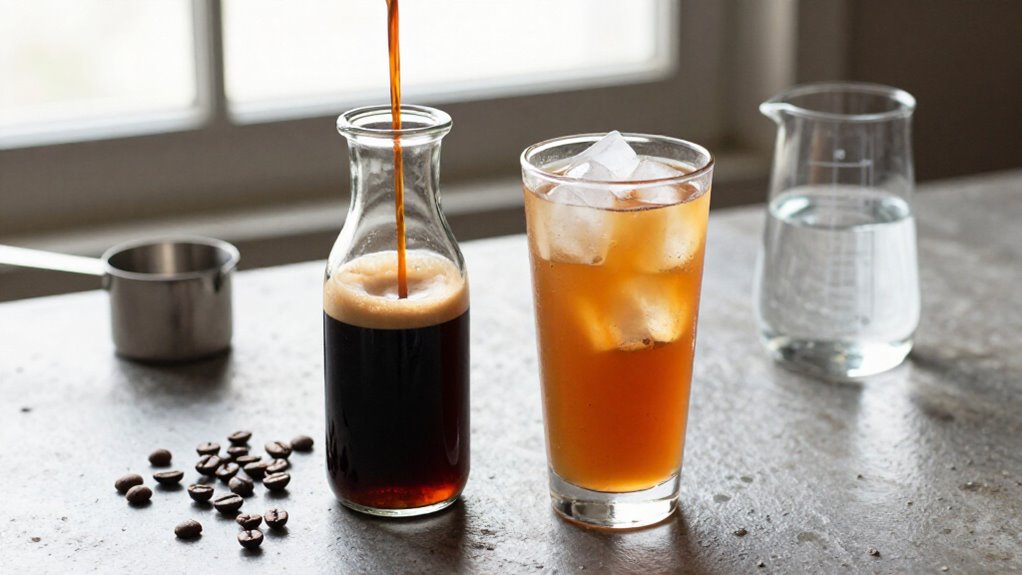
You’ll get more servings, compact refrigerator storage, and adjustable intensity from concentrate: a typical 1:6 brew diluted 1:1 doubles your yield, and you can add water, oat milk, or whole milk.
Choose ready-to-drink cold brew if you value immediate, consistent pouring at roughly 1:7, 1:8, with smooth, low-acidity flavor.
Concentrate usually costs less per serving but requires measuring and cleanup; RTD offers convenience.
The details below clarify storage, cost, flavor, and serving strategy so you can choose confidently.
Ratio, Dilution, and Servings
Because cold brew’s ratio determines both intensity and yield, the key difference is how much water reaches the cup. Choose concentrate when you want a dense, syrupy base: common coffee-to-water ratios run 1:4 to 1:8, with 1:6 a versatile midpoint. You’ll dilute it, often 1:1 with water or milk, to soften its intensity and open a smoother, rounder finish.
Choose RTD when you want calibrated strength immediately; typical ratios run 1:8 to 1:12, so you can pour and drink.
| Type | Yield |
|---|---|
| Concentrate | 1:6 diluted 1:1 makes 2 L. |
| RTD | 1 L stays 1 L. |
For you, a 1-liter concentrate diluted 1:1 yields about two liters, while RTD yields one. Concentrate lets you tune caffeine perception, body, and sweetness; RTD gives repeatable servings consistently. You control portions; RTD fixes the final profile.
Extraction and Packaging Differences
What separates cold brew concentrate from ready-to-drink coffee is the strength of the extraction and how the product reaches your cup. With concentrate, you steep 200 grams of coffee in 1,000 grams of water for 12,18 hours, producing a dense extract. RTD uses 125 grams per 1,000 grams and steeps 12,16 hours, so you pour it directly.
That difference shapes the package: concentrate comes in compact bottles or kegs; RTD comes in bottles, cans, or dispensing kegs.
- Compact concentrate bottle.
- Measured dark stream.
- Chilled RTD can.
- Efficient fridge storage.
Because you store stronger extract, concentrate saves refrigerator space per finished cup, while RTD simplifies service. Choose concentrate for measured mixing; choose RTD, and you’ll pour immediately at home without an extra manual preparation step.
Flavor, Acidity, and Body
That extraction difference carries directly into flavor, acidity, and body. Ready-to-drink cold brew, brewed around 1:7, 1:8, delivers a drink-in-the-glass profile. Concentrate, typically 1:4, 1:5, packs coffee solids, so you control intensity through dilution. Cold brewing suppresses sharp acidity and bitterness, yielding a smoother, sweeter finish than hot coffee.
Still, dilution determines balance: too little water leaves concentrate forceful, roasty, and potentially bitter; too much makes it thin and watery. Look for bold chocolate, roast, or fruit notes rather than stale, muted coffee character.
Milk changes perception in format. It adds creaminess and softens acidity, but it can erase a RTD’s flavor. With concentrate, milk integrates better, rounding harsh edges while preserving depth. Choose RTD for consistency; choose concentrate when you’ll value adjustable body and intensity.
Refrigerator Space and Containers
When refrigerator space is tight, concentrate gives you more servings per shelf because you store a smaller, stronger base rather than the full finished beverage. A concentrate bottle occupies less volume because its 1:4 brew is later diluted, while RTD holds finished-strength coffee at roughly 1:7, 1:8. Keep the base tightly sealed and refrigerated; you’ll preserve aroma and reduce exposed surface area.
- A squat bottle leaves room beside crisp produce.
- A cold pitcher waits like dark glass in the back.
- One labeled container prevents a cluttered shelf.
- A sealed cap traps roasted, chocolatey aromatics.
For repeated servings, dilute into one pitcher using your chosen ratio, such as 1:1, instead of storing multiple large RTD bottles. Refrigerate both; concentrate organizes your limited cold storage more efficiently.
Fits Standard Cup Sizes
Standard cup sizes work with either format, but the serving method differs. For an 8- to 12-ounce cup, you’ll dilute concentrate with water or milk, then pour it over ice. Its roughly 1:5 serving approach stretches one container across multiple measured portions, while letting you tune body, bitterness, and caffeine intensity.
Add less liquid for a denser, more syrupy texture; add more for a lighter, cleaner finish. Because the base is stronger, you’ll store less liquid for the same number of finished cups.
Ready-to-drink cold brew arrives at drinking strength, reflecting roughly a 1:8 coffee-to-water ratio. You’ll simply pour it over ice to fill a cup, gaining consistent flavor and strength. Choose concentrate for adjustable sizing; choose RTD for fast, uniform pours without measuring.
Shelf Life After Opening
After opening, refrigerate both formats in tightly sealed containers, but concentrate often preserves its richer aroma and body better because you can dilute only what you need. Plan to use either within three to five days, following the package’s guidance.
For RTD coffee, oxygen and repeated pouring can flatten aroma and create watery, stale notes. Concentrate gives you a fresher sensory reset: measure a serving, then dilute it.
- Dark chocolate aroma stays denser in the unopened remainder.
- RTD’s bright top notes fade first after repeated opening.
- A clean, cold refrigerator slows oxidation and microbial growth.
- Discard bottles with sour odors, fizz, mold, or unusual separation.
Don’t leave either format on the counter; warmth accelerates flavor loss, while dilution exposes more surface area to oxygen faster.
Cost per Finished Serving
Shelf life affects value, but the bigger cost difference appears in the finished glass. Concentrate usually costs less per serving because its strong 1:5 brew base gets diluted roughly 1:1 with water or milk. That purchase stretches across more cups, delivering dense aroma and body that opens into a smoother drink.
A 1-liter batch yields about 800 grams of concentrate and roughly twice that finished volume after dilution.
RTD cold brew uses about a 1:8 coffee-to-water ratio, so it’s already calibrated for the glass. You pay for that convenience and fixed flavor intensity: each bottle delivers one finished portion, with no volume to stretch. Concentrate also occupies less refrigerator space per cup. Add water for cheaper servings; RTD locks you into its fixed recipe.
Cleanup and Measuring Effort
With concentrate, you’ll measure and dilute each serving—often about 1:1 with water, milk, or oat milk—so a pitcher or measuring cup becomes part of the process. You’ll also adjust the ratio to control strength, mouthfeel, and bitterness, adding setup and occasional splashes.
Ready-to-drink cold brew skips that work: open, pour over ice, recap, and clean fewer utensils.
Measuring And Diluting
If you choose concentrate, you’ll measure its thicker, more intense coffee base before blending it with water or milk, typically at about a 1:1 ratio by weight, 800 g of concentrate makes roughly 1,600 g of finished drink. That small calculation lets you tune body, caffeine, and bitterness: add less dilution for a dense, syrupy cup, or more for a lighter finish.
You’ll handle two liquids, however, while RTD needs almost no measuring; pour it over ice and drink.
- Weigh dark concentrate in a scale’s cool bowl.
- Watch amber ribbons disappear into clear water.
- Add milk for a pale, velvety gradient.
- Taste, then adjust with a measured splash.
RTD delivers a fixed strength, often equivalent to a 1:7:8 brew. Choose RTD for speed and consistency; choose concentrate for precision, versatility, and compact storage for your daily home cold-brew routine.
Cleanup After Brewing
Once the brew has steeped, concentrate usually leaves you with less liquid to filter for the same number of servings: about 800 g at a 1:5 coffee-to-water ratio versus roughly 850 g of ready-to-drink coffee at 1:8. That smaller volume means less pouring and rinsing, so concentrate usually cleans up faster. RTD’s larger finished batch demands more handling, even though the filtration method stays the same.
For either brew, use a fine-mesh sieve, then a paper filter or cheesecloth. Rinse everything immediately; dried sediment hardens in the weave and leaves an oily film. Concentrate cuts measuring work, too: dilute 1:1 with water or milk when you’re ready to serve it.
For the shortest cleanup, steep in one lidded vessel and use one filtration setup.
Office Mugs, Camping, and Parties
For office mugs, you’ll get precise strength control by diluting concentrate roughly 1:1 with water or milk, while RTD pours at a consistent 1:7–1:8 ratio. When you’re camping, concentrate saves storage space and needs only water, but RTD makes party service faster because guests can pour it straight over ice.
If you’re serving mixed preferences, choose concentrate to produce anything from a bold, syrupy cup to a lighter, smoother mug.
Office Brewing Convenience
Concentrate usually makes office service more efficient: mix it with water at about a 1:1 ratio in a pitcher or carafe, then pour smooth, full-bodied cold brew into individual mugs while using less refrigerator space per serving.
You’ll get a repeatable workflow that keeps morning queues moving without sacrificing body or aroma. Stir thoroughly to homogenize dissolved solids, then chill the batch before service; each mug retains a balanced, velvety profile. Unlike RTD, you can adjust strength at the carafe: add water for a softer finish or less for a denser, more intense sip.
- Amber concentrate glistens beside a clear water pitcher.
- A quick stir creates a silky, coffee-scented batch.
- Cold mugs reveal a smooth, dark pour.
- A labeled carafe keeps portions consistent.
Camping-Friendly Options
When you’re packing for a campsite, concentrate offers the best balance of portability and flexibility: its strong ~1:5 brew ratio delivers a rich, full-bodied base that you can dilute in an office mug with water, oat milk, or whole milk. Its concentrated soluble solids and oils create a dense, aromatic body; add water at camp for a cleaner finish, or milk for creamy texture. A common 1:1 dilution lets you adjust intensity without sacrificing coffee character, while extra water moderates caffeine and bitterness.
Compared with ready-to-drink cold brew, concentrate reduces cooler volume and carried liquid for the same number of servings. RTD, often brewed around 1:8, weighs more because it already contains its serving water, though it wins when you need immediate, measurement-free drinking onsite.
Party-Ready Serving
A party’s coffee station works best with cold brew concentrate because you can tailor each office mug, campsite cup, or party glass to the drinker’s preference.
You’ll mix it 1:1 with water or milk, then adjust intensity: stronger for black coffee, gentler for creamy drinks.
Unlike ready-to-drink (RTD) cold brew, brewed near a 1:8 ratio, concentrate travels compactly and yields servings per cooler.
- Amber concentrate glints beside a pitcher of ice water.
- Dark coffee ribbons bloom through cold milk.
- Numbered ratio cards guide consistent office pours.
- A chilled keg or bottle serves a crowd.
Keep liquids refrigerated, label dilution recipes, and use pitchers.
Choose RTD when you need instant, identical pours; choose concentrate when varied preferences and flexible service matter.
Check Added Sugar Labels
If you want a cleaner, more controllable cup, choose an unsweetened or “Un-Sweet” product, then verify that added sugars are zero or low. Concentrate gives you more control: dilute it with water, milk, or oat milk, and adjust sweetness yourself.
You’ll avoid being locked into a manufacturer’s formula and can preserve the coffee’s cocoa, caramel, or roasted notes. Don’t rely on taste alone. Sensory impressions vary, so the sugar label remains a reliable comparison tool.
Conclusion
Choose concentrate when you want control: adjust dilution, stretch servings, and tailor intensity to your cup, provided you’ll measure and store it well. Choose ready-to-drink cold brew when you value consistency, portability, and immediate pouring, especially in offices or crowded refrigerators.
Compare cost per finished serving, container space, cleanup, and added-sugar labels—not just bottle price. Your best buy delivers the body, acidity, and convenience you’ll actually enjoy, cup after cup, at home, every day.