
How to Use a French Press Coffee Maker for Rich, Smooth Coffee
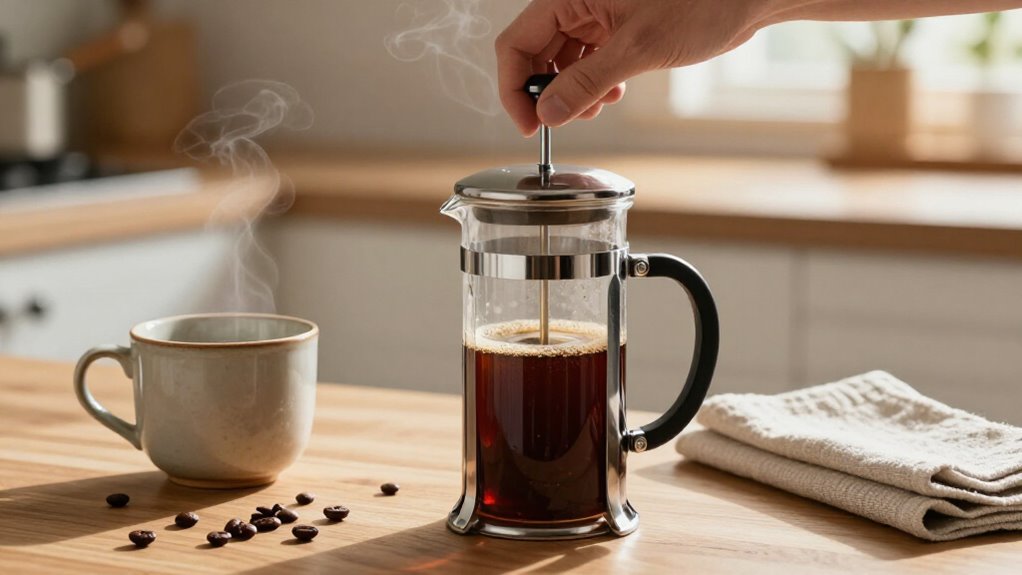
For rich, smooth French press coffee, weigh 30 g of coarsely ground coffee for every 500 g of water.
Heat water to 195–205°F (90–96°C), preheat your press, and discard the rinse.
Add grounds, pour evenly, and bloom for 30–45 seconds; stir gently to wet them.
Steep about four minutes, then plunge slowly and decant carefully, leaving sediment behind.
If your cup tastes muddy, grind coarser and avoid forceful plunging.
A few refinements make cups cleaner.
Coffee-to-Water Ratio
For a balanced French press, start with a 1:15 coffee-to-water ratio by weight: use 40 grams of coffee for 600 grams (about 600 milliliters) of water. That dose gives you a reliable middle ground: enough coffee for a rounded body and clear flavor without pushing the cup toward heaviness or thinness. Weigh both ingredients on a scale; tablespoons vary with bean size and grind, so they can shift your brew from batch to batch.
For a stronger, more concentrated cup, use roughly 1:14; for a lighter result, move toward 1:18. Keep your grind and steep time consistent as you adjust the ratio, so you can taste the effect of each change. For larger batches, multiply the coffee dose and water together rather than guessing by volume.
The balance should feel full and smooth, with coffee’s flavor lingering cleanly rather than tasting dilute or overly dense in the finished cup.
Water Temperature and Kettle
With your coffee dose set, turn to water temperature: aim for 195–205°F (90–96°C) for balanced extraction. Use a thermometer for repeatable control; otherwise, let boiling water rest briefly.
- For light roasts, choose the upper end, around 200–205°F, to draw out sweetness and limit sourness.
- For medium or dark roasts, try 195–200°F; gentler heat can soften bitterness and harsh edges.
- A gooseneck kettle gives you a steady, precise stream; a standard kettle works if you pour carefully.
- Without a thermometer, rest boiled water 30–120 seconds; your kettle and room temperature change the cooldown.
Pour steadily over the grounds, keeping the stream controlled rather than forceful. If you bloom, use water in the target range; this pause can help light-roast grounds release gas and extract evenly.
Step 1: Warm the French Press
Warm the French press before brewing to keep the water near its target temperature and help produce a richer, smoother cup. Pour hot water into the empty carafe, swirl it so the glass and metal warm evenly, and let it stand for 30–60 seconds. Then discard the water completely before you begin brewing.
This quick rinse limits the heat the cold vessel would otherwise draw from your brew, helping the water stay closer to 195–205°F (90–96°C) through the steep. You’ll notice steadier warmth from the first pour to the final press, supporting a fuller, silkier extraction rather than a thin or muted cup. If you’re brewing a darker roast or decaf, use water around 190–195°F (88–90°C), but still preheat the carafe. Don’t start with a cold press: early heat loss can weaken extraction, even when your kettle water is properly prepared over the full steep.
Step 2: Weigh and Grind Coffee
Once the press is warm, weigh your coffee and water to keep each brew balanced. Use a scale and aim for 60–70 g coffee per liter of water, or roughly a 1:15–1:16 ratio by weight. For about 500 g water, use 30 g coffee. Measure the water accurately too; correct amounts keep strength consistent.
Grind fresh beans just before brewing, ideally within one to two weeks of their roast date. Choose a very coarse setting, with particles resembling coarse salt, steel-cut oats, or breadcrumbs. This texture helps prevent bitterness and keeps grounds from clogging the filter. Aim for an even, coarse grind; dark or decaf coffee can tolerate slightly less uniformity. If the cup tastes off, adjust the grind carefully, then refine brew time or temperature.
Step 3: Pour Water Over Grounds
Pour hot water directly over the very coarse grounds, aiming for 195–205°F (90–96°C) to draw out their rich aroma without scorching them. First, preheat your French press with hot water, then discard the rinse. Add your measured coffee and start the timer as soon as you pour.
Direct the initial stream across the entire bed, wetting every particle evenly; the grounds should glisten and release a fragrant bloom. Let them saturate for 30–45 seconds. If your recipe calls for more water, add the remainder promptly, keeping your chosen coffee-to-water ratio—about 60–70 grams per liter—for a full, balanced cup.
At 30–45 seconds, gently stir to submerge floating grounds and support even extraction. Keep your movements controlled; vigorous agitation can send fine particles through the mesh.
Step 4: Break and Stir Crust
After the grounds bloom for 30–45 seconds, stir slowly for 10–20 seconds to break the floating crust and wet any dry pockets. The brief motion helps water reach each particle evenly, reducing uneven extraction and keeping trapped dry patches from dulling the cup. Use a spoon or wooden utensil, and move it through the brew with a controlled sweep rather than beating the grounds. You’ll hear a rustle and see the surface collapse as saturated grounds sink. Avoid vigorous stirring; it can churn fine particles into suspension and leave more silty sediment.
If you’re following the Hoffmann-style method, wait five minutes for a crust to form before stirring. Then let the coffee settle for another five minutes before plunging gently. This pause preserves.
Step 5: Skim Floating Grounds
At about the five-minute mark, skim the surface with two spoons, lifting off the foam and larger floating coffee bits without scooping up much liquid.
The foam forms a soft cap as the brew rests, while coarse fragments collect above the darker liquid. Slide each spoon just beneath the surface, then lift slowly; keep the bowl shallow so you remove floating material rather than coffee.
This quick step limits chunky fines and loose sludge that can cloud the cup or add a harsher edge to its flavor. Don’t stir the brew again, since that can scatter particles back through the liquid. For a long-settling approach, let it rest another five minutes after skimming, giving remaining grounds time to sink.
When you serve, pour gently and leave the settled bed undisturbed. You’ll preserve a clean surface and a smoother, less muddy cup without trying to remove every speck.
Step 6: Rinse the Filter Assembly
Once the coffee’s served, separate the filter assembly and rinse the plunger screen and rod under warm water to wash away trapped grounds and coffee oils.
If the screen unscrews, remove it so you can rinse the mesh and every plastic or metal part. Use your fingertips or a soft brush to loosen residue caught in the weave, where coffee fines cling stubbornly. Don’t scrub hard enough to bend or distort the mesh. Rinse until the water runs clear and no slick film remains.
Let each component drain fully before you reassemble the plunger; trapped moisture can hold old residue against the filter. For a dishwasher-safe Chambord-style press, you can wash the filter components in the dishwasher, then dry them completely before next use.
Taste for Balanced Flavor
For a sweet, rounded cup, use 60–70 grams of coffee per liter of water and a very coarse-to-coarse grind, about the texture of coarse salt to steel-cut oats.
Add water at 195–205°F (93–96°C), then steep about four minutes as a starting point; extend toward six to eight minutes for richer body. Taste before changing more than one variable. If the cup seems weak or sour, grind slightly finer or add a little coffee next time.
If it tastes bitter or ashy, shorten the steep or go coarser; for dark roasts or decaf, try water around 190–195°F. You’re aiming for rounded sweetness, clear flavor, and a finish that feels smooth rather than sharp. Serve it promptly after pressing.
Troubleshooting: Muddy Coffee
Even with a balanced recipe, French press coffee can turn muddy when fine particles stay suspended in the cup. Let grounds settle before you press; a coarse grind and gentle plunge keep grit from clouding the brew. Don’t stir again after the initial wetting.
| Symptom | Likely cause | Your fix |
|---|---|---|
| Gritty cup | Fine grounds | Grind very coarse |
| Cloudy brew | Forceful plunge | Press gently |
| Heavy body | Strong ratio | Use 1:15–1:16 |
| Suspended silt | Grounds disturbed | Wait, then decant |
You can steep for 6–8 minutes, then wait another 4–5 minutes so heavier silt settles. Lower the plunger only until its filter reaches the liquid; don’t press into sludge.
Decant carefully, leaving sediment at the carafe’s bottom. You’ll get smoother texture, less gritty drag, and rounded flavor in every sip.
Replace Worn Mesh Screens
When cleaning doesn’t stop gritty sediment from slipping into your cup, inspect the mesh screen: replace it if it’s bent, loose, rusty, or holed. A worn screen can also lose tension, letting fine particles bypass the filter and leave sludge at the bottom of your coffee.
Choose a replacement made for your exact French press model. Screen sizes vary, and a mismatched rim or diameter can leave gaps where grounds escape. Before installing it, rinse the new screen thoroughly. Then check that it sits level and that the plunger moves smoothly; misalignment can cause bypass even with an intact mesh.
If the screen’s only clogged, scrub and rinse it under hot water first. If excess fines persist, replace it. Brew as usual, then inspect your first cups for a cleaner, smoother finish.
Conclusion
With a measured ratio, hot, not boiling, water, and a warmed press, you’ll bring out coffee’s sweetness without harshness. Grind just before brewing, pour evenly, and let the grounds steep before pressing slowly. Rinse the filter assembly after each use, then taste your cup: adjust the grind or ratio if it’s muddy, thin, or bitter.
Replace worn mesh screens when they stop filtering cleanly. A few simple steps give you richer, smoother French press coffee.