Coffee Filter Sizes Guide
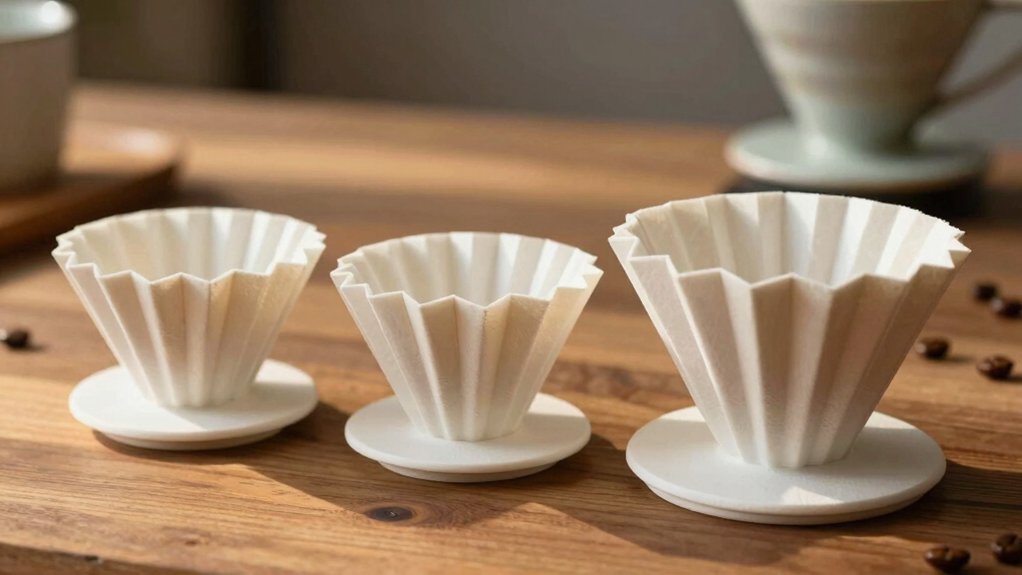
Pick a cone size that matches your brewer: #1 for single cups, #2 for 2–6 cups, #4 for 8–12, and #6 for large batches. Match height and taper so the paper won’t collapse or overflow.
Choose lightweight single-ply for bright, fast cups and heavyweight or multi-ply for fuller body and slower flow. Adjust grind finer for heavier papers. Recycled paper is rougher; virgin feels smoother.
Keep a snug fit for steady pouring. Keep going to learn practical tweaks.
Quick Overview
- Match filter number to brewer capacity: #1 for single-cup pour-over; #2 for 2–6 cups; #4 for 8–12 cups; #6 for commercial 10+ cups.
- Choose cone height and taper that fit your brewer to prevent collapse, overflow, or uneven extraction.
- Select flat vs cone bottom to suit your basket; cone center-points guide extraction toward a single stream.
- Pick paper weight and ply to control flow and body: lightweight single-ply for brightness; heavyweight/multi-ply for fuller body and durability.
- Use brew ratio ranges (1:15–1:18) as sensory guides: 1:15 strong, 1:16 balanced, 1:17 mild, 1:18 light.
Standard Cone Filter Dimensions
Curious which cone filter fits your brewer? You’ll feel the difference when water pours through a snug cone: #1 for single cups, #2 for most home brewers, #4 for full pots, and #6 for large batches. Match height and taper to avoid collapse or overflow. The cone’s point guides extraction toward a single, flavorful stream.
| Size | Typical Use |
|---|---|
| #1 | Single-cup pour-over |
| #2 | 2–6 cup drip or small pour-over |
| #4 | 8–12 cup home brewers |
| #6 | 10+ cup commercial brews |
Decide between flat bottom vs cone bottom depending on your basket. Also consider recycled content vs virgin wood pulp: recycled feels slightly coarser and eco-friendly. Virgin is smoother for delicate pours.
Brew-To-Water Ratios Reminder
How strong do you like your coffee? You’ll tune taste by treating brew to water ratios as a basic sensory guide: grind size, bloom, and pour affect extraction and mouthfeel. Use consistency metrics, like grams coffee per litre or the classic 1:15–1:18 range, to repeat results.
- 1:15 (strong): 67 g per litre, syrupy, bold aroma.
- 1:16 (balanced): 62.5 g per litre, bright clarity, medium body.
- 1:17 (mild): 58.8 g per litre, gentle sweetness, cleaner finish.
- 1:18 (light): 55.6 g per litre, delicate, tea-like notes.
Weigh coffee and water. Note extraction time and record consistency metrics. That way, you’ll match filter size and brew method to flavor without guessing.
Paper Thickness Options
You’ll notice paper thickness changes how your coffee tastes and how long brewing takes. Lightweight single-ply papers let water flow faster and give brighter cups. Heavyweight or multi-ply sheets slow flow, hold more fines, and feel sturdier when wet.
Consider durability during brewing and the environmental trade-offs: thicker filters mean less breakage but more fiber per cup.
Lightweight vs Heavyweight
Want a cleaner cup or a fuller body? You choose by swapping lightweight paper for heavyweight paper. With lightweight paper, water moves faster; you’ll notice brighter acidity and clearer aromatics. Grounds sit briefly, so more delicate floral and citrus notes shine.
Heavyweight paper slows flow, increasing contact time and producing a rounder, fuller mouthfeel with muted brightness and smoother bitters. In practice, pick lightweight for single-cup cones or when you want clarity in a light roast. Choose heavyweight for larger brews or bold beans that benefit from extra extraction.
Both filter types trap fines and oils differently, so adjust grind slightly: finer for heavyweight; coarser for lightweight to balance flow and avoid over- or under-extraction.
Single-Ply Vs Multi-Ply
Curious which paper thickness will sharpen your cup? You’ll notice single ply vs multi ply feels different when you touch wet paper: single-ply is airy and soft; multi-ply is firmer and slightly textured.
With single ply, aromas move through quickly. The mouthfeel can seem brighter and more immediate. Multi-ply gives you a tactile sense of sturdiness and can mute tiny bitter oils; so the sip tastes cleaner.
Choose single-ply for delicate, floral beans when you want clarity. Pick multi-ply for darker roasts when you prefer a smoother, less edgy finish. Either way, handle the filter gently, seat it properly in the cone or basket, and you’ll get a cup that matches your intent.
Impact On Flow
How fast should water pass through your paper? You want a steady drip that blooms, not a torrent or a crawl. Thinner, single-ply papers let water move quicker, raising the flow rate and demanding a finer grind size to avoid under-extraction.
Thicker, multi-ply or bonded papers slow seepage, extending contact time and forgiving a slightly coarser grind size while clarifying oils and sediment. Feel the texture: dense paper resists water, airy paper drinks it. Adjust pour speed and grind to match the paper’s resistance; pulse pours for slow filters, steady streams for fast ones.
Test by timing a standard brew. Small tweaks to flow rate or grind size yield noticeable changes in body, clarity, and extraction.
Durability During Brewing
Flow speed and paper thickness go hand in hand with how well a filter holds up under a hot brew. You’ll feel the difference: thicker paper resists sogginess, keeps shape, and lets you pour steadily without sudden collapse.
Thin papers let water pass faster, boosting brewing efficiency; however, they can tear or balloon if your grind’s too fine or you pour aggressively. Choose medium-weight sheets for a balance—firm rim, predictable flow, and reliable durability during routine home use.
When you notice fiber breakdown or pinholes after a brew, swap to a sturdier grade or adjust pour technique. Pay attention to wet stiffness and how the paper smells when hot; those sensory cues tell you if a filter will survive the next extraction.
Environmental Trade-Offs
Ever wondered how the thickness of a paper filter changes its environmental footprint? You feel the weight difference when you lift a thick filter versus a thin one. That tactile cue ties to environmental trade-offs.
Thicker papers use more fiber and energy to produce; however, they often trap more oils and need less rinsing or repeat brewing. This affects waste and water use. Thinner filters use fewer raw materials and generate less landfill mass per brew; yet, they may clog, forcing double filters or wasted coffee.
For sensible sustainability considerations, match filter thickness to brew size and grind: heavier filters for bold, oily brews; lighter for delicate single-cup pours. Composting and checking certifications reduce overall impact.
Frequently Asked Questions
Can I Use Cone Filters in Basket-Style Machines?
You generally shouldn’t use cone filters in basket-style machines because cone compatibility is poor. The cone won’t sit snugly, and water will channel around it. You’ll feel water pooling and hear splashing as extraction becomes uneven.
If you must, choose proper filter material options like a stiff paper or reusable metal base; shim the cone carefully to prevent collapse. Still, it’s best to match filter shape to your basket for consistent flavor.
Are There Compostable Coffee Filter Brands Recommended?
Yes, you can choose compostable brands like Cafec, Bambu, and Purity Coffee that break down and reduce landfill waste. You’ll smell fresher grounds, see less paper, and feel better about disposal.
Consider sustainability considerations: unbleached fibers, certifications (ASTM D6400/EN 13432), and local composting rules. You’ll want sturdy filters that avoid sinking or tearing; so test fit and note how they affect flow and extraction in your brewer.
How Do Reusable Filters Affect Coffee Flavor?
Reusable filters change your brew: Reusable filters flavor tends to be fuller, oilier, and more textured because metal lets oils through while paper absorbs them.
You’ll notice the metal vs paper impact clearly. Metal gives body and brighter aromatics; paper yields cleaner, crisper cups with less sediment.
Practically, use medium-fine grind with metal to avoid sludge. Rinse paper to reduce papery taste; experiment to match your preferred balance.
Can I Trim a Filter to Fit a Different Brewer?
Yes, you can trim a paper filter to fit, but filter modification has trade-offs. You’ll smell fresh paper and see faster flow. Cutting edges may let grounds slip or water channel, changing extraction. Trim carefully with scissors, remove only excess, and test with a small brew.
If you want consistent flavor and no collapse, use the correct-size or a reusable filter made for your brewer instead of extensive modification.
Do Filter Sizes Vary by Country or Region?
Yes, filter sizes can show regional sizing differences. Some countries use country specific filter standards. You’ll notice slightly different diameters, heights, and numbering when shopping abroad. The paper might feel a touch thinner or fit a bit loose.
Check measurements rather than names; match diameter and depth. You’ll avoid spills and weak brews. Carry a tape measure or compare brand specs before buying.
Conclusion
You’ve seen how cone sizes, paper thickness, and ply change flow, extraction, and cleanup. They all shape the cup you’ll taste. Pick a filter that matches your brewer and brewing rhythm: lightweight for brisk clarity, heavyweight for fuller body and fewer tears.
Think tactilely: the stiffness, the papery scent when dry, the damp weight mid-brew. Consider composting or unbleached options if you want greener cleanup. Small choices yield big flavor.