
How to Backflush an Espresso Machine
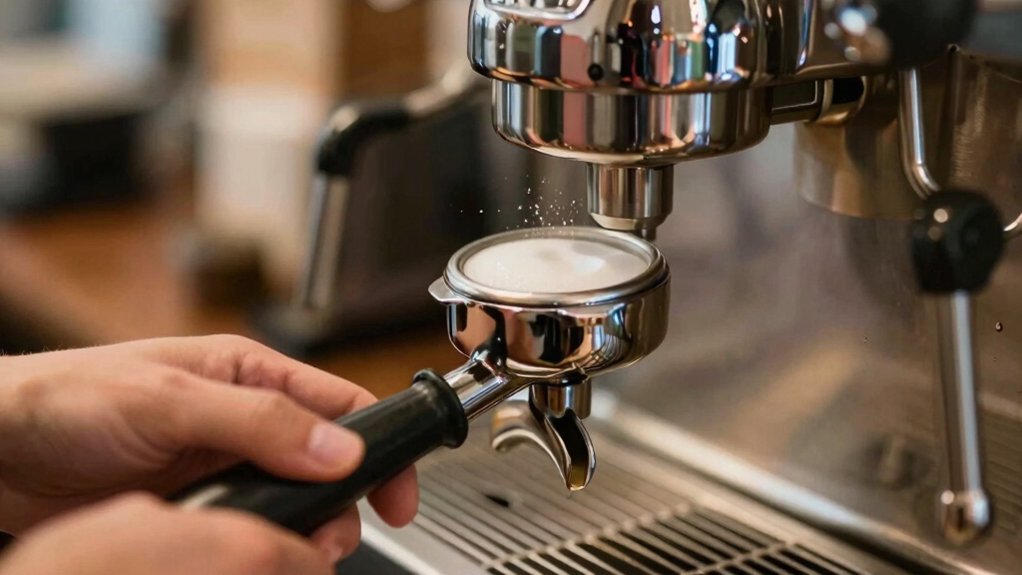
You should backflush with short, high‑pressure pump bursts using a correctly sized blind filter that seals your portafilter. Run 10–15s detergent bursts with 5s releases; or 10s on/5s off for rinses, repeating 5–10 cycles until pressure plateaus or water clears.
Use a gauge, pump sound, or water clarity to judge completion. Match disc diameter, depth and seal material to your portafilter to protect the three‑way valve. Keep going to learn specific sizes, seals and valve protection tips.
Quick Overview
- Use a correctly sized stainless blind filter and gasket that seats flush in the portafilter to ensure proper back-pressure.
- Run short pump bursts (10–15s on, 5s off) for chemical cycles and 10s on/5s off for water rinses. Repeat 5–10 cycles; stop when pressure plateaus or expelled water runs clear.
- Monitor pressure via gauge, pump sound, or a count-to-10 rhythm to detect plateau or clearing.
- After detergent cycles, flush with water-only cycles and verify three-way valve and pressure release behave normally.
Backflush Pressure & Time Chart
When you backflush, target short, high-pressure pump bursts rather than long runs. Use 10–15 second pump intervals with 5 second releases for chemical cycles and 10 second on, 5 second off for water rinses. Prioritize backflush timing and watch pressure indicators. You’ll run 5–10 cycles depending on buildup and machine type.
Use gauge, pump sound, or count-to-10 as your pressure indicators. Stop when pressure plateaus or water clears. Below is a simple chart to visualize timing vs detection:
| Machine Type | Pump Interval | Pressure Indicator |
|---|---|---|
| Standard | 10–15s | Listen/count |
| Gauge-equipped | Until 9+ bar | Gauge reading |
| Vibratory/Rotary | 10–20s total | Sound/plateau |
Follow this routine daily or per operational frequency.
Portafilter Basket Sizes
How do you choose the right portafilter basket size for consistent extraction? You match portafilter capacity to dose and machine flow to avoid channeling during backflush-based routines.
Basket geometry affects how detergent and water circulate; shallower, wider baskets disperse flow differently than deep, narrow ones. Use the correct blind filter that mirrors your brewing basket’s capacity and geometry to ensure seal and pressure behavior.
- Verify nominal portafilter capacity (single, double, triple) before selecting blind filter.
- Match basket geometry to the portafilter to prevent bypass and uneven back-pressure.
- Use identical material and perforation pattern when possible for consistent turbulence.
- Confirm the blind filter seats flush to maintain three-way valve cycling.
- Test with water-only cycles after detergent runs to validate extraction stability.
Blind Filter Compatibility Chart
When you choose a blind filter, match its diameter and depth to your portafilter basket sizes to ensure a sealed fit and correct backpressure. Check material and seal type: stainless steel discs, rubber-sealed versions, and proprietary shapes affect sealing and pressure relief behavior.
Also confirm whether your machine accepts universal blanks or requires a brand-specific disc to avoid leaks or damaged gaskets.
Blind Filter Sizes
Which blind filter fits your machine? Measure portafilter basket diameter and depth. Blind filters must match basket sizes to seal and build pressure for effective backflushing. Most commercial machines use 58 mm baskets; consumer machines range 49–58 mm.
Also confirm single vs double basket depth. Shallower singles may not hold a standard blind disc securely. Use a calibrated caliper or manufacturer spec sheet. If tolerance is tight, choose a beveled-edge blind filter that compensates for slight diameter variance.
Stainless steel discs are standard; silicone blanks can work for low-pressure testing but won’t withstand detergent abrasives. Always verify three-way valve compatibility and that the blind filter seats fully against the dispersion screen to prevent leaks and ensure proper detergent action.
Portafilter Compatibility Guide
Curious about whether a blind filter will seal and hold pressure in your portafilter? Use a compatibility checklist: measure internal diameter and lip profile, verify basket depth, and confirm latch engagement. Match blind filter dimensions to portafilter ergonomics. Handle angle and cam clearance affect sealing and user leverage during locking.
Note that dual-spout and bottomless adapters may alter backflush dynamics; prefer the configuration that maintains a full seal. Use basket color coding where manufacturers provide it to quickly identify diameter and depth ranges. Record color-to-size mappings for each machine. If you encounter marginal fits, test with a water-only brief cycle to confirm pressure hold before detergent.
Log results and standardize blind filters per group head for consistent maintenance.
Material And Seal Types
A blind filter’s material and seal type determine how reliably it will seat, hold pressure, and withstand repeated backflushing cycles. You should match these characteristics to your portafilter and maintenance routine.
Select stainless steel for durability and chemical resistance; its rigid face gives consistent contact but needs precise portafilter fit for proper material compatibility. Brass or plated discs can corrode over time with detergent; avoid them if you run frequent chemical cycles.
Silicone or nitrile seals compress to form a reliable gasket. Nitrile resists oils and heat better; silicone tolerates higher temperatures but can swell with some cleaners. Foam or felt seals are subtopic irrelevant for high-pressure cleaning.
Use a compatibility chart: list portafilter diameter, disc material, seal compound, and recommended cycle frequency to ensure repeatable seating and safe backflushing.
Pressure Relief Considerations
Pressure relief considerations focus on matching your blind filter and seal to the group head’s pressure release characteristics so you avoid overpressure, leaks, or valve malfunction. You’ll check compatibility charts for blind filter thickness, seal material durometer, and any bleed or relief groove patterns.
Use a seal that allows predictable pressure ramping to protect the three-way valve while sustaining effective backflush flow. Select components that minimize sudden pressure spikes for noise reduction and to prevent cavitation wear.
Proper matching shortens cycle time and increases energy efficiency by avoiding repeated pump work. Verify manufacturer tolerances and test with short detergent cycles, monitoring valve response and drip-tray foam. If you see excessive resistance, switch to a softer seal or a vented blind disc.
Universal vs Proprietary
Compatibility matters when choosing a blind filter: you’ll need one that matches your group head’s geometry, seal thickness, and any relief features to avoid overpressure or ineffective backflushing. You’ll evaluate two paths: universal compatibility discs and proprietary designs.
Universal compatibility options fit many commercial and prosumer groups by offering tapered seals, interchangeable gaskets, and standardized diameters; they simplify inventory and work for routine detergent cycles and water rinses. Proprietary considerations arise with some manufacturers that use unique seat geometries, relief valves, or stepped seals. Using a mismatched blind can trap pressure or bypass the three-way valve, reducing cleaning efficacy.
Consult a blind filter compatibility chart for your model, and choose the filter that preserves safe pressure release and proper cleaner flow.
Frequently Asked Questions
How Often Should I Deep-Clean the Three-Way Valve?
You should deep-clean the three-way valve every 1–2 months for E61 groups and about every other week for machines used heavily. This balances valve longevity and cleaning frequency. Use detergent backflush cycles, then thorough water rinses. Inspect the valve during monthly maintenance.
If you notice sluggish pressure release or oil build-up, clean immediately. Keep records and adjust intervals based on usage intensity and water/coffee oil load to prevent failures.
Can Backflushing Damage Antique E61 Groups?
Yes, backflushing risks exist with antique groups. You shouldn’t use frequent detergent backflushing on vintage E61s because high-pressure solvent cycles and aggressive chemicals can degrade gaskets, soften solder, or stress the three-way valve.
You should limit detergent cycles; prefer water-only rinses; use mild cleaners; and inspect gaskets and valves regularly. If unsure, consult a restoration specialist to avoid irreversible damage to antique groups.
Is Hot or Cold Water Best for Soaking Parts?
Use hot water for soaking metal parts to dissolve oils and residues faster; avoid boiling to protect gaskets. You can use cold water only for initial rinses or when parts are heat-sensitive.
For detergent soaks, mix cleaner in hot water (about 120–140°F/50–60°C) to improve efficacy. Then rinse with cold water to cool parts and halt chemical action. Always dry parts thoroughly before reassembly to prevent corrosion or seal damage.
Can I Use Household Detergents Instead of Cafiza?
You can’t use ordinary household cleaners. Can household products replace Cafiza? No: detergent safety is the issue. Household detergents often contain fragrances, bleaches, or residues that harm seals, leave tastes, or foam improperly.
Use a purpose-made espresso cleaner (Cafiza, Biocaf, etc.) at recommended doses. If you must substitute, verify NSF/food-safe formulation; avoid bleach or ammonia, and rinse thoroughly to prevent contamination and equipment damage.
How to Tell if Detergent Residue Remains?
You test for residue by running clear-water rinses and tasting/inspecting outputs; that’s how to test for residue and spot signs of contamination.
Pull a discarded shot after detergent cycles. Then run several blind-filter rinse cycles and flush group head until foam and chemical smell vanish.
Taste a pulled shot: bitter/soapy or metallic notes indicate contamination. Visual foam, persistent suds in drip tray, or detergent smell confirm residue.
Conclusion
You’ve now got the critical data to backflush correctly: match pressure and time to your machine, use the right blind filter and basket size, and confirm portafilter compatibility and seal materials. Check pressure relief settings and whether your machine accepts universal parts or needs proprietary components.
Follow the charted pressures/times, replace worn seals, and avoid overpressurizing. Do this consistently and you’ll maintain extraction quality, protect internals, and extend your espresso machine’s service life.