Drip vs Pour-Over vs French Press vs Espresso: Which Brew Is Best?
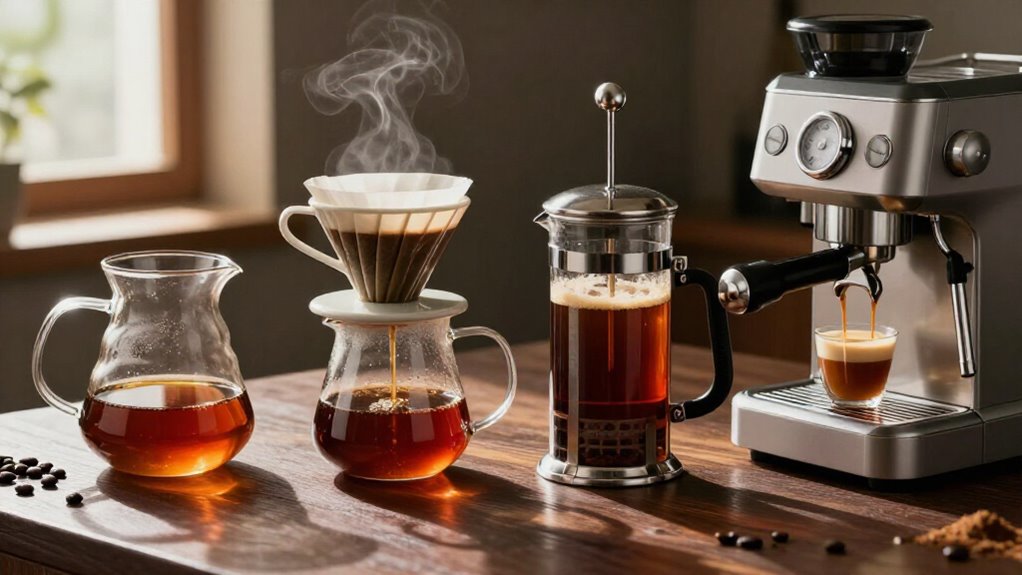
You’ll choose drip for set-and-forget consistency and a balanced, paper-filtered cup.
Choose pour-over when you want brighter clarity and lighter body, though technique affects results.
Pick French press for richer oils, body, and some sediment.
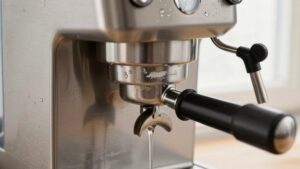
Choose espresso for concentrated intensity, crema, and milk-based drinks, but expect the most grind and timing sensitivity.
Paper filters also reduce coffee oils and diterpenes.
Match your method to serving size and cleanup preferences; the details below explain why.
Filter Type and Coffee Oils
When it comes to coffee oils, your filter plays a major role in the cup’s texture and clarity. Paper filtration traps most oils, micro-fines, and diterpenes such as cafestol and kahweol, giving you a cleaner, brighter cup with lighter body.
| Filter | What you’ll notice |
|---|---|
| Paper | Clean, bright, lower body |
| Metal | Richer texture, more sediment |
| Cloth | Balanced clarity and body |
Metal filtration lets more oil and sediment through, so you’ll taste greater richness; though the cup may feel less transparent. Cloth sits between these outcomes, retaining many fines while allowing some oil.
In espresso, the puck and metal screen help create crema and concentrated body. If you drink unfiltered coffee often, paper-filtered brewing may reduce diterpene exposure and its potential LDL-cholesterol effect over time.
Mesh, Paper, Pressure, Gravity
Your brew method determines how water moves through coffee—and that flow shapes body, clarity, and concentration. Choose mesh, paper, pressure, or gravity according to how much control and speed you want.
- Mesh: You steep coarse grounds for 4–5 minutes, then press a metal plunger through them.
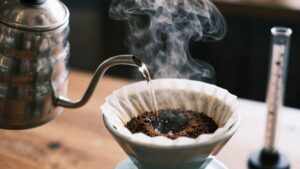
- Paper: You pour hot water through medium grounds and a paper filter over roughly 2–4 minutes.
- Gravity: You control staged pours and blooming manually, while drip machines distribute water through showerheads automatically.
- Pressure: You force hot water through finely ground coffee at about 9 bar, targeting 20 grams in and 25–30 milliliters out in 25–30 seconds.
- Hybrid options: You can use an AeroPress or moka pot when you want a bridge between gravity and pressure.
These mechanics explain why espresso extracts fastest, while mesh and paper methods in your kitchen depend more on steeping or flow timing.
Clarity, Body, and Sediment
The filter and extraction style also determine how clean, heavy, or concentrated your coffee tastes. If you value a clean, sediment-free cup, choose paper-filtered pour-over: its paper traps oils and fines, producing a lighter body and crisp finish. Drip coffee typically lands near that middle ground, with less sediment than French press but less tactile clarity than pour-over.
French press uses coarse grounds and a metal mesh, so oils and fine particles remain in your cup. You’ll get richer body and grit—a tradeoff if texture matters more than clarity. Espresso takes intensity further: a concentrated extraction, such as 20 grams in and 30 milliliters out over 25–30 seconds, creates the viscous profile. Choose pour-over for residue; choose French press for oils, body, and sediment.
Flavor Consistency Across Methods
For repeatable flavor, drip coffee offers the most set-and-forget consistency, while pour-over and French press vary more with technique. Your machine controls flow, supporting a stable baseline.
- Pour-over: Your staged pours and 2–4-minute brew can shift extraction from cup to cup.
- French press: A roughly 4–5-minute steep rewards consistency; timing the plunge differently changes intensity.
- Sediment: Paper filters remove excess oils and fines, giving pour-over a cleaner baseline; French press tastes fuller and may seem grittier.
- Recipes: Keep pour-over near a 16:1 water-to-coffee ratio and use a medium grind; French press needs coarse grounds at a similar ratio.
- Espresso: Your ~20-gram dose, 30-milliliter yield, and 25–30-second shot demand precision; tiny grind or timing changes noticeably alter flavor.
If you value repeatability, choose drip with confidence.
Counter Space, Brew Speed
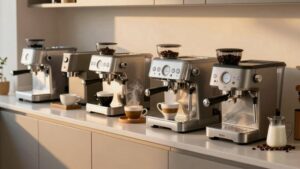
Counter space and brew speed often pull in opposite directions: espresso delivers a double shot in roughly 25–30 seconds, but its machine and grinder demand the largest setup. If you want the fastest result, espresso wins: extraction takes roughly 25–30 seconds for a double, but preparation adds work and the equipment occupies substantial counter space.
Pour-over keeps footprint modest, typically a brewer and kettle, but you’ll actively pour in stages for a 2–4-minute brew. French press needs little room and takes about 4–5 minutes; you’ll time the steep and press.
Automatic drip occupies more space than either manual brewer, yet it runs unattended. Choose espresso for immediacy, pour-over for quick participation, French press for an unhurried cup, or drip for hands-off volume, especially at home.
Filter Purchases and Cleaning
Paper-filter brewers add a small recurring cost but simplify cleanup: discard the used filter and grounds, then rinse the dripper and carafe. You’ll buy replacement papers for V60-style pour-over or automatic drip baskets, while a French press avoids paper purchases but demands more hands-on cleaning.
- Keep filters and grounds from sitting; stale residue smells worse and rinses less easily.
- Use fresh filtered water to reduce off-flavors and keep equipment fresher.
- Empty French press grounds promptly, then rinse its mesh and plunger thoroughly to prevent grit buildup.
- For pour-over, medium/medium-fine grounds and a 16:1 ratio help limit sludge and sediment.
- Expect about 3–3.5 minutes for a controlled V60 brew, with minimal cleanup.
Automatic drip machines streamline cleanup with built-in filters and water delivery.
Caffeine and Cholesterol Differences
Caffeine and cholesterol effects depend more on serving size and filtration than on brew label alone. Espresso packs the most caffeine per milliliter, but a filter serving can deliver a comparable total because you brew more water with more coffee. Drip and pour-over usually provide steady caffeine extraction when you keep the recipe consistent, whereas espresso varies with preparation.
French press retains natural oils and particles because its metal mesh doesn’t remove them; espresso may carry more oil-associated compounds than paper-filtered coffee. Drip and pour-over paper filters trap more oils and sediment, producing fewer lipid-associated compounds. If you’re monitoring cholesterol, favor paper-filtered coffee and discuss your intake with a clinician. Remember that serving size, frequency, and health risks matter more than a method’s reputation.
Grind Size Sensitivity
You’ll find French press most forgiving of small grind changes, while drip and pour-over perform best within a moderate medium-grind range. Espresso demands the most precision: slight adjustments to its very fine grind can quickly alter flow, extraction, and flavor.
In general, finer grounds extract faster and risk bitterness, whereas coarser grounds extract more slowly and may taste weak.
Forgiving Grind Ranges
If you’re prioritizing an easy starting point, French press is the most forgiving brew because its coarse grounds and metal mesh filter accommodate a wider grind range without clogging easily. You can begin with coarse sea-salt-like particles and adjust gradually without immediately ruining the cup.
Other brewers offer different levels of tolerance:
- French press: A little finer may add sediment; a little coarser usually tastes lighter.
- Drip: Its showerhead and paper filter make medium to medium-fine grounds fairly adaptable.
- Pour-over: Stay near medium; finer grounds can turn bitter, while coarser grounds can taste weak.
- Espresso: Fine, powdery grounds demand the narrowest range and expose small errors fastest.
- Adjustment: Finer generally needs less time; coarser generally needs more to prevent imbalance.
Choose French press for flexibility, not identical flavor every time.
Precision Matters Most
Although every brew benefits from a suitable grind, precision matters most when the method gives water little room to compensate. French press needs coarse grounds, like coarse sea salt, to limit sludge; its metal mesh still lets fines through.
Pour-over, especially a V60, needs medium-to-medium-fine grounds: too fine can stall flow, while too coarse can finish in 2–4 minutes with a weak cup.
Espresso is least forgiving. An extremely fine, powdered-sugar grind helps you draw about 30 mL from a 20 g double shot in 25–30 seconds, supporting rich crema. Drip sits between these extremes, though your machine’s flow rate and basket shape determine its sweet spot. Match the grind to contact time, pressure, and filtration, not to a copied setting for your specific method.
Best for Milk-Based Drinks
If you want classic lattes or cappuccinos, choose espresso: its concentrated shot and rich crema hold their flavor against steamed milk. Choose French press when you prefer a fuller, oilier base that pairs well with creamy, less delicate drinks.
For lighter milk beverages, pour-over or drip can work, but their cleaner or milder profiles won’t provide the same structure.
Espresso’s Rich Crema
Espresso’s high-pressure extraction creates a concentrated, viscous shot topped with rich golden crema: an emulsion of coffee oils and gases that gives milk drinks added texture and aroma. For you, that crema isn’t merely decorative: it signals a well-extracted, syrupy foundation for lattes, cappuccinos, and cortados. Target about 30 mL from roughly 20 g of coffee in 25–30 seconds, then let milk soften espresso’s bold intensity without erasing its aroma.
- Fresh beans preserve aromatic gases.
- A powdered-sugar-fine grind supports pressure.
- Dial grind size to control timing.
- Weigh dose and yield for repeatability.
- Clean equipment protects crema quality.
Your machine will demand practice: small grind changes can shift flow, yield, and flavor, but careful dialing can deliver café-style texture consistently in each milk-based cup you make.
French Press Fullness
With a French press, coarse grounds steep fully in hot water for about 4–5 minutes, producing a richer, heavier-bodied brew than paper-filtered methods. This full-immersion approach retains coffee oils and fine particles because the metal mesh plunger doesn’t remove them. The result feels rounder and thicker, giving milk something substantial to blend with rather than disappearing beneath it.
For a balanced base, aim near a 16:1 water-to-coffee ratio—roughly 7–8 grams per 6.7-ounce cup—and plunge slowly. If you want more intensity, move toward 12:1, but expect greater concentration and potentially more bitterness if extraction runs too far. Use water around 200°F; or boil it at 212°F and rest one minute. You won’t need specialized equipment, and the forgiving method scales easily for multiple servings.
Best Milk Pairings
For milk-based drinks, espresso provides the strongest foundation: a roughly 20-gram dose extracted for 25–30 seconds into about 30 ml creates a concentrated, syrupy shot with golden crema that won’t disappear beneath steamed milk. Its intensity balances milk’s dilution and supports latte art.
Match your brew to the balance of intensity, sweetness, and body. Choose your cup by the texture and convenience you want:
- Espresso: anchors lattes and cappuccinos with a durable coffee backbone.
- Pour-over: offers clean, bright flavor; a 16:1 ratio keeps milk drinks lighter.
- Drip: delivers consistent, mildly bold comfort near a 17:1 ratio.
- French press: leaves oils and sediment for maximum body in rich cortados.
- Decision: choose espresso for strength, pour-over for clarity, drip for ease, or French press for fullness.
Pick by Serving Size
Your serving size should guide the brew method as much as your taste does. For a single cup, choose pour-over: its controlled, hands-on process typically takes about 3, 3.5 minutes. It suits you when you want clarity and extraction control without brewing excess coffee.
For a small group, choose drip. Its full-pot design delivers consistent servings with little effort, making it practical for busy mornings. If you prefer a richer shared cup, French press steeps coarse grounds for roughly 4, 5 minutes, retaining natural oils and a heavier body.
Choose espresso when you want the most concentrated serving: about 20g of grounds can yield roughly 30ml in 25, 30 seconds, with crema. Match capacity to your household, and you won’t waste coffee or compromise freshness each morning.
Conclusion
Choose by serving size first, then match the brew to your priorities. For one concentrated drink, espresso is fastest and practical. If you want a clean cup, pour-over gives you control; drip suits several people with less hands-on work. French press scales easily and delivers fuller body, though sediment and unfiltered oils remain.
No method wins universally: use the brewer that fits your volume, time, equipment, and preferred texture and adjust grind and dose as.