Espresso Dose Yield Ratio
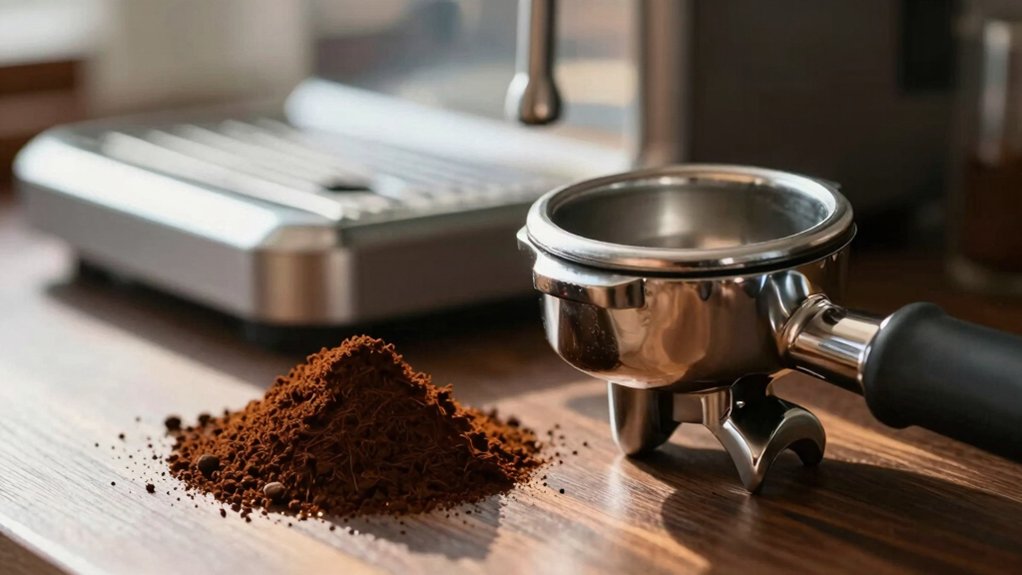
You control espresso strength and clarity by the dose-to-yield ratio: use equal weight (1:1) for ristretto, about 1:2 for classic (e.g., 18 g → 36 g), and around 1:3 for lungo (17–20 g → 50–60 g).
Keep tamp and grind consistent so one notch changes flow predictably. Weigh doses to ±0.1 g. Track time, yield, and taste when you adjust. Follow this method and you’ll see how subtle tweaks change extraction and flavor.
Quick Overview
- Dose-to-yield ratios (e.g., 1:1, 1:2, 1:3) define how many grams of extracted espresso you get per gram of ground dose.
- Common targets include ristretto 1:1 (14–18 g→14–18 g); classic 1:2 (18 g→36 g); lungo ~1:3 (17–20 g→50–60 g).
- Shorter ratios produce more intensity and early extraction compounds. Longer ratios increase sweetness and clarity.
- Keep dose constant and adjust grind in small increments (1–2 notches) while timing shots to map ratio effects.
- For consistency, weigh doses to ±0.1 g; use uniform tamping; and recalibrate grinder periodically.
Dose-to-Yield Ratio Chart
Wondering which dose-to-yield ratio to try first? You’ll start with a clear chart that links dose, yield, and expected extraction so you can test with dosing consistency and watch peak extraction timing. Use the table below to compare typical targets and plan adjustments.
| Ratio | Dose (g) | Yield (g) |
|---|---|---|
| Ristretto (1:1) | 14–18 | 14–18 |
| Classic (1:2) | 18 | 36 |
| Lungo (1:3) | 17–20 | 50–60 |
Read results against extraction time: short, intense shots hit peak extraction timing earlier; longer yields shift sweetness and clarity.
Keep grind and tamp steady, record times and yields. Then move ratios to correct under- or over-extraction precisely.
Tamped Dose Weight Guide
How firm should you tamp, and how does tamp pressure interact with your dose weight? You’ll aim for consistent tamping so the tamped dose presents a uniform bed. Firmness matters less than repeatability. Use this weight guide to match dose and tamp technique with grind size and basket capacity. Small changes in dose shift puck density; therefore, keep tamp force steady and adjust dose before altering grind.
- 18–20 g dose: firm, flat tamp; medium-fine grind size for balanced flow.
- 14–16 g dose: slightly lighter tamp; finer grind size to preserve extraction time.
- 20–22 g dose (high dose): firm tamp; check basket compression; moderate grind size.
- Single doses: light tamp; fine grind size; monitor channeling.
Grind Size Adjustment Tolerances
When you tweak grind size, small increments can change extraction noticeably. We will look at typical adjustment steps and how to measure their tolerance. You’ll learn methods for quantifying tolerance: particle distribution checks, timed yield tests, and repeat dose consistency. These variances affect brew time and final dose yield.
We will also cover practical equipment limits and calibration practices. This way, you can set realistic adjustment windows for consistent shots.
Grind Adjustment Increment
Why does a single notch on your grinder matter? A one-notch change alters particle size enough to shift extraction kinetics, affecting grind distribution and requiring dose calibration to retain target brew ratio. You’ll often see 1–2 notch moves produce measurable changes in flow rate and shot time; that’s not noise.
Treat increments as control steps: make one small change, lock dose, pull a timed shot, and compare yield and flavor. Track results so you can map notch-to-extraction impact for that bean and basket. Aim for the smallest consistent increment that produces repeatable sensory and numeric differences. This minimizes over-adjusting and preserves repeatability across tamping, humidity, and grinder wear.
Keeping your espresso dose:yield predictable.
Tolerance Measurement Methods
Want to know how sensitive your espresso routine really is? You measure grind-size tolerance by changing the grinder one increment at a time and tracking dose-yield changes, extraction time, and sensory shifts during a tasting session. Use a controlled protocol: same beans, temperature, basket, and tamp.
Record grams in and out, seconds, and flavor notes for each step. Quantify acceptable tolerance as the range where yield and cup quality stay within predefined limits—e.g., ±2 g yield, ±3 s extraction, or no perceptible flavor drift. Calibrate periodically to account for equipment durability; wear widens tolerances.
Repeat measurements across days to capture variability. This evidence-based method tells you how fine adjustments affect repeatability and taste.
Dose Consistency Impact
How much does a single notch on your grinder change the shot? You’ll see measurable effects because small grind adjustments alter particle surface area and flow resistance.
Maintain dose consistency to isolate those changes: weigh every dose to ±0.1 g and keep tamping uniform. With proper grinder calibration, you’ll find one notch may shift extraction yield by several percent; this changes perceived strength and balance.
Test methodically: change one notch, pull identical doses, record yield and tasting notes. If results vary unpredictably, re-check calibration and burr alignment.
Controlled experiments show reproducible trends when dose consistency and grinder calibration are maintained. This lets you define acceptable tolerance bands for adjustment without conflating other variables.
Brewing Time Variance
You’ve already seen that a single notch on the grinder can change extraction yield. Those same small adjustments also shift brewing time predictably because grind size controls flow resistance. You’ll notice coarser settings shorten brewing time and under-extract, while finer settings lengthen it and risk over-extraction.
Measure brewing time after each grind change and aim for the target window for your chosen brew ratio. Small increments produce linear time changes in consistent tamp and dose setups. Also, monitor extraction temperature: hotter water speeds soluble extraction, interacting with grind to alter perceived extraction at the same brewing time.
Log grind stepped changes, the resulting brewing time, and extraction temperature to create tolerances that keep shots repeatable without unnecessary recalibration.
Equipment Calibration Limits
Because grinder adjustments change extraction in small, predictable steps, you should treat each notch as a measurable tolerance rather than an abstract tweak. When you log dose and yield after each click, you quantify grind step size and spot calibration drift over shifts or weeks. Use a repeatable test dose, consistent tamp, and a timed yield to map how many notches move you from 1:2 toward 1:1.5 or 1:3.
Note that mechanical limits and burr wear create non‑linear responses; follow manufacturer service intervals. Incorporate barista ergonomics by placing controls within comfortable reach and marking reliable reference positions to reduce handling variability.
Calibrate regularly, record results, and adjust recipes only when measured deviations exceed your established tolerances.
Frequently Asked Questions
How Does Water Temperature Affect Optimal Brew Ratio?
You’ll adjust brew ratio because water temperature shifts extraction balance: higher temps speed extraction, so you’ll use slightly lower yield for brew ratio consistency.
You’ll also tweak grind size impact and dose calibration to prevent channeling. Stable temperature and pressure effects support crema development. Maintain temperature stability to avoid over- or under-extraction.
Make lungo adjustments by cooling slightly and opening yield while monitoring extraction balance and crema.
Can Brew Ratio Compensate for Under- or Over-Extraction?
Yes, adjusting brew ratio can partially compensate for under- or over-extraction; however, it won’t fix poor technique. You’ll use ratio changes to shift strength and perceived balance while chasing extraction targets.
Additionally, you can maintain brewing consistency by tuning dose and yield alongside grind and time. If shots are sour, reduce yield or increase dose. If bitter, increase yield or lower dose. Still, prioritize consistent parameters to reliably hit extraction targets.
Should Brew Ratio Change for Espresso-Based Iced Drinks?
Yes, you should adjust the espresso dose and yield ratio for iced drinks. You’ll often pull a slightly smaller yield (lower ratio) to keep concentration after ice dilution. Alternatively, you can increase the dose to maintain strength while using the same yield.
Test 1:1.5–1:2.5 depending on taste and milk. Measure dissolved solids and taste; tweak grind and extraction time to avoid under- or over-extraction while preserving clarity and balance.
How Do Different Tamping Pressures Influence Yield Consistency?
Higher tamping pressure improves yield consistency up to a point: you’ll compact grounds more uniformly, reducing channeling and shot-to-shot variability. Beyond about 20–30 pounds of force, you’ll see diminishing returns and risk over-compression, uneven extraction, or puck clogging.
Use a consistent, repeatable tamping routine (pressure, level, distribution) and measure yields. Small adjustments help, but grind, dose, and distribution have equal or greater impact on yield consistency.
Is Dose-To-Yield Ratio Different for Single-Origin Vs Blends?
Yes, you should adjust it. Single origin beans often have distinct acidity and nuanced flavor profiling. Therefore, you’ll tweak dose-to-yield to highlight those notes: leaner for clarity, fuller for body.
Blends aim for consistency and balance; you’ll use more standardized ratios. Test small changes in dose and yield, taste objectively, and document results to find the sweet spot that best expresses each coffee’s intended profile.
Conclusion
You’ll use the dose-to-yield chart and tamped dose guide to dial in predictable espresso: match dose to target yield, adjust grind in small, measured increments, and verify tolerance with repeated weight checks.
Prioritize dose consistency and regular equipment calibration to minimize brewing-time variance and stay within grinder adjustment limits. By measuring tolerances methodically and making conservative changes, you’ll achieve repeatable extraction and reliably hit your desired flavor profile.