French Press Recipe Chart
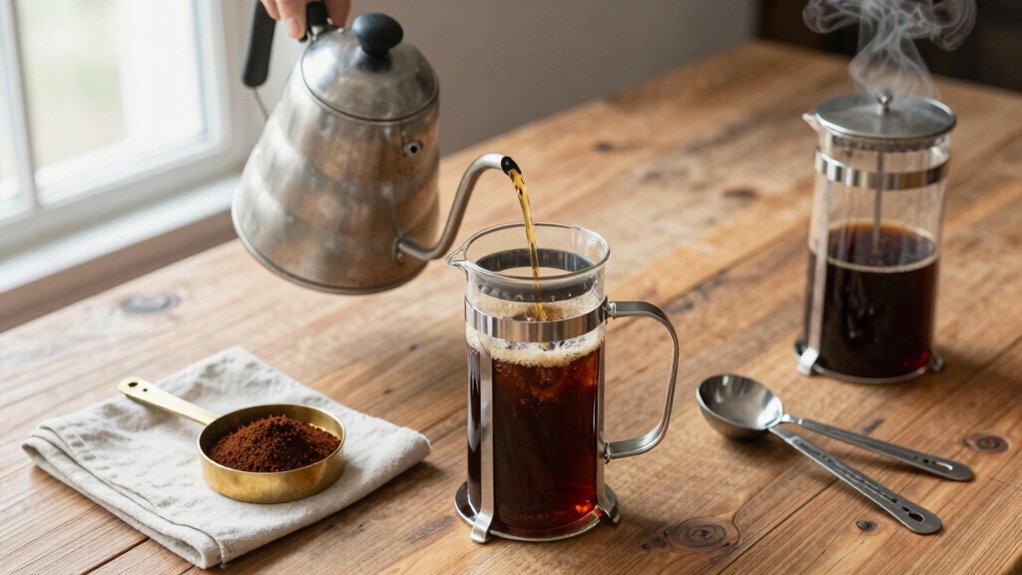
Use a coarse, even grind and 205–210°F water for a clean, full-bodied French press.
Aim for 3–4 minutes total steep for medium; 4–5 minutes for coarser or uneven grounds.
Avoid very fine grinds.
Pour gently to bloom 30–45 seconds, then continue with slow concentric pours to reach your water weight, watching for an even swell.
Preheat the carafe to preserve heat.
Keep this chart handy and you’ll find precise tweaks for every batch.
Quick Overview
- Use a coarse, even grind and brew 3:00–4:00 minutes for balanced extraction. Uneven coarse may extend to 5:00 minutes.
- Heat water to 205–210°F (96–99°C) and preheat the French press to minimize heat loss.
- Bloom grounds with a gentle pour for 30–45 seconds to degas and equalize saturation before continuing pours.
- After bloom, pour slowly in concentric circles to reach target water weight and avoid channeling.
- For multiple carafes, stagger pours 15–20 seconds; however, keep each carafe’s 30–45 second bloom identical for consistency.
Press Time vs Grind Size
Wondering how grind size changes the clock on your French press? You’ll feel coarse grounds resist the plunge, their rough, salt-like granules slowing water flow and lengthening steep time.
With a consistent grind distribution, you get even extraction; uneven particles deliver sour notes or over-extracted bitterness. Choose coarse for the classic 4-minute steep: particles stay bulky, sediment’s reduced, and the steel mesh won’t suffer filter clogging. If you dial finer, shorten to about 3–4 minutes and expect faster extraction but higher risk of muddiness and clogging.
Trust texture: large, individual crumbs mean fuller body; smaller, sand-like bits mean brightness and potential mess. Adjust time to match grind so aroma, mouthfeel, and clarity balance perfectly.
| Grind | Brew Time |
|---|---|
| Coarse | 4:00 min |
| Coarse (uneven) | 4:00–5:00 min |
| Medium | 3:00–4:00 min |
| Fine | Not recommended |
Water Temperature Guideline
How hot should your water be? You want 205°–210°F (96°–99°C): water that shimmers, releasing fragrant oils and lifting sweetness without scorching. Temperature control matters; it steadies extraction and highlights nuanced aromas. Heat the kettle, rinse the press so temperature loss is minimal, and pour with confidence.
Aim for 205°–210°F for consistent extraction and body. Preheat your French press to reduce heat drop on contact. Beware too-hot water; it amplifies bitterness and flattens floral notes. Too-cool water under-extracts, leaving acidity and thinness.
Remember grind impact: coarser grounds need full temperature to balance extraction. You’ll sense clarity, weight, and the true character of your coffee when you nail temperature control.
Blooming Step Timing
Start your bloom with a gentle, even pour and watch the grounds puff and release a fragrant, chocolatey foam. Aim for 30–45 seconds for most doses, but adjust by grind and roast. If your water’s at the hotter end (205–210°F), the bloom will be brisker and shorter. Coarser grinds or multiple-press batches may need a longer, steadier bloom to fully degas.
When brewing several presses back-to-back, time your pours so each batch gets the same bloom window and you don’t rush extraction.
Bloom Duration Guidelines
When should you let the coffee bloom, and for how long? You’ll wet the grounds immediately after dosing, watching the bed swell and effervesce. A 30–45 second bloom duration is ideal for most French press recipes. That short hiss and rising foam release trapped CO2; this smooths agitation and promotes even water contact. Aim for the lower end with very fresh roasts; aim longer for darker or degassed beans. This measured pause sharpens extraction clarity without cooling the vessel. You’ll smell sweetness deepen and see the surface calm before you stir.
Resume pouring gently, keeping total brew time in mind. Consistent bloom timing yields predictable body and flavor balance in your final cup.
Water Temperature Effects
Why does water temperature matter during the bloom? You’ll feel the hiss and see rapid bubbling when water temperature’s right. Hot water (96–99°C) wakes trapped gases fast; this causes a vigorous, fragrant bloom. Your nose catches bright citrus or chocolate notes as CO2 escapes, and that initial agitation primes uniform extraction.
Keep bloom duration short and deliberate: usually 30–45 seconds. This allows grounds to release gas without over-extracting bitter compounds. If water’s too cool, the bloom’s sluggish, under-extracting acids and flattening flavor. If water is too hot, it accelerates extraction and risks harshness.
Match your pour speed and bloom duration to the temperature you use; you’ll control aroma, clarity, and body from the very first wetting of the puck.
Coffee Grind Influence
How quickly your bloom unfurls depends a lot on grind size, so pay attention to texture and timing as you wet the bed. You’ll see tiny bubbles rise faster with a finer edge to your coarse grind; with a truly coarse, sea-salt texture, the bloom is slower and gentler.
Aim for even grind consistency so water meets similar particle surfaces at once, avoiding sudden over- or under-extraction pockets. Watch the surface: a steady, uniform swell means your grind distribution is good. If channels form or you notice rapid collapse, adjust coarseness or redistribute grounds before plunging.
Use a spoon or gentle swirl at 30 seconds to settle uneven areas. Then let immersion proceed to your target brew time.
Pouring Technique Tips
Curious about timing the bloom? You’ll watch the surface swell as trapped gases escape. Pour just enough hot water to wet the grounds and note how the bloom timing unfolds. Aim for a quick, 30–45 second bloom: long enough for fizz and scent to peak but short enough to avoid over-extraction. Use a circular pour, steady and silent, letting water sink through coarse islands of grounds so you feel the grind texture influence the flow.
After the bloom, continue pouring in slow, concentric motions to reach your target water weight. Keep the stream thin to avoid channeling. You’ll hear subtler gurgles and smell caramel notes when bloom timing and pour speed are balanced. This yields a cleaner, fuller cup.
Timing For Multiple Batches
When brewing multiple French press batches back-to-back, stagger your bloom so each carafe gets a fresh, 30–45 second fizz. Start the bloom for the first batch; wait about 15–20 seconds; then wet the next, and continue at that interval so you’re never letting grounds sit unbloomed or over-gassing. You’ll hear and see the CO2 release: tiny, lively bubbles; and smell bright floral notes.
Keep timing consistency: use a timer or metronome rhythm to maintain identical bloom windows as you scale production. For batch scaling, adjust your pour volume but preserve that 30–45 second active bloom per carafe. This precise, sensory-first approach prevents uneven extraction, preserves clarity and aroma, and makes successive presses taste uniform.
Frequently Asked Questions
How Do I Prevent Coffee Grounds From Escaping the Filter?
Use a coarser grind and plunge slowly to stop grounds escaping the filter. You’re preventing grounds by rinsing and pre-heating the mesh; ensuring a snug seal; and pouring steadily. For filter tips, double-screen or hold a paper towel over the spout briefly.
Try second brew ideas like a quick rebloom to settle fines. Adopt gentle cleaning methods: flush the screens and boil them occasionally to keep filtration precise and sensory clarity high.
Can I Reuse French Press Grounds for a Second Brew?
Yes, you can reuse grounds for a second brew; however, expect a weaker, flatter cup. You’ll notice dulled aroma, muted acidity, and a thinner mouthfeel as most oils and solubles were extracted.
To get the best of a second brew, grind a touch coarser initially. Steep a bit longer, and use hotter water. Treat it as a lighter, tea-like sip rather than a full-bodied espresso substitute.
What’s the Best Way to Clean My French Press?
You’ll rinse and scrub it after each use: dump grounds, rinse with hot water, and use a soft brush on the mesh to remove oils and bits.
Weekly, disassemble the plunger for deep cleaning with warm soapy water. Pay attention to the seal and screen.
Every month, descale using a vinegar solution if your water quality is hard. Dry fully before reassembling so the metal doesn’t tarnish or smell.
Is Paper-Filtering French Press Coffee Possible?
Yes, is paper filtering french press? You can, but it changes the experience.
You’ll plunge, then pour through a paper filter or use a paper-lined pour-over cone to catch fines and oil. Your cup will taste cleaner, brighter, and less gritty; mouthfeel thins and delicate aromatics pop. You’ll lose some body and buttery texture. So, if you love richness, don’t expect the same heavy, velvety sip.
How Long Can Brewed French Press Coffee Be Stored?
You can store brewed French press coffee for about 12–24 hours; though your ideal freshness window is the first 30–60 minutes. You’ll notice bright aromatics and clarity initially. After an hour, it dulls; by 12–24 hours, it tastes stale, flat, and oxidized.
If you keep it in an airtight thermos, you’ll preserve warmth and some flavor for longer. However, don’t expect the vibrant, just-brewed sensory experience.
Conclusion
You’ve dialed in your press: the coarse grind buzzes with floral aromatics, the 93°C water unlocks sweetness, and the first gentle bloom releases a sharp citrus brightness.
As you pour in measured spirals, the surface ripples, then stills into a glossy, fragrant mirror. Timing each press and batch keeps bitterness at bay and body plush.
Trust your senses—scent, sight, and taste—to tweak grind, heat, and pour until the cup sings.