
Home Coffee Roasting Basics
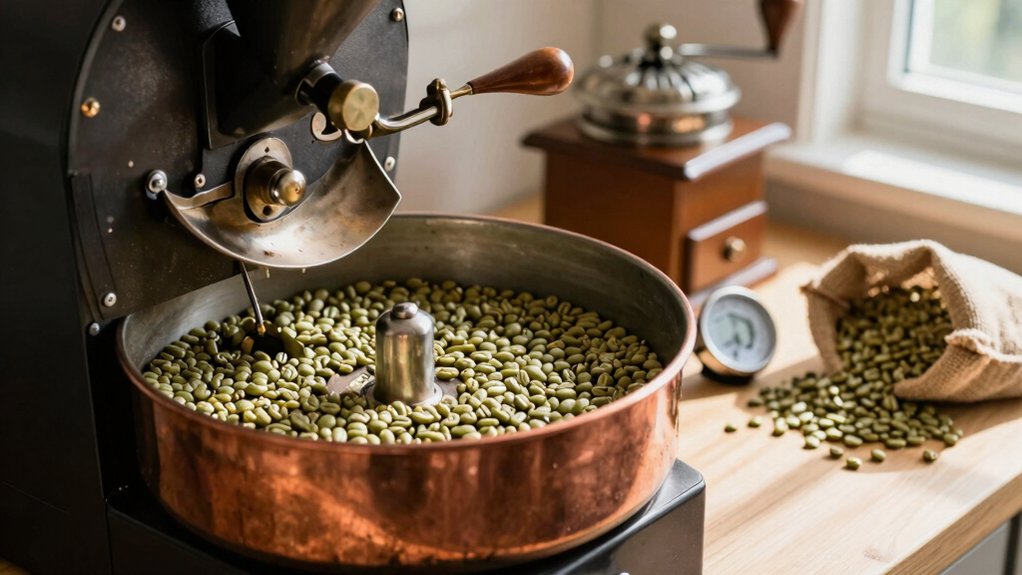
You’ll control roast time and temperature to steer acidity, sweetness, and body. Monitor bean moisture (yellowing ~327°F) and first crack (~400°F) as key decision points. Preheat and match batch size to your roaster to manage rate of rise. Then log charge weight and post-roast loss for moisture tracking.
Collect chaff in sealed containers to reduce fire risk and compost or mulch it. Follow these steps and you’ll unlock more origin-specific flavor guidance.
Quick Overview
- Preheat your roaster and charge with a consistent batch weight to stabilize roast environment and rate of rise.
- Watch bean color and temperature: yellowing (~327°F) signals moisture loss. First crack (~400°F) is the major decision point.
- Reduce heat slightly before first crack and adjust development time to preserve desired acidity, sweetness, or body.
- Tare and record green and roasted bean weights to calculate moisture loss and improve consistency across batches.
- Collect and empty chaff securely after each batch. Store or compost it safely to reduce fire risk and off-flavors.
Roast Time vs Temperature Chart
How do temperature and time map onto the flavors you want? You track roast time against a temperature chart to steer acidity, sweetness, and body. Monitor bean moisture early: yellowing around 327°F signals moisture loss. The first crack near 400°F is your decision point. Reduce power around 150°C; then taper before first crack to control development.
| Stage | Temp (°F) | Time (min) |
|---|---|---|
| Yellowing | 327 | ~6:00 |
| Approaching 1st crack | 380–400 | 7–11 |
| Light roast finish | 415 | 7–9 |
Use preheat and batch-size adjustments so rate of rise and development time match origin characteristics. Precise timing preserves origin fruitiness or drives bittersweet darker notes.
Bean Moisture and Weight Checklist
Tracking time and temperature tells you when to make flavor decisions, but measuring bean moisture and weight gives you the baseline those decisions rely on. You’ll use a simple weight checklist before each batch: tare a precise scale, record green bean mass, and note intended charge weight. Bean moisture varies by origin; higher moisture content slows heat penetration and alters roast curves. Therefore, log moisture readings when possible.
Treat moisture content as a key roasting variable alongside time and temp. Adjust heat and airflow for wetter lots to avoid scorching.
- Tare scale and record green weight.
- Measure post-roast weight loss for moisture estimate.
- Log moisture content and origin.
- Adjust roasting variables per checklist data.
Chaff Management and Disposal
Chaff is the papery skin stripped from origin beans during roast; it can tell you about bean age and processing. You’ll want a reliable collection method: sealed trays, vacuum ports, or capture bags. Loose chaff raises a fire risk and makes cleanup harder.
Consider composting or municipal yard-waste for disposal. Wipe or vacuum your roaster after each session to protect airflow and flavor integrity.
What Is Chaff
Anyone who roasts at home will notice a papery hull, light, dry, and flaky, that separates from the bean as it expands. This is chaff, the thin skin and silverskin shed during roasting. You should recognize chaff’s origins: it’s botanical residue from processing and varies by cultivar, altitude, and milling method. This variation affects aroma and cleanliness during roast.
Chaff ecology considers how that delicate material interacts with air, heat, and your workspace. Its low mass ignites easily and traps oils that carry origin-driven volatile compounds. Chaff ethics asks you to manage disposal responsibly. Avoid open burning and choose composting or sealed waste to preserve neighborhood air quality and retain trace flavor molecules from single-origin lots.
Handle it promptly; it influences both safety and sensory integrity.
Chaff Collection Methods
Why manage chaff carefully? You’ll protect roast clarity and preserve origin-specific flavors by removing the papery husk promptly. Use targeted chaff collection: attach a fine-mesh tray or dedicated chaff collector to your roaster, or set up a small cyclone or vacuum system positioned to catch flakes without disturbing airflow.
Empty collectors between batches to avoid stale smoke transfer that masks delicate acidity or floral notes. For disposal methods, bag chaff dry for composting; its carbon-rich fibers enhance soil or seal it for municipal green waste. Don’t mix chaff with roasted-bean waste; contamination alters flavor and attracts pests.
Keep records of collection technique and disposal method by origin and roast level so you can correlate chaff handling with cup quality.
Safety And Fire Risk
Because chaff is lightweight and highly combustible, you need strict handling and disposal routines to prevent fires and protect the flavor integrity of your roast. Treat chaff as an active fire risk: collect it in metal or tightly sealed non-combustible containers, empty them frequently, and keep them away from heat sources and sunlight.
Implement clear safety protocols. Metal lids, spark-resistant brushes, and a dedicated broom for chaff keep contamination and ignition points low. When roasting, monitor ventilation and never leave equipment unattended. Residual hot embers in chaff can smolder after you stop.
Document your routine and inspect collection areas for char or heat buildup. These disciplined steps protect your workspace, preserve origin-driven flavor nuances, and reduce the chance of an avoidable fire.
Eco-Friendly Disposal Options
Start by treating chaff as a resource, not just waste: its light, fibrous nature makes it useful for composting, mulch, and as a carbon-rich addition to garden beds when mixed with nitrogen-rich materials. You’ll sort chaff after each roast, keeping it dry to prevent mold and odor that can mask bean-origin aromas.
For eco friendly disposal, layer chaff with green waste or coffee grounds to balance C:N ratio; turn the pile weekly to accelerate breakdown. If you garden, use aged chaff as mulch around acid-loving plants, mindful of residual oils from darker roasts.
For sustainable disposal without a garden, offer chaff to community composts or use it in vermicomposting: worms help convert fibrous chaff into nutrient-dense castings that preserve terroir-sensitive flavor notes in future coffee-growing soil amendments.
Keeping Equipment Clean
When you finish a roast, clear chaff promptly and keep surfaces free of oily residue so equipment stays reliable and bean flavors remain true to origin. You’ll empty chaff collectors after every batch, wipe trays with a lint-free cloth, and brush vents to prevent buildup that alters airflow and roast consistency.
Store sieves and cooling trays dry to avoid rancidity. Dispose chaff responsibly: compost it or use as mulch. Avoid indoor bins that ferment oils and mask origin notes. Regular cleaning is part of careful calibration; a clean system gives repeatable heat transfer and consistent sensory results.
Schedule maintenance checks and document equipment calibration steps so your roast profile reflects bean provenance, not grime or drift.
Frequently Asked Questions
How Long Can Roasted Coffee Be Stored Before Flavor Degrades?
You’ll keep peak roast freshness about 1–2 weeks. Storing flavor stays strong for up to a month if you seal and protect against light, heat, and oxygen. For best flavor-centric results, rest beans 12–48 hours post-roast. Then use within two weeks for origin-specific clarity; beyond a month you’ll notice muted acidity and lost aromatics.
Freeze only long-term portions in airtight bags. Thaw whole-bean before grinding to preserve roast freshness.
Can I Roast Different Origins Together in One Batch?
Yes, you can roast different origins together, but you’ll need careful batch fusion planning. Match beans by density, size, and desired roast level so heat development and first crack timing align.
You’ll monitor temperature and airflow closely; adjusting power reductions to balance rate-of-rise is essential. Done precisely, roasting origins together yields harmonious, flavor-centric blends. Done carelessly, one origin can dominate or underdevelop, spoiling the final cup.
Is Home-Roasted Coffee Safe for People With Nut Allergies?
Yes, is home roasted safe? Generally, yes, but you’ll need nut allergy considerations. You control origins and equipment, so avoid cross-contact by cleaning grinders, storage, and roasting surfaces thoroughly.
Roast single-origin batches if you’re concerned about trace contamination; label jars and prevent shared tools. Flavor-wise, note that nut-like tasting notes aren’t actual nuts: they’re roast-derived compounds. If reactions are severe, consult an allergist before tasting.
How Do I Troubleshoot a Smoky Roast in a Well-Ventilated Space?
Check roast speed and airflow first: Smoky roast often means too-fast heat or low circulation. For smoke troubleshooting, slow your roast, lower initial heat, and increase fan gradually so chaff clears without cooling beans.
Use ventilation tips: Run an extractor fan, open windows, or roast outdoors. Position a small cooling fan and sieve immediately after roast.
Note bean origin and development: Darker, oily beans produce more smoke, so adjust roast degree accordingly.
Can I Reuse Chaff for Compost or Gardening Purposes?
Yes, you can reuse chaff in compost gardening. You’ll add light, carbon-rich material that breaks down well. Mix chaff with nitrogen sources (kitchen scraps, grass clippings) to balance the pile.
Be origin-aware: fresh chaff from your roasts is fine. However, avoid oily, over-roasted residues that slow decomposition or smell. Monitor moisture and turn regularly to maintain aeration.
Properly composted chaff enhances soil structure and subtle organic flavors in garden beds.
Conclusion
You’ve learned how roast time and temperature shape origin flavors, why bean moisture and weight matter, and how chaff affects taste and safety. Keep chaff contained, dispose of it responsibly, and clean equipment after each batch to protect delicate origin notes and prevent fires.
Precision in timing, temperature, and weight preserves terroir; routine maintenance and eco-friendly disposal keep your roaster safe and your coffee true to its provenance and flavor.