How to Use a Coffee Grounds Knock Box Like a Home Barista
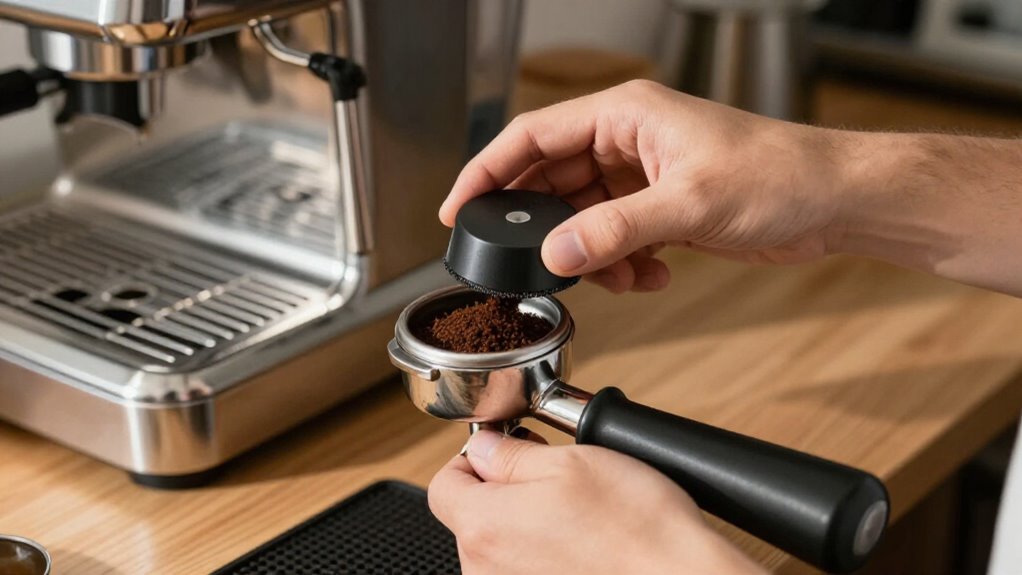
Set up a stable rubber-lined knock box beside your espresso machine, with its opening unobstructed, and test it with a gentle push.
Hold the portafilter at a slight angle, position the basket tip over the padded bar, and tap lightly, then slightly harder, then firmly, pausing 1–2 seconds between taps.
Check the basket; if the puck sticks, shift it slightly and repeat once.
Rinse the bar, wipe the rim, and explore these cleanup tips for more control.
Target: Three-Tap Puck Release
Consistency makes a three-tap puck release clean and repeatable. Tap the portafilter tip onto the padded knock bar, not the bin rim, so the puck drops straight into the container. Position the basket near the bar’s off-center point, often about two-thirds across the bin, to reduce bouncing and splitting.
Use a measured sequence: tap lightly, then slightly firmer, and finish with a solid tap. This progression usually releases a stubborn or baked-in puck without hard strike.
If the puck resists, don’t hit your counter. Shift the portafilter a few millimeters and repeat the same three-tap pattern on the padded bar. After the third tap, look inside the basket and confirm it’s empty. That quick check prevents leftover grounds from disrupting your next shot.
Rubber-Lined Knock Box Setup
A rubber-lined knock box cushions each portafilter strike, reduces noise, and helps prevent damage to your tools and countertop. Choose a stable model with a food-safe silicone sleeve, secure knock bar, and effective anti-slip feet. Before use, seat the removable liner fully so gaps won’t trap grounds, then confirm the bar’s retention mechanism is engaged. Keep the box level and within easy reach, but leave your tamping area clear.
- Wash removable parts with hot water and mild detergent; follow dishwasher guidance.
- Air-dry the sleeve and bar completely to discourage mold and stale odors.
- Replace cracked rubber, worn pads, or loose hardware before continued use.
Match capacity to shot volume, from compact 0.5-liter boxes to larger models. Empty grounds and compost them when appropriate.
Step 1: Center Portafilter Above Box
Once the rubber liner and knock bar are seated, center the portafilter over the box opening and aim for a straight downward drop. If the bar sits off-center, align the basket with its intended contact area rather than striking the middle. Hold the portafilter level enough to keep drips and loose grounds within the opening.
Use your firm, controlled tap against the rubber-coated bar to release the puck quickly. Avoid excessive force or repeated side hits; those motions can bounce the portafilter, spread grounds, and leave buildup around the catch area. After the tap, glance inside the box to confirm the puck has fully released. If it hasn’t, give one deliberate follow-up tap, then wipe the basket before preparing your next shot.
Step 2: Secure Box on Counter
Before your first shot, place the knock box on a flat, non-slip surface beside the espresso machine so you can dispose of pucks without reaching across the counter. Test the box with a gentle push before you start brewing. It shouldn’t slide, tip, or wobble when you use it, especially on a polished countertop.
Choose a model with rubber feet or a grippy base to hold its position and protect the counter. Keep the opening unobstructed and leave enough clearance around it for your normal workflow. A wider opening catches stray drips and grounds instead of letting them land nearby. Match the bin’s capacity to your routine: a 1–3.5-liter model won’t need constant emptying during several drinks, but empty it daily or when full.
Step 3: Angle the Portafilter Slightly
Hold the portafilter at a slight angle so the puck travels straight toward the rubber-coated knock bar instead of landing against the bin’s sides.
Keep the basket tilted consistently from shot to shot. This angle guides the spent puck into the grounds catch rather than letting it scatter inside the box. It also helps loose grounds and stray drips fall through a narrower opening, so your counter stays cleaner.
After the puck drops, straighten the portafilter promptly. That quick reset keeps your workflow smooth and positions the tool for the next extraction. If the puck veers off course, adjust the angle slightly rather than forcing the motion.
A stable, repeatable tilt makes disposal more predictable and reduces grounds buildup along the bin’s walls. Practice the movement slowly at first, then use it naturally as you move between shots. You’ll create a cleaner, faster routine without crowding your workspace.
Step 4: Strike Padded Bar Squarely
For a clean release, tap the portafilter’s basket end squarely against the rubber-padded bar rather than the bin’s rim. Aim the basket’s tip at the center of the cushion, using a firm, controlled motion. The padding absorbs shock, reducing vibration in your wrist and preventing the counter from wobbling. Don’t strike the handle, which can loosen or damage the basket assembly.
If the bar sits off-center, as it does on some models, direct the basket toward its position, often about two-thirds across the opening. A centered contact keeps the bar stable and helps the puck drop straight into the bin instead of splintering and scattering grounds.
Repeat a square, consistent tap as needed until the puck ejects completely. This keeps disposal neat and predictable.
Step 5: Pause Between Each Tap
After each tap, pause for about one to two seconds so the puck, loose grounds, and drips can settle into the knock box. This brief wait gives the spent puck time to release fully and prevents you from striking again too soon. Use a light, controlled touch rather than a rapid series of hits. Repeated impacts can split the puck and scatter grounds around the bar or insert.
If the puck remains in the basket, assess it during the pause, then give one more measured tap instead of escalating force.
Keep this rhythm consistent when you’re preparing several drinks. A short pause won’t slow your workflow; it keeps disposal clean and predictable. You’ll reduce buildup around the knock bar. During service, disposal stays cleaner.
Step 6: Rinse the Removable Knock Bar
Once the puck has settled, rinse the removable knock bar so moist grounds don’t collect in the gap between the bar and the knock box walls. Pull it out after each use, then hold it under warm running water. Wipe or rinse until no coffee residue remains.
If grounds cling to the rubber pad or knock surface, loosen them with a small brush or sponge, paying attention to crevices. Use gentle pressure to avoid unnecessary wear on the bar.
Let the bar dry completely before you put it back, because trapped moisture can create lingering coffee odors. Empty the catch bin as needed, and rinse the bar again whenever you clean the box interior. Reinsert it when dry so the knock box stays fresh.
Inspect Puck Integrity
Inspect each spent puck for dryness and cohesion: it should release as a compact puck rather than crumble into loose grounds. A slightly wet or mushy puck can create mess and signals that you should review your extraction setup. Check the puck’s surface for even integrity, too. If channeling occurred, weak areas may break apart during the knock and scatter grounds around the box.
After a firm tap, look at the puck on the bar area. It should remain intact, without major splitting; a centered bar can contribute to fractures and debris. If pucks degrade or leave residue, pause and reassess your grind, dose, distribution, and tamp. Consistent preparation should produce firm, cohesive pucks that knock out cleanly and keep the workflow tidy.
Puck Sticks to Portafilter
If the puck sticks to the portafilter, let it set briefly, then tap only the portafilter tip against the rubber-coated knock bar. Use a firm, single motion, not repeated scraping. The bar’s padded, off-center design helps the puck drop straight into the bin instead of splitting across the basket. Don’t rest the portafilter on a hard edge while waiting; the shock-absorbing bar prevents residue buildup and protects the basket.
| Problem | Adjustment | Benefit |
|---|---|---|
| Puck clings | Wait briefly | Easier release |
| Grounds smear | Strike once | Cleaner disposal |
If it still sticks, try the extra-hard-whack test after allowing the puck to dry for about 10 minutes. Check the removable insert or bar: trapped grounds in the crease can worsen adhesion. Keep the knock box clean so release stays controlled.
Wipe Rim After Emptying
After the puck drops, wipe the knock box’s rim and rubber-coated bar with a damp cloth or paper towel. Focus on the gap between the catch bin wall and rubber surface, where grounds often dry and stick. If your model has a removable insert or bar, take it out and wipe its underside and the rim, too.
Let the cleaned rim air-dry for 30–60 seconds before you place the portafilter on the counter. Otherwise, damp grounds may smear across your workspace. Make wiping part of your reset routine after every emptying. You’ll prevent buildup, keep the next puck from contacting old residue, and make future knock-box cleaning easier. A clean rim also helps your setup stay orderly and ready for the next shot.
Conclusion
With a little practice, you’ll empty your portafilter cleanly and consistently. Set your rubber-lined knock box securely, center the basket over the removable bar, and tap three times with controlled force.
A slight angle helps release the puck without damaging the rim. Check the puck’s shape for clues about extraction, then rinse the bar and wipe the portafilter rim. These simple habits keep your station tidy, protect your equipment, and make every next shot easier.