
Coffee Flavor Notes and Tasting Chart for Curious Coffee Drinkers
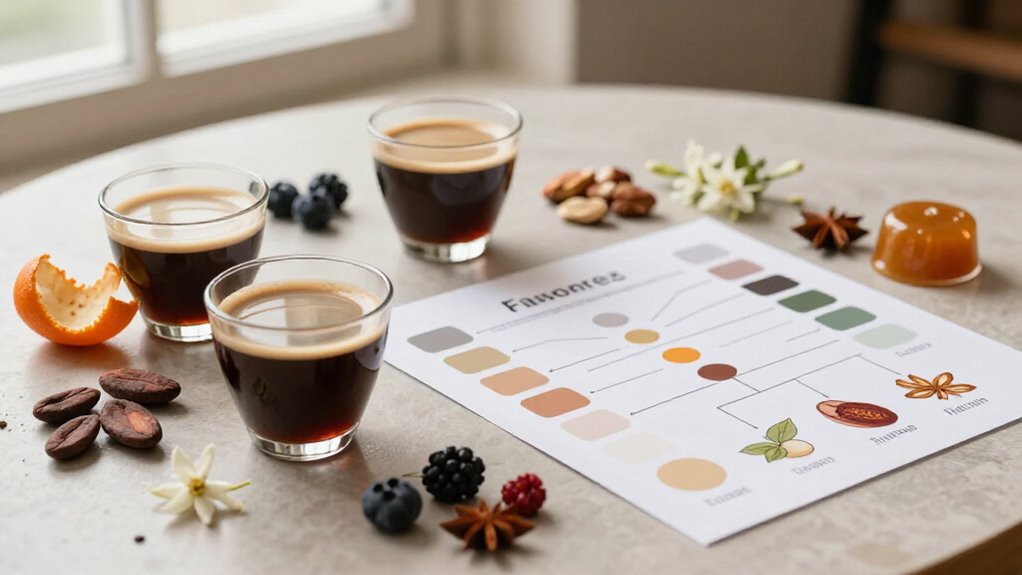
Use a 0-10 chart to identify coffee’s citrus, chocolate, and nutty notes.
Start at zero, taste side by side, and compare flavors with lemon peel, cocoa, and nuts.
Separate aroma, acidity, body, and aftertaste: citrus often signals bright acidity, while chocolate and nuts suggest sweetness and richness.
Pour-over highlights citrus; French press or cold brew emphasizes body.
Watch for vinegar-like, dirty, or moldy flavors, which can indicate faulty fermentation.
You’ll find scoring guidance below.
Spot Citrus, Chocolate, Nutty
When you taste coffee, look for citrus as bright, clean acidity: such as lemon zest, grapefruit, orange peel, or lime, while chocolate suggests a smooth cocoa or milk-chocolate sweetness, and nutty points to roasted almond, hazelnut, or similar flavors. These notes aren’t added ingredients; they describe what you perceive.
Use the flavor wheel to move from families to clues. Citrus often appears in high-elevation washed coffees from Ethiopia or Kenya, while chocolate suits medium-roasted coffees, including Brazilian examples.
Nutty and cocoa impressions frequently develop in medium roasts.
Your brewing choices can shift which character you notice. Pour-over may clarify citrus, while espresso can emphasize chocolate and roasted-nut qualities. Compare coffees side by side, and taste reference foods to connect each descriptor with a flavor.
Flavor Note Intensity Reference
Once you can spot citrus, chocolate, and nutty notes, you’ll want to assess how strongly each one appears. Use an intensity scale to turn impressions into consistent comparisons.
A 0-10 scale works well for home tasting, while panels may use 0-100 for finer analysis. Pair numbers with labels:
| Score | Meaning |
|---|---|
| 0 | None detected |
| 1-20 | Low |
| 21-60 | Medium |
| 61-100 | High to very high |
Start with zero when you can’t find a note. Choose low when it’s noticeable but minor, medium when it clearly contributes, and high when it dominates the cup. Taste coffees side by side, ideally blind, and record the scale each time. Reference foods such as citrus peel, cocoa, and nuts can help you calibrate. Your scores aren’t grades; they’re a practical vocabulary.
Aroma, Acidity, and Body
Aroma, acidity, and body describe different parts of your coffee experience: aroma captures what you smell first, acidity adds a bright lift such as citrus or lime, and body describes the drink’s weight and texture. Treat them as separate tasting axes, not one overall impression.
To evaluate aroma, pause before sipping and note its strength on the flavor wheel’s 1–15 intensity scale. Acidity often stands out in washed, lighter roasts, while higher heat can flatten delicate volatile compounds. For body, focus on how heavy, silky, or coating the coffee feels.
French press and cold brew usually pull more solids, creating fuller texture than clarity-focused methods. Taste slowly, score each quality independently, then move outward on the wheel and choose your clearest, most accurate descriptor.
Fruit Descriptor Progression
You’ll start with broad fresh-fruit impressions, then move outward on the flavor wheel to identify citrus, berry, stone fruit, tropical, or dried-fruit notes.
As you taste, you can compare each descriptor’s definition and intensity to refine your perception. Light, washed coffees may highlight citrus brightness, while processing and roast level shape the fruit character you notice.
Fresh Fruit Foundations
Start in the fruit lane near the center of the flavor wheel, where broad categories such as fruity, berries, or citrus establish the coffee’s general profile. From there, move outward through increasingly precise fruit descriptors. You might first identify berries, then narrow the impression to a reference such as blueberry.
Use the wheel’s intensity references, numbered 1 through 15, to compare the coffee with a standard reference. A low score suggests a subtle fruit impression, while a higher score signals greater prominence. Your result can reflect variety, origin, processing, roast, and brewing choices.
Natural processing often boosts fruitiness, while a clean, well-extracted cup makes individual notes easier to recognize. Taste deliberately, then consistently record the broad category and your closest specific match each time.
Citrus Flavor Notes
Once you’ve identified a coffee as broadly fruity, follow the wheel toward the sour-bright lane to pinpoint its citrus character. Begin at the center and move outward as your reference becomes more precise. A lemon-zest note often feels sparkly, especially in washed, high-elevation African coffees from Ethiopia, including Yirgacheffe, Sidamo, and Guji.
If the cup tastes juicy, clean, and subtly bitter, grapefruit may point toward a Kenyan coffee. If you notice a peel-like sweet-tart quality, consider orange peel; lime brings sharper, more mouth-puckering acidity.
Use the wheel’s 1–15 intensity range to match your cup with a citrus reference. Stop when the descriptor feels specific enough; moving farther outward isn’t always more accurate. Taste again as coffee cools; changing acidity can clarify your final choice.
Berry Flavor Descriptors
Use the wheel’s click-to-flavor-card references to calibrate your judgment. Each card defines its descriptor and provides an intensity score from 1–15, helping you compare your sample with a shared reference.
If you stop farther outward, you’ll usually reach a more precise berry type. Subtle acidity can connect berry impressions with neighboring fruit families, but let your cup—not expectation—guide the final note.
Stone Fruit Characteristics
After berry impressions, the fruity family also includes stone-fruit notes such as peach, apricot, cherry, and plum. As you taste, you’ll move from fruit toward specific Flavor Wheel tiers, then stop when one descriptor fits best. A ripe stone-fruit cup often feels juicy and sweet, with dessert-like aromas that may seem jammy.
Peach and apricot can suggest soft, rounded sweetness, while cherry and plum may bring brighter tang or deeper richness.
Processing helps shape this impression. Natural coffees often intensify stone-fruit character because fruit sugars and fermentation byproducts remain in contact with the beans during drying. Washed coffees usually present these notes more cleanly and distinctly, making the fruit seem brighter rather than heavy or fermented. Compare styles and note what your palate recognizes clearly.
Tropical And Dried Fruit
Use the wheel’s food references to compare intensity on its 1–15 scale. If the cup feels less juicy and more concentrated, move toward dried fruit descriptors.
Raisin, date, or prune-like impressions often taste jammy, deeper, and richer than fresh fruit. You don’t need to force a precise label: stop at any tier that feels accurate. Moving farther outward simply gives you more specific language and helps you avoid random tasting claims.
Pair Notes With Brewing
Pairing a coffee’s tasting notes with the right brew method can bring its best qualities forward. If you taste citrus, berry, or other bright notes, try a pour-over. Its clear cup and aromatic lift can make acidity feel pleasantly sparkly, helping delicate flavors stand out.
For chocolatey, caramelly, or smooth coffees, choose French press or espresso-style brewing. These methods can emphasize body, sweetness, and richness. When nutty or cocoa impressions dominate, French press or cold brew can bring a rounder mouthfeel and deeper profile.
Brewing changes extraction, so keep comparisons consistent: use the same grinder, grind size, water, dose, and recipe for each batch. That way, you’ll know whether a note comes from the coffee or your technique. Treat these pairings as starting points.
When Fermentation Tastes Off
When fermentation is working well, it can add fruit-forward complexity, but off fermentation tastes harsh, dirty, or tainted. You may notice unpleasant vinegar-like acidity or stinker notes instead of clean, bright citrus.
Winey or over-fermented character can slide into dirty, moldy, sour, or phenolic flavors.
Treat these sensations as defect signals, not adventurous fruit notes. Severe problems can follow agricultural over-blackening, when microorganisms create over-fermented pigment that carries into the cup.
During tasting, compare the impression with references and use the flavor wheel’s 1–15 intensity scale. A low score may indicate a mild, tolerable accent; a high score suggests a problem. Record the aroma, acidity, body, and aftertaste separately. If the cup tastes tainted or sour, don’t force a description: fermentation has gone off.
Ethiopian Washed Coffee Example
An Ethiopian washed coffee from regions such as Yirgacheffe, Sidamo, or Guji often presents a clear, bright cup with citrus and floral character. At high elevations above 1,800 meters, cherries mature slowly, helping develop dense beans with complex acids and sugars. In your cup, look for lemon zest: a clean, sharp, invigorating note.
You might also notice grapefruit-like acidity, juicy texture, and a comparatively dry finish.
Citrus may not appear immediately. As the coffee cools, pay attention to its sparkly, crisp impression, which signals bright acidity.
A light roast usually preserves the delicate volatile compounds behind these aromas, while a darker roast can flatten or burn off their brightness. Use a pour-over or cupping method to highlight clarity, then compare impressions with descriptors.
Correcting Stale Coffee Aromas
If your coffee smells papery, woody, or musty, its aromatics may have faded past their ideal flavor window. You’ll notice fruit, floral, or chocolate notes becoming muted rather than transforming into brighter flavors. Use the Flavor Wheel’s “Other” category to recognize these defect-leaning aromas.
To restore clarity, replace old coffee rather than brewing around staleness:
- Choose beans with a roast date.
- Store them sealed, cool, and away from light.
- Grind only what you’ll brew.
- Keep moisture, heat, and air away.
- Compare fresh beans with the old batch.
Stronger sour, fermented, or vinegar-like impressions can point to poor storage or handling, not lemon-like citric brightness. Staleness differs from defects such as FULL BLACK, though both can create dirty, moldy, or phenolic impressions.
Fresh beans reveal intended notes.
Cupping Form Scoring Guide
A cupping form helps you score aroma, flavor, aftertaste, acidity, body, and balance consistently instead of relying on vague impressions. Use the sheet’s scale, whether 0–10 or 0–100, and score each attribute against its “best” standard. Higher points mean greater intensity and quality within that category.
- Smell the dry and wet grounds, then rate aroma.
- Slurp to spread coffee across your palate and assess flavor.
- Note lingering character, brightness, weight, sweetness, and harmony.
- Record descriptors, using the Flavor Wheel to name categories and intensity.
- Mark faults, such as sour, moldy, phenolic, dirty, fermented, or stinker notes.
Review your totals. A low score can show muted acidity, weak sweetness, rough body, or harsh roast character. Change one brewing variable at a time, then cup again.
Conclusion
Use this chart as a starting point, not a set of rigid rules. As you taste, note each coffee’s aroma, acidity, body, and dominant flavors, then compare your impressions with the reference points. You’ll improve faster by brewing consistently, tasting thoughtfully, and recording what you find.
If a cup tastes stale or fermented, investigate freshness, processing, and technique. With practice, you’ll recognize clearer patterns and describe coffee with greater confidence and curiosity over time.