Glass vs Stainless Steel Replacement Carafes: Which Is Best?
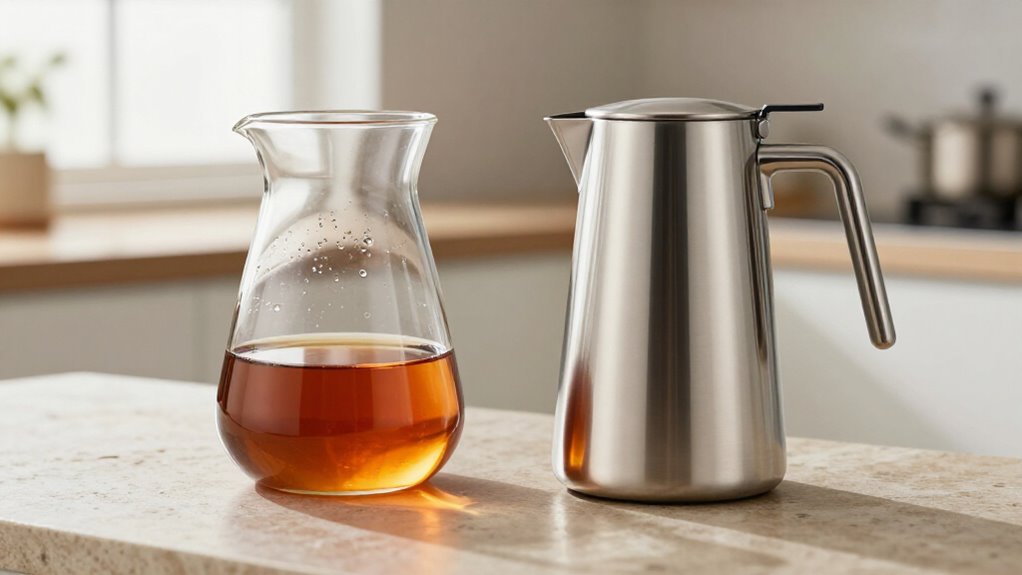
Choose stainless steel if you’ll need longer heat retention, fewer breakage risks, and safer daily use; vacuum insulation keeps coffee hot without a hot plate. Choose glass if you value visibility, an initially hotter pour, and monitoring, but expect faster cooling and greater cracking risk.
Before buying, confirm capacity, height, lid fit, spout control, and pause-and-serve compatibility with your brewer.
Check dishwasher guidance and clean coffee oils promptly.
More details can guide your choice.
Heat Retention and Breakage
When choosing between replacement carafes, stainless steel generally delivers better heat retention and impact resistance. Choose stainless when you need coffee to stay warm for hours; its insulated construction slows heat loss and shrugs off drops, though dents can occur. Choose glass for a hotter initial pour and easy visual monitoring, but expect faster cooling and greater breakage risk.
Borosilicate glass handles temperature changes better than ordinary glass, yet it can still crack or shatter after impact. Check compatibility before ordering: replacement shapes, lids, and seals must match your brewer.
| Material | Heat retention | Breakage profile |
|---|---|---|
| Stainless steel | Longer | Dent-resistant |
| Glass | Shorter | Shatter-prone |
For your setting, prioritize service duration and handling conditions. Stainless suits offices, transport, and heavy use; glass fits short serving windows where presentation matters. Inspect options regularly, and replace chipped, cracked, or damaged components.
Hot Plate, Vacuum Walls
A glass carafe on a drip maker relies on a hot plate to cycle heat, keeping coffee warm but potentially cooking its flavors into a burnt last cup. Glass can deliver a hotter initial pour, and Consumer Reports found only about 2.5°F variation after one hour, yet continued heating can degrade flavor.
You can’t overlook the plate’s ongoing direct heat and potential burn risk.
A vacuum-insulated stainless-steel carafe uses double-wall construction to limit heat transfer through conduction and convection. Consumer Reports measured about a 4°F drop after one hour, but the coffee avoids direct warming and stays hot longer. Preheat it with hot tap water before brewing; this helps the walls trap more heat. Choose glass for short service or stainless for longer holding.
Spout Control and Drip Prevention
Although material affects handling, spout geometry and lid fit largely determine whether a replacement carafe pours cleanly. As you compare glass and stainless models, examine the lip, valve, and gasket rather than assuming either material prevents drips. Stainless designs may reduce residue at the edge, yet they can dribble when you tilt them too quickly.
Glass offers clear flow visibility, but its spout still needs precise shaping and a snug lid.
- Choose a narrow, defined lip for a controlled stream.
- Check that the lid seats evenly around the spout.
- Pour with a gradual angle, not a sudden high tilt.
- Look for gaps that could leak around a valve.
- Keep the stream steady to limit overflow and cling.
A well-fitted replacement should stop flow cleanly when you level it. A fitted replacement should stop flow cleanly.
Pause-and-Serve Convenience
Clean pouring is only part of the serving experience; pause-and-serve convenience depends on how precisely the replacement carafe fits your brewer. For pause-and-serve models, you need more than matching overall volume: the replacement must include a lid and stop or activation design that matches the brewer’s mechanism. Glass and stainless bodies generally perform alike here, but a thermal lid may be harder to position if it doesn’t seat or lock like the original.
If your brewer uses a valve triggered when you lift the carafe, confirm it clears the brew area during serving. Measure height and geometry beneath the basket so the pause cutoff engages correctly, without dribbling when you briefly remove it. Choose a model that mates precisely with your pause-and-serve valve.
Capacity and Lid Fit
Capacity labels can be misleading because drip makers typically count each “cup” as about 5 fluid ounces, so a 12-cup carafe holds roughly 60 ounces rather than 96. Before you order, measure the clearance beneath your filter basket; height matters as much as volume. A replacement can hold the correct amount yet fail if it crowds the brewer or sits too low. Glass and stainless options may share capacity labels, but neither is automatically universal.
- A 5-cup replacement should hold about 25 ounces, while a 12-cup model holds roughly 60.
- Compare the carafe’s height and width with the brewer’s available space.
- Match the lid geometry to your machine’s pause-and-serve and drip-stopper mechanism.
- Check that the lid seals during brewing and supports controlled pouring.
- Confirm both size and lid style for your exact brewer model before purchasing with confidence.
Replacement Lids and Warranty
A replacement lid must match your brewer’s pause-and-serve mechanism, seal, and carafe design; otherwise, it may block brewing, leak, or prevent proper heat retention.
For glass, verify the lid’s diameter, hinge, and stopper against your model. Stainless thermal carafes need lids engineered for their insulated walls and vacuum or sealing structure, so a carafe-and-lid set often offers better fit than a generic part.
If you’re under warranty, use an OEM lid or confirm written compatibility with your exact brewer before ordering. Manufacturers may cover the carafe body but exclude lids, seals, or damage caused by nonapproved replacements.
Don’t substitute a random lid: limited access openings can trap residue and complicate maintenance, while an incorrect seal can compromise spill protection. Review warranty terms before purchase.
Dishwasher Compatibility and Staining
Dishwasher compatibility varies by model, so check the carafe’s label and manual before loading either glass or stainless steel. If approved, follow instructions to protect finishes, lids, and seals. Otherwise, wash by hand; coffee oils can leave residue that makes brews taste acidic or sour.
- Stainless steel: An soak with a dishwasher tablet and hot water can loosen stains; rinse thoroughly.
- Glass: Mix vinegar, dish soap, and warm water, then wash to reduce discoloration.
- Either material: Don’t assume dishwasher-safe means stain-proof.
- Narrow lid openings: Use a bottle scrubber brush to reach coffee residue.
- Daily care: Rinse, then clean with dish soap before oils dry.
Glass lets you see buildup, while stainless hides it and may need inspection. Retire chipped or cracked glass for safety.
Ergonomic Grip and Balance
When you compare carafes, assess whether the handle stays comfortable and secure when full. Glass models often feel lighter and more balanced during pouring, while heavier stainless-steel designs can place more strain on your wrist.
You’ll also want to check the lid and spout, since their design affects flow control, dribbling, and compatibility with pause-and-serve brewing.
Comfortable Handle Design
Handle design affects how securely and comfortably you can pour, especially when the carafe is full. As you compare replacements, consider grip shape, handle clearance, and reach rather than appearance alone. Glass models often feel less strain-inducing because they’re lighter, while insulated stainless models may require a broader, more supportive handle.
- You can wrap your fingers around a contoured grip without pinching.
- A generous opening accommodates larger hands or oven mitts.
- Textured surfaces improve control when your hands are damp.
- A rigid attachment prevents the handle from flexing under weight.
- Adequate clearance keeps your knuckles away from hot surfaces.
You’ll want a handle that lets you tip the carafe comfortably without awkward wrist angles. Glass may feel more natural; stainless needs deliberate ergonomic design.
Stable, Balanced Pouring
A well-balanced replacement carafe should feel steady when full, with its center of mass aligned for a controlled pour.
You’ll often find glass easier to hold, pour, and empty. Stainless thermal models may weigh more, so repeated pours can feel less nimble, especially when the grip lacks ergonomic shaping.
Choose a handle that fits your hand securely and lets you maintain a comfortable pour angle, reducing dribbling. Stainless lids and spouts can be harder to control, increasing dribbling; some thermal designs restrict removal during brewing, disrupting your workflow.
Check the lid fit and center of mass before buying. Test-fill the carafe and tilt it slowly. A stable design should start the stream smoothly, remain balanced as volume drops, and support smooth serving multiple cups.
For daily shared use, you’ll find stainless steel more durable and less prone to dangerous breakage than glass. Glass lets you monitor coffee levels easily, but it cools faster and may crack from thermal shock.
Compare lid and spout designs carefully, since either material can support spill-resistant brewing when properly sealed.
Durability For Daily Use
Daily office traffic favors a stainless-steel thermal carafe because it resists knocks, won’t shatter, and typically loses only about 4°F after an hour, reducing reheating and repeated handling. Stainless steel costs more and weighs more, but it resists drops, chips, and thermal shock without a warming plate.
- Survives hurried coworker handoffs.
- Avoids shattered glass near sinks.
- Handles transport to meeting rooms.
- Keeps coffee warm without reheating.
- Shows scratches without structural damage.
If you choose glass, select borosilicate construction; let it cool before washing, and never expose it to cold water. Use a trivet or towel, since sink-side thermal shock commonly causes cracks. Retire chipped glass immediately. For busy daily office traffic, stainless steel generally provides longer service life and fewer replacement interruptions at work.
Easy Coffee Monitoring
When several coworkers share one kitchen, a clear glass replacement carafe makes coffee levels easy to check without opening the lid. You can see when the pot is running low, so refilling becomes predictable. Stainless thermal carafes conceal their contents, requiring you to lift the lid or estimate remaining servings.
Glass as a result offers an advantage for shared offices, especially when people serve coffee within a window. However, stainless performs better when coffee must stay hot for hours; insulation limits temperature loss and helps preserve quality, while glass on a hot plate may affect flavor.
Choose borosilicate glass for visibility, but don’t ignore thermal shock, such as adding cold water to a hot carafe. If extended heat matters more than at-a-glance volume, choose stainless instead.
Choose a stainless-steel thermal replacement carafe for shared office kitchens, where sealed insulation reduces spill risks and eliminates the need for a hot plate. Compared with glass, stainless steel won’t shatter during routine handling, making it the safer, lower-maintenance choice in busy areas. Your best protection still comes from a secure lid and controlled spout:
- A sealed lid limits splashes when someone carries the carafe.
- A drip-resistant spout keeps counters cleaner during pouring.
- Double-wall insulation keeps coffee hot, losing only about 4°F after an hour.
- No hot plate means fewer burns, spills, and prolonged warming.
- Confirm pause-and-serve lid compatibility before ordering a replacement.
Glass shows the fill level, but breakage and dribbling increase shared kitchen risks. Choose stainless for durability and temperature retention during service.
Glass for Visual Brewing
Glass replacement carafes give you a clear view of the brew as it develops, so you can monitor the fill level and see when it’s time to serve or refill. That visibility suits you if presentation matters or you’re serving guests, while stainless steel conceals the remaining volume. It typically works best when you’ll drink the coffee soon.
On a hot plate, it can keep coffee warm; extended heating may “cook” the brew, shifting roasted notes toward stale, ashy, or burnt flavors. Compared with stainless steel’s longer heat retention, glass favors short serving windows and a hotter pour.
You’ll need gentler handling, too: thermal shock, such as rinsing hot glass with cold water, can cause cracking. Borosilicate glass reduces, but doesn’t eliminate, this risk.
Conclusion
When you choose a replacement carafe, match the material to your priorities. Choose glass if you want to see the brew level, avoid lingering odors, and use a compatible hot plate, but handle it carefully. Choose stainless steel if you value heat retention, durability, and safer shared use, accepting less visibility and possible lid-fit limits.
Before buying, verify capacity, spout design, grip, dishwasher guidance, and pause-and-serve compatibility with your coffee maker and included replacement parts.