
Iced Coffee Brewing Methods Compared
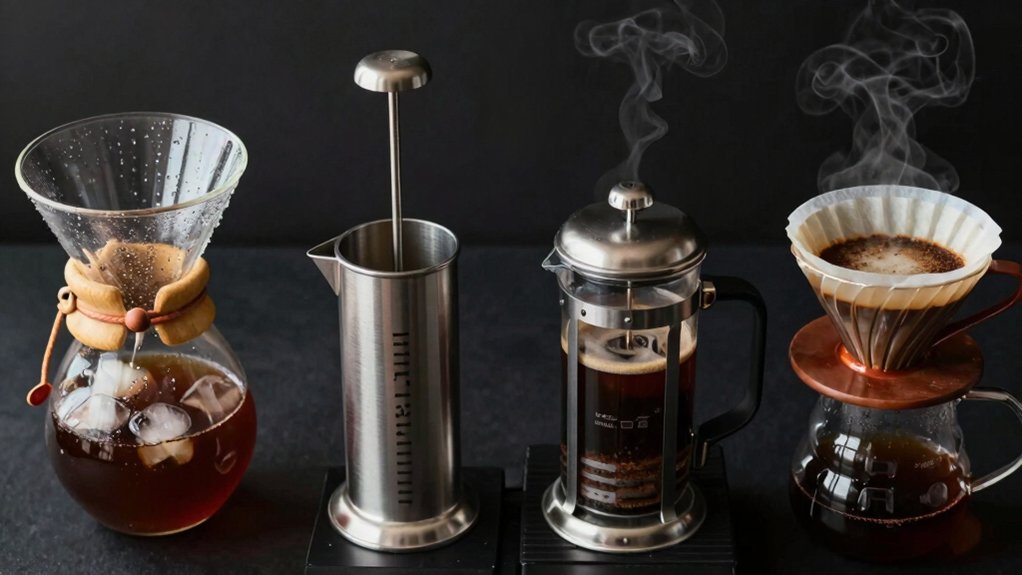
You’ll pick iced coffee by what you want: mellow, low-acid cold brew from a long, cool steep;
balanced Toddy-style concentrate for control and TDS tuning; or delicate, floral ice-drip for clarity and viscous body.
Grind coarser for long steeps, medium for Toddy, and finer for hot-brew flash-chill.
Use clean, mineral-balanced water and refrigerate long steeps.
If you want brighter aromatics and faster turnaround, flash-chill hot brew.
Keep going to learn exact ratios and temps.
Quick Overview
- Cold brew (12–24 hrs, coarse grind, 1:8 concentrate) yields mellow, low-acidity, sweet cups ideal for make-ahead service.
- Toddy-style immersion (~16 hrs, medium-coarse, ~1:15) balances clarity and body; it has tunable total dissolved solids.
- Ice-drip/Kyoto (24+ hrs, 15–25°C, medium-coarse) produces clean, floral, viscous cups that highlight delicate aromatics.
- Hot-brew then flash-chill (92–96°C bloom, short contact) preserves bright, floral notes; it is quickly cooled to stop extraction.
- Grind size, brew ratio, water temperature, and quality determine clarity, acidity, caffeine, and mouthfeel across all methods.
Cold Brew Concentrate Comparison
How do you choose the right cold brew concentrate? You’ll weigh time, gear, and desired flavor: mellow, bright, or floral. Immersion gives low acidity and high caffeine. Toddy adds complexity via a hot bloom. Ice drip teases floral notes.
Consider aroma preservation and practical packaging. Edible packaging won’t help extraction but can enhance sustainability for takeaways.
| Method | Time | Flavor |
|---|---|---|
| Immersion (standard) | 12–24 hrs | Mellow, sweet, low acidity |
| Toddy technique | ~16 hrs | Balanced, nuanced, lively |
| Ice drip (Kyoto) | 24+ hrs | Clean, floral, viscous |
Pick immersion for ease; Toddy for control and TDS tuning; ice drip for delicate nuances and body.
Grind Size & Ratio Chart
Choose grind size and brew ratios to control extraction, strength, and texture for each iced method. You’ll use a simple ratio chart to match grind size to method: coarser for long immersion, medium-coarse for drip, and fine for quick hot brews you flash-chill. That clarity keeps acidity, sweetness, and body in balance.
- Cold Brew: coarse grind, 1:8 concentrate ratio for mellow, low-acid results.
- Ice Drip/Toddy: medium-coarse, 1:15 (adjust to taste) for clarity with body.
- Japanese/Flash-Chill: medium-fine, 1:16 pre-ice (reduce water by ~30% when brewing over ice).
- AeroPress/Iced Adaptation: fine-medium, 1:12–1:14 for quick extraction and bright aromatics.
Follow the ratio chart. Taste and tweak grind size to dial your perfect iced cup.
Water Temperature Limits
You’ll want to respect temperature limits because they control extraction speed and flavor balance across methods.
Aim for the ideal brewing range for hot brews. Keep cold-brew temps low for mellow, and use rapid cooling or ice for flash and Japanese-style techniques to lock in brightness.
Don’t forget water quality: minerals and cleanliness change extraction and the cup’s clarity.
Ideal Brewing Range
Want coffee that hits the right balance of extraction and flavor? You’ll dial water temperature to control sweetness, acidity, and body: 88–96°C (190–205°F) for hot-brewed methods that you’ll flash-chill, and 15–25°C (59–77°F) for precise ice-drip setups that avoid heat-driven bitterness.
Staying within those ranges preserves coffee balance while letting method-specific variables—grind, contact time, and dilution—do the rest. Pick higher temps for fuller extraction with shorter contact. Choose the lower end when you want brightness without over-extracting.
Consider your equipment footprint too: small electric kettles give tight temp control for pour-over or AeroPress. Larger rigs like ice-drip towers need consistent cool input. Match temperature strategy to method, and you’ll get predictable, excellent iced coffee.
Cold-Brew Temperature
Shifting from temperature ranges for hot and ice-drip methods, let’s focus on how water temperature defines cold-brew extraction limits. You’ll rely on near-room or refrigerated water—typically 1–10°C (34–50°F) for the cleanest, lowest-acid cup—or slightly warmer room temperatures up to about 20°C (68°F) if you want a bolder result without heat-driven acidity.
Cold brew depends on time more than heat; therefore, you’ll adjust steep duration rather than raising temperature. Maintain strict temperature control to avoid unwanted microbial growth and inconsistent extraction. Refrigeration is safest for long steeps. If you experiment with warmer immersion, shorten steep times and taste frequently.
Respecting these temperature limits preserves the mellow, smooth character that defines quality cold brew.
Hot-Brew Rapid Cooling
When you brew hot and chill fast, water temperature limits become the pivot that preserves bright aromatics while preventing over-extraction and bitterness. You’ll aim for 92–96°C for the initial pour to activate a clean hot bloom without scorching delicate acids.
Keep contact time short so soluble sugars and acids extract before harsher compounds appear. As you dump over ice or employ rapid dilution, cooler water stops extraction instantly and locks in fragrance. Measure your dose and adjust temperature down slightly if tannins sneak in; a few degrees can tame bitterness while maintaining clarity.
You’ll find this balance lets floral and fruity notes shine in the finished iced cup. This delivers freshness that slow cold methods can’t replicate.
Extraction Rate Effects
Hot brewing then rapid chilling shows how temperature clamps extraction. Now you’ll look at how small shifts in water temperature speed or slow which compounds leave the grounds. You’ll notice hotter water raises extraction rate, pulling acids, sugars, and oils faster. Cooler water favors slower, selective solubles. That change alters flavor balance: brightness and volatile aromatics come quickly at high temps; sweetness and body extract more gradually.
For iced methods, you’ll balance desired taste against caffeine yield. Colder, long steeps often boost caffeine yield despite gentler flavor extraction. Flash-chill preserves volatile aroma but yields less caffeine than extended cold contact. Control temperature to steer bitterness, sweetness, and strength. Small adjustments produce measurable shifts in cup profile and stimulant content.
Water Quality Impact
How much do you notice the water you use when brewing iced coffee? You should: Water temperature limits change extraction dynamics. Hotter water pulls oils and acids quickly; cold extraction emphasizes solubles over time. For flash-chilled and Japanese iced methods, you’ll use near-boiling water briefly, relying on temperature to capture brightness. For cold brew and ice drip, you’ll use cold or room temp water for long periods, favoring smoothness.
Pay attention to water minerals and filtration clarity. Balanced minerals aid extraction and mouthfeel, while poor filtration muddies flavors. Test with bottled or filtered water, then adjust grind and brew time to match temperature. Control both temperature and water quality, and your iced coffee will be noticeably cleaner and more expressive.
Frequently Asked Questions
Can I Carbonate Iced Coffee at Home?
Yes, you can carbonate iced coffee at home. You’ll run carbonation experiments using a soda siphon, kegerator, or CO2 tank with proper fittings. Take care with at home pressurization safety, cold temperatures, and coarse filtration to avoid clogging.
Chill the coffee thoroughly, strain fines, carbonate gently at low pressure, then taste and adjust. You’ll preserve brightness best with flash-chilled or Japanese-style brews for sparkling clarity and balanced bubbles.
How Long Does Brewed Iced Coffee Stay Fresh Refrigerated?
Brewed iced coffee stays fresh refrigerated for about 3–5 days. You’ll maximize refrigerated freshness by storing it in an airtight container, keeping it cold immediately, and avoiding repeated temperature changes.
For best flavor and aroma, drink within 24–48 hours. After that, bitterness and oxidation increase. If you’ve added milk or sweeteners, consume within 24–48 hours.
Label containers with dates so you’ll know how long it’s been stored.
Can I Use Flavored Syrups in Cold Brew Concentrate?
Yes, you can use flavored syrups in cold brew concentrate. You’ll get great flavor pairing by choosing syrups that complement the concentrate’s chocolatey, nutty, or fruity notes. Syrup compatibility depends on sweetness and viscosity.
Start with small additions, stir and taste, then adjust. Consider vanilla, caramel, or hazelnut for mellow brews. You can use citrus or berry syrups for brighter profiles. Chill, dilute to taste, and enjoy balanced, consistent results.
Does Iced Coffee Freeze Well Into Coffee Ice Cubes?
Yes, coffee freezes well into coffee ice cubes. You’ll avoid dilution by freezing cold brew, Toddy concentrate, or double‑strength flash‑chilled coffee into ice cube trays.
For ice cube ideas, try adding cubes of milk‑coffee, flavored syrups, or concentrated espresso. Use freezing techniques like single‑use trays for clarity, quick freeze for fewer crystals, and airtight storage to prevent freezer odors.
You’ll get chilled drinks that stay flavorful as the cubes melt.
What’s the Best Milk Alternative for Iced Coffee?
Almond milk’s often the best milk alternative for iced coffee because it’s light, adds nuttiness, and won’t overpower delicate flavors. You’ll get creamy texture without heavy dairy, and it mixes cleanly over ice.
If you want richer body, try oat milk; it’s naturally sweet and stabilizes foam. Coconut gives tropical notes but can dominate. Experiment: use chilled, barista blends, and adjust ratios until your iced coffee sings.
Conclusion
You’ve seen how grind, ratio, temperature, and water quality shape iced coffee. Now you can pick the method that matches your taste. Use coarser grounds and long cold-brew steeping for smooth, low-acidity concentrate. Choose hotter, faster pour-over then rapid cooling for brighter, more volatile flavors.
Keep water clean, control extraction, and stay in the ideal temperature range. With these parameters dialed, you’ll consistently brew iced coffee you actually crave.