
Espresso Machine Cleaning Routine
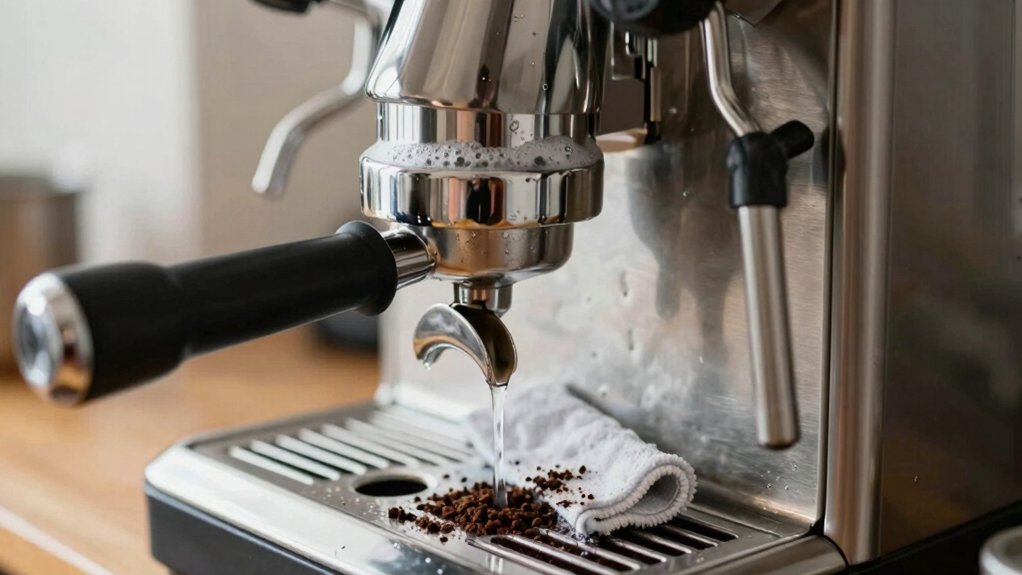
You should do daily water purges, weekly backflushes, and periodic descaling. Run short water cycles each day. Then use a blind basket with 5 detergent on/off cycles followed by 5+ water rinses weekly; adjust cadence to shot volume.
Check and record portafilter gasket torque before and after maintenance. Descale with measured acid (1–3% typical; 0.5–2% for aluminum). Flush thoroughly and neutralize; document concentration and contact time. Continue for setup, safety, and troubleshooting guidance.
Quick Overview
- Backflush Espresso Machines weekly or by shot volume: light home use 2–8 weeks; moderate 1–4 weeks; heavy weekly.
- Use a blind basket with detergent: run five detergent on/off cycles, then five water rinse cycles until clear.
- Descale with appropriate acid concentration: 1–3% typical; 0.5–2% for aluminum; up to 5% for heavy buildup per warranty.
- Record shots/day and torque readings before/after maintenance to set cadence and correlate descaling needs.
- After descaling, neutralize and flush with at least two full tanks of fresh water. Check for residual taste.
Weekly Backflush Times
When you schedule weekly backflushes, base the detergent frequency on daily shot volume and machine type so you clean oils without overdoing detergent exposure. You’ll match detergent frequency to use: Light home users can stretch detergent to 2–8 weeks while doing water-only backflushes daily. Heavy home or commercial setups need weekly detergent with daily water cycles.
For semi-auto and La Marzocco machines, follow manufacturer cycles; for E61 groups, minimize detergent to avoid lever wear. Follow the procedure specs: blind basket, 5 on/off detergent cycles, 5 water cycles, rinse until clear. Track shots/day and machine class to set cadence and avoid warranty-risk detergents.
| Use Class | Detergent Frequency | Water-Only Frequency |
|---|---|---|
| Light | 2–8 weeks | Daily |
| Moderate | 1–4 weeks | Daily/1–2 days |
| Heavy | Weekly | Daily |
Portafilter Gasket Torque
Proper portafilter gasket torque ensures a consistent seal between the group head and portafilter, preventing leaks and uneven extraction. You’ll check torque periodically to maintain consistent pressure distribution and prevent gasket deformation. Use a calibrated torque driver and follow manufacturer specs; typical values are low, precise increments rather than high torque.
Note torque before and after maintenance tasks so you can correlate changes with descaling timing and other service events.
- Inspect gasket for wear, set torque to spec, verify seal under pressure.
- Record torque reading, run a short purge, confirm no leaks and even flow.
- Recheck torque after scheduled descaling and weekly backflushes; adjust if compression changed.
Descale Solution Concentration Levels
You’ll select a descaling concentration based on the acid type and material sensitivity. Typical phosphoric or citric acid solutions run 1–5% by weight for stainless boilers and 0.5–2% for aluminum or mixed-metal systems. Measure with simple household tools, such as a kitchen scale or teaspoons per liter. Adjust exposure time inversely to concentration: lower percent requires longer soak and flow cycles; higher percent shortens contact but increases corrosion risk.
After descaling, always neutralize and flush thoroughly with multiple full tanks of fresh water to remove residual acid and protect gaskets and seals.
Recommended Acid Concentrations
Although descaling agents vary, you should aim for acid concentrations that effectively dissolve mineral scale without harming seals or metal components: typically 1–3% phosphoric or citric acid by volume (10–30 g/L) for routine descaling and up to 5% for heavy buildup, following manufacturer guidance. You’ll choose between phosphoric (better metal compatibility) and citric (biodegradable, gentler odor).
For routine cycles, use Subtopic A procedures with 1–3% solutions; for stubborn scale, switch to Subtopic B guidance and increase concentration only if materials and warranty permit. Always confirm elastomer compatibility, soak duration, and temperature to avoid accelerated degradation.
Neutralize and flush thoroughly after descaling. Keep records of concentration, contact time, and component response to refine safe, repeatable maintenance.
Measuring With Household Ingredients
How do you measure household acids to reach the 1–3% (10–30 g/L) routine and up to 5% heavy-build-up concentrations? You’ll weigh or measure by volume: for a 1 L solution, add 10–30 g of citric or acetic acid for 1–3%; add 50 g for 5% if targeting severe scale.
Use a kitchen scale for grams or teaspoons only if calibrated. 1 tsp citric ≈ 4.8 g; white vinegar at 5% acetic is ~50 mL per liter to reach ~2.5%. Label mixes and record batch concentration.
Prioritize descale safety: use gloves, eye protection, and avoid mixing with household solvents, bleach, or ammonia. Dispose diluted waste per local guidance and rinse machine thoroughly after descaling.
Time Versus Concentration
Having measured your acid accurately, decide the concentration based on how quickly you need scale removed: higher concentrations work faster but increase corrosion and require stricter rinsing controls. You’ll balance time vs concentration by selecting a solution that achieves target cleaning within safe exposure limits.
For light scale, use lower ppm and longer contact (30–60 minutes). For heavy deposits, increase concentration and reduce soak time (10–20 minutes). Monitor temperature and flow; both accelerate reactions and can allow lower concentrations. Document concentrations, contact times, and results to refine your cleaning rate tradeoffs.
Always follow manufacturer maximums for chemical strength and limit repeated high-concentration cycles. After descaling, perform multiple full-tank rinses and verify absence of residual taste before returning to service.
Material Compatibility Concerns
When you choose a descaling concentration, consider how acids and chelants interact with your machine’s metals, seals, and coatings. Higher strengths speed scale removal; however, they raise the risk of corrosion, elastomer swelling, and finish degradation. You should match concentration to materials: mild acidic solutions (e.g., 1–2% citric acid) suit stainless steel and nitrile seals. Stronger chelants or mineral acids can attack brass, aluminum, and EPDM.
Test hidden areas and consult manufacturer limits. Shorter contact time can permit slightly higher concentration; however, avoid compensating indefinitely. Do not treat material limits as a subtopic not relevant. Document concentrations, exposure times, and observed effects. Do not introduce unrelated discussion about neutralization here; reserve that for the next procedural step.
Neutralizing After Descaling
Why neutralize after descaling? You must neutralize after descaling to remove residual acid or alkaline agents that can corrode components, taint taste, and pose safety hazards. Measure descaling solution concentration per manufacturer specifications. Record ppm or percent active ingredient before flushing.
Flush with at least two full tanks of fresh water through group head and steam wand. Then circulate a neutralizing rinse (bicarbonate solution for acids; mild citric for alkaline residues) at controlled concentration—typically 0.5–1.0% w/v—validated by pH strips returning to near-neutral (pH 6.5–7.5). Verify by tasting and instrument check.
Document neutralizing after descaling steps and include safety considerations: PPE, ventilation, labeling of containers, and secure disposal of spent solutions.
Frequently Asked Questions
How Often Should I Replace the Group Head Gasket?
You should replace the group head gasket every 12–18 months. Replace it sooner if you notice leaks, tamping irregularities, or difficulty locking the portafilter.
Check seals during routine maintenance and after descaling frequency considerations; aggressive descaling or frequent chemical cycles can accelerate wear. Inspect monthly for hardening, cracks, or brew pressure loss. Swap gaskets promptly using manufacturer-specified material and torque to restore proper seal and consistent extraction performance.
Can I Use Vinegar for Descaling My Commercial Machine?
No, you shouldn’t use vinegar for descaling a commercial machine. Vinegar descaling can corrode brass, stainless fittings, and internal seals. This corrosion leaves residues that affect flavor and void warranties. Use manufacturer-approved descaling agents and follow recommended concentrations and cycles to avoid commercial machine risks like gasket degradation, pump damage, and mineral redeposition.
Rinse thoroughly with multiple full tanks of fresh water. Run several brew cycles to clear any residual solution.
What’s the Safest Way to Clean the Steam Wand Interior?
You purge and backflush carefully: purge the steam wand before and after use, then wipe the exterior. For interior cleaning ideas, soak the removable tip and steam tip in a food-safe detergent solution weekly. Run steam through the wand into a container while submerged to dislodge residue.
Safety steps: turn off steam, depressurize, wear gloves and eye protection, use manufacturer-approved detergents, and flush thoroughly with fresh water to remove detergent.
How Long Can Coffee Grounds Sit in a Portafilter?
You shouldn’t let coffee grounds sit in a portafilter longer than a few minutes. Ideally, you’ll knock them out immediately after extraction to preserve portafilter freshness and prevent bitter oils from oxidizing. If you must wait, limit residual grounds to under 10–15 minutes in a cool, dry environment.
Beyond that, flavor degradation and bacterial risk increase; rinse and dry the portafilter promptly to restore optimal brewing conditions.
Are There Signs My Machine Needs Professional Servicing?
Yes, you’ll notice clear signs of wear that indicate professional servicing is needed. Reduced pressure, inconsistent shot extraction, strange noises, persistent leaks, or scalding steam behavior all signal internal component degradation.
Mineral buildup causing slow flow or poor steaming, recurring electrical faults, or error codes also require trained diagnostics. Don’t delay: scheduling professional servicing prevents costly failures and restores proper pump, boiler, and valve performance.
Conclusion
You’ve covered the essentials: weekly backflush timing, correct portafilter-gasket torque, and how descaling concentration and time interact. Use recommended acid concentrations or measured household substitutes only within safe ranges. Always verify material compatibility for boilers, group heads, and seals.
After descaling, neutralize residues and flush thoroughly to prevent corrosion or seal damage. Follow specified concentrations and durations precisely to maintain performance, longevity, and espresso quality.