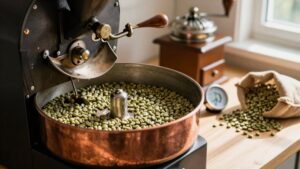
Coffee Roast Levels Explained
You’ll learn roast levels by watching color, crack timing, and moisture, not just thermometer numbers.
Light roasts (no surface oils) hit about 180–205°C and keep origin acidity.
Medium‑dark roasts (oils appearing) run ~210–230°C and push body and roast flavors.
First crack timing and its tempo tell you when to stop for desired development.
Green beans at ~10–12% moisture change heat transfer; so measure and store tightly.
Keep going to master curves and protection of origin character.
Quick Overview
- Roast levels range from light (no surface oils) to dark (oily surface); they affect acidity, body, and flavor clarity.
- Light roasts (180–205°C) preserve origin character, have higher acidity, and feature brighter, more nuanced flavors.
- Medium–dark roasts (210–230°C) show oil on beans, have reduced acidity, a heavier body, and more roast-derived caramel and chocolate notes.
- First crack timing, tempo, and seconds to crack are crucial cues for repeatable roast level and development decisions.
- Bean moisture (typically 10–12%) and storage humidity shift drying, Maillard timing, and crack onset; therefore, measure and log moisture.
Roast Color and Temperature Chart
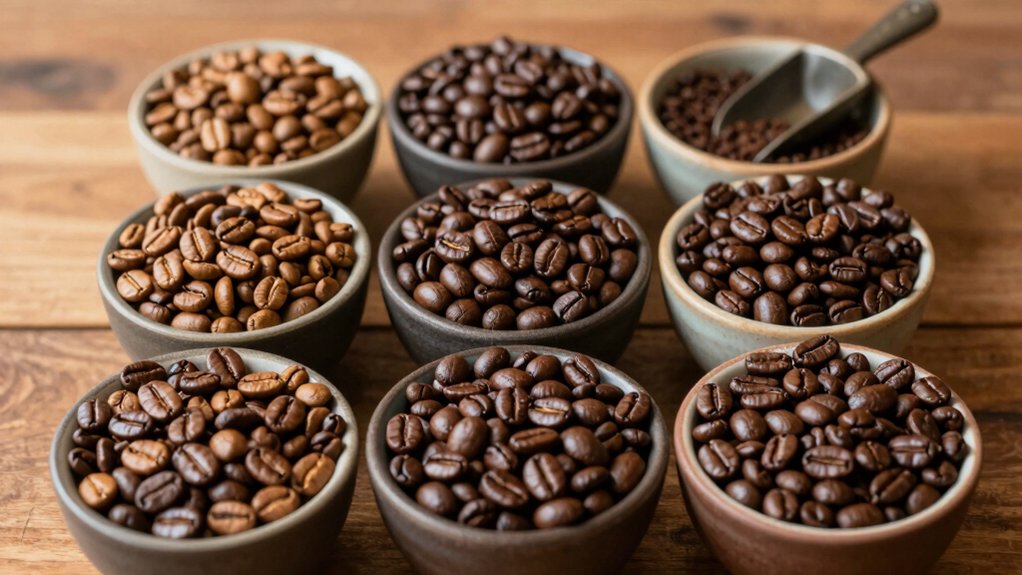
Curious how color and temperature map to the flavors you taste? You will use a temperature chart alongside roast color to read roasting curves and predict flavor shifts. Lighter roasts (180–205°C) keep origin sweetness and acidity. Medium (210–224°C) balance develops as oils appear. Dark (>225°C) yields roast-dominant notes.
Color to temp mapping isn’t linear: probe placement and roaster type alter readings; so follow curves, not single numbers. Track first and second crack timing relative to bean temp; but focus here on color. Use simple references to stay consistent:
| Visual Cue | Temp Range |
|---|---|
| Light brown (no oils) | 180–205°C |
| Medium–dark (oils) | 210–230°C |
Read color, watch curves, and adjust heat to hit your target roast.
Optimal First Crack Timing
You’ve been watching color and temperature to hit your target roast; now listen for first crack: it’s your most informative audible cue. You’ll use sound and elapsed time to judge optimal timing, balancing development with flavor preservation. Hear the sharp, papery snaps that mark structural change. Note tempo and spacing to decide when to end drying or enter development. Small adjustments of heat or drum speed alter crack onset and final acidity, sweetness, and body.
- Track onset: log seconds from roast start to first crack for repeatability.
- Listen for rhythm: close, fast cracks signal faster development; widen spacing to slow roast.
- Decide development time after crack to protect origin while achieving desired roast.
Bean Moisture Percentage
You’ll want to start by checking green bean moisture, typically 10–12% for specialty coffees. This is because that water content directly shapes heat transfer and roast development. Even small moisture differences change roast speed, first- and second-crack timing, and final flavor balance. Therefore, measuring with a reliable moisture meter matters.
We’ll also cover how moisture interacts with storage practices and what adjustments you should make to profiles to keep origin character consistent.
Green Bean Moisture
How much moisture should green coffee beans hold before roasting, and why does it matter? You want green beans moisture generally between 10–13% by weight. That range gives predictable heat transfer, consistent first-crack timing, and cleaner development across roast levels.
If moisture sits too low, beans heat and char faster; too high, and you risk long drying phases that mute acidity and complicate your roast color and temperature chart readings. You’ll measure moisture with a hygrometer or moisture meter and adjust batch size, airflow, and charge temperature accordingly.
Treat moisture as a controllable variable: it’s not flavor itself, but it strongly shapes how origin characteristics express during roasting. Therefore, monitor and standardize it for repeatable results.
Moisture Effects On Roasting
Having green beans at 10–13% moisture sets a predictable starting point. However, the exact moisture percentage you roast from changes how heat moves through the bean and what flavors will come forward. You’ll notice beans with higher moisture prolong the drying phase, delaying Maillard reactions and shifting sweetness development later in the roast.
Lower-moisture beans speed moisture evaporation, accelerating temperature rise and pushing you sooner into color development and first crack. That timing alters acidity, body, and perceived origin character: slower drying preserves delicate acids and floral notes; faster drying favors caramelization and roast-derived sweetness.
When you control initial moisture, you control roast rhythm. Therefore, monitor and adjust charge temperature and airflow to shape desired roast level and flavor balance.
Measuring Moisture Content
Curious how much water is hiding in those green beans? You measure bean moisture percentage to predict roast behavior: typical green beans sit around 10–12% moisture. Small shifts change heat transfer and development. Use a calibrated moisture meter or oven-dry method for accuracy; record readings by lot and date.
You’ll track moisture stability over storage to maintain consistent roast curves. Note humidity variation during transport and storage. Sudden swings raise surface moisture, alter first-crack timing, and can cause uneven color. Log moisture alongside batch weight and ambient RH so you can adjust charge temperature and airflow precisely.
Moisture And Roast Development
You already log moisture to stabilize roast curves, so now use those measurements to predict how a batch will develop through first and second crack. Knowing bean moisture percentage lets you anticipate heat absorption and moisture transfer rates during the drying and Maillard phases. If moisture is high, drying takes longer, delaying first crack and risking uneven development. If too low, beans heat faster, pushing you toward early crack and potential surface scorching.
Track moisture alongside weight loss and temperature to protect bean integrity. Adjust charge temperature, airflow, and drum speed to control ramp. Small, deliberate changes based on percentage readings give consistent crack timing and flavor outcomes. This helps keep terroir expression intact while avoiding roast-driven defects.
Storing For Moisture Control
Store green and roasted beans with moisture control in mind: aim for stable relative humidity and temperatures so bean moisture percentage stays within target ranges. Small swings change drying behavior during roast and can shift crack timing. You’ll monitor storage humidity closely. Green beans prefer ~10–12% moisture; roasted beans lower and stable to prevent stale-off or rehydration.
Use humidity control: sealed containers, desiccants for roasted stock, and climate-controlled rooms or dryers for greens. Measure moisture percentage with a hygrometer or moisture meter and log it. Adjust ventilation and temperature rather than forcing rapid changes. By keeping storage humidity steady, you’ll preserve predictable roast development, consistent crack onset, and the flavor clarity that differentiates light, medium, and dark profiles.
Frequently Asked Questions
How Does Roast Level Affect Caffeine Content per Cup?
Roast level barely changes caffeine per cup; you’ll mostly see differences from bean density and brew method. Lighter beans are denser, so by volume they can give a touch more caffeine. While darker beans lose mass and pack differently, that’s the real caffeine myths point: roast doesn’t destroy much caffeine.
You’ll trade taste tradeoffs: lighter keeps origin acidity, while darker brings smoky sweetness. So choose flavor, not caffeine.
Can Roast Level Change Recommended Grind Size?
Yes, roast level can change recommended grind size. Lighter roasts are denser, and you’ll need a slightly finer grind to extract flavors. Darker roasts are more porous, so you can grind a bit coarser.
Adjust grind consistency to match extraction: finer for under-extracted; coarser for over-extracted. Keep brew ratios steady while you tweak grind size. Then dial in grind consistency and ratios until the cup tastes balanced.
Do Roast Levels Influence Espresso Crema Stability?
Yes, roast levels affect crema stability. Lighter roasts give higher acidity and denser crema initially. However, you’ll get thinner, faster-dissipating foam because oils are minimal and extraction balance skews toward brighter solubles.
Medium roasts usually offer the best crema stability and extraction balance, with richer body and longer-lasting foam. Dark roasts produce oily, heavy crema that can collapse quicker and mask nuanced flavors despite appearing thick.
How Does Roast Level Impact Coffee Storage Lifespan?
Light roasts spoil faster because their higher density and retained acids make the freshness window shorter; you’ll lose bright flavors sooner.
Dark roasts age more gracefully thanks to oils and lower acidity; thus, your freshness window extends a bit. However, oils can go rancid.
You should store any roast in an airtight storage container, kept cool, dark, and away from oxygen. Rotate stock and use beans within the freshness window.
Are Lighter Roasts Better for Pour-Over Extraction?
Yes, you’ll often prefer a light roast pour over if you want clarity and origin expression. You’ll extract brighter acidity, delicate fruity and floral notes, and nuanced flavor balance that pour-over brewing highlights.
You’ll need finer grind, slightly higher brew temperature, and careful timing to avoid underextraction. If you want more body or smoky sweetness, choose medium or dark; however, for transparent, terroir-driven cups, light roasts excel.
Conclusion
You’ve learned how roast color, temperature, and first crack timing shape flavor. You also understand why green bean moisture matters: typically 10–12% for predictable roasting. Monitor moisture with a reliable meter. Adjust heat and development time for wetter or drier beans. Store greens in a cool, dry place to preserve consistency.
With attention to these factors, you’ll control roast development confidently. You can coax the best flavor from every batch.