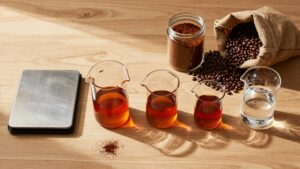
Cold Brew Coffee Ratio
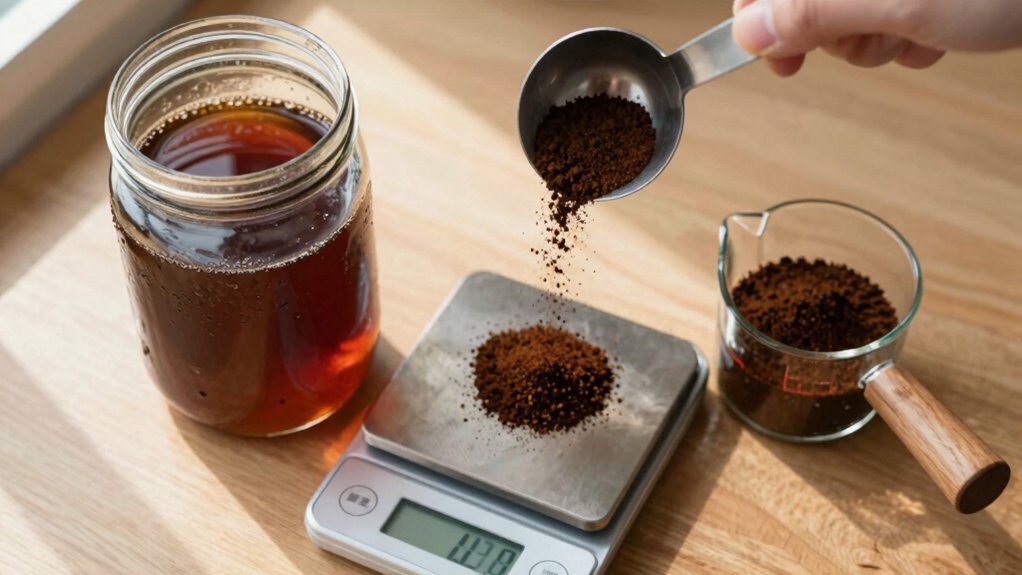
Use a clear concentrate-to-water ratio so you control strength and extraction: for concentrated cold brew, try 1:4–1:10 (very strong to medium). For ready-to-drink, aim 1:10–1:15. Coarser grinds suit concentrates; finer grinds speed extraction but increase sediment.
Steep 8–24 hours depending on temperature and ratio. Shorter for brighter acids, longer for fuller body. Keep water temp and time consistent and adjust by taste. You’ll find precise tweaks and timings further on.
Quick Overview
- Typical cold brew ratios range from 1:4 (strong) to 1:15 (ready-to-drink), with 1:8–1:10 as a common starting point.
- Use 1:4 or 1:6 for concentrated brews intended to dilute later. Use 1:10–1:15 for drinkable cold brew.
- Steep time interacts with ratio: concentrates (1:4–1:6) often need 6–10 hours. While 1:10–1:15 benefits from 10–18 hours.
- Grind coarser for concentrates to reduce sediment and bitterness. Grind slightly finer for ready-to-drink for fuller extraction.
- Adjust water temperature and time together. Cooler water slows extraction and preserves acidity; warmer speeds extraction and increases body.
Concentrate-To-Water Ratios Chart
How do you want to dilute your cold brew concentrate? You’ll choose from clear, evidence-based options: 1:1 for standard strength, 1:2 for medium-strong, 1:4 for light, 1:6 for very light, and 2:1 for very strong. Use the table below to guide precise pouring and tasting. Avoid treating this like an unrelated topic or irrelevant discussion.
| Dilution Ratio | Strength | Use Case |
|---|---|---|
| 2:1 | Very Strong | Maximum intensity |
| 1:1 | Strong | Standard serving |
| 1:2 | Medium-Strong | Moderate intensity |
| 1:4 | Light | Subtle flavor |
| 1:6 | Very Light | Minimal intensity |
Measure concentrate and water by volume or weight. Taste, then adjust incrementally for repeatable results.
Preferred Grind Size
Now that you’ve chosen a dilution for your concentrate, match grind size to extraction goals: Coarsely ground coffee (similar to raw sugar or sea salt) gives slow, even extraction and minimal bitterness for typical 12–24 hour cold brews. Slightly finer grinds speed extraction and raise strength but risk over‑extraction and muddier flavors. You’ll control brew density and clarity by selecting grind size that complements your chosen ratio. Use a burr grinder and measure by weight; consistency reduces variance in extraction yields.
For concentrates, coarser grinds favor cleaner body. For ready‑to‑drink or stronger recipes, modestly finer grinds increase soluble yield.
- Coarse: chunky, low sediment, lower brew density
- Medium-coarse: balanced extraction, moderate density
- Medium: faster extraction, higher density risk
- Fine: avoid for long steeps; high sediment
Steep Time and Temperature
You’ll control final strength mainly through steep time and temperature: standard cold extraction takes 12–24 hours. However, shorter or longer periods shift acidity, bitterness, and body. Cooler water and fridge-steeping slow extraction, favoring sweetness and lower acidity. In contrast, room-temperature water speeds it and can increase perceived bitterness.
Use the timing adjustments guide; shorten steep for finer grinds or warmer conditions. Lengthen for coarser grinds or colder conditions to reach the target 1:x ratio profile.
Steep Time Ranges
Because steep time and temperature control extraction just as much as your coffee-to-water ratio, you should treat them as adjustable variables when dialing in cold brew; not fixed rules. You’ll typically test steep time ranges between 12 and 24 hours at cool kitchen temperatures. Shorter steeping (8–12 hours) favors brighter acids, while longer steeping (18–24+ hours) increases body and soluble yield.
Use temperature control to refine those ranges: colder conditions slow extraction, so extend steep time. Slightly warmer conditions accelerate it, so shorten steep time. Record grind size, ratio, exact temperature, and steep time for each trial.
Evaluate strength, acidity, and bitterness objectively. Then adjust by 2–4 hour increments until you reach the balance you want.
Water Temperature Effects
How does water temperature shape cold brew extraction? You control extraction primarily through steep time and the temperature of the water you use. Lower temperatures slow solute dissolution, favoring acids and floral aromatics. Slightly warmer cold-brew temperatures accelerate extraction of sugars and some bitters.
Maintain temperature stability during steeping; fluctuations change extraction rate and hue. Pay attention to water chemistry: mineral content alters solubility and mouthfeel. Use consistent water (filtered or spectrally similar to your baseline) when comparing ratios. For repeatable results, standardize temperature and steep time together with your chosen ratio. For example, use 1:10 at 4–6°C for 12–18 hours versus 10–12°C for a shorter duration.
Record values and iterate systematically to reach your target profile.
Cold Extraction Rate
Cold extraction rate depends primarily on steep time and water temperature. You control how quickly flavors and solubles move from grounds into brew. You’ll find extraction is kinetic: colder water slows solute diffusion, requiring longer steep times to achieve target soluble extraction.
Use consistent brewing gear; grind size, vessel surface area, and agitation alter contact efficiency and change required time. Measure time precisely. Typical ranges are 12–24 hours at room temperature and 16–48 hours refrigerated, adjusted for your chosen ratio.
Monitor for under-extraction (sour, thin) or over-extraction (bitter, astringent) and modify steep time incrementally. Understand basic flavor chemistry: acids and aromatic compounds extract early; sugars and bitter compounds later. Control temperature and time to prioritize desired flavor fractions.
Room Versus Fridge
Why choose room temperature or the fridge for your steep? You’ll control extraction speed and flavor clarity by choosing temperature.
Room temperature speeds extraction: compounds dissolve faster, producing fuller body and higher perceived bitterness if left long. Fridge storage slows extraction: acids and soluble oils extract more gently, yielding cleaner, brighter cups with less perceived bitterness.
Use room temperature when you want efficient extraction and don’t mind stronger, more robust profiles; monitor steep time closely. Prefer fridge storage when you aim for subtlety, greater sweetness perception, and extended steep windows with lower risk of over-extraction.
Both approaches work with standard ratios (1:10–1:15); adapt steep duration to your ratio and desired strength. Then filter and taste before diluting.
Timing Adjustments Guide
Wondering how steep time and temperature interact with your chosen ratio to shape flavor? You’ll treat steep time and water temperature as control variables: longer steep times extract more soluble solids and acidity while slightly higher water temperature for room-brewed or warmed methods accelerates extraction.
For a 1:10 concentrate, 12–18 hours at room temperature yields full body; shorten to 8–12 hours if you raise water temperature modestly. For 1:15 ready-to-drink, 10–14 hours preserves delicate aromatics; avoid warm water beyond 25°C to prevent over-extraction.
If you use a strong 1:4–1:5 ratio, cut steep time to 6–10 hours. Record times and temperatures, taste systematically, and adjust incrementally to reach your target balance.
Frequently Asked Questions
Can I Use Espresso Beans for Cold Brew?
Yes, you can use espresso beans for cold brew. You’ll get a darker, more chocolatey profile. Use a coarse grind size to avoid over-extraction and excessive bitterness during long cold immersion.
Adjust ratios: start around 1:10–1:8 for concentrate or 1:15 for ready-to-drink. Taste after 12–24 hours. If it’s too strong, dilute; if flat, try slightly finer grind size or longer steeping next time.
How Long Does Cold Brew Stay Fresh Refrigerated?
You’ll keep refrigerated cold brew fresh for about 7–10 days if stored airtight and chilled below 40°F. Use clean containers, minimize air exposure, and taste daily after day 5.
Stronger concentrates often last toward the upper end; ready-to-drink batches decline faster. For best quality, label with brew date and consume within a week.
two word idea 1 two word idea 2
Can I Cold Brew With Instant Coffee?
Yes, you can cold brew with instant coffee, but results differ. Instant dissolves, so you’ll steep for flavor rather than extract like from espresso beans. You won’t need grind size control.
Use cold water, stir well, and chill to avoid sediment. Expect lower and variable caffeine content compared with standard cold brew from roasted grounds. For true cold-brew characteristics, use coarsely ground espresso beans or brewed espresso instead.
Do Flavored Syrups Affect Extraction or Steep Time?
No, flavored syrups don’t affect extraction impact or steep time because they’re added after brewing. You’ll still follow your chosen steep time to control solubles extraction and achieve desired flavor balance.
Add syrups post-filtering to taste; they change sweetness and aroma, not the chemistry of cold brew extraction. If you mix syrups during steeping, you risk uneven flavor integration; however, extraction kinetics remain governed by grind, ratio, and time.
Is Tap Water Quality Important for Cold Brew Taste?
Yes, tap water quality matters for cold brew taste. You should use tap water with a balanced mineral profile. Mineral balance influences extraction, mouthfeel, and perceived sweetness. If your tap water tastes off, you’ll notice it in the cold brew.
Test or filter tap water to stabilize mineral content. Alternatively, use bottled water matching recommended mineral ranges. A tasteredict approach: systematic tasting and tracking helps you quantify water effects.
Conclusion
You’ve got the variables under control: grind, ratio, time, and temperature drive extraction; so adjust them deliberately. Use coarser grinds for clarity. Stick to tested concentrate ratios (1:4–1:8) when making concentrate, and dilute to taste.
Steep longer at colder temps or in the fridge; shorten steeping with warmer water. Track outcomes, change one factor at a time, and rely on repeatable measurements to achieve consistent, evidence-based cold brew results.