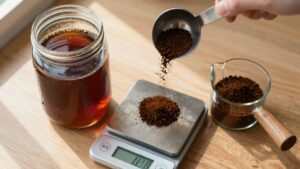
Coffee to Water Ratio Chart
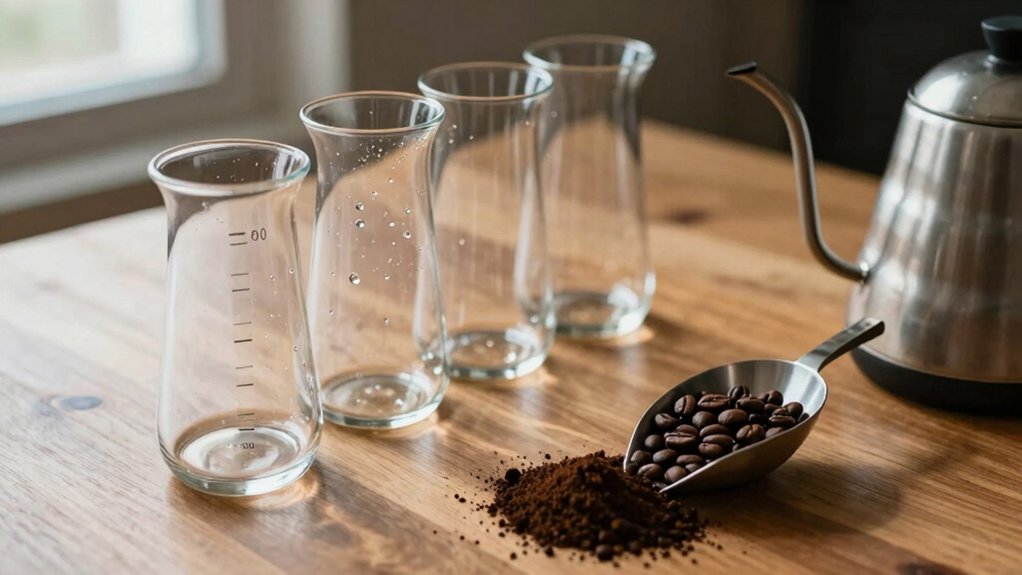
Use these starting brew ratios: espresso 1:2 (brew), pour-over 1:17 (1:18 mild, 1:13–1:15 robust), French press 1:15 (1:12–1:18), cold brew concentrate 1:8. Zero your scale, note grind setting (finer for stronger extraction), and test water hardness: aim ~50–150 ppm total hardness. Hard water results in a slightly weaker ratio (for example, 1:17 → 1:16); soft water leads to a stronger ratio.
Adjust one variable at a time. Taste for brightness, body, and bitterness. Keep a log to refine.
Quick Overview
- Standard brew ratio: 1:17. Adjust to 1:18 for milder or 1:13–1:15 for a bolder cup.
- French press guideline: 1:15 typical; acceptable range 1:12–1:18 depending on strength preference.
- Cold brew concentrate commonly uses 1:8. Dilute to taste before serving.
- Adjust ratio based on water hardness. Reduce coffee slightly with hard water; increase with very soft water.
- Record dose, grind, and brew time. Change one variable at a time and retest by 0.5–1 ratio points.
Brew Ratios by Method
How strong do you like your cup? You’ll choose ratios by method: pour-over defaults to 1:17 (1:18 for mild, 1:13–1:15 for robust). French press favors 1:15 (range 1:12–1:18). Cold brew uses 1:8 concentrate. Match pairing coffee to method and adjust for water minerals that influence extraction.
Check grinder’s calibration to ensure consistent particle size; don’t rely on time alone. Focus on sensory cues: aroma clarity, mouthfeel, and finish. Use this compact reference to dial strength precisely.
| Method | Typical Ratio | Use Case |
|---|---|---|
| Pour-over | 1:17 | Balanced |
| French press | 1:15 | Velvety |
| Cold brew | 1:8 | Concentrate |
Scale and Grind Settings
Because precise measurements and consistent particle size are what determine repeatable results, you should use a quality digital scale and a calibrated grinder every time you brew. You’ll feel the weight settle, hear the quiet motor, and see numbers that guide extraction.
Prioritize scale calibration before measuring dose: zero the scale, tare your vessel, and verify with a calibration weight. Adjust grind size incrementally to match your method: finer for espresso, medium-fine for pour-over, coarser for French press; tracking time and taste.
- Calibrate scales regularly to ensure accurate dosing.
- Maintain grinder consistency by checking burr alignment and wear.
- Record grind setting, dose, and brew time for each trial.
This practice sharpens sensory feedback and yields reliable cups.
Water Hardness Impact
Pay attention to your water hardness because dissolved minerals change extraction and the way flavors bloom. Hard water can leave scale in your equipment and mute acidity or amplify bitterness. You may need to slightly tweak your coffee-to-water ratio and brew time.
Test your water with a simple kit or meter; then adjust grind, ratio, or use filtered water to keep taste and machines consistent.
Mineral Effects On Extraction
Why does the mineral content of your water change how coffee extracts? You’ll notice that water with low mineral content yields flatter aroma and muted sweetness because fewer dissolved ions interact with soluble coffee compounds. Hard water, rich in calcium and magnesium, enhances extraction of acids and aromatics; this produces brighter, more textured cups.
When you soften water, ion exchange often replaces calcium with sodium. This can increase perceived saltiness and suppress complexity. Avoid extreme mineral depletion; totally pure water strips flavor and leaves a hollow mouthfeel. Aim for balanced mineral levels so bitterness, acidity, and body stay in harmony.
Test your water, adjust with mineral additions or balanced blends, and taste for clarity, brightness, and full-bodied aroma.
Scale And Equipment Buildup
Hard, mineral-rich water not only brightens your cup; it also leaves deposits inside boilers, pipes, and showering spray heads that change performance over time. You’ll notice reduced flow, uneven spray, and a metallic whisper in steam wands as scale builds.
Inspect group heads and boiler seams monthly. Use descaling agents per manufacturer intervals and log scale calibration events so you track buildup versus water source. Flush lines after treatment, and dry accessible parts to limit new deposits.
Check grinder compatibility with your maintenance schedule; fine dust and minerals together accelerate clogging. When you descale, run several water-only cycles and weigh extraction yields to confirm consistent output. Small preventative steps preserve equipment feel and predictable brewing metrics.
Taste Changes From Minerals
Minerals in your water directly alter extraction and flavor, so you’ll notice differences in brightness, body, and aftertaste as hardness changes. Pay attention: Higher water hardness (more calcium and magnesium) amplifies perceived body and can mute acidity, producing a fuller, rounder cup. Lower hardness yields cleaner, brighter flavors but can feel thin.
Taste the difference side-by-side. Note mineral taste as a subtle metallic or chalky layer when hardness is high; it can coat the tongue and linger in the finish. Smell for muted aromatics with harder water versus lively floral or citrus notes with softer water. Use consistent grind, dose, and brew time when comparing, so only water hardness drives change. Record sensations: brightness, body, aftertaste, and any mineral taste.
Adjusting Ratio For Hardness
How much you should tweak your coffee-to-water ratio depends on your water’s hardness and the flavor goals you want to reach. If your water’s mineral balance leans high, you’ll taste muted acidity and heavier body; lower the ratio slightly (e.g., move from 1:17 to 1:16) to sharpen clarity.
Conversely, with very soft water that yields thin, bright cups, increase strength toward 1:15 to add substance. Pay attention to water alkalinity: higher alkalinity buffers acidity, so you may want more coffee or a finer grind to compensate.
Make single changes at a time: adjust ratio by 0.5–1 point, brew, and evaluate aroma, acidity, and aftertaste. This way, you can isolate effects and dial in your preferred cup.
Testing Water For Hardness
Because your water shapes every note in the cup, you should test its hardness before you lock in a brewing ratio. Start with a simple test strip or a digital TDS/hardness meter to measure calcium and magnesium levels; you’ll want about 50–150 ppm total hardness for balanced extraction.
Watch how minerals affect aroma and mouthfeel: too hard dulls acidity and mutes floral notes; too soft can taste flat. Use mineral testing results to tweak toward the 1:17 golden ratio or the 1:15–1:18 range depending on preference.
Maintain brewing cleanliness—rinse equipment and change filters—to prevent scale buildup that skews readings. Record results and adjustments so you reproduce the sensory profile you prefer.
Frequently Asked Questions
How Do I Adjust Ratios for Altitude or Pressure Differences?
You should increase extraction slightly at higher altitude by using finer grind, hotter water, or a stronger ratio. Those adjustment considerations compensate for lower boiling point and reduced pressure. Taste and mouthfeel guide you: if brew tastes sour or weak, tighten grind or move from 1:17 toward 1:15.
At higher pressure, like espresso machines, reduce dose or grind coarser to avoid over-extraction and keep aromas bright.
Can I Use Volume Measurements Instead of Weight Accurately?
You can, but it’s less accurate than weight. Volume measurements vary with grind, roast, and tamp; you’ll get inconsistent taste balance and extraction. Use scoops for rough consistency, then calibrate by tasting. Always prioritize brew temperature and timing to compensate.
If you want repeatable results, switch to a scale; if not, document your scoop size and grind setting so you can reproduce sensory outcomes more reliably.
How Long Should Brewed Coffee Be Kept Before Flavor Degrades?
You should drink brewed coffee within 30 minutes to an hour for peak flavor. After that, brewing time increases staling, and flavor stability drops noticeably. If you keep coffee in a thermal carafe, it stays acceptable for up to 2 hours with milder degradation.
For sensory clarity and best aroma, avoid leaving coffee on a hot plate longer than 20–30 minutes. Heat accelerates oxidation and dulls bright, nuanced notes.
Does Roast Level Change the Ideal Coffee-To-Water Ratio?
Yes, roast level can shift your ideal coffee-to-water ratio. If you use darker roasts, you’ll often lower dose slightly, leaning toward 1:17–1:18 because flavors extract faster. Lighter roasts may need a bit more coffee, at 1:15–1:16, to highlight brightness.
Also, adjust grind size: finer grinds extract more, so reduce dose or lengthen brew time. Coarser grinds need more coffee or longer contact to achieve balanced, fragrant cups.
Can Adding Milk or Sugar Affect Extraction Recommendations?
Yes, adding milk or sugar won’t change extraction, but it’ll change how you assess coffee composition and flavor balance; therefore, you should adjust brewing choices.
Taste with additives in mind: If milk mutes acidity, you can brew slightly brighter (leaner ratio) to preserve clarity. If you add sugar, you might prefer a bolder body, so use a stronger ratio. Always taste and tweak grind, dose, or ratio for desired sensory balance.
Conclusion
You’ve learned how brew ratios, grind, and water chemistry shape extraction and flavor. So adjust deliberately: scale dose to method, tweak grind for flow, and use the chart as your baseline. Test your water hardness; then soften or mineralize it to match the profile you prefer.
Watch for scale buildup on equipment and clean routinely. Taste each change: brightness, body, and finish will tell you whether to raise, lower, or refine your ratio.