Espresso Terminology Explained
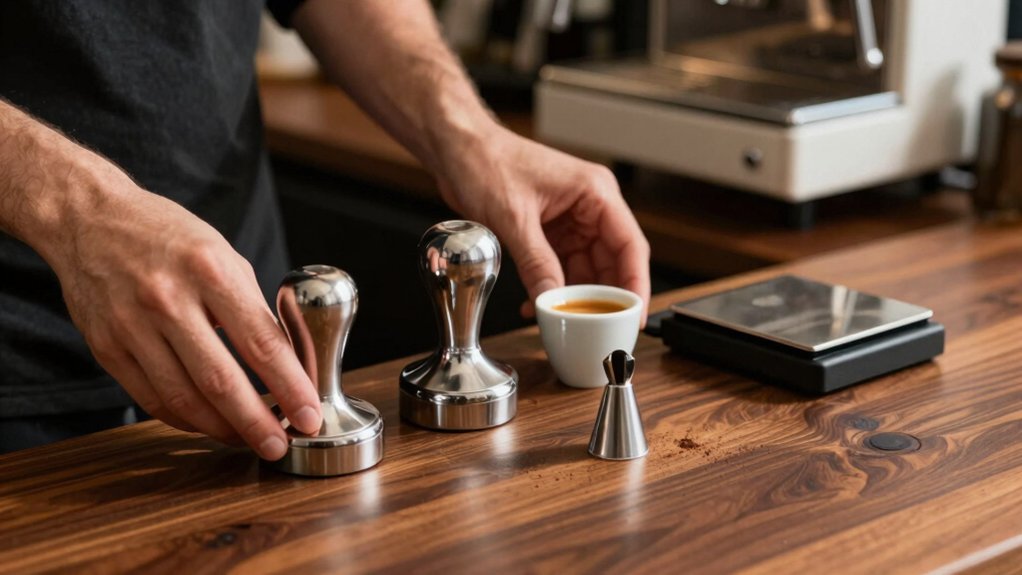
You’ll learn key espresso terms so you can diagnose and dial shots precisely: grind controls flow and extraction time (finer = slower, coarser = faster). Dose is the dry weight you aim for with tight tolerances (±0.1–0.3 g). Yield and time define extraction; channeling shows uneven flow. Use a diagnostic pull to check puck, flow, and taste.
Keep scale precision and routine to reduce variability. Keep going and you’ll get practical steps to tune each variable.
Quick Overview
- Extraction: The process where hot water passes through coffee grounds is controlled by grind, dose, time, and yield to determine strength and flavor.
- Grind Size: Particle fineness controls flow rate and extraction time. Finer means slower and more extracted; coarser means faster and less extracted.
- Dose and yield: Dose is dry coffee weight, while yield is liquid output. Their ratio (brew ratio) guides target strength and extraction.
- Pull diagnostics: Observe flow, time, yield, and taste on a diagnostic pull to identify channeling, over-extraction, or under-extraction.
- Scale and tolerances: Use precise scales (0.1 g or better) and small dose tolerances (±0.1–0.3 g) for consistent and repeatable shots.
Grind Size vs Extraction Time
How does grind size steer extraction time? You control extraction time by dialing grind size: finer grinds increase resistance, slow water flow, and lengthen extraction. Coarser grinds do the opposite. You’ll balance surface area and flow to hit target TDS without over- or under-extracting.
| Grind Setting | Typical Extraction Time | Result |
|---|---|---|
| Fine | 18–30 s | Higher yield, risk of over-extraction |
| Medium-fine | 30–35 s | Requires adjusted ratio or dose |
| Coarse | Extended | Lower yield, needs longer contact |
If shots pull too fast, make grind finer or increase dose. If too slow, coarsen grind or reduce dose. Watch for channeling and adjust burr alignment to keep extraction time consistent.
0-second Pull Checklist
Ready for a better second pull? You’ll refine technique quickly by treating the second pull as a diagnostic run: observe flow, time, yield, and taste. Then adjust only one variable. Prioritize consistency and use knob calibration to fine-tune pressure or steam settings that affect extraction stability.
- Check puck integrity and edge seal before locking in the portafilter.
- Time the shot and compare against target extraction window.
- Measure yield and note flow pattern for channeling signs.
- Taste for balance; adjust grind or dose if sour or bitter persists.
- Verify knob calibration and machine temperature stability between pulls.
Apply one change at a time. Document results and iterate until your second pull reliably matches your desired profile.
Dose Weight Tolerances
You’ll set a target dose range and watch how variability from grinder clumps, tamp inconsistency, or static affects each shot. Use a precise scale with fine resolution so you can define acceptable tolerance limits (for example ±0.1–0.2 g for single doses) and spot drift quickly.
Then adjust your dose to compensate for yield changes so extraction ratios stay consistent and repeatable.
Target Dose Range
Why does the exact dose matter so much when dialing in espresso? You control extraction chemistry with grams, so setting a clear target dose narrows variables and improves repeatability. Define a target dose based on your basket, grind, and desired yield; that central value anchors adjustments to time and yield.
Then specify a practical dose range: typically ±0.2–0.5 g for precision dosing to accommodate minor weighing inconsistencies without derailing flavor. Staying inside that dose range keeps solubles-to-water ratios stable, preserving balance and body. You’ll be able to reproduce preferred shots and compare changes after tamp or grind tweaks.
Treat the target dose and dose range as deliberate constraints; they guide consistent dosing, faster dialing-in, and reliable sensory feedback.
Dose Variability Causes
Once you’ve locked a target dose and narrow tolerance, small weight swings still creep in and change extraction. Understanding where those swings come from helps you keep shots consistent. You’ll track bean clumpiness, grinder retention, and static that alter dose between doses.
Dose consistency depends on steady grind distribution and routine dosing technique: knock, purge, and timed dosing cut variability. You’ll inspect grind settings for drift; clean the chute; and monitor hopper fill to avoid irregular feed. Tamping uniformity matters: uneven pressure or angle shifts puck density and required dose to hit the same extraction.
Also account for humidity, bean age, and operator habits that subtly change bulk density. Control those inputs and your dose tolerance becomes manageable, repeatable, measurable.
Scale Precision Needs
How precise does your scale need to be to keep dose swings from wrecking extraction? You’ll want resolution and repeatability that let you detect gram-level and sub-gram deviations affecting yield and flavor. Treat dose control as a measurable variable: use inconsistency metrics (standard deviation, range) across repeated doses to quantify grinder and tamping variability.
If your standard deviation exceeds desired limits, dose swings will translate into extraction shifts. Choose a scale with 0.1 g resolution for routine dosing and 0.01 g for highly controlled experiments. Verify performance regularly with simple calibration methods: known test weights, zero checks, and placement tests to catch drift or nonlinearity.
Precise measurements let you isolate other variables and chase consistent shots.
Acceptable Tolerance Limits
Wondering how tightly you need to hold dose weights to keep extraction predictable? You’ll aim for small tolerances because dose variance directly shifts extraction and flavor. Practically, keep dose ±0.1–0.2 g for single doses and ±0.2–0.3 g for doubles in daily service; tighter for competition or sensory work.
Those limits assume stable grind consistency and disciplined calibration habits for the grinder and scale. Monitor and log dose spread, then tighten or relax tolerances based on shot variability and palate sensitivity. If crema, time, or taste wander beyond acceptable bounds, reduce tolerance and verify tamping and distribution before blaming beans.
Clear, consistent tolerances let you isolate variables: grind, yield, or time; and make targeted adjustments confidently.
Adjusting For Yield
Dose-to-yield control matters because small changes in dose shift your brew ratio and extraction more than you might expect. You should set and hold tight tolerances when adjusting for yield. When you change dose even a gram or two, your target yield and extraction percentage move; therefore, adjust grind and extraction time methodically.
Use a calibrated scale and record dose, yield, and time to isolate variables. Prioritize grind consistency before chasing tamping pressure. Inconsistent particle size forces compensations that mask true effects. Once grind is stable, standardize tamping pressure and technique so you can evaluate real yield impacts.
Iterate in small steps, keeping one variable fixed at a time. You’ll converge on reproducible recipes with predictable flavor and body.
Frequently Asked Questions
How Does Crema Form and Why Does It Matter?
Crema forms when hot, high-pressure water extracts coffee oils and CO2, creating tiny gas bubbles stabilized by proteins and lipids: this is crema formation.
You’ll notice crema stability depends on fresh beans, proper dose, grind and extraction; stable crema signals good emulsification and trapped gases. It matters because it carries aroma, contributes to body and mouthfeel, and indicates extraction quality.
You can diagnose freshness and technique quickly.
What’s the Difference Between Ristretto and Lungo?
Ristretto vs lungo differences: A ristretto uses less water and a shorter extraction, giving a sweeter, more concentrated shot. A lungo uses more water and a longer extraction, yielding a milder, sometimes more bitter cup.
Crema formation changes. Ristretto often has thicker crema; lungo can show thinner, paler crema. Crema importance remains: it signals extraction quality and traps aroma. You’ll still use crema cues to judge balance and freshness.
How Often Should I Replace Grinder Burrs?
You should replace grinder burrs roughly every 500–1000 pounds of coffee or about 1–2 years for home use. Commercial shops will need them more often. For grinder burrs replacement frequency, track dose counts and taste shifts.
Set a grinder maintenance cadence: inspect burrs quarterly, clean monthly, and re-calibrate grind settings after replacement. Use burrs replacement timing based on wear, inconsistent particle sizes, or persistent taste degradation. Don’t wait too long.
Why Does My Espresso Taste Sour or Bitter?
Sour means under-extraction and bitter means over-extraction; you’re tasting imbalance. Sour vs bitter flavors come from extraction time, dose, grind size, water temperature and channeling.
You’ll fix sourness by finer grind, longer extraction or hotter water; fix bitterness by coarser grind, shorter shot or cooler water. Balancing acidity requires tweaking dose, yield and time while ensuring even tamping and fresh beans so flavor becomes clean and sweet.
How Do Milk Textures Differ Between Latte and Cappuccino?
You’ll notice latte and cappuccino milk textures differ mainly in foam density and milk textures: a latte uses silky, low-foam steamed milk for a creamy, integrated texture. A cappuccino has thicker, denser foam density with distinct airy microfoam above equal parts espresso and milk.
You’ll steam milk longer for cappuccino to introduce more air and stiffness. For a latte, you’ll stretch less, aiming for smooth, glossy pourable milk.
Conclusion
You’ve now got the essentials: grind size and extraction time are inseparable, and that 0-second pull checklist prevents sloppy starts. Keep dose within tight tolerances and understand what drives variability: tamp, distribution, and scale precision.
Use a scale that matches your tolerance needs, set acceptable limits, and adjust for yield by tweaking dose or grind, not instinct. Apply these rules consistently, and you’ll turn repeatable measurements into reliably excellent espresso.