Home Coffee Bar Setup Basics
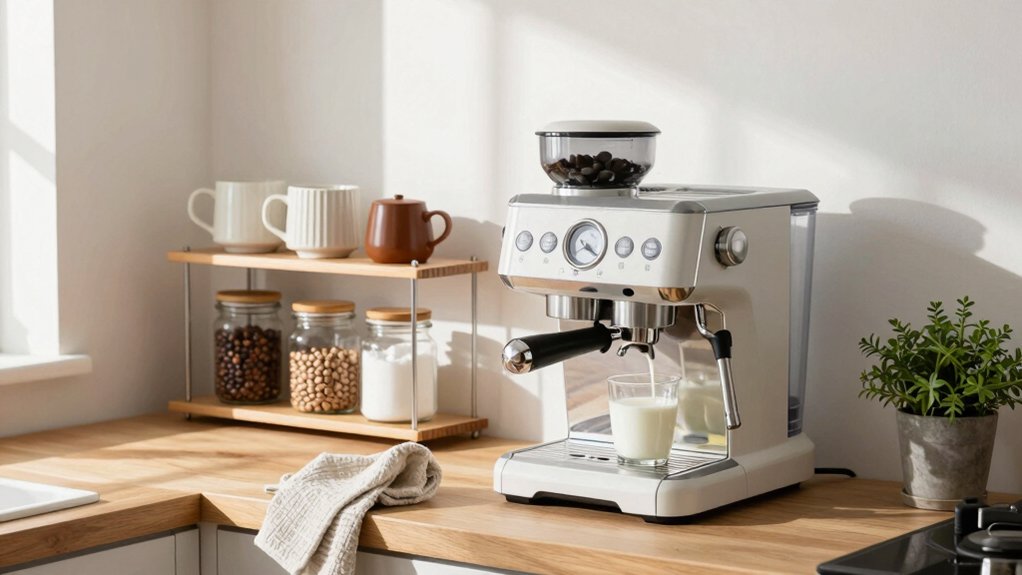
Measure your counter and pick a machine that fits. Typical home semiautos run 9–15″ wide, 16–20″ deep and 14–22″ high, weighing 20–26 lb, so it sits stable and serviceable. Lay out a water zone, tamping zone and venting clearance. Match portafilter size (53–58 mm) to your baskets and wrist torque.
Test tap hardness and plan descaling. Aim for 70–150 ppm TDS with moderate calcium. Follow a methodical maintenance rhythm and you’ll get consistent flavor and longevity as you go further.
Quick Overview
- Measure available counter depth, width (9.3–14.6 in typical machines), and height (13.7–21.7 in) to ensure secure, serviceable placement.
- Choose a machine weight-matched to surface strength (20–26 lb for heavier units) and allow clearance for heat vents and tamping.
- Designate a maintenance zone for water refills, descaling, waste disposal, and easy access to controls and portafilter.
- Confirm portafilter diameter (58, 57, or 53 mm) and use consistent wrist torque and matching baskets for even dosing.
- Test tap water hardness and install appropriate conditioning (carbon, ion-exchange, or cartridge) to protect equipment and flavor.
Espresso Machine Dimensions Chart
Where will your machine live on the bar? You’ll measure width, depth, and height against available surfaces so the machine sits secure and serviceable. Think tactile weight on wood or metal, how steam warmth rises, and how controls fall to hand for user ergonomics and routine espresso machine maintenance.
| Width (in) | Height (in) | Depth (in) |
|---|---|---|
| 9.3–14.6 | 13.7–21.7 | 16.5–19.6 |
Place heavier 20–26 lb units on stable countertops or dressers. Mobile bar carts suit lighter, compact models. Leave clearance for water access, tamping, and heat vents. Mark a service zone for descaling, reservoir refills, and waste disposal so maintenance stays methodical and quick.
Portafilter Sizes & Torque
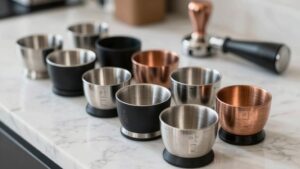
Although portafilter size might seem like a small detail, it directly affects your dosing, tamping feel, and extraction consistency; so measure and match it to your workflow. You’ll notice the metal’s cool weight in your hand, the lip seating snugly into the group head. Check portafilter compatibility with your machine: 58mm and 57mm are common. Smaller commercial home units use 53mm.
Consistent torque when locking in the portafilter matters: apply the same wrist torque each time so seals and water flow repeat. Match basket dose to diameter for even puck depth and uniform extraction. Tune your routine: grind, distribute, tamp, and lock with measured force.
- You’ll feel confidence.
- You’ll hear a steady drip.
- You’ll see a cleaner crema.
- You’ll taste balance.
Water Hardness Recommendations
You should measure your tap water hardness first to know how dissolved minerals will shape extraction and mouthfeel. Aim for about 50–150 ppm total hardness (roughly 70–150 mg/L as CaCO3) and adjust conditioning or bottled options if you’re outside that range.
Use that result to plan descaling frequency and whether a simple carbon filter, ion exchange cartridge, or blended mineral packet best preserves flavor while protecting equipment.
Measure Water Hardness
How hard is your water, and how will that affect the flavor and longevity of your equipment? Start by testing: use a liquid test strip or a digital TDS/hardness meter to quantify calcium and magnesium levels. Hold the strip or probe as instructed, note ppm or °dH, and record results in a simple log.
Compare readings to recommended ranges for espresso and pour-over; adjust your descaling cadence based on measured hardness. Harder water needs more frequent cycles. If readings are high, consider a filtered reservoir, water softener, or bottled water for brewing.
Smell and look for mineral buildup on shower screens and boilers as visual cues. Repeat tests quarterly or after plumbing changes to maintain consistent extraction and protect hardware.
Effects On Flavor
Minerality shapes both taste and machine health, so measure your water hardness and adjust brewing choices accordingly. You’ll notice soft water highlights acidity and floral top notes but can leave the cup thin. Moderate hardness rounds acidity, enhances body, and preserves aroma balance. Hard water mutes delicate flavors and can emphasize bitter, chalky elements.
Aim for total hardness around 70–150 ppm (as CaCO3) for balanced extraction: enough minerals to carry sugars and aromatics without overpowering. Use blending, bottled mineral water, or a simple remineralization recipe to reach target levels. Taste methodically: brew identical doses with varying hardness, sniff for aroma balance, and score sweetness, acidity, and aftertaste to select the best profile for your beans.
Descaling Frequency Guide
Water hardness not only shapes cup clarity and balance but also determines how often your equipment needs descaling. Measure hardness or check municipal reports. If your water tastes metallic or leaves visible spots, mineral buildup is likely. Soft water reduces scale; you can descale every 6–12 months. Moderately hard water calls for descaling every 3–6 months. Very hard water requires monthly attention.
Discard common descaling myths that promise you can skip regular maintenance; they risk clogged boilers and dull flavor. Use a sensory check (slower flow, altered steam, bitter extraction) alongside a schedule. Flush systems after descaling, rinse thoroughly, and record dates. A methodical log prevents surprises and keeps espresso clarity consistent and equipment reliable.
Ideal Mineral Range
What mineral balance should you aim for to get clean, expressive extraction without scale buildup? Aim for an ideal mineral concentration around 70–150 ppm total dissolved solids, with moderate calcium (40–70 ppm) and low magnesium. That range preserves brightness, body, and aroma while limiting deposits on heating elements.
Taste the cup: clarity in the mid-tones and a clean finish signal good water compatibility with your beans. Measure with a TDS meter or check local water reports; then compare to these targets. If your water falls outside the band, adjust before brewing (conditioning options discussed elsewhere).
Track hardness and machine performance methodically. Note extraction clarity, crema texture, and any mineral film to maintain consistent, sensory-forward results without accelerating maintenance.
Conditioning Options
Several practical conditioning options will help you keep hardness in the 70–150 ppm range without dulling flavor or accelerating scale: use a simple pitcher filter for modest softening, install an under-sink or counter-top cartridge with partial demineralization for steady calcium around 40–70 ppm and low magnesium, or fit a dedicated coffee machine water filter designed to balance minerals while trapping chlorine and particulates.
Choose based on flow needs: pitchers suit occasional brews, cartridges give consistent extraction for daily use, and machine filters protect internals. Test water, note sensory shifts—brightness, mouthfeel, crema—and adjust. Avoid unrelated topic tangents or irrelevant discussions when deciding.
Maintain replacement schedules; stale filters degrade taste and invite scale.
Frequently Asked Questions
Where Should I Place a Coffee Bar in a Small Apartment?
Place it where outlets and counter space meet: near your kitchen, entryway, or beside the living room sofa for cozy layout ideas and space saving placement. You’ll feel the warm steam, hear the grinder, and access mugs easily.
Use a narrow bar cart, end table, or floating shelf; keep grinders, beans, and cups within arm’s reach. Arrange lighting and textiles to invite lingering. Then tuck storage under or behind for a tidy look.
Can I Use a Bar Cart for Cold Brew Storage?
Yes, you can. Use a bar cart for cold brew storage by dedicating a lower tier to sealed jars or growlers, labeling freshness and keeping lids tight so aromas stay bright.
Arrange bottles methodically; group syrups and glassware. Add a small ice bucket on a rolling tray for service. This bar cart organization gives you accessible cold brew storage solutions that look tidy, smell fresh, and pour cleanly every time.
What Lighting Makes a Coffee Station Feel Cozy?
You want soft lighting that bathes the station in warmth. Use warm accents like low-watt bulbs, amber LEDs, or a small table lamp to create a gentle glow.
Combine ambient textures — woven shades, matte ceramics, and soft towels — with clean lines in fixtures and shelving to keep it organized. Layer light sources: a dimmable overhead, a task light for brewing, and subtle strip lighting to highlight mugs and create inviting depth.
How Often Should I Replace Coffee Filters?
You should replace disposable paper filters after each brew. You should replace washable/reusable filters every 1–3 months depending on use and cleanliness. How often to replace depends on filter longevity: paper offers single-use consistency. Cloth may last weeks with daily rinsing. Metal filters can endure months but need descaling and scrubbing to avoid oil buildup.
Smell, taste changes, or visible residue signal it’s time to replace or deep-clean your filter.
Which Mugs Best Show Coffee Crema?
You should pick crema retaining mugs and latte art friendly mugs with narrow rims and slightly tapered walls to concentrate aroma and preserve foam. Choose thicker ceramic or double-walled glass to maintain temperature; this enhances crema texture and mouthfeel.
Matte or glossy white interiors let you see color and microbubbles clearly. Handle shape should balance weight for steady pours. Clean, pre-warmed vessels give the most vivid sensory contrast and stable crema presentation.
Conclusion
You’ve set up a coffee bar that actually performs; now keep it precise. Use the right machine size and portafilter torque so extraction feels solid and predictable. Test and measure water hardness regularly. You’ll notice flavor clarity shift with mineral levels.
Descale on a schedule tied to your hardness readings. Aim for the ideal mineral range or use conditioning to protect equipment and highlight sweetness, balance, and texture in every shot you pull.