How to Store Ground Coffee So It Stays Fresh Longer
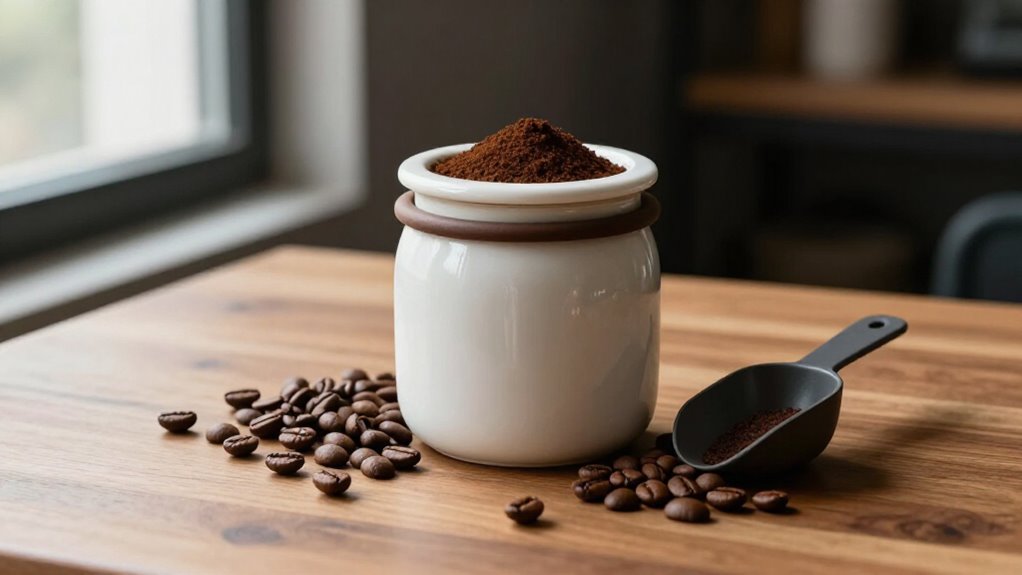
Store ground coffee in an airtight, opaque container with a gasket, leaving little headspace.
Keep it in a cool, dry, dark pantry away from heat, light, steam, and odors.
Seal the lid immediately after each scoop, and don’t refrigerate daily-use coffee.
Label the grind or opening date and aim to use it within 14 days; freeze extra portions airtight, then thaw completely before opening.
Check for musty smells, dampness, clumps, or spots, and learn below.
Oxygen and Light Exposure
Because oxygen accelerates the loss of coffee’s volatile aromas, exposed grounds quickly develop a flatter, duller flavor. Each opening replaces the atmosphere with air containing about 21% oxygen, accelerating oxidation and stripping aroma. You’ll preserve more character by exposing your grounds for as little time as possible, then closing the package immediately.
Don’t leave a dose beside the brewer while you prepare water, and don’t repeatedly open your supply throughout the day. Light adds a source of damage: sunlight and even artificial light can accelerate aroma loss, especially when heat accompanies exposure. Keep coffee in a cool, shaded pantry, away from windows, stovetops, ovens, and other warm spots. If you’re storing grounds in a valve bag, the valve can release carbon dioxide while limiting oxygen entry.
An Airtight, Opaque Container
Choose an airtight, opaque container with a silicone or rubber gasket to limit oxygen, moisture, light, and odor exposure. Select ceramic, opaque glass, or food-grade stainless steel; each blocks light and resists flavor transfer.
Match the container to your usual purchase:
- Choose a size that leaves minimal headspace.
- Transfer grounds immediately after opening the original bag.
- Keep bulk portions sealed separately to reduce repeated air exchange.
Store the canister in a cool, dry, dark pantry away from ovens, stovetops, sunlight, and warm appliances. Open the lid only when necessary, then close it firmly. Clean the container every few weeks, or whenever you change roasts, using mild soap; dry it completely before refilling.
Don’t refrigerate daily-use grounds, because condensation and odors can compromise them.
14-Day Freshness Timeline
For the best flavor, aim to use your ground coffee within 14 days of roasting, when its aroma is most vibrant. Once ground, coffee loses flavor quickly, so keep your grinding-to-brewing interval short. Oxygen, heat, moisture, and light accelerate staling throughout this window.
| Timing | What you’ll notice |
|---|---|
| Days 1-3 | Bright aroma and clear flavor |
| Days 4-14 | Strong quality with gradually softer aroma |
| After day 14 | Noticeable decline; use soon or freeze |
If you’ll finish the coffee within two weeks, store it at a cool, stable room temperature, away from sunlight and the stove. By day 14, you’re near the peak quality window, although the coffee may remain drinkable for another week or two.
For longer storage, freeze airtight portions and thaw each portion before opening.
Seal the Lid Immediately
Choose an opaque, airtight container, and close the lid quickly after each scoop to minimize air exposure. Check that the seal is secure, then store the container away from heat.
Choose An Airtight Container
An opaque, airtight container will protect ground coffee from oxygen, light, and moisture, but you’ll only get that benefit if you seal the lid immediately after every pour. Choose a rigid canister with a gasketed, locking lid rather than a standard zipper bag. Opaque metal or dark, food-safe plastic blocks light, while the tight seal limits oxygen and moisture that flatten flavor and cause clumps.
If you’re transferring grounds from a one-way-valve bag, place them in the container and close it immediately. A vacuum-sealed or evacuated model provides stronger protection for longer storage. Reducing oxygen from about 21 percent in air to roughly 0.5 percent can increase shelf life by up to 20 times.
Keep it cool, dark, and dry between uses at home.
Minimize Air Exposure
Once you’ve picked an airtight container, seal the lid immediately after every scoop to limit oxygen exposure. Oxygen drives oxidation, which strips away volatile aroma compounds and makes coffee taste flat. Ground coffee can lose its fresh character rapidly after opening, so don’t leave the container exposed while you measure or prepare your brewer.
Use an opaque container with a dependable gasket to reduce oxygen from the roughly 21% found in air to about 0.5% inside; this can slow oxidative flavor loss dramatically. If you’re using a valve bag, press the opening gently and reseal it without letting air re-enter. Store the sealed container on a cool, dark, dry pantry shelf. Portioning coffee into small containers also limits exposure of your unused supply.
Close The Lid Quickly
After each scoop, close the lid immediately to limit the oxygen that causes ground coffee to stale. Open the container only when you need to dispense portion, then close it before measuring or brewing. Every moment of exposure lets oxygen reach the grounds and speeds aroma loss.
If you use a one-way valve bag, reseal it after each use. The valve can release carbon dioxide from coffee without allowing air to enter, but it only works when you keep the bag closed.
For longer storage, you can tape over the valve after closing the bag. Avoid leaving coffee open while you measure; portion what you need and return the rest to its container. This habit preserves aroma and flavor between uses throughout the week.
Check The Seal
Closing the lid quickly works only if the seal is airtight. After each pour or scoop, press the lid firmly into place and check that it closes completely. An airtight, opaque container blocks oxygen and light, helping protect aroma; a loose lid lets air in and can make grounds taste stale within days.
If you use the original one-way-valve bag, squeeze out excess air and reclose it tightly after every use. The valve allows carbon dioxide to escape without admitting much oxygen, but it can’t compensate for a poor closure.
For consistency, divide your supply among several small airtight containers. You’ll open each one less often, limiting air exchange. Don’t wait to reseal: once opened, grounds stay freshest for about one to three weeks. Replace any lid, zipper, or gasket that no longer seals.
Store Away From Heat
Keep ground coffee away from your stove, oven, sunny windows, and warm counters, since heat speeds the loss of volatile aroma compounds. Choose a cool, dark pantry shelf instead, where temperature stays stable and light can’t flatten the flavor. Don’t store the container above an oven or beside an appliance; repeated warming accelerates staling.
Seal the lid immediately after every scoop. An airtight, opaque container limits oxygen exchange and blocks light while preventing warm air from cycling through the grounds. Press the seal firmly, then return the container to its storage spot rather than leaving it open during brewing. If your coffee was freshly roasted, aim to use it within about two weeks for peak quality. Heat exposure makes that freshness window shorter.
Account for Humid Kitchens
In a humid kitchen, keep your coffee in an opaque, airtight, moisture-proof container. Store it on a high, dry shelf away from the stove and dishwasher, where damp air can accelerate staling.
Don’t refrigerate it; instead, portion and freeze extra grounds, removing only what you’ll use and resealing the rest immediately.
Control Kitchen Humidity
When your kitchen runs humid, moisture can accelerate staling and create moldy off-flavors, so store ground coffee in an opaque, airtight container, ideally vacuum-sealed, on a cool, dry pantry shelf away from the oven, dishwasher, and other steam sources.
In a frequently humid kitchen, don’t rely on a loose bag or frequent access. Every opening lets warm, moist air enter, and grounds may taste stale within days. You can place a moisture-absorbing desiccant pack in the pantry area, but never loose inside the coffee.
For coffee you’ll use after several weeks, freeze sealed portions; remove only what you need, and reseal the rest promptly. Keep each portion sealed until it reaches room temperature to limit condensation. This routine protects aroma while reducing clumping and flavor loss.
Avoid Damp Storage Areas
Humidity quickly dulls ground coffee and can introduce moldy, unpleasant flavors, so don’t store it near sinks, dishwashers, kettles, or stove hoods. Steam settles on nearby surfaces and can seep into coffee during repeated kitchen use, accelerating staling and encouraging clumps or mold.
In a humid kitchen, choose the driest pantry or cabinet at stable room temperature, well away from appliances that release heat or vapor. Don’t use the refrigerator as a freshness fix: condensation during temperature changes can add moisture, while coffee can absorb odors from stored foods. If the grounds show condensation or feel humid, discard them rather than brew a questionable batch. Improve the storage location immediately, and buy amounts you can use within two weeks of opening, especially in damp conditions.
Use Moisture-Proof Containers
Choose an opaque, moisture-proof airtight container, ideally one with a one-way valve or vacuum seal, to keep damp air from dulling coffee’s flavor or making it taste musty.
In a humid kitchen, place it in a dry pantry away from sinks, kettles, steam, and heat. Wipe condensation from the container before you reseal it, and keep the lid closed between scoops; even brief exposure lets moisture and oxygen accelerate aroma loss.
Don’t refrigerate ground coffee: it can absorb odors and develop condensation despite the closed container. If you need to store grounds longer, divide them into airtight, vacuum-sealed bags before freezing. Thaw each sealed portion completely before opening it to prevent moisture from collecting. For peak flavor, buy only what you can use quickly.
Sweet Aroma on Opening
Want that sweet aroma to greet you when you open the bag? Use ground coffee within two weeks of roasting, when its volatile compounds remain vibrant. Seal it in an airtight, opaque container, and keep it in a cool, dark pantry away from heat and light. Oxygen speeds staling, replacing sweet notes with a flat smell. Don’t refrigerate opened coffee: it can absorb odors and lose aromatic character.
For storage beyond a few weeks, vacuum-seal small portions and freeze them. Correctly sealed grounds can retain freshness for up to about two years. Open one portion at a time, and let it reach room temperature before opening. Avoid repeated freeze-thaw cycles and temperature swings; they can dull the aroma. Buy only what you’ll finish promptly.
Mold or Moisture Checks
Before brewing, check your ground coffee for visible spots, unusual clumping, or a musty smell. Fresh grounds should flow freely and smell clean, while moisture may create lumps.
A dull, bitter cup usually signals staleness, but a musty, sour, or “off” odor raises a safety concern.
If you find fuzzy spots, discoloration, dampness, or clumps that remain after loosening, don’t use the coffee. Discard it rather than trying to dry it out; mold and its toxins can extend beyond what you see.
Keep your supply dry in an airtight, opaque container placed in a cool, dark location. When you freeze portions, seal them tightly and let each portion reach room temperature before opening. Reseal leftovers immediately, and avoid repeated opening, which can introduce condensation and moisture.
Avoiding Fridge Door Storage
The refrigerator door isn’t a good place for ground coffee because frequent temperature changes can introduce moisture and accelerate staling. Each opening exposes the package to cycling humidity, while nearby foods can transfer odors that dull coffee’s aroma. Original packaging won’t fully prevent these effects.
Instead, keep your coffee in a cool, dark pantry, away from ovens, sunlight, and other heat sources. Use an airtight, opaque container, and remove only the amount you’ll brew.
- Choose a stable pantry shelf rather than the refrigerator door.
- Keep grounds away from spices, cleaning products, and strongly scented foods.
- Freeze airtight portions only when you need storage beyond a few weeks.
For everyday use, pantry storage protects flavor better than refrigeration. Freeze portions; open them at room temperature.
Label the Grind Date
Label the grind date as soon as you open or prepare your coffee so you can track its short freshness window. If you grind beans yourself, write the grind date on the container. If you buy pre-ground coffee, record the opening date instead.
When the roast date is available, note it too: coffee’s freshest within about two weeks of roasting. A practical rule is “grind date + 14 days,” which gives you a target for using the grounds before aroma fades.
For opened coffee, track the opening date because room-temperature freshness usually lasts only one to three weeks. Use an airtight, opaque container and keep it in a cool, dark pantry, but let the label guide your brewing priority. If you freeze a vacuum-sealed portion, add the freeze date. Properly sealed grounds can last up to two years; without ideal sealing, plan on six months.
Conclusion
To keep ground coffee fresh, limit its exposure to oxygen, light, heat, and moisture. Store it in an airtight, opaque container, seal it immediately, and keep it in a cool, dry cabinet, not the fridge door.
Label the grind date and aim to use it within 14 days for the brightest flavor. Before brewing, check for dampness, clumps, mold, or a flat smell. If you notice any warning sign, discard the coffee to protect your health.