How to Descale an Electric Kettle
You can descale your electric kettle quickly and safely by unplugging and cooling it.
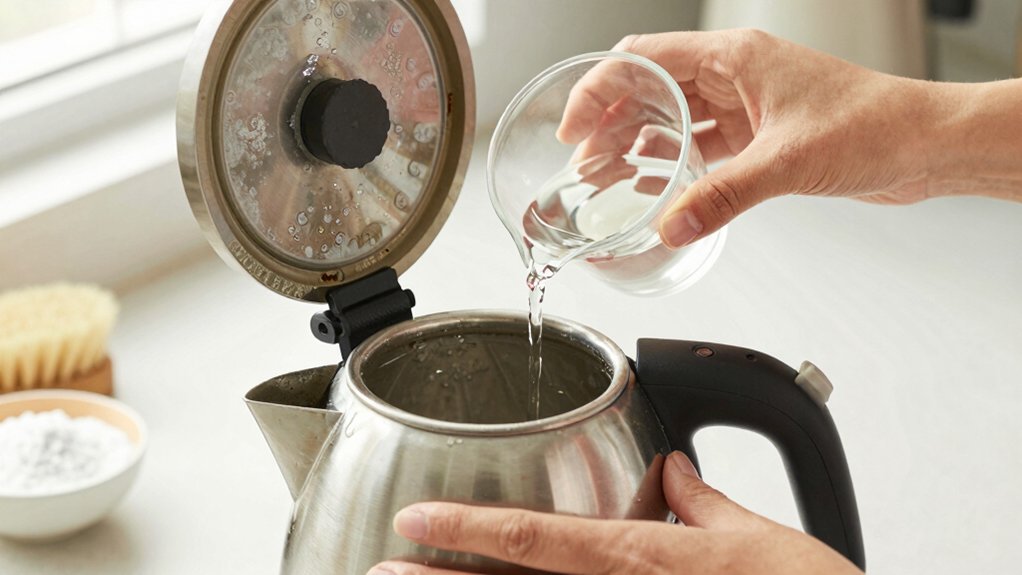
Then, fill it with a 50/50 white vinegar-water mix or a citric acid solution and let it soak for 20 to 60 minutes; longer for heavy buildup.
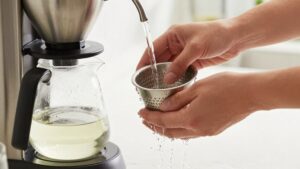
Scrub the kettle and removable filter screen with a soft brush.
Rinse 3 to 5 times and dry fully before use.
Inspect screens every 1 to 2 weeks if you have hard water and keep a simple maintenance log to track treatments.
More tips follow.
Quick Overview
- Unplug the kettle, let it cool, and remove any detachable filter or screen before cleaning.
- Use a descaling solution: 50/50 white vinegar and water, or dissolved citric acid, poured to cover the element.
- Soak for 20–60 minutes (vinegar); 30–45 minutes (citric acid); or follow commercial descaler instructions for heavy scale.
- Empty and rinse 3–5 times. Boil fresh water once, then discard to remove any residual taste or acid.
- Clean removable filter screens separately: soak, scrub with a soft brush, rinse, dry, and reattach.
Limescale Removal Timechart
Wondering how long to leave a descaler in your kettle? You’ll match soak duration to how bad the limescale buildup is: light scale needs shorter soaks, and heavy deposits need extended treatment or repeats.
Use vinegar 20–60 minutes after boiling. Citric acid often works in 30–45 minutes. Commercial descalers and stronger mixes usually require ~60 minutes. Rinse thoroughly 3–5 times and remove filters to soak separately.
| Method | Typical Soak | When to Extend |
|---|---|---|
| Vinegar 50/50 | 20–60 min | Heavy buildup, repeat |
| Citric acid | 30–45 min | Resistant phosphate scale |
| Commercial descaler | ~60 min | Follow product notes |
Monitor scale visually. Longer soaks penetrate deeper and restore efficiency.
Descale Frequency by Water Hardness
Knowing how long to let a descaler work helps. However, how often you need to descale depends mainly on your water hardness. You should match descaling frequency to local mineral content and usage to preserve heating efficiency and taste. Keep acidity levels appropriate for the method you use. Always follow electrical safety: unplug before treating and avoid wetting the base.
- Hard water (high calcium/magnesium): descale approximately once monthly to prevent heavy buildup.
- Moderate hardness: descale every 6 to 8 weeks; inspect for visible scale.
- Soft water: descale every 1 to 3 months; more if you boil daily.
- Heavy use (multiple daily boils): increase frequency regardless of hardness.
Filter-Screen Cleaning Schedule
Check the filter screen every 1–2 weeks if you use the kettle daily, or with each descaling cycle in less frequent use. You’ll remove most mesh filters by twisting or gently pulling. Then soak them in your chosen descaling solution (vinegar or citric acid), scrub with a soft brush, rinse thoroughly, and let dry before reattaching.
Keep a simple maintenance log noting inspection dates, cleaning method used, and any replacements to track performance and adjust frequency.
When To Inspect
How often should you inspect the kettle’s filter screen? Aim for inspection timing tied to observable mineral buildup cues rather than a rigid calendar. Check the screen every 1 to 2 weeks if you notice cloudy boils, slower boils, or visible flakes; these are clear mineral buildup cues.
In hard-water areas, inspect weekly and after any heavy use spells. In softer-water settings, every 2 to 4 weeks suffices unless you spot residue sooner. Always look for discoloration, reduced water flow, or trapped particles when you pour or refill. Remove and view the mesh against light; even thin scale films warrant a quick soak.
Keeping inspections responsive to cues prevents performance loss and makes descaling more effective and less frequent.
Frequency By Usage
Want a simple rule you can follow? Check and clean the filter-screen based on how often you boil and your water hardness. If you use the kettle daily in a hard-water area, inspect and descale or remove and soak the screen monthly.
For moderate use or softer water, every 6–8 weeks is usually enough. Light, infrequent use can stretch cleaning to every 2–3 months; however, watch for visible buildup or slower boils. These care tips prevent limescale from reducing heat transfer and spoiling flavor.
Also, inspect for design flaws: poorly seated screens or hard-to-reach crevices trap scale and need more frequent attention. Adjust your schedule to actual buildup rather than fixed dates.
How To Remove
Looking for a quick way to remove the filter screen? You’ll first unplug the kettle and let it cool completely. Most mesh screens are held by a twist-fit or a small clip behind the spout; use a flat tool or fingernail to release the clip. Then slide the screen out gently.
If it’s stubborn, apply a few drops of warm soapy water to loosen mineral grip and wiggle steadily; don’t force metal parts. Place screens in a separate bowl with vinegar or citric acid solution to soak (per safety rules). Then rinse and dry fully before reattaching.
Don’t treat this as an unrelated topic or off topic task. Regular screen removal on a schedule prevents limescale and preserves kettle performance.
Cleaning Methods Recommended
When should you remove and clean the filter screen? Remove it every 1–4 weeks depending on water hardness and use: monthly in hard-water areas; every 1–3 months in softer water. Make it part of your cleaning rituals. Soak the mesh in a 50/50 white vinegar solution or diluted citric acid for 10–30 minutes. Scrub gently with a soft brush, rinse thoroughly, and dry before reinstalling.
For light buildup, a baking soda rinse can finish cleaning without damaging the mesh. Always unplug the kettle and avoid wetting electrical parts. Regular filter care preserves flow, prevents taste changes, and supports efficient heating without compromising kettle aesthetics. Inspect the screen each time you descale and replace it if damage or persistent clogging remains.
Maintenance Record Keeping
How often should you log filter-screen cleanings? You should record each cleaning date, method used (vinegar, citric acid, baking soda), and any visible scale removed. In hard-water areas, log monthly; in soft-water regions, note cleanings every one to three months. Track usage intensity and kettle performance to spot history trends that predict when more frequent action is needed.
Keep entries brief: date, cleaner, duration, and results. Use a simple paper log or a notes app timestamped with photos of the filter screen for objective evidence. Sustainability considerations mean recording and minimizing chemical use: choose citric acid or shorter vinegar cycles when effective.
Review the log quarterly and adjust frequency based on documented outcomes.
Frequently Asked Questions
Can Descaling Void My Kettle’s Warranty?
Yes, improper descaling can affect your descaling warranty and may void coverage if you use abrasive cleaners or submerge electrical parts. You should follow manufacturer instructions and avoid harsh scrubbing on nonstick coating safety grounds.
Never let liquids reach the base or wiring. Use recommended mild acids (vinegar/citric) or baking soda as directed. Rinse thoroughly and keep records of maintenance to support warranty claims.
Can I Use Vinegar in a Kettles With Nonstick Coating?
Yes, you can use vinegar, but be cautious: descaling myths often exaggerate damage. Vinegar (diluted 50/50) effectively removes limescale without harming most nonstick coatings if you avoid prolonged soaking and don’t submerge electrical parts.
Rinse thoroughly and run two full boils of fresh water afterward. If your kettle’s manual warns against acids, follow that. Coating safety from manufacturer guidance beats general advice.
Is Descaling Safe for Glass Electric Kettles?
Yes, descaling is safe for glass electric kettles when you follow descaling safety and respect glass kettle materials. Use mild acids (50/50 white vinegar and water or citric acid) and avoid prolonged boiling or harsh abrasives that can stress glass.
Unplug first, keep liquids away from electrical components, rinse thoroughly, and remove any filters for separate soaking. Repeat if scale remains. Do not mix baking soda with acids.
Can I Run the Kettle Empty After Descaling to Dry It?
Yes, after thoroughly rinsing out all descaling solution, you can do an empty run to help kettle drying. Unplug first, fill partially with water, and bring to a quick boil. Then pour out to clear residues and speed evaporation.
Repeat if any taste or smell remains. Do not overheat a dry kettle; avoid running it completely dry. Let the interior air-dry fully before next use to ensure safety and no residual odors.
How Do I Remove Rust, Not Limescale, From a Kettle?
You remove rust by scrubbing with a paste of baking soda and water or using white vinegar soaked on the spot; neither being a limescale method. For rust removal ideas, use a soft brush or fine steel wool gently. Rinse thoroughly and dry immediately to prevent recurrence.
If rust is extensive inside an electric kettle, replace it. Don’t risk electrical or taste issues. Always unplug and avoid soaking electrical parts.
Conclusion
Descaling keeps your kettle efficient, safe, and long-lasting. Follow the timechart and adjust frequency for your water hardness and usage: more often with hard water or daily use.
Clean filter screens regularly and inspect seals, cords, and heating elements for buildup or damage. Use proven methods (vinegar, citric acid, or commercial descalers) and rinse thoroughly. Track maintenance dates so you don’t skip sessions.
Stay proactive: small, regular care prevents costly repairs and preserves performance.