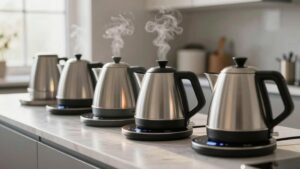
Siphon Coffee Maker vs Pour-Over: Which Brew Method Wins?
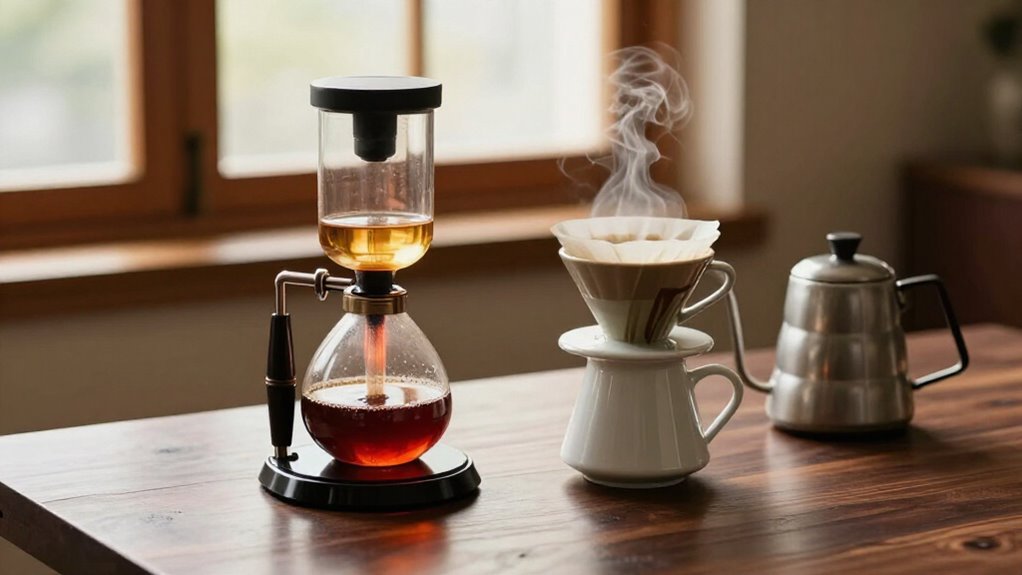
Siphon wins if you value fuller body, aromatic intensity, and theatrical immersion, as its cloth or mesh filter passes oils and micro-fines.
Pour-over wins for crisp clarity, portability, and repeatable control: paper filtration sharpens origin notes, though gravity drawdown can run 2:30–4:00.
A siphon’s 45–60-second immersion demands precise heat timing, while cloth filters require rinsing and complete drying.
Choose based on texture, workflow, and batch size; more will clarify the choice.
Filter Design and Flow
Because the filter controls both particle retention and drawdown speed, its design strongly shapes each brewer’s cup.
In a siphon, cloth or metal mesh lets oils and micro-fines through, giving you a rounder texture and fuller body. Fine disks or paper adapters sharpen clarity but may restrict flow and complicate fit. Check the gasket and seating: a leak or clogged pores can cause channeling or a stalled return.
| Filter | Retention | Cup effect |
|---|---|---|
| Cloth | Medium fines | Silky body |
| Metal | Variable fines | Oil-rich texture |
Paper suits you when you want isolated origin notes; siphon cloth suits you when you prefer aromatic depth, fuller texture, and balanced clarity. Clean cloth, metal, ceramic, and gaskets regularly to preserve neutral flavor and consistent flow across repeated daily brewing cycles.
Vacuum Pressure vs Gravity
Filter design determines what passes through; the brewer’s driving force determines how that liquid moves. In a siphon, you heat water in the lower chamber until vapor pressure pushes it upward. After you combine water and grounds, you typically manage a brief 45–60-second immersion near 93°C.
Remove the heat, and the pressure drop creates a vacuum, pulling the brew back through the filter.
With pour-over, you supply the driving force indirectly: gravity draws hot water through the coffee bed and filter into your vessel. You’ll usually brew around 90–96°C, adjusting kettle temperature, pour rate, and pauses across a 2:30–4:00 cycle. The siphon’s pressure-driven sequence concentrates control around heat removal and timing; pour-over gives you continuous control through measured pouring and flow at each stage.
Cup Clarity and Body
How a brew feels and reads on the palate depends largely on what the filter retains. With paper, your pour-over removes oils and fine sediment, producing a crisp, transparent cup with defined layers and bright origin character. You’ll notice a structured texture, especially in lighter single origins, though the body can feel comparatively light.
A siphon uses cloth or metal filtration, so more oils and micro-fines reach your cup. Its vacuum drawdown separates grounds quickly after heating stops, helping preserve aromatics while creating a smoother, rounder mouthfeel. You’ll get more weight without losing clarity: fruit and chocolate notes remain distinct, but their edges feel less angular.
In a Yemen Mocha comparison, siphon coffee tasted fuller and balanced, while pour-over appeared brighter, more layered, and lighter. Choose based on whether you prioritize definition or texture.
Cloth Filter Cleaning Demands
That added body comes with more maintenance: after each siphon brew, rinse the cloth filter thoroughly and dry it completely so retained oils don’t turn rancid and taint the next cup. Unlike a pour-over’s disposable paper, your reusable cloth needs gentle handling and occasional scrubbing; work residue free without stretching or tearing the weave.
Store it fully dry in a clean, breathable place, because trapped moisture can create musty aromas or mold. As oils accumulate, filtration slows and more sediment passes, shifting the cup from defined to heavier and muddier. Replace the filter when cleaning no longer restores flow or mouthfeel.
You’ll spend more attention on this small component, but disciplined care preserves the siphon’s balanced texture. Pour-over cleans easier; siphon needs disciplined care.
Batch Size and Portability
When you’re brewing for one, a pour-over dripper offers a compact, flexible setup that scales from a single cup to a modest carafe by adjusting the dose and vessel. You pack the dripper, filters, and kettle, then brew a cup wherever you have hot water. Its simple workflow suits travel and small batches, while paper-filter disposal keeps cleanup quick.
A siphon serves a chamber volume, so larger groups require a larger unit. You’ll also carry the brewer, heat source, and glass chambers; assembly demands sealing the tube, heating water, and managing vacuum drawdown.
That ritual can produce a balanced, textured cup, but it’s cumbersome away from home. For mobility and batch flexibility, choose pour-over; choose siphon when presentation and immersion performance outweigh transport convenience.
Fuel and Replacement-Part Costs
Siphon brewing usually costs more to maintain because each session requires burner fuel, while pour-over only requires hot water from a kettle. Pour-over shifts recurring expense toward paper filters. Those filters remain inexpensive and disposable, so you can discard them after extraction without storage or cleaning.
A siphon also carries more replacement exposure. You may eventually replace a cloth filter, connecting tube, or glass chamber, and cloth requires thorough rinsing and storage to limit oil buildup and degradation.
That care can shorten replacement intervals and add labor alongside cost. By contrast, a pour-over needs fresh filters and occasional dripper or kettle upkeep. If you brew daily, you’ll spend less per cup with pour-over; choose siphon only if its ritual justifies higher operating and parts costs.
Glass Breakage and Burns
With delicate glass chambers, a siphon demands more careful handling than a pour-over’s sturdier dripper and carafe. Its upper and lower vessels, joined by a siphon tube, can crack from bumps during assembly, cooling, or steam-damp wiping. Thermal shock, such as cold water on heated glass, magnifies that risk. Keep the brewer on a stable, heat-resistant surface and inspect seals and glass before heating.
At 92–95°C, expanding steam drives water upward, while an active burner heats the lower chamber and hardware. You can burn your skin on glass after you remove the flame. Heat-resistant gloves reduce injuries, but don’t rush transfers or handle mis-seated components.
Pour-over limits exposure: you direct hot water from kettle onto a dripper, with less glass to touch or break.
Hands-On Technique Tradeoffs
You’ll manage siphon brewing through heat timing, a brief immersion, and vacuum drawdown, while pour-over requires steady pouring, bed control, and a staged bloom. Siphon offers precise immersion control but demands more setup and cloth-filter maintenance; pour-over gives you faster cleanup and repeatable flow adjustments.
These technique choices also shape the cup: siphon tends toward rounded body, while pour-over emphasizes crisp acidity and layered clarity.
Brewing Effort Compared
Although both methods require precision, siphon brewing demands more hands-on control because you’ll heat the lower chamber to roughly 92–95°C, manage the vacuum drawdown, and time a 45–50-second extraction window. You’ll also dial a finer grind, around 110–140 in the example, so the hot immersion extracts evenly rather than tasting thin or bitter.
Stir timing and heat removal matter; a small lapse can stall the draw or flatten aromatics.
Pour-over feels more linear. You’ll bloom with 26g of water for 30 seconds, then pour stages toward a 226g yield, stopping as the bed nears exposure. Still, you must keep the stream steady, maintain 89–93°C water, and hold a 2:30–3:00 cycle.
That technique prevents channeling and produces a cleaner, brighter cup with less intervention overall.
Cleanup And Control
The hands-on tradeoff continues after brewing: pour-over cleanup stays simple, since you can discard the paper filter and quickly rinse the dripper, while siphon brewing leaves you responsible for the reusable cloth or metal filter.
You’ll need to wash it thoroughly and dry it fully, or retained oils turn stale and muddy the next cup. Siphon residue also feels heavier because its filter passes more oils and fines.
Control differs. With pour-over, you steer extraction through bloom timing, staged pours, and flow rate, reaching a 226-gram yield in three minutes. With siphon, you manage burner intensity, keep the chamber near 92–95°C, then remove heat to trigger vacuum drawdown.
A cue can stall flow or sharpen bitterness. Pour-over rewards repetition; siphon rewards timing but demands cleanup.
Best for Impressing Guests
If you want live brewing theater, you’ll impress guests with a siphon’s visible rise, 40–60-second immersion, and vacuum-driven drawdown. You’ll give them a hands-on experience by timing heat removal and stirring, while pour-over offers simpler, drop-by-drop participation.
For elegant table presentation, the siphon creates the stronger centerpiece, whereas pour-over delivers a cleaner, brighter cup with less setup.
Live Brewing Theater
For maximum guest impact, siphon coffee turns brewing into a visible three-stage performance: steam pressure lifts near-boiling water, typically around 93–100°C, into the upper chamber, the grounds steep, and vacuum pulls the finished coffee back through the filter.
This sequence gives you a stronger visual contrast than pour-over, where gravity guides staged water at roughly 90–96°C through the grounds over 2:30–3:00+. The siphon’s lower chamber boils visibly, then drawdown usually completes in under a minute after mixing.
A burner, glass chambers, and cloth or metal filtration add vintage atmosphere, while immersion extraction creates a fuller, clearer mouthfeel than paper-filtered pour-over. Yet pour-over offers quieter elegance and more predictable daily repeatability. For maximum wow-factor, choose siphon; choose pour-over when you want restrained precision.
Hands-On Guest Experience
When guests want to participate, a siphon turns brewing into a visible, hands-on performance: steam pressure lifts 92–95°C water into the upper chamber, guests can add and stir the fine-ground coffee, and removing the heat triggers a vacuum that draws the brew through the filter in about 40–60 seconds.
It gives you precise control over immersion time and stirring while guests notice the rising water, aromatic bloom, and richer mouthfeel from a cloth or metal filter.
Elegant Table Presentation
At the table, a siphon creates an unmistakable performance as steam pressure lifts 92 to 95°C water into the upper chamber, then a vacuum draws the brewed coffee back down through the filter. You can time this cycle while guests watch the liquid rise, steep, and return, producing a rich, full-bodied cup with smooth, rounded fruit acidity.
Its glass chambers, burner, and motion create theatre, showing berry or grape notes beside chocolate and caramel sweetness.
A pour-over looks refined but quieter. You’ll present a dripper, paper filter, and carafe, then pour controlled pulses at roughly 89 to 93°C over 2:30 to 4:00. The setup emphasizes clean lines, clarity, and layered acidity.
Choose siphon when you want spectacle and depth; choose pour-over when minimalist elegance and flavor will impress your guests.
Check Grinder Compatibility
Can your grinder produce the finer setting a siphon requires? Siphon brewing typically needs a 110–140 setting, about granulated-sugar fineness, because near-boiling water, around 92–95°C, contacts the grounds for only 45–50 seconds. Uniform particles help dissolve sweetness and preserve a clean yet rounded texture before vacuum drawdown. Check that your grinder adjusts precisely and doesn’t scatter excessive fines.
Pour-over generally favors a coarser 70–100 setting, closer to coarse salt, with water near 89–93°C flowing for 2:30–4:00. Grind too fine, and the bed drains slowly, producing muddy bitterness; grind too coarse, and the cup can taste thin. When you switch methods, recalibrate noticeably, even with similar ratios. A siphon may use 1:12, while pour-over often suits about 1:15 before tasting, then refine by flow, clarity, and flavor.
Conclusion
When you choose between a siphon and pour-over, match the brewer to your priorities. You’ll get a cleaner, lighter cup and simpler travel with pour-over, while the siphon delivers fuller texture, theatrical brewing, and precise temperature control.
Neither method wins universally: your grinder, filter maintenance, batch size, and tolerance for heat and breakage matter. If you value repeatable clarity, choose gravity. If you want aromatic depth and an engaging ritual, choose vacuum pressure, then practice consistently.