Instant Coffee vs Ground Coffee: Taste, Cost, and Convenience Compared
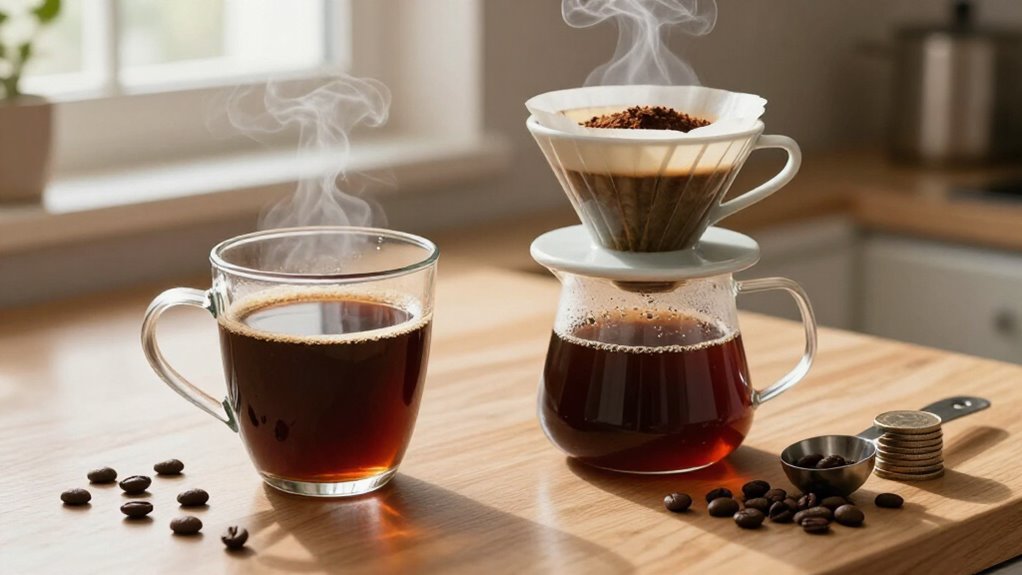
If you want speed and savings, choose instant: stir crystals into hot water for a smooth, low-residue cup in about 30 seconds, typically costing ₹2–5.
Ground coffee usually costs ₹8–15 per cup and takes five to 10 minutes, plus equipment and cleanup, but you’ll taste more sweetness, acidity, body, and floral or fruity aroma.
Instant can taste flatter or sharper, though premium freeze-dried Arabica improves character.
Your choice depends on your morning; more context follows.
Flavor, Caffeine, and Aroma
When you compare instant coffee with freshly brewed ground coffee, the difference is most noticeable in flavor and aroma: instant coffee often tastes flatter, sharper, and more bitter, especially when it uses Robusta-heavy blends; while ground coffee can reveal greater sweetness, acidity, body, and delicate floral or fruity notes.
You’ll also notice aroma fading quickly after instant coffee rehydrates; heat exposure during spray-drying can mute volatile compounds. Premium freeze-dried, Arabica-based options may retain more character, but they rarely restore every high note. You can get more caffeine per cup, although dose, bean type, and brewing method matter. Instant coffee may provide comparable antioxidants.
| Sensory cue | What you’ll perceive |
|---|---|
| Aroma | You’ll notice more subtle floral and fruity lift. |
| Caffeine | Your cup varies with dose, bean, and extraction. |
Instant Crystals vs Ground Beans
Although instant crystals start as brewed coffee, manufacturers concentrate and dry the liquid through spray-drying or freeze-drying, while ground beans remain roasted coffee milled to a chosen particle size. Spray-drying costs less but heat can mute volatile aromatics, leaving a flatter, sometimes burnt impression. Freeze-drying generally preserves more fragrance and bean character, especially when producers use quality Arabica.
By contrast, freshly ground beans can express clearer floral, fruity, nutty, or chocolate notes, depending on origin, roast, grind, and brewing method.
When you taste them, you’ll find instant coffee can seem chalky, sharply bitter, or sour, while ground coffee offers aroma, balanced sweetness, and acidity. Yet quality varies: premium freeze-dried instant can approach brewed coffee. Choose crystals for consistency; choose beans when nuance matters most.
Dissolving, Sediment, and Residue
Taste isn’t the only difference between instant crystals and ground beans; their behavior in water changes the cup’s texture, too. Instant coffee dissolves because manufacturers pre-brew and dehydrate it into soluble granules, giving you a noticeably smooth sip with little residue.
- Instant: You’ll see few particles because its solids are designed to dissolve.
- Ground: Brewing leaves some fine particles suspended, then settling as the cup rests.
- Texture: A finer or medium-fine grind often creates more sediment, especially when grounds remain immersed.
- Clarity: A filter traps particles, while unfiltered brewing leaves a heavier, grittier finish.
Because instant’s pre-processing standardizes solubility, you’ll get more consistent residue cup to cup. With ground coffee, particle size and contact time make each final mouthfeel less predictable overall.
Kettle Needed, Grinder Optional
Instant coffee keeps the setup simple: you’ll heat water, stir in the crystals, and have a drink in about 30 seconds, with no grinder or brewing device required. With hot water alone, granules dissolve smoothly, leaving a clean, quick cup.
You won’t measure a grind, adjust particle size, or manage extraction, so consistency comes easily, though you sacrifice control over aroma and strength.
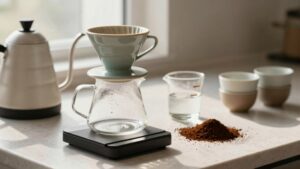
Ground coffee typically needs a kettle plus a brewing device, such as a drip brewer, French press, or espresso setup. You’ll match grind size to the method: finer grounds extract faster, while coarser grounds suit slower brewing.
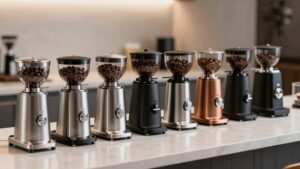
Buy whole beans, and you’ll also need a grinder; choose pre-ground coffee, and grinding remains optional. Brewing takes five to 10 minutes, plus cleanup.
Travel, Camping, Office Use
That simpler setup matters most when you’re traveling, camping, or supplying an office: instant coffee needs only hot water and can be ready in about 30 seconds, with no grinder, filters, or cleanup. Across airports, trails, and break rooms, packets travel light, and premium instant stays reliable for 18 months. Ground coffee tastes more aromatic and layered, but usually takes 5–10 minutes, equipment, and cleanup. Instant’s mild, sometimes flat sip contrasts with freeze-dried microground’s fuller roasted fragrance.
- Travel: Slip packets into your bag; use a hotel kettle or dispenser.
- Camping: Stir beside your stove; hot water is enough, even remotely.
- Office: Stock servings for consistent, quick cups during rushed meetings.
- Choice: Choose instant for speed; choose ground when aroma and ritual matter.
Unused Grounds and Spoilage
When you’re comparing unused coffee, ground beans generally lose their fragrant oils and bright flavour sooner, turning a once-aromatic cup dull and flat even before the product formally expires.
That doesn’t mean instant coffee is immune to age-related change. Its pre-dehydrated, soluble crystals contain little moisture, so sealed instant coffee typically keeps a steadier taste for around 18 months at room temperature.
Instant Coffee’s Acrylamide Levels
Because roasting and dehydration use heat, both coffee types can contain acrylamide, a compound formed during high-temperature processing. You may find slightly higher levels in instant coffee than in some ground varieties, although typical cups remain within accepted safety limits. Processing and roast intensity matter, so your choice can shift exposure without making either option inherently unsafe.
- Instant coffee can show slightly higher levels because extraction and dehydration add heat.
- Ground coffee still varies with roast intensity, bean, and brand.
- A darker, toastier cup signals roasting, not a measurable acrylamide level.
- You can compare labels if you’re monitoring intake.
Both remain safe in moderation; choose your preferred cup and keep overall daily intake moderate.
Packaging, Waste, and Recycling
You’ll find instant coffee in sealed jars or sachets that protect its aroma longer, while repeatedly opened ground-coffee bags can lose freshness faster. Instant formats create fewer discarded grounds, but mixed-material sachets may be harder to recycle than some ground-coffee bags.
To reduce waste, choose larger jars or bulk coffee, then follow your city’s recycling guidelines.
Packaging Materials
Packaging Materials
Instant coffee usually comes in sealed tubs or sachets that keep its dry crystals from absorbing moisture, clumping, or losing aroma for roughly 18 months at room temperature. You’ll notice that plastic tubs, aluminum cans, paper cartons, and multilayer sachets create a barrier against humidity, oxygen, or light.
- Plastic tubs feel sturdy and resealable.
- Aluminum cans block light and air effectively.
- Paper cartons feel light; inner linings protect coffee.
- Foil-lined sachets give you sealed portions.
Ground coffee often comes in smaller bags or cans with oxygen-limiting linings or valves.
Because grounds lose aroma faster after grinding, their packaging must restrict air and light; instant packs primarily repel moisture. You’ll feel it when seals preserve roasted, toasted aroma before you open.
Waste And Recycling
Packaging choices affect how much waste each coffee type creates after opening. Instant crystals come in lightweight jars or sachets, often producing less bulky material than containers ground coffee may demand. Its longer shelf life, about 18 months for premium brands, also helps you avoid throwing away coffee. Ground coffee lasts about 12 months at room temperature, and its fading aroma can leave beans or grounds destined for the bin, though sealed bags and tins can remain low-waste.
Recycling complicates the comparison. You can recycle glass jars and metal tins, but multilayer sachets and plastic liners often lack accepted collection routes. Check your local rules rather than assuming. Buy what you’ll use, store grounds airtight, and recycle accepted packaging; those habits matter more than the label alone.
Dorms, Offices, and Campsites
In a dorm, you can mix instant coffee with hot water in about 30 seconds, avoiding equipment, mess, and its often flatter, mildly bitter taste. In an office, ground coffee offers a fresher aroma and potentially 70–140 mg of caffeine per cup, but instant coffee keeps shared routines cheaper and simpler.
At a campsite, you’ll appreciate instant packets’ light weight and shelf life, even if brewed grounds provide a richer sensory experience.
Dorm Room Brewing
When space, time, and cleanup matter, instant coffee fits dorm rooms, offices, and campsites exceptionally well: add hot water, wait about 30 seconds, and you’re done. That simplicity suits your small room: a kettle, mug, and spoon replace a brewer, grinder, filters, and sink-side scrubbing. Ground coffee can take five to ten minutes and leave wet grounds behind, while instant costs roughly ₹2–5 per cup versus ₹8–15.
For a realistic dorm snapshot:
- Tear open a sachet; the aroma is brief, but the drink arrives fast.
- Sip a mild, sometimes chalky cup with sharper bitterness than fresh grounds.
- Choose premium freeze-dried instant when you want more bean character and less flatness.
- Store it dry; roughly 18 months of shelf life beats ground coffee’s approximate 12.
Office Coffee Routines
For offices, dorms, and campsites, instant coffee turns a teaspoon of granules and hot water into a drinkable cup within seconds, with no brewer, filters, or cleanup. You get a brisk, clean cup, though mass-market instant can taste sharper, flatter, or burnt than brewed Arabica; premium freeze-dried versions preserve more aroma.
You can store it at room temperature for about 18 months, whereas ground coffee lasts roughly 12 and loses aroma faster after grinding.
Ground coffee can taste deeper when your office has a brewer and you can spend five to ten minutes grinding, brewing, and washing equipment each morning. Instant costs ₹2–5 per cup versus ₹8–15 for ground, while caffeine ranges roughly 30–90 mg per teaspoon and 70–140 mg per brewed cup, respectively.
Campsite Convenience Factors
A kettle and a sachet are usually all you need to make instant coffee in about 30 seconds, whether you’re in a dorm, office, or campsite. That speed matters when mornings feel cold and cramped: you get a warm cup without hauling a grinder, filter, or brewer.
- Dorm: You sidestep equipment and get standardized taste, though the cup may taste sharper or flatter than fresh ground coffee.
- Office: You skip brewing and washing, trading released aromatics for a repeatable, low-mess drink between meetings.
- Campsite: Single-serve packets pack lightly; with limited water and no grinder, you’ll still make a smoky, warming cup beside tent.
- Choice: Choose ground coffee when aroma and complexity justify extra gear, time, and cleanup; choose instant when “right now” wins.
Pick by Morning Schedule
On packed mornings, instant coffee gets caffeine into your cup in about 30 seconds—just stir the granules into hot or cold water—while ground coffee suits a slower 5–10-minute routine involving drip, pour-over, French press, or moka-style brewing.
If you’re racing out the door, instant also travels well, costs roughly ₹2–5 per cup, and delivers a repeatable cup with little cleanup. A teaspoon provides about 30–90 mg of caffeine, so you can choose a lighter lift.
With 5–10 minutes, ground coffee costs about ₹8–15 per cup but rewards you with a fuller aroma and layered flavor. Your grind, freshness, and extraction shape each sip, though they can create inconsistency. Choose instant for speed and control; choose ground coffee when brewing itself is part of morning.
Conclusion
Ultimately, you’ll choose between instant and ground coffee by deciding which trade-offs fit your morning. Ground beans usually give you fuller aroma, layered flavor, and more control, while instant delivers convenience with a lighter body and no sediment.
Both provide caffeine, though amounts vary by product and preparation. You’ll also weigh equipment, packaging, waste, and acrylamide exposure. For speed, travel, or shared spaces, instant wins; for ritual and richness, ground coffee earns the extra minutes.