Light vs Medium vs Dark Roast Coffee: Which Should You Choose?
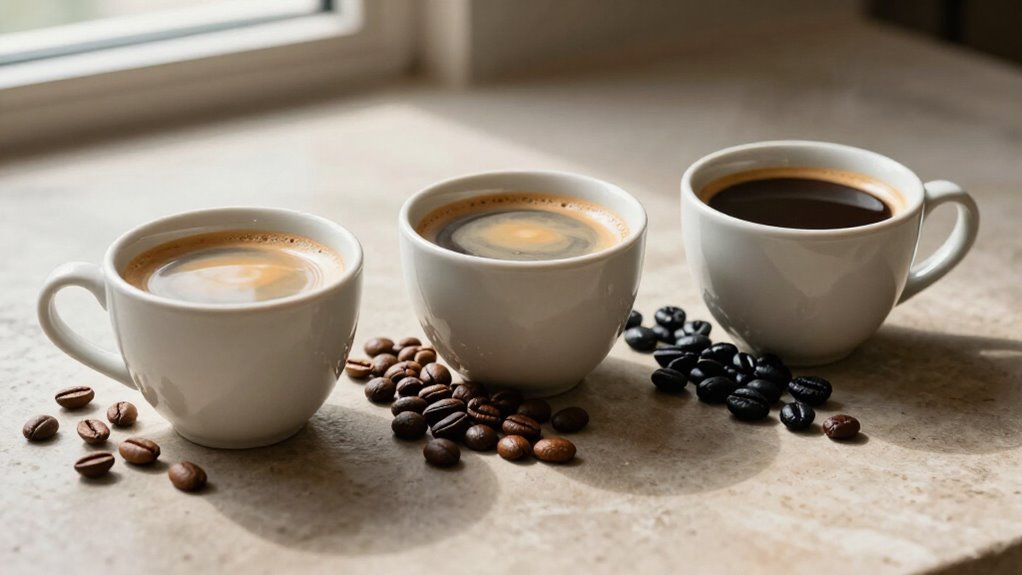
Choose a light roast if you want floral, citrusy, or tea-like flavors with bright acidity and a clean finish.
Pick medium roast for caramel sweetness, nuttiness, balanced acidity, and forgiving extraction.
Choose dark roast for heavy body, smoky toast, dark chocolate, and mellow finish, especially with milk or French press.
Roast level changes flavor more than caffeine; dose matters more.
Check freshness first, and weigh beans rather than scooping by volume.
Continue for guidance.
Flavor, Body, and Acidity
Although roast labels vary by roaster, they offer a useful sensory guide: light roasts tend to taste bright, floral, citrusy, and tea-like, with a lighter body and pronounced acidity; medium roasts round out those sharper notes with caramel sweetness, nuttiness, and more body; dark roasts trade much of the bean’s origin character for a fuller, heavier mouthfeel and bittersweet flavors of dark chocolate, toast, and smoke.
| Roast | Flavor | Body and acidity |
|---|---|---|
| Light | Fruit, floral, citrus; clean finish | Light-bodied; bright acidity |
| Medium | Caramel, nut, rounded fruit | Medium body; balanced acidity |
| Dark | Dark chocolate, toast, smoke | Heavy body; mellow acidity, longer finish |
You’ll choose light for origin clarity, medium for versatility, or dark when you want weight, bitterness, and roast-driven intensity in every cup you brew.
Crack Stages by Roast
During roasting, first crack marks the point when trapped steam escapes with audible pops, signaling that the beans have reached a light-roast profile, typically around 385–410°F. At this stage, you’ll see pale, dry beans and taste a bright, aromatic cup preserving origin character. Beyond first crack, moisture loss makes beans brittle, moving them toward medium at 410–430°F.
Heat breaks down acids and caramelizes sucrose, replacing sharpness with rounded sweetness and chocolate, nut, or caramel notes.
Dark roasting advances through additional crack stages, often reaching roughly 430–450°F or about 464°F by some definitions. Later snaps signal deeper carbonization and toasty, smoky aromatics. Acids convert into lactones and other compounds; bitterness rises, and origin brightness yields to a robust profile. Labels vary, so trust these cues.
Caffeine Levels by Roast
As beans move past first crack into medium and dark roast territory, heat reduces their caffeine slightly, so medium coffee roasted around 410–430°F typically retains marginally more by weight than dark coffee roasted around 430–450°F. Yet the difference is tiny: weigh equal doses, and your cup’s caffeine will be nearly indistinguishable.
By volume, however, dark beans are less dense after extended roasting, so a tablespoon holds fewer grams and may seem weaker.
Your perceived kick depends more on dose and bean variety than roast label. Robusta generally delivers more caffeine than arabica, while brewing choices determine how much reaches your cup.
A medium roast may taste sweet and chocolatey; a dark roast may taste smoky and bitter, but bitterness doesn’t reliably signal higher caffeine.
Grind Size Forgiveness
Your grinder matters most with light roasts, which can swing from bright and thin to sharply bitter when particle size misses the mark. Because these beans resist extraction, a coarse grind can leave lemony acidity hollow and sour, while excessive fines can push the cup toward harsh bitterness. Adjust one step at a time: finer if the brew tastes bright but thin, coarser if it tastes bitter or ashy.
Medium roasts offer more forgiveness; developed sweetness and smoother acidity can preserve balance across a broader particle range.
Dark roasts forgive the most, since lower acidity and smoky, roast-derived flavors conceal small errors, though an ultra-fine grind can still taste intensely smoky and overextracted. Let the finish guide your next adjustment with care.
Best Roast for Pour-Over
Once the grind is dialed in, pour-over usually favors a light roast, whose higher acidity and lower roast development can produce a clean, aromatic cup with citrus, berry, or floral notes. At roughly 385–410°F, these beans retain more of their farm character, while a delicate filter highlights volatile aromatics and a crisp finish. You’ll need a finer grind, hotter water, or longer contact to extract sweetness from these beans; otherwise, the cup can taste sour or thin.
Medium roast, around 410–430°F, gives you caramel sweetness, medium body, and smoother acidity, making it a forgiving alternative when you prefer balance over vivid origin detail. Dark roasts taste toasty, smoky, and bitter in pour-over, with muted acidity. Consider Pink Lady for a bright, complex profile.
Price per Brewed Cup
How much each cup costs depends more on your dose and brew ratio than on whether the beans are light, medium, or dark. A $21, $22 12-ounce bag can deliver comparable economics across roast levels when you weigh grounds and target the same beverage yield.
Extraction affects completeness: a darker roast may taste plush, smoky, and satisfying with milk or ice, while a lighter cup’s sharper aromatics might prompt additions. Those choices can raise your cost.
Don’t measure by scoop. Dark beans are less dense, so each tablespoon contains fewer grams, making servings pricier. Use a scale instead, then calculate bag price divided by total grams and multiply by your dose. Caffeine varies little by roast, so stimulation costs stay similar; dose and ratio matter.
French vs. Italian Roasts
Although both belong to the dark-roast family, French and Italian roasts diverge in intensity: French roast typically reaches about 430–450°F internally, producing toasty, smoky, and deeper chocolate notes, while Italian roast pushes farther into dark roasting.
You’ll taste French roast as restrained: its acidity falls, its body thickens, and its finish blends bittersweet chocolate with a smoky edge.
Italian roast intensifies those roast-driven sensations, bringing firmer bitterness, heavier body, and a persistent charred impression. Both obscure more origin nuance than lighter profiles, so choose French when you want boldness without maximum bitterness. Choose Italian when you prefer a robust, smoky cup that stands up to milk in espresso-style drinks. In a moka pot or espresso, adjust extraction: darker roasts can become harsh when overextracted.
Surface Oils and Freshness
As roasting intensifies, internal oils migrate to the bean’s surface, giving dark roasts a glossy sheen while light roasts usually remain matte and dry. Don’t equate that shine with freshness: air, heat, and light oxidize exposed oils, producing stale or rancid aromas sooner when storage is poor.
Judge beans by their fragrance and cup flavor, and store them airtight, cool, and dark.
Why Oils Appear
Those glossy beads on a coffee bean’s surface form when prolonged, hotter roasting weakens the bean’s internal structure and drives its oils outward. As heat intensifies, the bean expands and its cellular framework fractures, letting oil-rich compounds migrate outward.
That sheen feels slick and looks glassy, especially on dark roasts pushed toward or beyond second crack.
- Light roasts remain largely matte and dry because fewer oils reach the surface.
- Medium roasts may show a faint sheen, but usually lack visible oil.
- Dark roasts display the strongest gloss because longer, hotter profiles extract more oil compounds.
- Shine signals roast-driven oil migration, not superior bean quality.
A shiny bean tells you about thermal development and structure; it doesn’t necessarily promise better flavor.
Freshness And Storage
Once coffee leaves the roaster, every roast level gradually loses aroma and flavor, so light, medium, and dark beans all need the same protection from oxygen, humidity, heat, and light. Keep your beans in an airtight, opaque container away from heat and moisture; oxidation dulls volatile aromatics, turning your cup flat and muted.
Light roasts make fading citrus and floral notes especially noticeable, so you’ll want them within weeks of roasting for peak expression.
Dark beans often look glossy because roasting drives oils toward the surface. That sheen signals exposure to air, allowing oils to stale or taste rancid sooner when storage fails. Judge freshness with your nose: a lively, sweet aroma suggests intact aromatics, while a weak, papery smell indicates degradation, whatever the roast level.
Choose by Morning Routine
Match your morning pace with a medium roast for a quick, smooth cup, or a dark roast when milk, sugar, or espresso adds body. Consider brew time: light roasts reward a slower pour-over, while medium and dark roasts suit faster methods or cold brewing.
Then choose your flavor focus—bright citrus and florals, balanced caramel and nuts, or bold smoky chocolate.
Match Your Morning Pace
Your morning pace can guide your roast choice as much as your preferred flavor. If you’re rushing, dark roast delivers a bold, low-acidity profile: smoky, toasty, and bitter, that stays assertive with milk or over ice.
- Fast and forceful: Choose dark roast for immediate impact and a robust finish.
- Grab-and-go balance: Choose medium roast, developed around 410–430°F, for smooth sweetness and noticeable, rounded acidity.
- Unhurried brightness: Choose light roast for citrus, berry, and floral aromatics that feel vivid as you wake.
- Method-aware matching: Pair light roast with pour-over; reserve darker profiles for espresso or French press.
Caffeine varies little by weight, so let flavor and acidity lead. Medium remains the adaptable middle: complex enough to notice, mellow enough to drink routinely.
Consider Your Brew Time
When your morning is short, choose the roast whose flavor registers immediately rather than relying on extra brew-time adjustments. A light roast can give you a vivid impression: bright aromatics and a clean finish, though it may need grind and temperature control to extract evenly. If you can’t troubleshoot, medium roast offers the most forgiving option: balanced sweetness, moderate body, and acidity remain clear across a filter cycle.
Choose dark roast when you need a fast cup that holds up to preparation, dilution, or milk. Its lower acidity and fuller body feel substantial, while smoky, toasted chocolate notes persist through imperfect timing. Match the bean to your method and contact time, then dose by weight; small roast-related caffeine differences matter less than extraction and your routine.
Choose Your Flavor Focus
If you’re choosing coffee by morning mood, let flavor—not supposed “strength”—guide the roast. Match your routine to these sensory targets:
- Bright and lively: Choose light roast (about 385–410°F) for citrus, berries, and floral sweetness, with crisp acidity and less bitterness. A pour-over preserves its delicate origin character.
- Balanced and dependable: Choose medium roast (410–430°F) for smooth acidity, moderate body, and caramel, chocolate, or nut notes. It’s the most adaptable everyday choice.
- Bold and fast: Choose dark roast (430–450°F) for low acidity, fuller body, and smoky, toasty depth; especially satisfying with milk or over ice.
- Check the “strength” assumption: Roast level mainly changes flavor and mouthfeel, not caffeine. Medium and dark provide roughly similar caffeine when you measure beans by weight.
Choose what you’ll enjoy.
Match Roast to Milk Drinks
Milk softens acidity and rounds out texture, so roast strength determines whether the coffee remains distinct or fades into the drink.
Choose dark roast for lattes, cappuccinos, or hot-chocolate-style drinks when you want coffee to stay assertive. Its low acidity and smoky, toasty, dark-chocolate notes cut through milk’s sweetness and fat, leaving a coffee-forward finish.
Choose medium roast for smoother definition. Its medium body, restrained acidity, and caramel, chocolate, and nut tones remain distinct beneath steamed milk, creating balance without roast bitterness.
Choose light roast when brightness matters most. Citrus, berry, and tea-like aromatics create a cup, but milk can’t preserve their complexity. Match acidity and intensity to the drink: dark for robust contrast, medium for equilibrium, and light for fruit and floral character.
Conclusion
Ultimately, choose the roast that fits your palate and routine, not a rigid rule about quality. You’ll taste brighter acidity and clearer origin character in a light roast, while a medium roast balances sweetness, body, and clarity.
A dark roast delivers heavier bitterness, roast-driven aroma, and a fuller, oilier texture. Match grind, brew method, and milk accordingly, then adjust by taste. Fresh beans and careful extraction matter more than the label on your bag says.