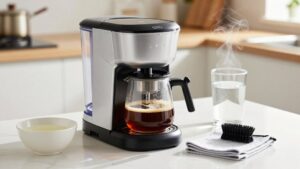
Cleaning vs Descaling a Coffee Maker: What’s the Real Difference?
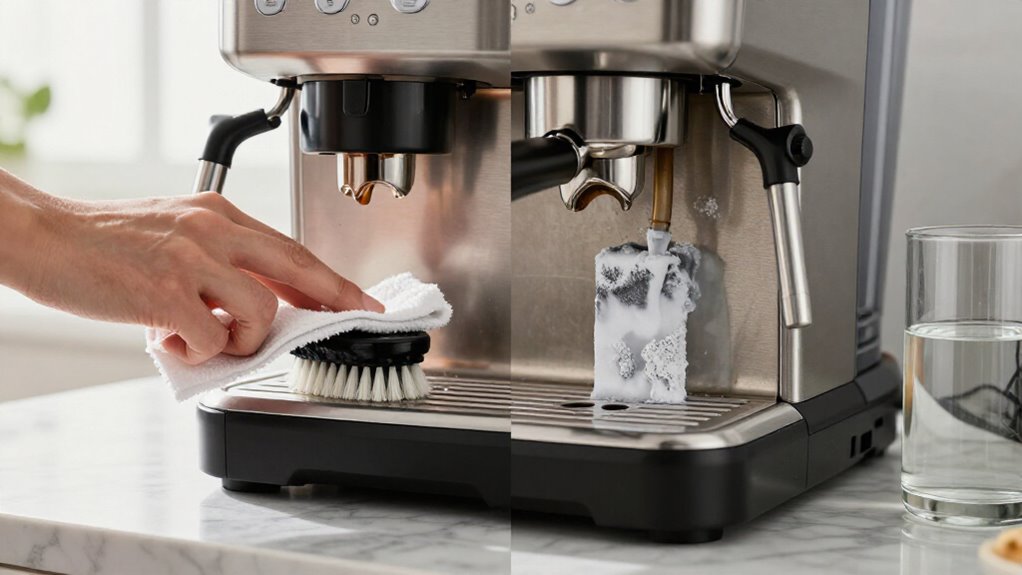
Cleaning removes coffee oils, grounds, and stale residue from baskets, carafes, portafilters, grinders, and other removable parts.
Descaling removes calcium and magnesium limescale from heating elements and water pathways.
Use detergent for oily buildup and an approved acidic descaler for minerals; they aren’t interchangeable, and avoid bleach or harsh solvents.
Clean after each use, deep-clean about monthly, and descale according to water hardness and the manufacturer’s schedule.
Flush twice with plain water; practical guidance follows next.
Mineral Buildup vs. Coffee Oils
When your coffee maker develops buildup, identify whether you’re dealing with mineral scale or coffee oils, because each affects different components and requires a different treatment. Scale comes from hard-water minerals and accumulates on heating elements, tubing, valves, boilers, and drip lines. Oils come from roasted coffee and cling to baskets, carafes, showerheads, mesh filters, portafilters, and wetted surfaces. Use clues to classify the problem:
| Clue | Mineral scale | Coffee oils |
|---|---|---|
| Evidence | White crust; slower flow or heating | Oily film; bitter, stale flavors |
| Main impact | Lower temperature and weaker extraction | Flavor carryover and rancidity |
If brewing slows or sputters, inspect scale-prone paths. If your cup tastes bitter despite normal flow, inspect oil-bearing parts.
Water hardness, usage, and recirculation determine how quickly each buildup returns.
Acids Dissolve; Detergents Lift
Use an acidic descaler to dissolve mineral scale and a detergent-based cleaner to lift coffee oils and rancid residue. Acids such as citric acid or vinegar break down calcium-carbonate limescale inside hot-water pathways and heating elements.
Detergents work differently: they loosen oily organic films and ground residue so you can remove them from the carafe, brew chamber, portafilter basket, and grinder burrs. Don’t expect detergent to dissolve limescale, and don’t use an acidic descaler to remove coffee oils. Follow the product’s concentration and contact-time instructions, then flush the machine with plain water.
Run two full rinse cycles; if vinegar odor remains, run a third. Never substitute bleach or harsh solvents, and don’t overexpose metal parts to acid. Check your manual before treating sensitive components.
Flavor Clarity and Brew Temperature
Flavor clarity and brew temperature often deteriorate for different reasons, so identify the buildup before choosing a treatment. If coffee tastes dull, sour, or stale despite normal brewing, coffee-oil residue may be interfering with extraction. Cleaning targets those organic deposits, helping fresh grounds extract more cleanly and restoring flavor definition.
Descaling addresses a different problem: calcium and magnesium scale inside heating elements and water pathways. That insulating layer can keep water from reaching the proper brewing temperature, producing lukewarm coffee, weaker extraction, and inconsistent flavor. Restricted flow may also lengthen brew times and destabilize temperature further. Use the manufacturer-approved descaling schedule and agent, especially when hard water or frequent brewing accelerates scale formation. Correctly matching the treatment protects both cup quality and heating performance.
Removable Parts and Rinsing
Once you’ve addressed flavor and temperature problems, handle the removable parts separately to prevent residue from returning to the brew path. Remove the carafe, brew basket, portafilter basket, and filter holder, then discard any used filter or pod. Rinse grounds and oils immediately; wash each part with water and dish soap after every use. This prevents rancid buildup that can make coffee taste bitter.
After descaling, wash these components separately so acidic residue doesn’t taint your next cup. Run two water-only rinse cycles through the machine; run a third if you can still smell vinegar. For vinegar descaling, run half a brewing cycle, let the solution stand 30–60 minutes, finish the cycle, and then rinse with water. Check crevices and drain parts before reassembly.
Cleaning the Water Reservoir
Although the water reservoir isn’t part of the heater’s descaling pathway, it can collect coffee oils, splashes, and stagnant moisture that cause stale or rancid flavors.
Cleaning the reservoir targets oily organic residue, not calcium, magnesium, or limescale inside the heating circuit; it complements rather than replaces descaling. Empty it fully, then wash it with warm water and mild dish soap after frequent use. Rinse thoroughly and dry completely to limit bacteria, yeast, mold, and corrosion.
- Remove the lid and inspect corners, seams, and outlet areas for oily film or trapped droplets.
- Once monthly, apply a coffee-machine cleaning solution—powder, tablet, liquid, or capsule—according to its directions.
- Refill only after the reservoir is clean and dry, preventing contaminated water.
Manufacturer Warranty Requirements
Cleaning the reservoir supports good maintenance, but warranty compliance also depends on following the manufacturer’s descaling requirements.
Before descaling, check your manual for the approved product, solution concentration, water volume, and procedure. Use the specified schedule—often every three months with normal water and about monthly with hard water—even if performance seems acceptable.
If your machine displays a descale warning, run the cycle promptly; continued operation with heavy scale may qualify as neglect under warranty terms. Follow every contact-time and circulation instruction, then flush the system through multiple complete cycles using plain water.
Keep purchase receipts and maintenance records, including dates, products, and alerts, so you can demonstrate compliance if service is required. Never substitute unapproved chemicals or skip rinsing; either action can jeopardize warranty coverage.
Vinegar May Harm Seals
Vinegar can damage or accelerate wear on some rubber and silicone seals, especially when you use it repeatedly or leave its acidic solution in the machine longer than recommended. Acid may linger in tubing and around gaskets, and inadequate rinsing increases contact time. You should treat vinegar as a descaler, not a universal one.
- Check your manual for seal sensitivities and descaling products.
- Use the vinegar concentration and contact time; don’t improvise stronger mixtures.
- Run at least two water-only cycles afterward; add a third if you detect vinegar odor.
For espresso machines or models with seal concerns, choose the manufacturer-approved descaler instead. If the descale light specifies a product, follow that instruction rather than substituting vinegar. Thorough flushing helps remove residual acid before next brew.
Effects on Machine Lifespan
Regular descaling prevents mineral buildup in the heater and water pathways, helping maintain efficient flow and temperature control. By reducing stress on pumps, boilers, and valves, you’ll lower the risk of failures and extend your coffee maker’s service life.
Follow the manufacturer’s schedule, adjust it for hard water, and rinse thoroughly after each treatment.
Prevents Mineral Buildup
When hard-water minerals such as calcium and magnesium accumulate, they form limescale on the heating element and inside water pathways. Descaling dissolves this insulating deposit, so water can circulate and heat normally instead of moving through narrowed passages. If you’ve noticed white faucet residue, soap scum, noisy pumping, sputtering, flakes, or lukewarm coffee, your water likely carries a mineral load.
Use this schedule:
- Descale about monthly in hard-water areas.
- Descale at least every three months with softer water.
- Act sooner when warning signs or the machine’s alert appears.
Follow the manual’s approved acidic solution, concentration, and contact time. Flush thoroughly with fresh water afterward; leftover acid can damage components and taint coffee. Filtered or softened water reduces incoming minerals, but it doesn’t eliminate the need to monitor scale.
Extends Equipment Lifespan
A consistent maintenance routine extends your coffee maker’s service life by addressing both mineral scale and coffee residue. Descale regularly to dissolve calcium and magnesium limescale that coats heating elements, restricts flow, and can clog boilers or pipes. In hard-water areas, descale about monthly; with softer water, every three months may suffice. Follow your manufacturer’s schedule and approved solution.
Clean oil and grounds residue from the carafe, brew chamber, portafilter basket, and grinder burrs frequently. Rancid deposits can clog components and accelerate wear, so wash the carafe after each use and deep-clean about monthly. After descaling, run several plain-water cycles to remove residual acid and limit chemical exposure. Using filtered water also slows scale formation, helping preserve stable heating, water flow, and machine reliability.
Daily Cleaning, Monthly Descaling
Rinse the carafe, brew basket, and brew chamber after each use to remove oils and grounds that can make coffee rancid or bitter. Descale monthly to dissolve limescale, especially if you use hard water; soft water may extend the interval to about three months.
After descaling, run at least two water-only cycles, and a third if odor remains, to keep coffee fresh.
Daily Rinse Routine
After every brew, wash the carafe and filter basket with soap and water to remove coffee oils and grounds that can make future cups bitter or rancid. Rinse thoroughly, then air-dry parts before reassembly. This daily step protects flavor and hygiene; it doesn’t remove mineral scale.
- Carafe: Scrub the interior, lid, and spout, where oily residue hides.
- Filter basket: Clear every perforation, then check for trapped grounds around the rim.
- Brewer surface: Wipe the warming plate and nearby splashes with a damp cloth; never immerse the machine.
About once a month, run the manufacturer-approved coffee-machine cleaner to dissolve oil buildup that rinsing misses. Keep soap out of the water reservoir unless your manual permits it. Reassemble only after a complete rinse and full air-drying.
Monthly Mineral Removal
Daily cleaning removes coffee oils and grounds, but it doesn’t clear calcium and magnesium scale from the water pathways or heating element. Descaling dissolves this limescale, helping your machine maintain proper temperature and flow. Plan it about monthly in hard-water areas; with soft water, every three months may suffice.
If you’re unsure, start monthly and adjust for usage and water hardness.
Mix an approved descaler with water according to the manufacturer’s instructions, then run the solution through the reservoir and heating circuit. Afterward, flush the machine with three water-only cycles to remove residual acidity, taste, and odor. Descale sooner if brewing slows, sputtering or pump noise increases, white flakes appear, or the descale light activates. Never substitute bleach, and don’t exceed recommended contact time.
Keep Coffee Fresh
Keep coffee fresh by washing the carafe, brew basket, and other removable parts after every brew to remove oils and grounds before they turn bitter or rancid. Rinse promptly, then use mild dish soap and a soft brush; weekly or monthly, deep-clean the brew path according to your manufacturer’s instructions.
Descale monthly because calcium and magnesium can hide on the heating element, lower temperature, and restrict flow.
- After brewing: Empty grounds, rinse parts, and leave them open to air-dry.
- Monthly: Run an approved descaler through the full circuit; don’t exceed its contact time.
- After descaling: Run two or three full water-only cycles until no acidic smell or taste remains.
Hard water may require monthly descaling; soft water often permits a three-month interval between treatments.
Finish With Two Rinse Cycles
Once descaling is complete, run at least two full water-only rinse cycles to flush residual solution and prevent off-flavors. Complete the first rinse cycle until it finishes, then empty the reservoir completely. Refill it with plain water and run a second complete cycle.
These water-only passes remove acidic residue from the heating circuit, tubing, and brew outlet, protecting your next cup from unwanted off-flavors.
If you still detect a vinegar or descaler smell, run one additional full rinse, for three total. Don’t shorten either cycle or reuse rinse water, because incomplete flushing can leave residue behind. Only after the required rinses should you wash removable parts, including the carafe and basket, with cleaner and fresh water. Then you can resume normal brewing, following manufacturer instructions.
Conclusion
Now you know that cleaning and descaling solve different problems: detergent removes coffee oils from removable parts, while an acid solution dissolves mineral buildup inside the water path.
Clean daily, descale monthly or according to your water hardness, and protect seals by following the manufacturer’s instructions instead of assuming vinegar is safe. Rinse the reservoir and brew circuit twice after either process. You’ll reliably preserve temperature, improve flavor, and extend your coffee maker’s service life.