
Espresso Channeling Causes and Fixes
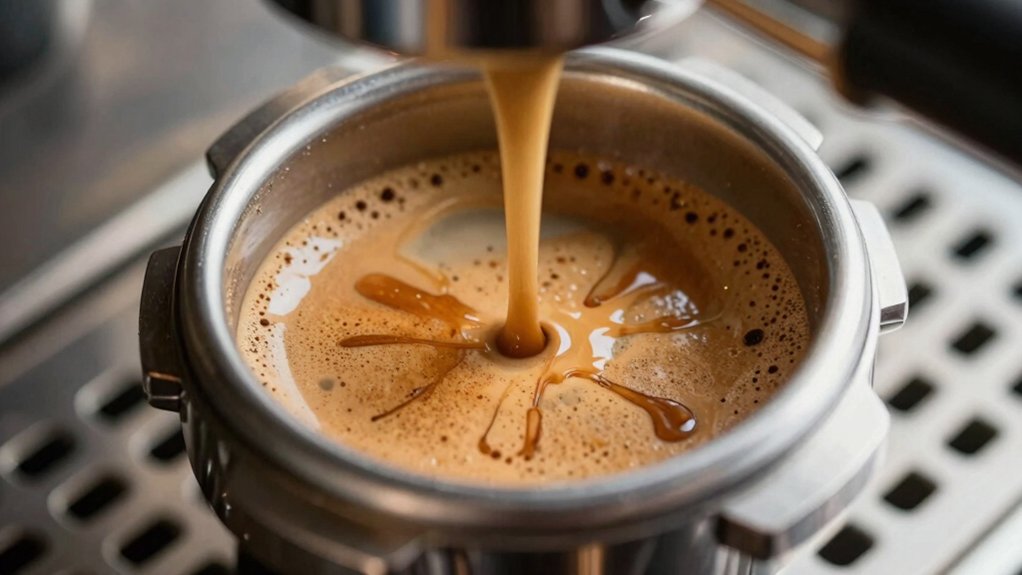
Channeling happens when water finds easier paths through uneven or inconsistent puck structure. You’ll fix it by controlling flow, grind uniformity, distribution, and dose. Narrow your particle size range, purge and align burrs, and weigh doses to keep pressure steady.
Use WDT or leveling to remove boulders and fines before tamping. Slow or profile flow to stop dominant channels from widening. Do these, and you’ll get steadier yields and crema. Keep going to learn specific checks and adjustments.
Quick Overview
- Excessive flow or pressure magnifies weak spots, widening channels and causing uneven extraction.
- Uneven grind size distribution (fines and boulders) creates variable permeability and promotes channeling.
- Poor distribution or inconsistent tamping leaves pathways for water to bypass dense puck areas.
- Incorrect grind setting or sudden mid-shot surging indicates grinder retention, burr misalignment, or over-fines.
- Measure dose, yield, and time; adjust grind, distribution, or dose when extraction percent deviates from target.
Channel Width vs Flow Rate
How does flow rate shape channel width in the puck? You’ll see that higher flow rate widens channels: water takes paths of least resistance. Quick flow magnifies existing weak spots and produces uneven extraction.
Lower flow rate narrows channels by increasing contact time and forcing more uniform percolation; however, you’ll need finer grind or longer time. Keep flow rate consistent to prevent sudden channel growth. Flow profiling helps by adapting pressure when a channel starts to dominate. Adjust grind, tamp, and machine flow to control channel width actively.
| Condition | Effect |
|---|---|
| High flow rate | Widens channels, raises channeling risk |
| Low/controlled flow | Narrows channels, improves uniformity |
–11% Extraction Yield Checklist
A % extraction-yield checklist helps you hit target extraction consistently by turning sensory goals into measurable steps: weigh dose and yield, time the shot, calculate yield percentage, and compare it to your target range (typically 18–22% for balanced espresso).
Use the checklist each pull to link extraction timing to flavor balance and isolate channeling causes quickly. Record numbers, note flow behavior, and adjust grind, distribution, or tamp based on deviations.
- Weigh dose and final yield, time extraction, calculate % yield, log results.
- Compare yield to target; if low, check for channeling signs or too-coarse grind.
- If high, inspect for over-fines, uneven tamp, or excessive extraction timing; refine technique.
Grind Particle Size Distribution
Check your grind’s particle size range and aim for a narrow distribution to keep flow even through the puck. Watch for fines and boulders; understand how your grinder type influences retention and particle spread. Adjust dose to minimize clogged or loose areas.
With small, targeted tweaks to grind uniformity and dosing, you’ll reduce channeling and get more balanced extractions.
Particle Size Range
Why does the distribution of grind particles matter so much for preventing channeling? You must control particle size range because excessive grind variance creates paths of least resistance: fines over-compress and block; coarse fragments let water rush through.
Aim for a tight particle size range so the puck compacts uniformly. That reduces localized permeability differences that trigger channeling. Balance your settings with dose accuracy: small changes in dose exaggerate effects of an uneven size range.
If you see spurting or rapid mid-shot flow, tighten the grinder or adjust burr alignment rather than changing tamp. Use timed test shots and inspect puck surfaces to confirm consistent resistance.
With focused refinement of particle size range and strict dose accuracy, you’ll dramatically lower channeling risk and improve shot consistency.
Distribution Uniformity
You’ll want to think of particle size distribution as the blueprint for how water will move through the puck: tight, consistent particles pack evenly and present uniform resistance, while a wide spread creates micro-routes that invite channeling.
Focus on improving distribution uniformity by dialing your grinder; aim for a narrow grind particle size distribution that minimizes voids. Check grounds for visible clumps and adjust burr alignment or grind setting to reduce fines and oversized fragments.
Use distribution tools or controlled tapping to level the bed before tamping so the uniform particle layout stays intact. Measure shot consistency: steady flow and balanced crema mean your distribution uniformity is working.
Small adjustments here prevent big extraction problems.
Fines And Boulders
How do fines and boulders affect your shot? You’ll notice that fines impact flow by filling channels and increasing local resistance, creating under-extracted pockets and bitter streaks. Tiny particles can glue together, slowing water early and then flushing suddenly; so watch extraction curve and taste for imbalance.
Conversely, boulders effects manifest as coarse islands that let water bypass mass, producing weak, sour lines and uneven crema. To control this, dial grind distribution, purge and weigh doses, and use brief leveling or WDT to break clumps before tamping. Aim for a consistent particle spread so pressure and flow stay uniform.
With focused adjustments, you’ll reduce channeling and extract cleaner, more consistent shots.
Grinder Type Impact
What role does your grinder play in channeling? You rely on consistent particle size distribution to prevent channels. Your grinder brand and burr material determine that consistency. Choose a grinder with well-aligned burrs and stable dosing to minimize fines and boulders.
Hardened steel burr material often offers durability, while ceramic burrs can yield cleaner particle profiles for some beans: test both if you can. Check for wobble, retention, and blade wear; they widen the distribution and invite uneven flow. Adjust grind setting incrementally and evaluate puck appearance and flow.
If you see multiple streams or spurting, suspect the distribution rather than tamping first. Invest in a quality grinder and maintain it: clean, calibrate, and replace burrs on schedule to reduce channeling risk.
Dose And Retention
Because dose and retention directly shape the puck’s particle size distribution, small changes in how much coffee you dose and how your grinder retains grounds can create big differences in extraction uniformity.
Check and weigh doses every shot to lock in dose consistency; a 0.1–0.2 g swing alters pressure and channel risk. Clear retained grounds between doses so old, coarser fragments don’t mix with fresh particles.
Monitor your grinder’s retention pattern and adjust burr alignment or purge routines to stabilize output. Aim for an even particle spread that supports predictable puck hydration during pre-infusion.
When you control dose and retention, you reduce heterogeneous flow paths, making tamping and distribution more effective and cutting channeling incidents without changing your grind setting.
Frequently Asked Questions
Why Does Crema Suddenly Vanish Mid-Shot?
Crema suddenly vanishes mid-shot because crema instability signals uneven extraction or rapid degassing: this often results from channeling or sudden changes in shot pacing. You’ll check grind, distribution, and tamp to stabilize bed density.
Then, slow or steady your flow to restore consistent pressure. Adjust grind finer or coarser only slightly; improve distribution tools, and tamp evenly. With focused technique and controlled shot pacing, you’ll regain stable, lasting crema.
Can Water Temperature Affect Channeling Risk?
Yes, temperature can raise channeling risk because hotter water lowers viscosity and extracts faster; this exaggerates density differences in the puck. You should control water quality and machine calibration so temperature stays stable. Inconsistent temps plus poor calibration create sudden pressure and flow changes that favor channels.
Focus on precise, even distribution, consistent tamping, and routine calibration checks to keep extraction uniform and reduce channeling chances.
Do Single-Dose Vs Bulk Dosing Change Channeling Frequency?
Yes, single dose usually reduces channeling compared to bulk dosing because you’ll work with fresher, more consistent grounds and avoid clump variability from repeated grinding.
With single dose, you’ll see more uniform distribution and fewer unpredictable density spots. If you bulk dose, you’ll need stricter distribution, regular de-clumping, and consistent tamping to compensate.
Focus on even filling, WDT or distribution tools, and steady, level tamp pressure to cut channeling risk.
Can Portafilter Basket Type Influence Channeling?
Yes, portafilter baskets can influence channeling. Different basket types (stock, precision, ridgeless, pressurized) alter water flow, hole pattern, and resistance; so you’ll see varied channeling tendencies.
Precision and ridgeless baskets promote uniform extraction when you distribute and tamp carefully. Pressurized baskets mask dosing/grind errors but can spur uneven flow. Choose a basket type that matches your dosing, grind consistency, and technique. Adjust prep to minimize channels.
How Often Should I Replace Burrs to Reduce Channeling?
You should replace burrs every 500–1,000 kilograms of coffee to minimize burr wear and preserve dosing precision. Track total kilos and inspect grind distribution monthly. If you see more fines, clumps, or shifting dose weight, swap sooner.
New burrs keep particle size consistent, reduce channeling risk, and make dosing repeatable. Stay proactive: log usage, test espresso shots after changes, and adjust grind steps to retain extraction stability and technique confidence.
Conclusion
You’ve learned how channel width, flow rate, and grind distribution drive channeling and how to fix them. Focus on narrowing particle size range, reducing fines and boulders, and tuning dose, distribution, and tamping to eliminate weak paths. Match grinder choice and retention management to your goals. Then adjust flow rate and channel width with small, deliberate changes.
Keep measuring extraction yield and iterating: precise technique and patient troubleshooting will turn inconsistent shots into reliable, excellent espresso.