French Press Coffee Ratio
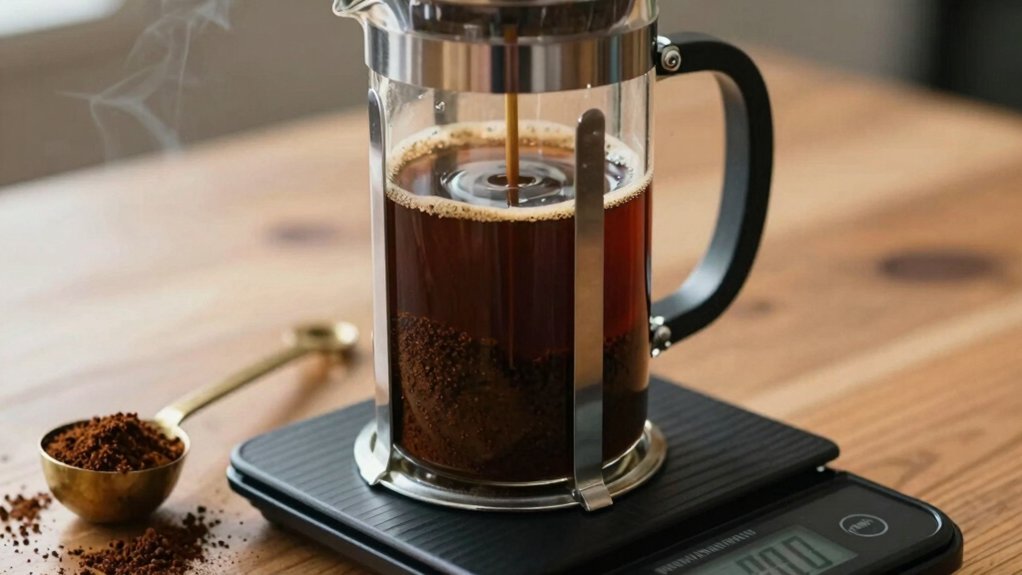
Use a 1:15 ratio for a balanced French press. Lean toward 1:17 if you want lighter coffee, or 1:12–1:13 for a bolder, thicker cup. Weigh beans and water, grind coarse to medium coarse, and bloom for 30 to 45 seconds with a small pour. Then fill evenly and plunge after 4 minutes; adjust time if it tastes weak or bitter.
Keep notes on dose, grind, and bloom so you can repeat what works. Keep going and you’ll fine-tune it quickly.
Quick Overview
- A common French press ratio is 1:15 (coffee:water) for balanced extraction and flavor.
- For a richer, bolder cup use 1:12 (e.g., 30 g coffee to 360 g water for one strong mug). Adjust dose in 0.5–1 g steps: increase if weak, decrease or coarse grind if bitter.
- Use a consistent coarse-to-medium-coarse grind, short bloom (30–45 s), and even pour for uniform extraction. Record grind setting, bloom time, and water temperature to reproduce preferred results.
Press: Coffee-to-Water Ratios
How strong do you want your French press? You choose ratios to control brewing chemistry and sensory perception: 1:15 is the standard baseline for balanced extraction; 1:17 leans lighter. Ratios of 1:13 or 1:12 give boldness. Use a scale for precision; tweak in 0.5–1 g steps.
| Ratio | Effect |
|---|---|
| 1:15 | Balanced, baseline |
| 1:17 | Lighter, cleaner |
| 1:13 | Bold, heavy |
| 1:20 | Very light, tea-like |
Match the ratio to press size and grind coarse for consistency. If coffee tastes weak, increase grounds. If it tastes bitter, shorten steep or use a slightly coarser grind. These small adjustments let you target extraction and sensory outcomes reliably.
:15 and 1:12 Examples
Craving a bolder French press, or just curious how 1:12 changes the cup? You’ll notice a richer, thicker body using 1:12 compared with standard 1:15–1:17 guides. Try it when you want bold intensity without changing brew time. Remember: this subtopic is not relevant to grind size or bloom details. Those are the other subtopic not relevant here.
- For a single strong mug: 30g coffee to 360g water (1:12).
- For a small press: 24g coffee to 288g water; bold but balanced.
- For an 8-cup press experiment: 56g coffee to 672g water; expect heavy mouthfeel.
- If it’s too intense, nudge toward 1:13–1:15 or reduce dose.
Weigh ingredients, pre-heat the press, and keep steep time consistent.
Grind Size and Bloom Time
You’ll want a coarse to medium-coarse grind and consistent particle size to prevent over-extraction and a gritty cup. Start with a short bloom: pour just enough hot water to wet the grounds and wait 30–45 seconds to release trapped gases and improve extraction.
Use a brief, even pour and gentle stir during bloom to ensure all grounds wet uniformly before filling the press.
Grind Size Basics
Wondering why grind size matters for your French press? You control extraction with particle size: coarser grounds slow extraction and reduce sediment; finer grounds speed extraction and risk over-extraction and clogging. Aim for a consistent coarse texture so water contacts evenly. Uneven particles make some bits over-extract while others under-extract.
Bloom time still matters even in immersion. Pour a small amount of near-boiling water to fully wet grounds, let CO2 escape for 30–45 seconds, and then add remaining water. This brief bloom time helps uniform extraction across coarse particles. Adjust grind size slightly coarser if plunging feels too resistant or finer if brew tastes weak. Keep adjustments small and test by tasting rather than guessing.
Coarse vs Medium-Coarse
How coarse should your French press grind be: coarse or medium-coarse? You’ll usually choose a coarse mesh grind for classic French press brewing. This produces large, pebble-like particles that reduce fines and prevent over-extraction. Coarse grind produces a cleaner body and allows for easier plunging.
Use medium coarse if you want slightly quicker extraction or a touch more strength; it’s between drip and true French press texture. For bloom time, you’ll still bloom briefly by pouring a small amount of water and waiting 30–45 seconds before filling to the target volume. This releases gases and evens saturation.
If plunging feels gritty or slow, shift coarser. If brew tastes weak, move one notch finer toward medium coarse. Adjust grind, not brew time, for consistent results.
Grind Uniformity Importance
Why does grind uniformity matter so much in a French press? You get even extraction when particles are similar size, so flavors stay balanced rather than bitter or thin. Coarse, uniform grounds reduce over-extraction of fines and under-extraction of large bits during the full-immersion brew. You should use a burr grinder and check for consistent chunks. Blade grinders make too many fines that muddy the cup and clog the mesh.
You can still use a light bloom technique: pour a small amount of water to saturate grounds briefly to release initial gases and promote contact. However, keep pours gentle to avoid agitating fines. Consistency in grind uniformity directly improves clarity, body, and repeatability in your French press.
Bloom Time Purpose
When should you bloom your French press grounds, and how does grind size change what that bloom does? You’ll wet the grounds immediately with a small amount of hot water (about twice the coffee weight) and let them release gases for 20–45 seconds. Bloom time helps degas fresh coffee so water later contacts grounds evenly: the purpose clarification is to improve extraction consistency, not to shorten total steep time.
With coarser grinds, the bloom is faster and more about surface wetting. With finer coarse-to-medium grinds, gas release is slower and can trap channels if skipped. Adjust bloom time toward the shorter end for coarser grinds and slightly longer for fresher, finer grounds. Then continue the planned full-immersion brew.
Bloom Technique Tips
Curious about dialing in your bloom for different grinds? You’ll adjust grind size and bloom time to control initial degassing and surface wetting. Use a coarser grind for French press; larger particles need slightly longer wet contact to release CO2.
For medium-coarse, pour just enough water to saturate grounds and wait 30–45 seconds. For coarse, extend bloom to 45–60 seconds. Keep bloom water temperature at 195–205°F (190–195°F for dark roasts). Stir gently after bloom to equalize.
These small adjustments improve consistency and reduce channeling when you finish brewing. Note bloom technique in your extraction notes: record grind setting, bloom time, temperature, and observed crema or bubbling so you can repeat preferred results.
Frequently Asked Questions
Can I Reuse French Press Grounds for a Second Brew?
Yes, you can reuse grounds, but second brew possibilities are limited. You’ll get a weaker, more tannic cup because most soluble flavors were extracted during the first brew.
To improve results, use finer grind, slightly hotter water, longer steep, and a higher coffee-to-water ratio. Expect milder body and increased bitterness. Consider using reused grounds for iced coffee, cold brew blend, or as a brief second-morning cup rather than your primary brew.
How Do I Clean Coffee Oils From the Press Mesh?
You scrub the screen with hot water and a soft brush to remove trapped grounds. Then apply a drop of dish soap and gently work both sides to cut cleaning oils. Rinse thoroughly. Disassemble the plunger assembly periodically for deeper mesh maintenance.
Soak parts in warm soapy water or a 1:1 vinegar solution for 15–30 minutes. Dry fully before reassembly to prevent rust and stale odors.
Does Altitude Affect Brewing Temperature or Time?
Yes, altitude affects brewing; so you’ll make temperature adjustments and may tweak brew time. At higher elevations, water boils cooler. You’ll heat water a bit higher before pouring: aim near 195–205°F measured at sea level.
Allow a slightly longer contact time to reach similar extraction. You’ll also taste more acidity; so you might use a marginally finer grind or increase dose a touch to balance flavor while monitoring extraction.
Can I Make Cold Brew in a French Press?
Yes, you can make cold brew using the French press technique. Coarsely grind coffee, add a 1:8–1:12 ratio (or about 1 cup grounds to 4 cups water), pour cold filtered water, stir, and steep in the fridge for 12–20 hours.
Press slowly, decant, and dilute to taste. You’ll get smooth, low-acidity cold brew. Store refrigerated for up to a week and adjust grind or steep time for strength.
What’s the Best Way to Store Leftover Brewed Coffee?
Store leftover brewed coffee in an airtight container in the refrigeratororto preserve freshness and flavor retention. You should cool it quickly: pour into a shallow vessel or ice bath. Then seal and chill within an hour.
Use within 24–48 hours for best taste; reheating gently avoids burnt notes. Don’t leave coffee at room temperature. Avoid open pitchers that accelerate oxidation and flavor loss.
Conclusion
You’ve got the essentials to make better French press coffee: aim for 1:15 to 1:12 depending on strength. Use a coarse to medium-coarse grind, and prioritize uniform particles for even extraction.
Don’t skip a brief bloom; pour a little water, let trapped gases escape for 30–45 seconds, then finish pouring. These simple adjustments consistently improve flavor, body, and clarity. So tweak ratios and grind until the cup matches your taste.