
Moka Pot Sputtering Causes
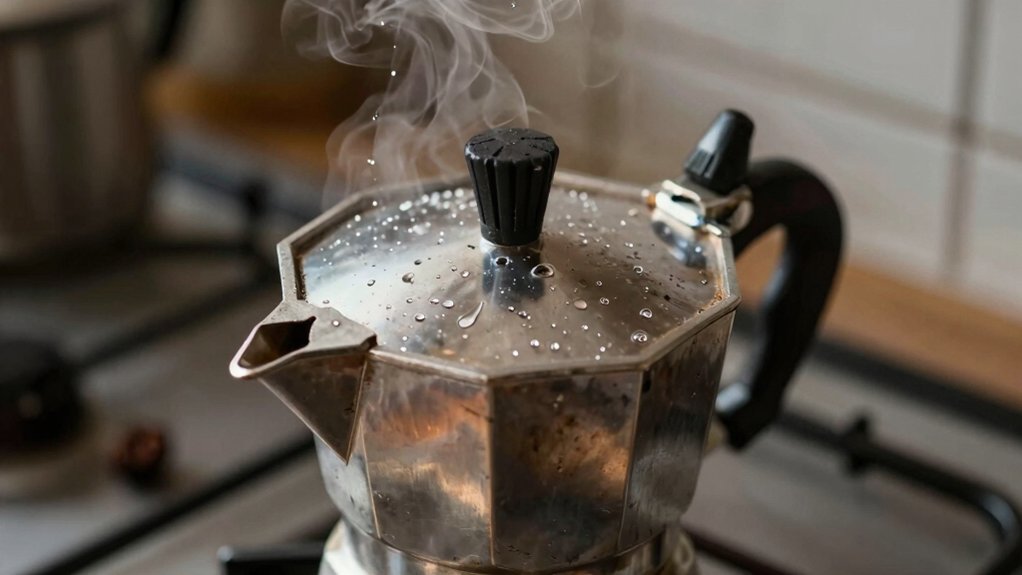
Sputtering in your moka pot happens when pressure dynamics, grind size, seal integrity, and heat control interact poorly. If the grind is too coarse, you won’t build pressure; too fine and you create backpressure that forces intermittent steam-liquid bursts.
Worn gaskets or uneven torque let steam escape unpredictably. Rapid or excessive heat causes localized superheating and vapor pockets that expel liquid erratically.
Start cooler and ramp heat to stabilize flow. Keep going to uncover specific fixes and tests.
Quick Overview
- Grind too fine increases backpressure, causing sputtering and bitter, uneven extraction.
- Worn or deformed gasket and improper torque create leaks or micro-gaps that disrupt steady flow.
- Excessive heat or rapid temperature rise produces sudden steam pockets that expel liquid intermittently.
- A cold start to high heat can cause localized superheating and vapor lock, triggering sputtering bursts.
- Coarse grind or insufficient tamping yields low pressure and fast, weak gushes rather than steady flow.
Pressure vs. Grind Size
Why does grind size matter so much in a moka pot? You control pressure via grind: too coarse yields low pressure and under-extraction; too fine creates excessive backpressure, safety-valve cycling, and sputtering. You’ll aim for 360–660 μm for steady 1–2 bar operation.
| Grind Level | Pressure Effect | Extraction Result |
|---|---|---|
| Too Coarse | Low pressure | Weak, fast brew |
| Medium-Fine | Controlled 1–2 bar | Balanced extraction |
| Too Fine | Excessive pressure | Bitter, sputtering |
Adjust grind by pot size and monitor brew time. Also, check gasket condition and wrench torque significance on chamber seal. Poor sealing or incorrect torque alters pressure dynamics and can mimic grind-related sputtering; therefore, tighten consistently.
Gasket Condition & Torque
How tight is the seal between the moka pot’s chambers, and is the gasket still compressing evenly? You’ll inspect gasket wear and consider seal age to diagnose irregular flow. Torque at the threads must be consistent; under-torque leaks, and over-torque deforms the gasket and rim.
Check radial compression: uneven compression creates micro-gaps that let steam escape intermittently, causing sputter. Replace gaskets showing flattening, cracks, or hardened surfaces.
- Measure compression uniformity with a benchtop feeler or visual gap check.
- Apply moderate, repeatable hand torque; avoid excessive wrenching.
- Note seal age and service interval; replace at first functional decline.
- Verify mating surfaces for burrs or rim deformation.
Reassemble and test with reduced heat to confirm steady flow.
Water Temperature Threshold
You should monitor the water temperature because crossing the boiling point sharply increases steam generation and triggers sputtering. Starting with cold water alters the time-to-pressure and can push the brew chamber into an overheated state if heat isn’t reduced as flow begins.
Identify the pressure-build-up threshold for your setup to avoid thermal shock to components and sudden violent expulsion.
Boiling Point Effects
Although the moka pot relies on steam-driven pressure, the actual boiling point of the water in the lower chamber critically determines flow behavior and sputtering risk. When water temperature rapidly exceeds its local boiling point, sudden phase change produces vapor pockets that violently displace liquid through the coffee bed.
You should monitor and control heat to prevent localized superheating that creates intermittent vapor lock and abrupt expulsions. Sudden microboiling alters flow regime; this disrupts extraction kinetics and produces uneven solute transfer that can reduce mystery aromas and exaggerate texture contrast.
Analyze stovetop output, pot metal mass, and ambient pressure: small changes shift boiling point and nucleation patterns. You’ll reduce sputtering by ramping temperature modestly and maintaining steady, sub-rolling boil conditions.
Cold Water Start
Why start with cold water in the lower chamber? You use a cold start to control the water temperature gradient and delay rapid steam formation until pressure builds predictably. Starting cold reduces the likelihood of early flash boiling that forces irregular flow through the coffee bed. By keeping initial water below the aggressive boiling threshold, you allow progressive heating, steady vapor generation, and consistent upward displacement through the funnel.
Monitor the steam vent behavior: a steady, gentle exhaust indicates controlled pressure; intermittent violent bursts signal premature steam dominance. Practically, begin on moderate heat and only increase if flow stalls. This procedure minimizes sputtering caused by sudden vapor expansion while preserving extraction stability without risking the overheated brew chamber conditions discussed next.
Overheated Brew Chamber
How hot is too hot for the brew chamber? You must monitor water temperature to prevent rapid boiling that causes sputtering and component damage. Maintain just-above-saturation heat; once coffee flows, reduce or cut heat to avoid sustained temperatures that induce irreversible discoloration of interior surfaces and accelerate metal fatigue in the chamber and funnel.
Excessive temperatures create thermal cycles and localized hotspots that change alloy microstructure and weaken seals. Use a low-to-medium flame or stepwise power reduction when flow begins, and time trials to find the minimal effective heat for your stovetop-pota combination. Regular inspection for early discoloration and deformation helps you detect overheating before mechanical failure or safety-valve compromise occurs.
Pressure Build-Up Threshold
What temperature does water need to reach inside the lower chamber before pressure starts rising dangerously? You should monitor liquid temperature approaching 100°C at ambient pressure; as bulk water nears boiling point, steam production accelerates exponentially and system pressure climbs.
In practical stovetop conditions, localized superheating and nucleation sites can cause rapid transient pressure spikes below nominal boiling; therefore, you must control applied heat to keep the lower chamber well under sustained vigorous boiling. Manage heat input so phase-change rate matches the moka pot’s flow capacity; otherwise, pressure overshoot yields sputtering.
This is a technical non-coffee discussion focused on thermodynamic thresholds, not an unrelated topic about taste. Measure temperature or watch for gentle percolation as the primary control metric.
Thermal Shock Risk
Could sudden temperature differentials crack your moka pot components? You must treat thermal shock as a mechanical failure mode. Rapid changes from cold water to intense heat create stress differentials in aluminum and stainless parts. If the lower boiler heats far faster than the brew chamber and upper assembly, microscopic fissures can form at seams, threads, and gasket seats.
Those fissures alter flow geometry and sealing, producing erratic pressure and sputtering. Maintain a controlled ramp rate; avoid maximum flame on cold pots. Let preheated water or a gentle heat profile minimize gradients. Inspect mating surfaces for hairline cracks after severe events.
Quantify risk by noting abrupt temperature delta magnitudes. Smaller deltas reduce thermal shock probability and preserve consistent extraction dynamics.
Frequently Asked Questions
Can Mineral Buildup in the Valve Cause Sputtering?
Yes, mineral buildup can cause valve sputtering. You’ll find scale deposits restrict the safety valve’s movement and narrow flow paths. This creates pressure fluctuations that lead to erratic expulsion.
Inspect and clean the valve regularly: remove scale with descaler or vinegar, rinse thoroughly, and verify free movement. If deposits have corroded seating surfaces or the valve won’t reseat, replace it to restore consistent pressure regulation and smooth extraction.
Is It Safe to Brew With a Dented Funnel?
No, it isn’t a safe practice to brew with a dented funnel. A dented funnel compromises seal integrity and alignment; this produces irregular pressure, channeling, and unpredictable flow. You’ll risk sputtering, uneven extraction, and potential hot-fluid leaks.
Replace or gently reshape the funnel. Verify mating surfaces and gasket fit before use. Treat dents as a mechanical fault requiring repair or replacement to restore consistent, controlled brewing performance and user safety.
How Often Should I Replace the Filter Plate?
You should inspect and replace the filter plate every 6–12 months as part of a defined replacement schedule. Monitor for mineral buildup, corrosion, or warping that degrades flow.
If you notice valve sputtering, uneven extraction, or visible clogging, swap the plate immediately. Clean regularly to extend service life; however, assume mechanical wear or persistent deposits warrant replacement to maintain consistent pressure, seal integrity, and reliable extraction performance.
Can Using Preheated Water Prevent Sputtering?
Yes, using preheated water often prevents sputtering because you reduce the time liquid spends boiling in the lower chamber. This reduction lowers abrupt steam generation and pressure spikes.
You’ll still need to control heat, avoid overfilling, and use correct grind and packing. Also, check for mineral buildup in the chamber and safety valve; scale reduces flow and aggravates sputtering. Regular descaling maintains consistent pressure and smooth extraction.
Does Altitude Affect Moka Pot Pressure and Sputtering?
Yes, altitude effects change boiling point, so you’ll see pressure changes in the moka pot. At higher altitude, water boils at lower temperature, reducing vapor pressure and slowing extraction. You may get more sputtering if you compensate with higher heat.
Conversely, lower altitude raises boiling point and pressure, risking aggressive flow. You should adjust heat and fill levels; fine-tune grind and tamping to maintain stable pressure and smooth extraction.
Conclusion
You’ll prevent moka pot sputtering by controlling the variables that drive pressure and flow. Match your grind size to the sealed-condition pressure threshold, keep the gasket tight and torque consistent, and avoid thermal shock by using warm, never boiling, water.
Monitor brew-chamber temperature to prevent overheating and excessive vapor pressure. If you see irregular sputtering, reduce heat, relieve pressure, and inspect for clogged passages. Consistent setup and measured inputs eliminate most sputtering failures.