French Press Steep Time
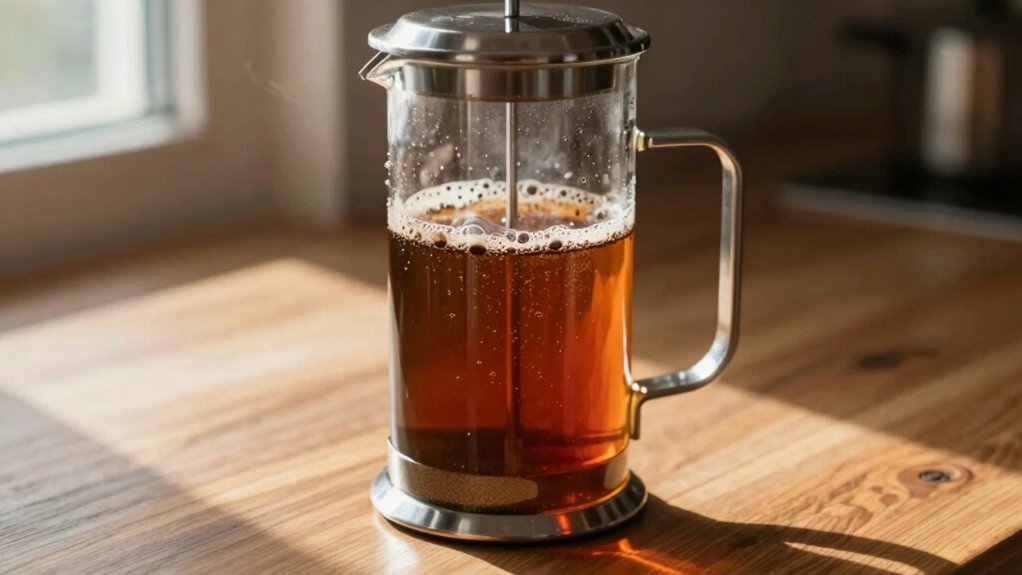
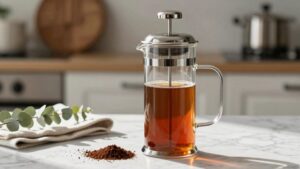
For French press steep time, match grind and roast: use coarse grind for 4–5 minutes, medium-coarse for 3–4. Alternatively, extend coarse to 6–7 minutes for a bolder body.
Start timing at pour, give a 30-second bloom with a brief stir, then steep. Adjust in 30-second steps and log results. Keep water 195–205°F; let boil rest 30–45 seconds. Account for altitude by slightly raising temperature. More controlled notes follow if you want finer tweaks.
Quick Overview
- Match steep time to grind: coarse 4–5 minutes, medium-coarse 3–4 minutes; coarse long 6–7 minutes for fuller body.
- Start timing at first pour. Include a 30-second bloom, then briefly stir and resume timing for main steep.
- Use 195–205°F (90–96°C). Let boiling water rest 30–45 seconds before pouring for consistent extraction.
- Adjust steep time in 30-second increments and log results to refine extraction reproducibly.
- At higher altitudes, raise brew temperature ~1–2°F per 300 m and re-test if extraction seems weak.
Brew Time vs Grind Size
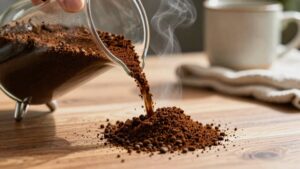
How long should you steep relative to grind size? You’ll match brewing duration to grind coarseness: coarser grounds need longer contact, while finer grounds need less. Use the table below to decide.
| Grind Coarseness | Typical Brewing Duration | Outcome |
|---|---|---|
| Coarse | 4–5 min | Balanced extraction |
| Medium-coarse | 3–4 min | Milder, less extraction |
| Coarse (long) | 6–7 min | Bolder, fuller body |
Be methodical: choose coarse for French press to avoid sediment. Then set duration per roast. Dark roasts shorten time toward 3–4 minutes to prevent bitterness. Light roasts extend toward 6–7 minutes to extract sweetness. Adjust in 30-second increments and record results for repeatable, analytical improvement.
–4 Minute Timer
WONDERING HOW TO TIME YOUR BREW PRECISELY? YOU’LL RELY ON A MINUTE TIMER TO CONTROL BLOOM DURATION AND TOTAL STEEP TIME. USE A RELIABLE DIGITAL OR MECHANICAL TIMER, RECORD INTERVALS, AND COMPARE RESULTS TO ASSESS TIMER ACCURACY. BE METHODICAL: START TIMING AT POUR, LOG THE 30-SECOND BLOOM, STIR BRIEFLY, THEN RESUME TIMING FOR THE MAIN STEEP.
- CHOOSE A TIMER WITH ONE-SECOND RESOLUTION AND CONSISTENT REPEATABILITY TO MINIMIZE TIMING VARIANCE.
- NOTE BLOOM DURATION SEPARATELY; IT’S PART OF TOTAL EXTRACTION AND AFFECTS HOW LONG YOU STEEP AFTERWARD.
- TEST TIMER ACCURACY BY COMPARING MULTIPLE RUNS AND ADJUST YOUR ROUTINE IF DISCREPANCIES EXCEED A FEW SECONDS.
YOU’LL GET REPRODUCIBLE EXTRACTION BY TREATING TIMING AS MEASURABLE PROCESS CONTROL.
Water Temperature Range
You should target an ideal window of about 195°F to 205°F for most French press brews. Understand how boiling versus held water alters extraction. Measure temperature accurately with a thermometer or kettle with temperature control. Adjust for altitude by increasing water temperature slightly if boiling point is reduced.
Precise temperature control directly changes extraction rate and flavor balance; therefore, plan adjustments methodically.
Ideal Temperature Window
Why does water temperature matter so much for French press brewing? You control extraction kinetics: within an ideal window (195–205°F / 90–96°C), soluble compounds dissolve at a rate that balances acidity, sweetness, and bitterness. Stay below 195°F and you risk under-extraction. If you exceed 205°F, harsh bitter notes dominate.
Match temperature to grind consistency and roast level. Coarser grinds or darker roasts may tolerate the lower end. Finer grinds or lighter roasts benefit from the higher end. Measure temperature or let boiled water rest 30–45 seconds before pouring to hit the window reliably. Maintain consistency across brews to isolate steep time effects on flavor profile. Adjust only when tuning for specific beans or personal preference.
Boiling Versus Held
How should you handle water temperature, straight off the boil or held down in the 195–205°F window, to get the extraction you want? You’ll choose based on control and desired clarity. Using water at a rolling boil accelerates extraction; the boiling debate centers on speed versus precision.
Boiling can push oils and solubles quickly, increasing risk of harshness if you don’t shorten steep time. By contrast, a held comparison favors consistency: maintaining 195–205°F yields predictable extraction rates and makes the 4–5 minute guideline reliable.
Practically, you’ll either reduce contact time with boiling water or stabilize temperature and follow standard steep times. Measure, time, and adjust: shorter steeps for boiling, consistent timings for held temperatures to achieve repeatable results.
Temperature Effects On Extraction
Water temperature directly controls extraction rate and solubility of coffee compounds. Keeping it within the 195–205°F window gives you predictable, balanced results; hotter water speeds extraction and cooler water slows it. You’ll use higher temperatures to extract oils and solubles faster, shortening necessary steep time. Lower temperatures require longer contact to reach similar extraction yields.
Adjust steep time in concert with temperature to avoid over- or under-extraction. Monitor how temperature alters perceived acidity, body, and aroma volatility during tasting trials. Pair temperature adjustments with grind size control: coarser grind for hotter water; finer for cooler to maintain target extraction.
Note subtle cues like increased grind noise during dosing and changes in bloom behavior as diagnostics for consistency.
Measuring Temperature Accurately
Want precise temperature control? You’ll target 195–210°F for optimal extraction. Achieving that consistently depends on temperature accuracy. Use a reliable instant-read thermometer and measure water immediately before pouring; record deviations to establish a correction factor.
If you use an electric kettle with a display, verify its reading against your thermometer at multiple setpoints; this is basic calibration methods practice. For pour-over kettles without presets, measure after heating and before bloom to account for heat loss.
Log results: kettle setting, measured temperature, ambient conditions, and time between boil and pour. Consistent measurement and simple calibration methods let you repeat steep times reliably and isolate temperature as a variable in adjusting extraction.
Adjusting For Altitude
Curious how altitude changes the temperature you should use? At higher elevations, water boils at lower temperatures. You must make altitude adjustments to keep extraction consistent. Measure your brewing altitude; then raise water temperature toward the upper end of the 195–210°F range to compensate for reduced boiling point and slower extraction kinetics.
Increase by 1–2°F for every 300 meters (about 1°F per 150 meters) as a practical rule. Then test with a standard 4–5 minute steep time. If coffee tastes under-extracted, incrementally increase temperature or extend steep time. If it tastes bitter, lower temperature or shorten steep.
Record each adjustment methodically so you build a repeatable profile for that brewing altitude.
Frequently Asked Questions
How Does Roast Level Affect Optimal Steep Time?
You should shorten steep time for dark roast because its soluble compounds extract faster, preventing bitterness and preserving aroma balance. For light roast, you’ll extend steeping to boost flavor extraction and develop floral, acidic notes without under-extracting.
Calibrate by sampling: start with mid-range time, taste, then reduce minutes for darker beans or add 30–60 seconds for lighter ones. Record grind, temperature, and time to refine repeatable results.
Should I Adjust Steep Time Based on Coffee-To-Water Ratio?
Yes, you should adjust steep time when you change the coffee ratio. If you increase the coffee ratio, extend steep time slightly to achieve fuller extraction. If you lower the ratio, shorten steeping to avoid bitterness.
Maintain consistent bloom timing (about 30 seconds) to release gases and ensure even extraction. Then, adjust post-bloom steep length incrementally, testing 30–60 second changes until taste and extraction balance for your grind and roast.
What’s the Purpose and Timing of the Bloom Phase?
The bloom phase releases CO2 and stabilizes extraction; timing is about 30 seconds before full steep. You’ll adjust bloom based on roast level and grind consistency to avoid channeling.
With a given coffee to water ratio, bloom helps even saturation so steep time yields expected extraction. Equipment effects (plunger fit, kettle control) matter.
Watch decant timing to stop extraction and prevent bitterness from overextended contact.
How Soon Should I Decant After Plunging to Avoid Bitterness?
You should decant immediately after plunging, within seconds, to stop extraction and avoid a bitter aftertaste. If you prefer bright acidity and clarity, pour into a carafe right away. Letting grounds sit against coffee even for a minute increases over-extraction and bitterness.
For consistency, plunge at your target time; lift the press and split into serving vessels promptly. This methodically preserves desired acidity while minimizing harsh, lingering bitterness.
Do Grind Consistency and Equipment Impact Steeping Adjustments?
Yes, grind consistency and equipment impact steeping adjustments directly. If your grind’s uneven, you’ll see over- and under-extraction. You should shorten steep time or use a slightly coarser setting to balance. Precise, consistent burr grinding lets you dial steep duration reliably.
Equipment impact: press quality, mesh size, insulation alters extraction rate. So, test and record small time changes per device to achieve repeatable, preferred results.
Conclusion
You’ll dial in brew time and grind size to hit your target extraction: Start with four minutes and a coarse grind, then tweak. Keep water between 195–205°F (90–96°C); don’t pour boiling water directly or you’ll over-extract. Measure temperature with a reliable thermometer and adjust for altitude by aiming slightly higher if needed.
Make one change at a time, record results, and iterate methodically until taste and strength consistently match your goal.