Cold Brew Recipe Chart
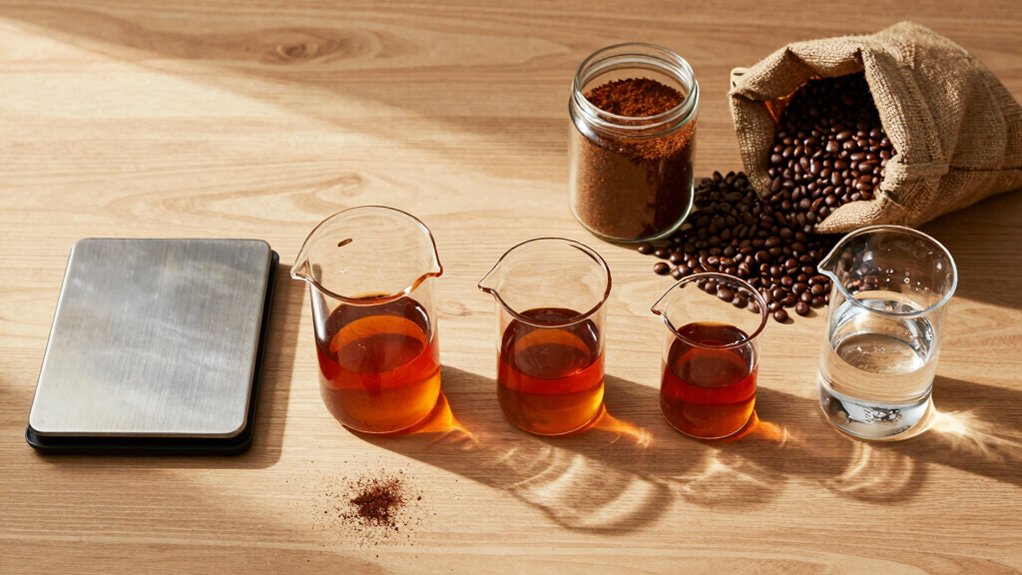
Use a coarse to extra‑coarse grind (chunky, sandy) and steep 12–24 hours in cold or room‑temperature water depending on brightness desired.
Aim for about 1:4–1:2 for concentrate or 1:15–1:18 for ready‑to‑drink.
Coarsen or shorten if bitter; slightly finer or longer if weak.
Chill quickly after steeping.
Store concentrate refrigerated up to 7–10 days, and dilute to taste over ice.
Keep going for a practical chart with exact combos.
Quick Overview
- Use coarse to extra-coarse grounds (≈800–1,300+ μm) for chunky, sandy texture and stable extraction.
- Typical steep times: 12–24 hours cold; 14–24 hours extra-coarse. Shorten if bitter; lengthen if weak.
- Common ratios: 1:2 concentrate; 1:10–1:14 strong diluted; 1:15–1:18 ready-to-drink.
- Use cold/room-temperature water (4–25°C). Colder water leads to smoother results; slightly warmer water (
- Chill concentrate immediately after steeping. Refrigerate concentrate for 7–10 days and ready-to-drink for 5–7 days.
Grind Size vs. Brew Time
How coarse should your grind be for cold brew? You’ll want a coarse to extra-coarse texture—around 800+ microns—so water extracts slowly over long steeping. Feel the grit between fingers: chunky, sandy, not floury. Consistent grind distribution and good particle uniformity keep flavors balanced and prevent sharp over-extraction from fines.
| Grind Type | Typical Brew Time |
|---|---|
| Coarse (690–1,300 μm) | 12–24 hours |
| Extra-coarse (800–1,400+ μm) | 14–24 hours |
| Medium-coarse | ~8 hours |
| Very coarse | Longer, gentler extraction |
If your cold brew tastes bitter, coarsen the grind or shorten time. If it’s weak, slightly finer grind or extend steeping. Adjust in small steps and note changes.
:1 Coffee-to-Water Ratio
You’ve dialed in a coarse grind and steep time. Now the next key variable is the coffee-to-water ratio, which controls strength, body, and flavor clarity. Your grind size and brew time set extraction pace; however, the water ratio determines whether you get an ideal cold brew concentrate or a ready-to-drink clarity. Use room temperature water for long steeping time; then chill before serving to settle flavors.
Pay attention to how dilution, ice, or quick chilling changes perceived strength.
- 1:2 concentrate for syrupy intensity; dilute later to taste
- 1:15–1:18 ready-to-drink for balanced, nuanced cups
- 1:10–1:14 for strong diluted options
- 1:17 for smooth, rounded profile
Water Temperature Guidelines
For best results, use cold or room-temperature water (around 4–20°C / 40–68°F) so extraction stays gentle and clean. Remember, your chosen water-to-coffee ratio will determine how concentrated the final brew is.
Steeping time interacts with temperature and ratio: longer steeps compensate for colder water, while shorter steeps suit slightly warmer room temperatures. Chill the concentrate before serving, and adjust dilution and ice to taste so your pour stays flavorful as it cools.
Ideal Cold Brew Temperature
Wondering what water temperature works best for cold brew? You’ll usually use cold or room-temperature water to preserve sweet, low-acidity notes and highlight delicate aromas. Ice-cold water slows extraction, yielding smoother body and muted bitterness. Slightly warmer water, still under 25°C/77°F, nudges extraction toward brighter acids and more aromatic lift.
Pay attention to overlooked variables: grind size, coffee freshness, and contact time, as they interact with temperature to shape extraction. Trust your sensory perception: sip thoughtfully, note aroma, sweetness, acidity, and mouthfeel, then adjust. If you want clearer, sweeter cups, err colder and steep longer. If you crave livelier acidity and more pronounced aromatics, allow a touch more warmth while keeping steep times controlled.
Room Temperature Effects
Room temperature water (around 20–25°C / 68–77°F) gives you a middle ground: it extracts more soluble oils and acids than ice-cold water. Therefore, your cold brew will taste brighter and more aromatic than a fridge-cold steep; however, it won’t pull as much bitter or harsh flavors as warmer brews.
Use room temperature if you want lively floral or fruit notes without aggressive tannins. Steep times may be slightly shorter than refrigerated steeps; watch clarity and aroma. After brewing, chill promptly to slow further extraction and bacterial growth. Taste before extended storage.
For best flavor stability and safety, keep concentrate refrigerated and observe storage duration guidelines: consume concentrate within 7–10 days, ready-to-drink within 5–7 days.
Water-to-Coffee Ratio
How hot should the water be when you measure your coffee ratios? You’ll mostly follow room temperature effects for cold brew: use cool or room-temp water when weighing to keep measurements consistent.
Water temperature guidelines for cold brew favor chilled extraction. The ideal cold brew temperature sits around 4–10°C for storage; however, you can mix at room temp before chilling.
Match grind size to your chosen coffee to water ratio. Coarse grounds slow extraction and suit long brew time. Pay attention to brew time and steeping time impact; they’ll determine strength more than small temp shifts.
After steeping, strain and chill thoroughly. Follow chill and serving tips: dilute concentrate as desired and serve over plenty of ice.
Steeping Time Impact
You’ve already set your measurements and grind. Now think about how time and temperature work together during steeping. You’ll notice cold water at fridge temperatures extracts slowly, yielding chocolatey, low-acid notes over 12–24 hours. Slightly warmer water at room temp speeds extraction and brightens aromatics; however, it risks over-extraction if you push time too long.
Tune steeping duration to your chosen ratio: concentrated blends tolerate longer contact. Ready-to-drink ratios need less. Use your senses — smell sweetness and taste for bitterness — to decide when to stop. Don’t confuse this with chill-and-serve steps; keeping focus here avoids subtopic misalignment or an unrelated focus on serving. Time and temp are your levers for clarity, balance, and mouthfeel.
Chill And Serving Tips
Wondering how water temperature changes the final sip? You’ll notice cooler water slows extraction, so stick with coarse grind size and longer brew time to avoid underdeveloped flavors. Use filtered, fresh water; water quality shapes brightness and mouthfeel more than you’d think.
After steeping, chill the concentrate rapidly to stabilize flavors. Rapid cooling preserves volatile aromatics and keeps acidity in check. For ready-to-drink batches, aim for a serving temperature around 2–6°C (35–43°F) to highlight sweetness and suppress harshness. If you dilute concentrate, cool both components beforehand so ice doesn’t over-dilute.
When serving, taste at your target temperature and adjust dilution. Then garnish or milk only once the cup hits serving temperature to keep texture consistent.
Frequently Asked Questions
How Long Does Concentrate Keep Refrigerated Safely?
You can safely store cold brew concentrate in the fridge for about 10–14 days. You’ll notice concentration stability starts to decline after a week; flavors mellow and oxidation creeps in. Refrigerate in an airtight container to slow it.
Keep it cold. Smell and taste before using; if it’s off, discard. For best sensory brightness, use within 7 days. Refrigeration duration beyond two weeks risks quality and safety.
Can I Use Flavored or Decaffeinated Coffee?
Yes, you can use flavored coffee or decaffeinated coffee for cold brew. You’ll still get rich, smooth extraction; the slow, chocolaty or fruity notes will come forward. Flavored beans may mellow or intensify depending on steep time.
Decaffeinated beans produce similar body with less stimulant kick. Taste as you go, adjust grind and steeping to highlight aroma, and expect subtle shifts in brightness and mouthfeel compared with regular beans.
How Does Water Hardness Affect Extraction?
Water hardness affects extraction: higher mineral content can boost extraction impact, pulling more solubles and brightening flavor. Very soft water may under-extract and taste flat.
You’ll notice sensory differences—crisper acidity or muted sweetness—because minerals interact with temperature interactions during steeping and dilution. Taste and adjust: try filtered, spring, or mineral-balanced water to find the best balance for your beans and desired mouthfeel.
Should I Bloom Grounds Before Steeping?
Yes, you should, but gently. Blooming effectiveness in cold brew is subtle: you’ll wet the coarse grounds to release trapped gases and awaken aroma. Then, add the rest of the water. You’ll notice a faint fragrance and tiny bubbles if it’s working.
Grind size impact matters: too fine over-extracts; too coarse under-extracts. Aim for coarse, even grounds, wet lightly, wait a minute or two, then steep slowly for best flavor.
Can I Reuse Grounds for a Second Batch?
You can, but reusing grounds for a second batch will give a much weaker, flatter cup. When reusing grounds, expect muted aroma, thin body, and less acidity. Steep longer or use a finer grind to coax more flavor; however, do not expect the brightness of the first brew.
For best results, blend fresh and spent grounds. Alternatively, reserve reused grounds for iced or diluted drinks where subtle, softer flavors work better than bold concentration.
Conclusion
You’ve got the basics to make silky, balanced cold brew every time. Adjust grind size, steeping time, and coffee-to-water ratio to tune strength and clarity. Use cold water and a long steep for smoothness, or slightly warmer water and finer grind for brighter notes.
Chill it thoroughly, serve over ice, and taste as you go to refine. Keep notes on each batch so you quickly recreate the cup you love.