How to Troubleshoot Coffee Extraction Step by Step
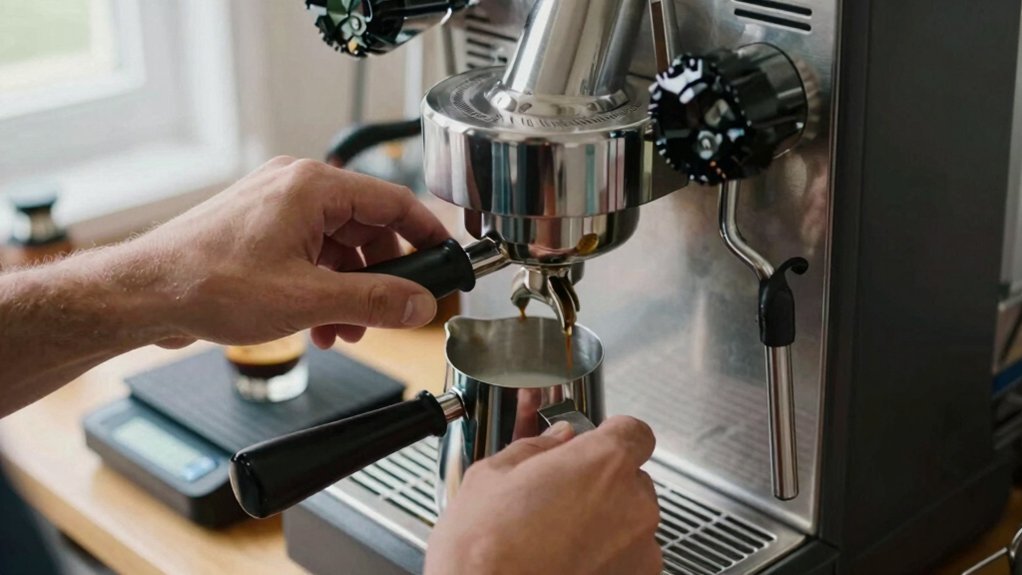
Start by tasting and noting whether the shot is sour, bitter, or flat. Then change only one variable: dose, grind, brew time, or distribution.
Weigh dose and yield for a controlled ratio. Watch flow and shot time and target 27–31 seconds for espresso.
If sour, grind finer or increase time; if bitter, coarsen or shorten. Check puck for dry spots or channels and purge the grinder before adjustments.
Keep this checklist and you’ll quickly spot what to tweak next.
Quick Overview
- Confirm dose, yield, and brew ratio first. Weigh inputs and outputs to set a baseline for troubleshooting.
- Change only one variable at a time (grind, dose, time, temperature) and record sensory notes for each test.
- Adjust grind finer to slow flow and increase extraction, or coarser to speed flow and decrease over-extraction.
- Inspect puck/flow: channeling, dry spots, or uneven blonding indicate poor distribution or tamping. Redistribute and retamp.
- Target extraction time (espresso ~27–31s; pour-over 2–4 minutes) and tweak grind or dose until flavors balance.
Brew Ratio Comparison Chart
How strong do you want your cup? You’ll pick a ratio to shape aroma, body, and clarity: 1:18 gives clean cupping notes and brightness. 1:15 adds body. 1:12 feels syrupy. For espresso, aim near 1:2 (double shot). A sidecar espresso pour leans toward 1:3–1:4 for a longer, lighter sip.
| Brew Style | Typical Ratio |
|---|---|
| Pour-over/Cupping | 1:16–1:18 |
| French press | 1:12–1:15 |
| Espresso (double) | 1:2 (25–35s) |
Taste each adjustment. If acidity dominates, lower ratio or coarsen grind. If flat, increase dose or lengthen brew time. Use ratios as control points for precise troubleshooting.
0-Second Brew Checklist
If your first shot exposed issues in taste, flow, or timing, use this Second Brew Checklist to make targeted corrections and hear, see, and taste the changes more clearly. Start with one variable at a time: note flavors, watch flow patterns, and measure shot time. Confirm dose and distribution, purge the grinder if you changed settings, and inspect the puck for cracks or dry spots.
Check water temperature stability and weigh output to verify your ratio. Log each change and cupping note for comparison.
- Verify dose, distribution, and tamp consistency.
- Observe flow: channeling, blonding point, and crema texture.
- Confirm brew temperature and timing against target.
- Perform quick equipment maintenance and quality control checks.
Grind Size Vs Particle Distribution
Start by tuning grind size so you can hear and see how water moves through the puck: Finer cuts slow flow and darken the crema; coarser cuts speed it and thin the body. Pay attention to particle distribution: Clumps and fines cause channeling and uneven extraction, while uniform grinds give steady flow and balanced flavor.
Use a simple sieve or extraction time (target 27–31 seconds) as a proxy for grind uniformity. Then purge and make small grinder adjustments until brew time and sensory cues align.
Grind Size Basics
Why does grind size matter so much? You’ll hear it: a consistent grind sound signals steady burr contact and uniform particle creation. Adjust coarser if shots drag or clog; go finer when flow races and shots finish too fast.
Change settings in small steps, purge old grounds, then test. Listen, watch flow rate, and time pulls toward 27–31 seconds. Note how extra-fine textures increase resistance and risk shortcuts through the puck.
Keep a strict maintenance schedule for burr alignment and cleaning; dull or dirty burrs widen particle spread. Measure dose precisely, distribute evenly, then tamp. Your senses—auditory cues from the grinder, visual flow, and tactile puck feel—confirm when grind adjustments produce balanced extraction.
Particle Distribution Effects
How does particle distribution change what you taste in the cup? You’ll notice extraction balance shift when fines and boulders coexist: fines over-extract, giving bitterness and heavy body; coarse bits under-extract, leaving bright, thin notes. Aim for even particle distribution across the puck so water meets similar resistance everywhere.
Assess by tasting: muddled, astringent, or hollow flavors point to poor particle distribution despite an appropriate grind size. Improve results by purging old grinds, dialing grind size, and using distribution routines (gentle WDT strokes, leveling) before tamping.
Grind uniformity reduces channeling, stabilizes flow rate, and clarifies flavors. Sweetness, acidity, and body become more distinct when particle sizes are consistent throughout the bed.
Measuring Grind Uniformity
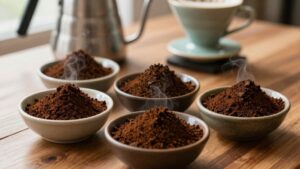
Curious how you can tell whether your grinder’s output is helping or hurting extraction? You measure grind uniformity by inspecting particle distribution and testing how that distribution affects flow and taste. Pull a small sample, spread it on white paper, and look for fines and large shards. More fines smell sweeter but choke the puck; large particles taste thin.
Use a simple sieve kit or a lab-scale particle analyzer if available to quantify spread. Track dosing accuracy with a 0.1 g scale for each sample; inconsistent doses mask true grind issues. Taste shots made from each sample, noting texture, bitterness, and channeling signs.
Log results, change one variable at a time, and prioritize narrowing particle spread before adjusting other variables.
Grinder Adjustment Techniques
Want a grinder tweak that actually changes what you taste? You’ll adjust grind size to shift particle distribution and, consequently, extraction balance. Move finer to increase surface area and syrupy texture; move coarser to reduce resistance and avoid harsh bitterness.
After each change, purge remaining grounds so the new distribution is pure. Use small, measured steps and taste between adjustments.
Check burr alignment during grinder calibration and keep a strict maintenance cadence to prevent drift in particle spread. Feel for consistent aroma and texture in the cup: silky mid-palate means even fines and boulders are balanced; metallic sourness or rapid blonding means too many fines or channels.
Iterate until flavor, not time, guides you.
Impact On Brew Time
Where does grind size really change your shot’s clock? You’ll hear time shift as water meets particle surface area: finer grinds increase resistance, slowing flow and lengthening extraction. Coarser grinds reduce contact and speed the shot.
Watch for channeling from mixed particle distribution: furrows, spurts, early blonding. Purge old grounds after adjustments. Measure pull time against 27–31 seconds, then tweak grind, not dose first.
Feel the puck’s texture after extraction; a firm, even puck signals even extraction. Remember grind temperature can subtly alter apparent viscosity and flow, so dial in after the machine stabilizes.
Match your tamping consistency to grind; uneven pressure amplifies distribution flaws. Adjust incrementally and re-test, trusting sensory cues and time.
Frequently Asked Questions
Why Is My Puck Cracking After Extraction?
Your puck’s cracking after extraction because uneven flow and over-compression break puck integrity, producing visible extraction crackling. You’re likely over-dosing, tamping unevenly, or using too-fine grind that forces water to find paths.
Dry the basket, purge grinder, adjust grind coarser, measure dose precisely, and distribute with WDT or circular motion before a level tamp. Those changes reduce channeling, give a firmer, spongy puck, and stop the crackling.
How Often Should I Clean the Group Head?
You should clean the group head every 30–60 minutes during service and perform deeper group head maintenance daily. During busy periods, backflush with detergent and wipe gaskets and screen every half hour to keep water flow even and puck integrity intact.
Daily, you’ll remove the shower screen, soak, and scrub to remove oils and residue. Regular cleaning frequency prevents off-flavors, uneven sprays, and the sour or bitter notes you’ll taste.
When Should I Change My Tamping Pressure?
Change your tamping pressure when you notice inconsistent shots, sticky channeling, or after adjusting dose variation. You’ll feel when tamping consistency slips. Pucks that crack or compress too hard signal a tweak is needed.
When you move between doses or grind sizes, adjust pressure slightly and test: aim for a firm but springy puck, consistent resistance under the tamper, and stable 27–31 second shot times while watching flow and aroma.
Why Does Espresso Taste Sour Despite Correct Timing?
If your espresso tastes sour despite correct timing, you’re likely under-extracting from temperature, grind, or dose issues.
Check espresso stability: raise brew temperature slightly (while matching roast), fine-tune grind finer, or increase dose to boost extraction. Smell and taste for bright, acidic fruit. If sour notes persist, improve distribution and tamping to avoid channeling.
Ensure fresh beans roasted within three weeks for balanced, sweet aromas.
How Does Water Temperature Affect Dark Roasts?
Dark roasts need lower brew temperatures because roast level impacts soluble balance. You’ll avoid over-extraction and harsh bitterness by dialing temperature down.
Maintain temperature stability so flavors stay consistent shot to shot; small bumps can amplify char and oily notes. Taste for sweetness and body while decreasing by 1–2°C increments until bitterness softens.
Expect fuller mouthfeel and smoky aromas at slightly cooler, stable brew temperatures.
Conclusion
You’ve now got the tools to diagnose extraction quickly: compare brew ratios, check grind size and particle distribution, and time your pours. Trust your senses: watch flow, listen for sputters, smell acidity or roast, and adjust the grinder in small steps. Measure particle uniformity if you can; then re-brew and note changes.
Keep each tweak deliberate and sensory-focused. You’ll zero in on balanced sweetness, clarity, and body through systematic, repeatable adjustments.