Burr Grinder vs Blade Grinder: Which Makes Better Coffee?
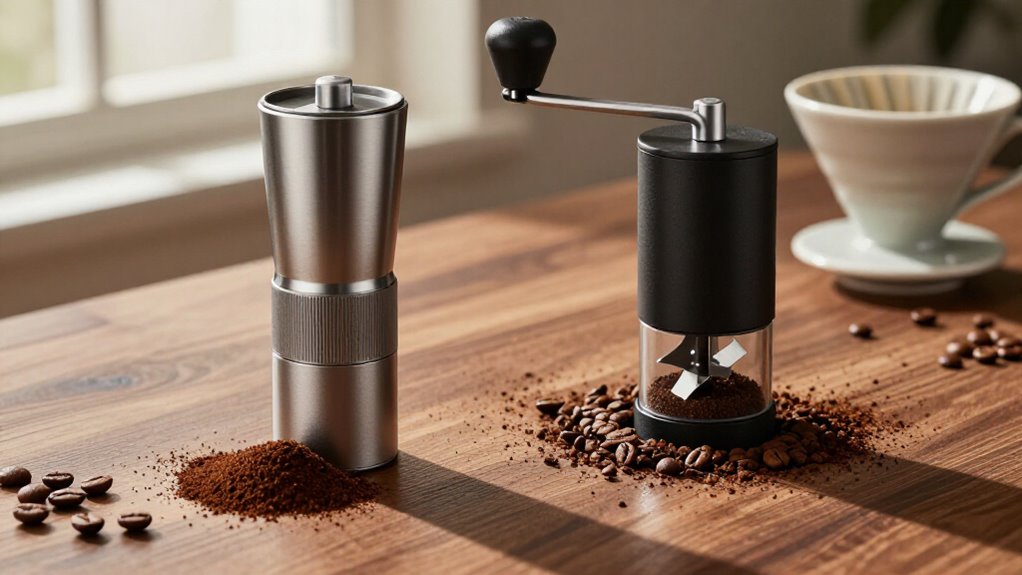
You’ll get better coffee from a burr grinder because it produces more uniform grounds and supports even, repeatable extraction. Its adjustable burr gap lets you dial in espresso or French press with greater control, while direct dosing improves consistency.
A blade grinder chops unevenly, creating fines and larger pieces that can taste bitter, sour, or weak. It can handle occasional spices or coarse brews cheaply.
The details below can guide your final grinder and method choice.
Flavor and Grind Consistency
The main difference between burr and blade grinders is particle consistency. When you use a burr grinder, controlled spacing creates a narrower distribution, so grounds extract more evenly, producing clearer, sweeter, more balanced coffee. A blade grinder chops chaotically, creating fines and coarse fragments. You’ll often extract fines too far while larger particles remain sour or thin.
| Grinder | Expected result |
|---|---|
| Burr | Uniform grounds; repeatable flavor |
| Blade | Mixed sizes; variable flavor |
You can adjust a burr grinder to target extraction and reproduce results. A blade grinder offers no setting; changing time, shaking, or tilt changes the mixture. It may suffice for immersion brewing, but pour-over and espresso expose its limitations.
If you value clarity and consistency, choose burr grinding; if cost matters most, accept variability.
Conical vs. Flat Burrs
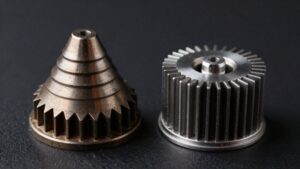
Once you choose a burr grinder, the burr shape becomes the next performance consideration. Flat burrs use two parallel discs with cutting teeth that move closer together or farther apart. Their tighter particle-size distribution makes them especially effective for espresso and pour-over, where uniform grounds support controlled extraction and help prevent filter-flow problems caused by excess fines.
You’ll notice clarity and brightness.
Conical burrs use a rotating cone inside a ring-shaped outer burr. They’re typically more affordable, quieter, and cooler-running, making them practical for cost-conscious or convenience-focused brewing. Their distribution may be slightly broader, but the flavor difference usually remains smaller than the effects of recipe and technique.
Choose flat burrs for maximum uniformity; choose conicals when price, noise, and operating temperature matter more.
Static, Retention, and Clumping
Because blade grinders chop beans at high speed, they create more fines and turbulence, which encourages static, clumping, and residue on plastic surfaces. That sticky dust can cling to the grinder and form uneven clumps, so water contacts particles inconsistently during brewing.
With a burr grinder, particles exit only after fitting the burr gap, so you generally get fewer ultra-fine particles, less static, and more predictable output. That reduces the material available to remain in the chamber or chute. Retention still depends on the grinder’s design and cleaning, but a removable chamber lets you knock out grounds more effectively.
If you don’t clear retained coffee, old flavors can mix with the next brew. Clumps trap fines and change distribution, so your cup consistency declines.
One-Touch Grinding and Dosing
When you want a faster, more repeatable workflow, a burr grinder’s one-touch function can grind directly into a portafilter or measured bin with minimal handling. It combines a preset run time with adjustable burr spacing so you can reproduce both particle size and dose.
Some models stop automatically at a programmed quantity while others use timed dosing, so you should verify output with a scale when changing beans. Direct dosing reduces transfers, mess, and opportunities for spillage.
A blade grinder may offer one-touch operation, but its button only controls motor duration. Because blades chop unevenly, the timing can produce different amounts of fines and larger particles, making dosing less predictable.
Burr grinders run cooler and quieter, supporting repeated use without excess heat or noise.
Espresso or French Press
If you’re choosing between espresso and French press, match the grinder to the method’s precision requirements: espresso needs a burr grinder capable of producing a fine, consistent grind, roughly 200–400 microns, to support a 25–30-second extraction, while French press uses a coarse grind and can tolerate less uniformity.
Burr grinding controls the gap between two abrasive surfaces, giving you a repeatable particle size and more predictable extraction. Blade grinding depends on chop duration, creating fines and chunks together: fines may over-extract and taste bitter, while coarse pieces may under-extract and taste sour or weak.
If you want one grinder for both methods, choose a burr model with a wide adjustable range. A blade grinder may work for occasional French press, but it won’t deliver reliable espresso.
Burr Replacement and Warranty
Plan for burr replacement as part of long-term grinder ownership, not as an unexpected failure. Burrs wear gradually, so you don’t need to treat replacement as evidence of immediate grinder failure. Check your model’s service guidance; lifespan varies by burr design, materials, workload, and bean volume. For perspective, Baratza Virtuoso burrs are rated for about 500 pounds, or roughly eight to ten years at one pound weekly.
Your actual interval may differ, particularly with heavier use or poor maintenance. Replacing burrs on schedule helps preserve particle-size uniformity, repeatable settings, and the extraction advantage burr grinders provide over blades.
Before buying, check warranty duration, coverage, exclusions, and wear provisions. Keep receipt. If burrs fail prematurely, contact the manufacturer before disassembly; unauthorized repairs may void coverage.
Heat Buildup and Noise
How much heat and noise a grinder produces affects both cup quality and daily usability. Blade grinders can build substantial heat as high-speed blades chop beans and make them bounce through the chamber. That heat may dull volatile aromatics before brewing. Burr grinders usually run cooler because beans pass through a controlled gap, helping preserve flavor, although repeated grinding can still raise temperature.
Noise also influences your routine. Blade models are often much louder, with output varying considerably by design. Burr grinders generally sound quieter, but flat burr models typically run hotter and louder than conical versions. If you grind daily, especially in a shared space, a burr grinder offers the safer practical balance of cooler operation and lower noise during repeated daily use.
Steel vs. Ceramic Burrs
When you compare burr materials, steel offers strong durability and maintains consistent grind quality through regular use. Ceramic burrs resist corrosion and can last longer under suitable conditions, but they’re more brittle and may chip if mishandled.
Both materials improve particle uniformity over blade grinders, while your brewing method determines the required grind range.
Steel Burr Durability
Steel burrs are usually the practical workhorse because they balance abrasion resistance, ruggedness, and ease of maintenance for daily coffee grinding. If you grind often, steel tolerates bean contact and handling without demanding care. Its durability reflects material strength and serviceability, not an unlimited lifespan.
Track these factors:
- Workload: Frequent dosing accelerates abrasive wear, while occasional use extends service life.
- Exposure: Foreign debris can cause impact damage; inspect beans and keep the grinder clean.
- Specifications: Follow the manufacturer’s lifespan and replacement guidance because burr geometry and motor design matter.
For perspective, Baratza rates the Virtuoso’s burrs for 500 pounds of coffee, roughly eight to ten years at one pound weekly. You’ll get consistent performance by replacing worn burrs rather than judging durability by material alone.
Steel generally provides a forgiving, maintainable option for everyday grinding across years of normal use.
Ceramic Burr Benefits
For long-term consistency, ceramic burrs resist dulling and can maintain their grind geometry longer than steel burrs. That durability helps you preserve a stable burr gap, so you can produce uniform particles and achieve even extraction than a blade grinder allows. Ceramic transfers less heat during grinding, which may help you retain aromatics, particularly during doses.
However, you shouldn’t treat ceramic as universally superior.
Steel burrs offer impact resistance, grinding performance, and replacement availability. They wear over time, so you may eventually need new burrs to restore consistency. With either material, the main advantage comes from controlled particle size: the burr gap limits the fines-and-chunks mix that causes uneven extraction. Choose ceramic for cooler operation and longevity; choose steel for robustness, accessibility, and straightforward maintenance.
Grinding Spices With Blades
You can use a blade grinder for spices such as cumin, coriander, peppercorns, and dried chilies, especially when you need small batches. Its high-speed blade produces uneven particles, so pulse briefly and check the texture to limit excess powder and preserve control.
To prevent flavor cross-contamination, clean the chamber thoroughly between uses or reserve a separate grinder for spices.
Blade Grinder Spice Uses
A blade grinder can handle spices like a compact food processor, using a fast-spinning metal blade to chop them into uneven pieces. You can stop early to preserve a texture, combining salt-sized and sand-sized particles with larger bits. If you continue, crushing shifts the batch toward ultra-fine dust and powder. That change matters because fines extract more aggressively, while larger fragments extract less, potentially creating harsher flavor.
For use, evaluate the result in three ways:
- Stop before the powder stage.
- Check whether particle sizes suit your recipe.
- Clean the chamber thoroughly to prevent flavor transfer.
Unlike a burr grinder’s adjustable gap, a blade grinder offers no repeatable particle-size control.
You’ll get speed and low cost, but each batch remains less predictable.
Best Spices To Grind
Whole, dry spices such as cumin, coriander, peppercorns, cardamom, and cloves work well in a blade grinder because short pulses can break them down quickly. These spices have firm structures that tolerate high-speed chopping, and you don’t need a fine powder for cooking. However, blades lack an adjustable gap, so they produce particles ranging from powdery dust to sand-like pieces.
Use short pulses; prolonged grinding creates more ultra-fines and can intensify harsh, bitter, or sour-like notes. Stop before everything becomes dust: fines release flavor compounds rapidly, while larger particles release them more slowly, producing less balanced results. For more consistent spice particle sizes, choose a burr grinder with an adjustable gap. That control helps you match texture to each recipe with greater overall precision.
Preventing Flavor Cross-Contamination
Because blade grinders chop spices into uneven particles, they create fine dust that clings to the chamber and can transfer strong flavors to the next coffee batch. If you use a blade grinder for spices, don’t grind until powdery; extended grinding creates residue and increases bitter-smelling carryover.
Use this sequence:
- Stop grinding before powder dominates.
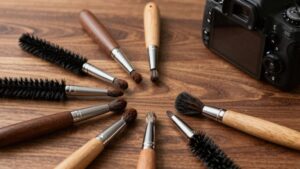
- Brush the chamber and blade thoroughly.
- Run a small amount of coffee through, then discard it.
A burr grinder generally leaves less ultra-fine dust because its controlled burr gap produces a more consistent grind. Even so, purge the burrs, chute, and chamber before brewing.
If you regularly grind aromatic spices, dedicate the blade grinder to them. Cleaning duration determines how much spice flavor reaches the next cup.
Burrs Offer Better Control
With adjustable burr spacing, you can select a specific grind size and produce a far more uniform particle distribution than a blade grinder’s timing-based chopping. That control helps you dial in each brew method. Burrs also create fewer ultra-fine particles, so you can limit over-extraction and its bitterness while adjusting strength more predictably.
A blade grinder mixes dust with larger chunks. You’ll extract the fines too quickly and the coarse pieces too slowly, creating bitterness and weak, sour flavors. Burrs generate less heat, which helps you preserve aromatics during grinding. If your coffee tastes harsh or bitter, move coarser; if it tastes weak, watery, or sour, move finer.
These adjustments give you a path to balanced flavor, whereas blade-grinder timing offers no repeatable setting.
Conclusion
Ultimately, you’ll get better coffee from a burr grinder because it produces a more uniform grind and gives you precise control over brewing variables. You can choose conical or flat burrs, steel or ceramic construction, and convenient dosing features based on your priorities.
A blade grinder costs less and works for basic drip coffee or spices, but it creates uneven particles and more heat. If flavor, consistency, and flexibility matter, choose burrs for your kitchen.