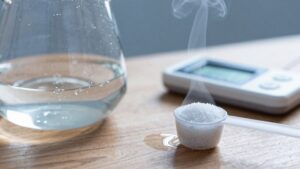
Coffee Brewing Methods Explained: Find Your Ideal Cup
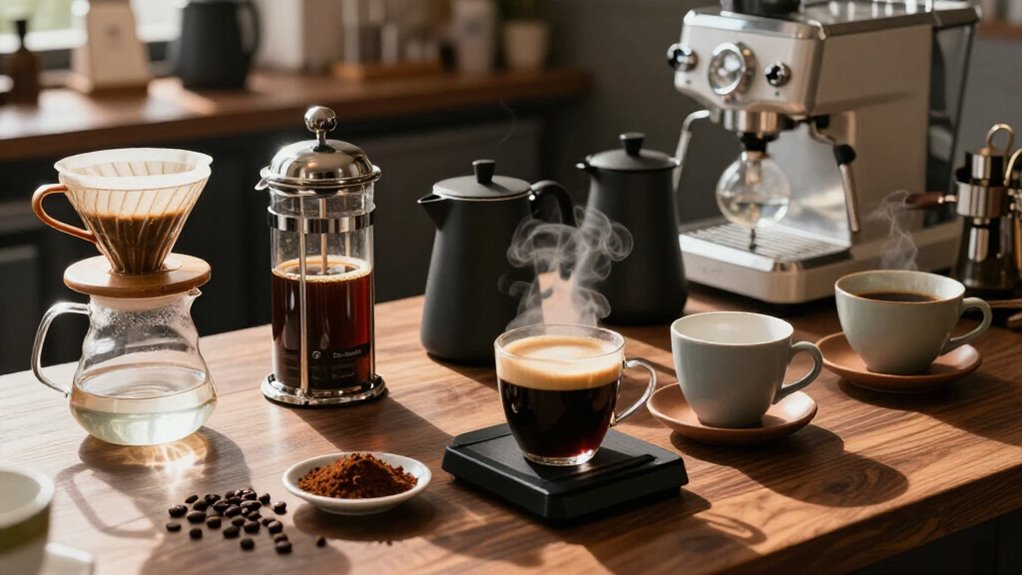
Choose your brewer by the cup you want: auto-drip delivers clean, consistent batches; French press gives fuller, sediment-rich body; pour-over and Chemex emphasize clarity; AeroPress offers fast, flexible brewing; espresso concentrates flavor; cold brew produces a smooth concentrate.
Control extraction with grind, temperature, contact time, and agitation. Start around 1:16 coffee-to-water, use 90°C water for AeroPress, rinse paper filters, and adjust for altitude.
Water chemistry matters, too. Keep going, and you’ll find recipes and troubleshooting.
Compare Six Brewing Methods
Each brewing method controls extraction differently, so your choice affects flavor, strength, clarity, and preparation time. When you need volume, choose auto-drip: its medium grind and wide shower head support rapid, even batch brewing. Choose French press for simple full immersion; steep coarse grounds about four to five minutes, then plunge without a paper filter.
For maximum manual control, use pour-over with medium-fine to medium grounds and 195–205°F water. AeroPress combines brief steeping with pressure filtration, using a paper microfilter and medium-to-fine grounds in roughly one to three minutes. Select espresso when you want a fast, concentrated shot: a fine grind, about nine bars, and 25–30 seconds matter.
Choose cold brew when you can’t rush preparation; coarse grounds steep 12–24 hours, usually as concentrate.
Extraction Shapes Every Sip
Extraction Is the process by which water dissolves soluble compounds from ground coffee into your brew. You shape each sip by controlling grind size, contact time, temperature, and agitation.
Finer particles expose more surface area and extract faster; longer contact raises extraction yield (EY). Hotter water accelerates dissolution, although excessive heat or time can pull bitter compounds after acids and sugars.
Aim for 18–22% EY for balanced flavor. If you under-extract, you’ll taste acidity, thin body, or a finish; over-extraction can taste dry and bitter. Brew ratio controls strength, while dissolved solids (TDS) measures concentration. Use a refractometer to read TDS; combine it with brew ratio to estimate EY. Percolation depends on flow through the bed; immersion depends on steep time, grind, and agitation.
Morning AeroPress at 90°C
For a morning AeroPress, heat water to about 90°C (195°F), then brew for 1–3 minutes using a medium-to-fine grind. That temperature supports efficient extraction while limiting harsh bitterness, making it practical when you want a fast, balanced cup.
Stir briefly after wetting the grounds, secure the paper microfilter, and press gently once the immersion phase ends. The paper keeps bottom grit out while preserving a smooth, full-flavored profile.
For repeatable mornings, measure your coffee and water, hold the temperature steady, and use the same timer. Adjust brew duration within the one-to-three-minute range: extend it for greater intensity or shorten it for a lighter result.
Because the AeroPress is portable and single-serve, you can maintain this routine at home, work, or while traveling each day.
Brewer-Specific Grind Sizes
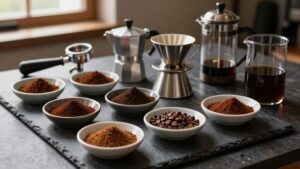
You’ll use a coarse grind for French Press to limit sediment and prevent a muddy cup. Choose a medium grind for pour-over to support even flow and clean clarity.
Espresso requires a fine grind to regulate high-pressure water flow and achieve balanced extraction in roughly 25–30 seconds.
French Press: Coarse Grind
With a French press, use a coarse grind because the grounds steep fully in hot water before the metal mesh separates them. Choose particles that resist over-extraction during a four-minute steep. If you grind too finely, small particles can pass through the mesh, creating a muddy or silty texture and increasing harsh, bitter flavors.
Heat water to 195°F–205°F (90–96°C), then combine it with coffee at your recipe ratio. Let the mixture steep for four minutes; you can swirl gently midway to promote even contact without disturbing fines. When steeping ends, press the plunger slowly and steadily. Decant the coffee after plunging, since leaving it on the grounds can extend extraction.
This coarse setting preserves the French press’s full-bodied character while limiting sediment and bitterness.
Pour-Over: Medium Grind
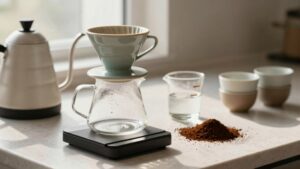
Although pour-over brewers differ in shape and filter design, a medium-fine to medium grind generally provides balanced flow and extraction. For V60 and Kalita Wave, choose a medium grind to balance clean, bright clarity. A coarser setting speeds flow, causing under-extraction and sour, thin flavors; a finer setting slows flow, increasing over-extraction and bitterness.
With Chemex, use a medium grind to complement its thicker paper filter, maintain smooth extraction, and preserve delicate flavor nuances.
Heat water to 90–96°C (195–205°F), then pour steadily in a consistent circular pattern to saturate the grounds evenly. Adjust grind first when your cup tastes unbalanced: move finer when it’s sour or weak, and coarser when it’s bitter or harsh. Pour rate influences contact time; change one variable at once.
Espresso: Fine Grind
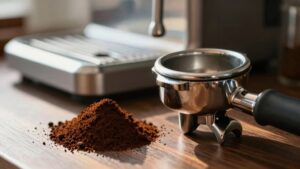
Because espresso brews under roughly 9 bars of pressure, it requires a very fine grind to slow water flow during the 25–30-second extraction. This grind creates a dense, even puck that supports consistent flow, reduces channeling, and helps produce crema. You’ll need a particle size, since uneven grounds can send water through weak paths.
If your grind is too coarse, the shot runs quickly and tastes sour or thin from under-extraction. If it’s too fine, flow may stall, producing bitter, harsh over-extraction. Start with a fine setting, then adjust incrementally while targeting a dose-to-yield ratio and shot time. Your machine, basket, and coffee can differ, so taste every result.
For AeroPress espresso-style brewing, choose the finer end of its range for a concentrated extraction.
Water Chemistry Effects
You’ll notice that hard water can increase extraction and amplify bitterness, while softer water may produce a lighter, sharper cup.
Alkalinity buffers coffee’s natural acids, so higher alkalinity can mute brightness and acidity. You’ll get more consistent flavor when calcium, magnesium, and alkalinity remain balanced.
Water Hardness Impact
Water hardness, the concentration of calcium and magnesium in your brewing water, directly affects extraction and flavor. Harder water can pull more compounds from coffee, increasing perceived strength and emphasizing bitterness or astringency when your grind or brew time runs high. Softer water produces a cleaner, brighter-tasting cup, though low mineral content can reduce extraction consistency.
Aim for balanced mineral content; many brewers target approximately 50–175 ppm total dissolved solids. Test your water or check your filter’s specifications before adjusting your recipe.
If your coffee tastes dull or harsh, you’ll troubleshoot it fastest with filtered, low-mineral, or remineralized water before changing beans. Descale regularly: hard-water deposits can alter heater performance and flow paths, shifting brew temperature and taste over time despite an unchanged recipe.
Alkalinity And Acidity
A brew’s brightness depends on both extraction and water chemistry: balanced extraction produces pleasant tang, while under-extraction tastes sour and over-extraction can turn harsh or bitter. Alkalinity measures water’s resistance to pH change; it buffers brewed acids, reducing perceived acidity and making your cup smoother but less bright.
High-alkalinity water can mute delicate, nuanced flavors, especially in clarity-focused pour-overs. Lower-alkalinity water can make those characteristics more pronounced.
Use filtered water and keep your brewer clean. Mineral buildup can alter alkalinity and pH, causing inconsistent flavor. Also consider grind size: a coarse grind may produce a thin, sour, acidic cup because extraction remains low, whereas a fine grind can push extraction toward bitterness and astringency. Adjust grind and water chemistry together, then taste the result.
Mineral Balance Matters
Mineral balance strongly affects extraction, so the same coffee can taste flat with overly soft water or harsh when hardness is excessive. For repeatable results, use moderately mineralized water, targeting about 50–150 mg/L total hardness (roughly 40–100 ppm is common practical guidance), rather than distilled or fully softened water. Match water to your method and keep it consistent when comparing recipes.
Pay attention to alkalinity, too. High bicarbonate buffers coffee’s acids, potentially increasing bitterness and astringency, while lower alkalinity preserves acidity and clarity. Chlorine and other off-flavors can obscure delicate notes, even when your grind, temperature, and ratio are correct, so filtered water often improves balance. If the same coffee changes after you brew elsewhere, investigate water chemistry before altering your roast, dose, or technique.
Batch Brewing for Guests
When you’re serving several guests, choose a larger-format auto-drip brewer, an 8-cup model can produce multiple servings quickly with consistent results. Use filtered water, a medium grind, and the quantity your machine supports to keep flavor stable across cups. Descale regularly.
| Method | What you’ll get |
|---|---|
| Auto-drip | Clean, consistent cups, minimal intervention |
| Chemex | Paper-filtered clarity from gravity draw |
A Chemex-style batch suits guests seeking a clean, clear profile, though its drawdown takes longer. For a richer option, use a French press with coarse grounds and a four-minute immersion; decant to limit sediment and continued extraction. A moka pot delivers an espresso-like batch through steam pressure, but its metal filter may leave sediment and produce thicker, bitter coffee. Match the method to serving speed, texture, and capacity.
Altitude Alters Boiling Temperature
At higher elevations, lower atmospheric pressure causes water to boil below the 195–205°F (90–96°C) range targeted by many coffee recipes. Your water may look boiling yet extract coffee more slowly, producing sharp acidity, muted sweetness, or thin body. Treat boiling temperature as altitude-dependent, not recipe-ready heat.
For pour-over or French press, brew slightly longer or use hotter heat when available. Espresso needs tighter adjustment: slower extraction changes flow and timing, so recalibrate grind and dose until the shot reaches your target yield and balance. Start with small changes, then taste for acidity, sweetness, bitterness, and body. You don’t need to force a rolling boil; measure temperature when possible, then tune time or grind to match the sea-level flavor profile and maintain balanced extraction at altitude.
Rinse Paper Filters First
Once you’ve accounted for altitude-dependent water temperature, prepare the filter before brewing. Place the paper in your V60, Kalita, or Chemex, then rinse it with hot water. This removes papery compounds and preheats the brewer, helping maintain a temperature during extraction. Discard the rinse water before adding coffee.
- Use enough hot water to wet every section.
- Confirm the filter sits flush against the brewer.
- Rinse thicker Chemex filters carefully.
- Watch for dry patches that can disrupt flow.
- Expect a sweeter, cleaner, more transparent cup.
Because paper traps oils and fine particles, rinsing helps your coffee, not filter residue, define the flavor.
It also supports saturation and flow, reducing the risk of unwanted bitterness and preserving clarity. This simple step matters most when filter performance shapes the brew.
Brew With 1:16
Start with a 1:16 coffee-to-water ratio—for example, 20 g of coffee to 320 g of water—to establish a balanced baseline for most home brewing methods. Keep this ratio by weight, then tune extraction through grind size, temperature, and contact time.
For a French press, choose a coarse grind and steep for about four minutes; the ratio helps limit muddy texture from over-fines. With a V60 or Chemex, use a medium-fine to medium grind and 195–205°F water for a cleaner, brighter cup.
For an AeroPress shot, retain 1:16 initially, but adjust grind and time because extraction responds more sharply. If the brew tastes bitter or astringent, coarsen the grind slightly or shorten contact time while keeping your ratio. You’ll preserve a consistent baseline for useful comparisons.
Conclusion
Your ideal cup emerges when you match method, grind, water, and temperature to your preferences. Compare six brewers, then control extraction rather than relying on labels.
For AeroPress, start around 90°C; use method-specific grind sizes, rinse paper filters, and try a 1:16 coffee-to-water ratio. Account for mineral content and altitude, which changes boiling temperature.
When guests arrive, choose batch brewing for consistency. Measure, taste, and adjust one variable at a time—you’ll refine your process.