Coffee Equipment Cleaning Station Setup
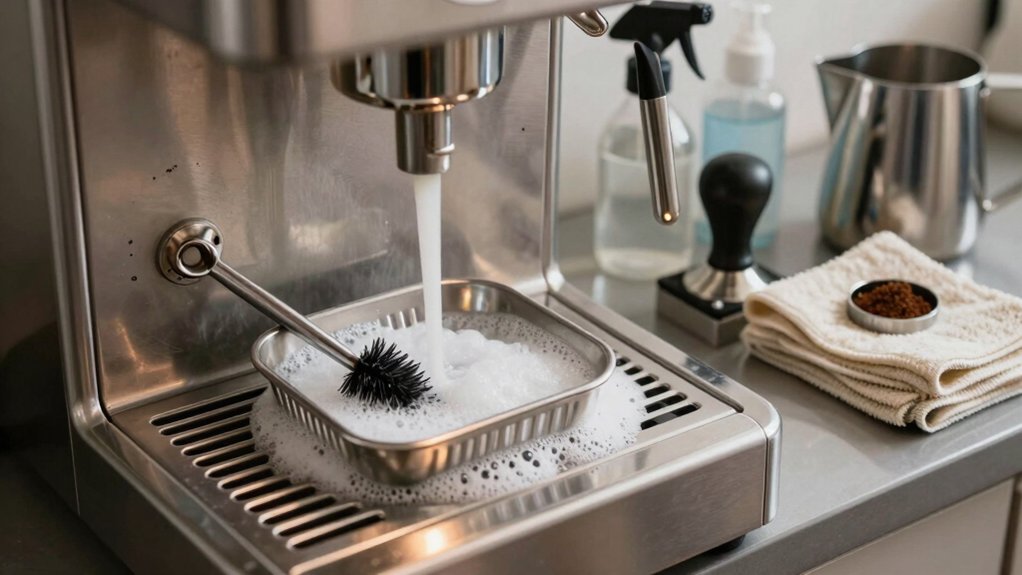
Set up a compact cleaning station with labeled tubs for quick (3 min), routine (30 min with Cafiza), and severe soaks (boil then 30 min). Plus, an end-of-day Cafetto tub. Keep brushes, scrapers, and a spare blind for backflushing handy.
Inspect knife-edges and seating surfaces for nicks, corrosion, or loose fittings. Dry parts before reassembly. Monitor group-head pressure with a visible gauge; use short release cycles and log spikes. Follow these steps and you’ll be ready to implement full safety protocols.
Quick Overview
- Designate a ventilated area with a sink, chemical storage, and durable counter for soaking and scrubbing portafilters and parts.
- Provide labeled detergent (Cafiza/Cafetto), measuring tools, and sealed containers for 30-minute and quick 3-minute soaks.
- Mount a visible pressure gauge/transducer at eye level; set alarm thresholds to monitor backflush and pump pressures.
- Include PPE (eye protection, heat-resistant gloves), slow-release valves, and clear procedures for relieving pressure and handling spikes.
- Create an inspection station with soft brushes, a magnifier, and a torque check for seating/knife-edge.
- Include a drying rack before reassembly.
Portafilter Soak Times
How long should you soak a portafilter? You’ll use a portafilter soak of 30 minutes with Cafiza or similar for routine deep cleaning. Light 3-minute soaks work for quick turnover. At a cleaning station, submerge metal parts only; avoid wooden handles and rinse thoroughly before reuse.
For severe clogs, boil for 10 minutes; then follow with a 30-minute detergent soak. Overnight Cafetto restores stainless shine for end-of-day maintenance. Always scrub after soaking, dry parts fully, and run a purge shot after reinstalling baskets.
| Purpose | Recommended Soak |
|---|---|
| Quick clean | 3 minutes |
| Routine deep | 30 minutes |
| Severe clog prep | 10 minutes boil |
| Overnight shine | Overnight |
| Safety/notes | Rinse, avoid wood |
Knife-edge Portafilter Checklist
After soaking and rinsing your portafilter parts, inspect the knife-edge basket and surrounding seating for nicks, buildup, or warping that will compromise seal and extraction. You’ll want a clean, sharp knife edge and a flat seating surface so the portafilter seals reliably and prevents channeling.
Check edges under good light; use a magnifier for hairline damage. If you see corrosion or bending, replace the basket or portafilter immediately to avoid leaks or uneven pressure. Verify screw fittings and spouts are tight. Dry all parts fully before reassembly to prevent corrosion.
- Examine knife edge for dents, burrs, or residue that disrupts tamping.
- Confirm seating is flat, clean, and free of compression marks.
- Test seal on group head; replace parts if you detect leaks.
Backflush Pressure Limits
When you backflush, keep pump pressure within the manufacturer’s safe range to avoid seal and valve damage. Know the difference between boiler, pump, and brew pressures; monitor them during cleaning, and stop immediately if readings spike.
Always use pressure relief practices: slow-release cycles and confirmed blind-port fittings to prevent overpressure failures.
Safe Pressure Range
Why should you care about backflush pressure? You need to control safe pressure to protect seals, valves, and brew groups during cleaning. Stay within manufacturer pressure limits: typically 1–1.5 bar (15–22 psi) at the group head for detergent backflushing. Higher pressures risk gasket extrusion and valve damage.
Use a calibrated gauge or machine diagnostics to verify pressure before you start. If pressure spikes, stop immediately, relieve pressure, and inspect for blockages or worn components. Log pressure readings with each maintenance session to spot trends that indicate failing pumps or valves.
Prioritize safety: wear eye protection, keep hands clear of steam paths, and follow the machine manual. Correct pressure control extends equipment life and prevents costly repairs.
Pump Pressure Types
How should you match pump pressure types to safe backflush limits? You’ll identify the machine’s pump pressure spec. Vibration pumps typically peak around 9 bar; rotary pumps can be adjusted and exceed that. Set backflush cycles to stay below manufacturer-recommended maximums to avoid seal and spring damage.
Use shorter, controlled bursts when pressure is high. Low-pressure machines tolerate standard 5–10 second cycles. Never compensate for excess pressure by increasing detergent concentration. For portafilter soak, detach metal parts and soak in approved Cafiza solution separately rather than subjecting gaskets to prolonged high pressure.
Document pump type and chosen backflush limits at the station. Train staff to follow those limits strictly to protect group seals, springs, and operator safety.
Backflush Pressure Monitoring
Matching pump type to backflush limits is only the start. You also need active pressure monitoring during backflushing to protect seals, springs, and staff. You should install a reliable gauge or transducer visible at eye level and set alarm thresholds tied to safe backflush pressure ranges recommended by the machine maker.
During each cycle, watch the readout. Stop immediately if pressure spikes or fails to return to baseline between intervals. Log readings per shift so trends reveal worn gaskets or partial blockages before failure. Train staff to recognize abnormal patterns and to isolate the pump if alarms trigger.
Consistent monitoring backflush keeps components within design limits, reduces repair costs, and prevents sudden equipment hazards.
Pressure Relief Practices
When should you stop a backflush cycle if pressure climbs unexpectedly? Stop immediately if pressure rises above your machine’s normal backflush range or if you see rapid, sustained climb. You should secure the group, release steam valves per manufacturer steps, and allow pressure to drop before inspecting.
Regular gauge calibration prevents misreading spikes; check gauges monthly and after any service. Use pressure relief safety practices: wear eye protection, keep face clear of group head, and never remove panels while pressurized. Log any abnormal readings and tag the machine out of service until a qualified technician verifies relief valves and pump control.
Follow manufacturer limits for your model rather than guessing safe thresholds to protect staff and equipment.
Preventing Overpressure Damage
Why would you risk equipment failure or injury by ignoring backflush pressure limits? You must monitor backflush pressure during every cycle to prevent seal blowouts and group head damage. Use the manufacturer’s recommended pressure and a calibrated gauge; don’t improvise.
If pressure rises unexpectedly, stop, relieve pressure, inspect the blind basket and gasket, and confirm the portafilter soak hasn’t introduced swelling or debris that restricts flow. Replace damaged gaskets and check the relief valve function regularly.
Train staff to recognize warning signs: hissing, leaks, or pressure spikes. They should follow a strict checklist: correct detergent dose, timed cycles, and controlled pump activation. Consistent attention to backflush pressure protects equipment and prevents injuries.
Frequently Asked Questions
Where Should Cleaning Chemicals Be Stored to Meet Safety Codes?
Store cleaning chemicals in a locked, ventilated cabinet away from food prep to ensure storage safety. You’ll keep them off floors, on spill-proof shelves, and separated by incompatibility.
Label each container clearly with chemical labeling, hazards, and instructions. Keep SDS accessible nearby. You should install secondary containment for leaks, maintain good lighting, and restrict access to trained staff only to reduce risk and meet health-code requirements.
How Often Replace Microfiber Cloths and Towels?
Replace microfiber cloths daily with heavy-use areas and weekly for light tasks; replace towels daily or immediately when soiled. Establish cloth care and replacement schedules that log use, laundering, and inspections.
Follow towel hygiene by washing at high temperatures with proper detergent. Avoid fabric softeners to preserve microfiber durability. Retire cloths showing fraying, loss of absorbency, or contamination and document replacements to maintain sanitation and safety.
Can Grinders Be Cleaned While Still Connected to Power?
Yes, but only after you follow proper Grinder safety and Power off procedures. Unplug the grinder and switch it off at the breaker if available. Lock out or tag the switch if required.
Remove the hopper, empty beans, and run remaining grounds out by briefly pulsing on low only if manufacturer permits; otherwise keep it unplugged. Clean burrs and hopper with recommended tools, avoiding water on motor parts. Then reassemble and restore power.
What Ventilation Is Required Near Descaling or Soaking Areas?
You need ventilation requirements that ensure descaling safety: provide mechanical exhaust venting at soaking/descaling stations to capture fumes. Exchange air 6–12 ACH, and keep windows or supply air to prevent negative pressure. Use corrosion-resistant fans and ducting to outdoors, as well as local capture hoods near heavy chemical use.
Post warning signage, sealed chemical cabinets, and an eyewash/ventilated wash area. Monitor with CO2/VOC detectors and follow product SDS limits.
Are Separate Sinks Mandatory for Small Cafés?
Not always: requirements vary by local health codes. However, you should provide separate sinks if your cleaning workflow risks cross-contamination. You’ll protect food safety by dedicating one sink for equipment cleaning and another for handwashing.
Plan equipment placement so chemicals and dirty tools stay away from prep areas, with clear signage and drainage. If local rules allow one sink, follow strict protocols, schedules, and sanitation checks to prevent contamination.
Conclusion
You’ll keep your coffee gear safe and reliable by following clear, practical limits: soak portafilters only as long as needed; use the knife-edge checklist before each brew; and backflush within the machine’s safe pressure range. Monitor pump and backflush pressures routinely. Use pressure-relief practices if readings spike, and don’t ignore signs of overpressure.
Consistent, cautious maintenance prevents damage, protects you, and ensures every shot tastes as intended. No shortcuts, no surprises.