Pour Over Filter Paper Size Chart
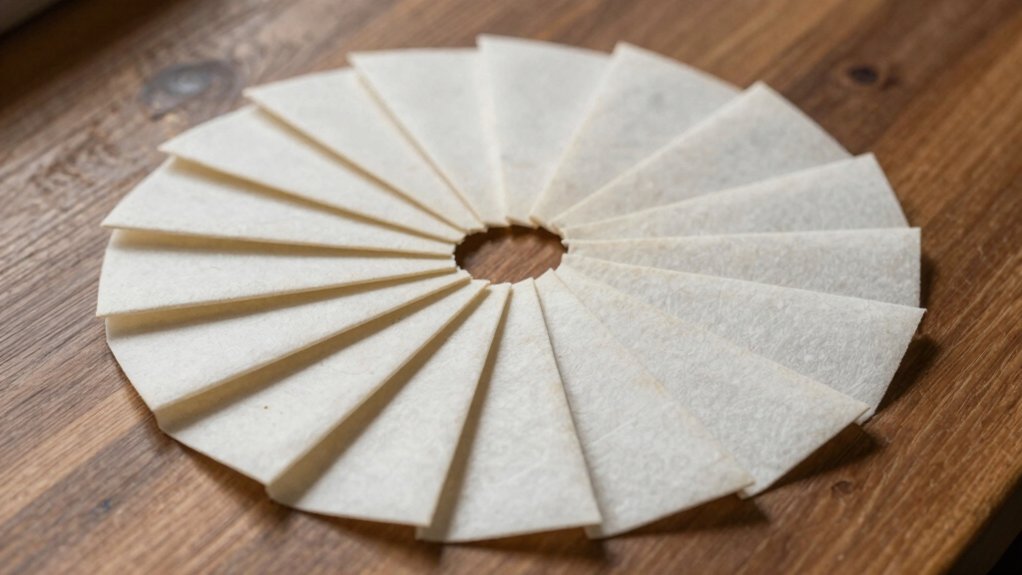
Pick cone sizes by brew volume and control needs: #1 for single cups, #2 for 2–6 cups, #4 for 8–10 cups and #6 for 10+; larger cones reduce drift and channeling and give steadier drawdown.
Fold pleats and seam placement change bed depth and flow; so adjust grind and dose to compensate.
Wet-rinse (30–200 ml, 10–90 s) removes paper oils and preheats the dripper, affecting clarity versus body.
Keep notes to refine; more specifics follow.
Quick Overview
- Cone sizes: #1 for single-cup, #2 for 2–6 cups, #4 for 8–10 cups, and #6 for 10+ cup brews.
- Filter shape affects flow: conical for focused extraction, flat-bottom for more even bed and slower drainage.
- Pleats and seam placement change bed depth and drawdown; tighter pleats increase contact time.
- Wet-rinse (30–200 ml) removes papery flavors, preheats dripper, and stabilizes initial flow rate.
- Record filter size, rinse volume/time, and drawdown to translate flow changes into grams for target extraction.
Cone Filter Diameter Chart
Why choose one conical filter size over another? You’ll match cone diameter to target brew volume and dripper geometry: #1 for single-cup precision; #2 for 2–6 cups (common V60); #4 for 8–10 cups; and #6 for 10+ cups. Diameter affects flow, extraction, and non functional drift (unexpected channeling over the cone surface). Larger cones reduce susceptibility to drift and channeling variance. Choose size to minimize filter waste by avoiding oversized paper for small brews.
| Filter Size | Typical Use |
|---|---|
| #1 | Single-cup pour-over |
| #2 | 2–6 cup V60/medium brews |
Use cone-specific pore and geometry data to control flow rate and extraction reproducibly.
Paper Fold & Brew Ratio
How you fold a conical or flat-bottom paper filter directly affects bed depth, flow uniformity, and ultimately the brew ratio you’ll need to hit target extraction. Small edge pleats or a pronounced seam change water path and can speed or slow drawdown. You’ll adjust dose and ratio based on measured flow changes: tighter pleats raise bed depth, increasing contact time. Flattened seams lower resistance, reducing contact time.
Use these discussion ideas and subtopic contrasts to calibrate:
- Measure drawdown time with standard 20 g/300 ml ratio; note deviation.
- Repeat with one pleat folded vs. multiple pleats; record extraction yield.
- For flat-bottom filters, test uniform pleat positions to reduce channeling.
- Translate drawdown delta into +/- grams of coffee to meet target extraction.
Apply results to standard cup sizes for reproducible brewing.
Wet-Rinse Timing Recommendations
You should wet-rinse filters to remove paper fibers and stabilize extraction by pre-heating the dripper and bed. For a quick rinse, pour 30–60 ml of near-boiling water over the paper and discard immediately. For a thorough rinse, use 120–200 ml and allow 10–15 seconds contact time to ensure uniform wetting.
These choices measurably affect brew taste: they reduce papery off-flavors and alter initial flow rate. Adjust rinse volume and timing based on filter size and desired extraction.
Purpose Of Wet Rinse
Start by wet-rinsing the paper filter to remove residual paper fibers and manufacturing residues that can alter extraction and flavor. This step also preheats the dripper and carafe, stabilizing brew temperature for more consistent extraction.
You’ll perform a brief rinse (10–20 seconds) with near-boiling water to flush soluble cellulose and reduce washing aroma that can mask coffee volatile compounds. The wet surface improves initial wetting of grounds, promoting uniform aroma diffusion and minimizing channeling.
Rinse volume should approximate the wetting surface area; about 200–300 ml for standard #2/#4 conical filters or 300–500 ml for larger flat-bottom filters to ensure consistent thermal mass. Empirical trials show this protocol reduces paper-derived off-notes and narrows brew variability.
Timing For Quick Rinse
Having rinsed the paper to remove fibers and preheat equipment, plan a brief, timed wet-rinse to balance solvent flushing with thermal equilibration: a 10–20 second pour for #2/#4 conical filters and 15–30 seconds for larger flat-bottom or commercial-size filters reliably expels soluble cellulose while bringing the dripper and carafe to near-brewing temperature.
You’ll time the pour to avoid over-extraction from retained surfactants; yet, ensure surface wetting for consistent flow. Use shorter rinses when using a coarse grind to prevent excessive cooling. Extend toward the upper bound when you’ve performed a long preheat or when ambient temperature is low.
Measure flow rate: target full-wet coverage with minimal pooling. Then, discard rinse water and proceed immediately to brew.
Timing For Thorough Rinse
Why rinse thoroughly and for how long? You should perform a wet rinse long enough to saturate the paper, flush manufacturing residues, and pre-warm the dripper and carafe.
For conical and flat-bottom filters, 30–60 seconds of continuous pour at a flow rate matching your planned brew (≈50–100 g/min) will remove fines and reduce surface tension variability. Longer rinses (60–90 s) are warranted for larger #4/#6 or high-surface-area flat-bottom filters to ensure full pore activation.
Quantify rinse volume: use 30–60 g water for single-cup filters and 100–150 g for larger sizes. Proper wet rinse minimizes channeling effects by homogenizing initial wetting and reducing preferential flow paths. Document rinse time and volume for reproducible extraction.
Effects On Brew Taste
How long you rinse the paper filter measurably alters extraction dynamics and flavor balance. So plan rinse timing based on filter size and brew goals. You’ll adjust rinse duration because residual paper solids and trapped air change initial flow rate and contact time. Larger #4 or #6 conical filters require proportionally longer wet-rinses to stabilize flow and avoid under- or over-extraction spikes.
Empirical data show a brief 5–10 second rinse reduces papery off-flavors. Extended 20–30 second rinses more fully pre-wet fibers, marginally increasing body and sweetness. Use two word discussion ideas to compare short versus long rinse outcomes: “clarity vs body.”
Monitor taste balance quantitatively by cupping TDS and extraction yield after varying rinse intervals to choose the optimal rinse for your target profile.
Practical Rinse Tips
Wondering how long to wet-rinse your filter? You should perform a timed wet-rinse of 10–20 seconds for single-cup conical filters (#1–#2) and 20–30 seconds for larger #4–#6 or flat-bottom filters to saturate the paper and stabilize flow.
Use near-boiling water; rinse until runoff temperature drops 5–10°C from initial pour to ensure thermal equilibrium with brewer. This procedure reduces papery off-flavors and primes pore paths relevant to coffee filtration. For unbleached vs bleached papers, expect slightly slower initial flow with unbleached due to residual fibers.
Extend rinse by ~5 seconds when using unbleached to achieve comparable wetting. Record rinse duration and runoff temperature to maintain reproducible extraction and consistent brew-to-brew flow rates.
Frequently Asked Questions
Which Filter Size Fits a Melitta #4 Cone Dripper?
You should use Melitta #4 cone filters. On the size chart, the Melitta #4 fits most 8–10 cup cone drippers and matches flat-bottom Size 4 dimensions (about 9 3/4 x 4 1/4 inches for regular decanter types).
Choose a #4 conical filter for optimal capacity (1.25–1.5 L range) and flow characteristics. This size maintains recommended coffee-to-water ratios and minimizes channeling; it provides consistent extraction across typical home brewers.
Can I Use Flat-Bottom Filters in Conical Drippers?
Yes, you can use flat-bottom filters in conical drippers; however, disposable compatibility varies, and fit may be imperfect. You will get slower, less even flow unless the paper is trimmed or the dripper adapted.
Evidence shows shape and pore distribution affect extraction and filter taste impact. Flat bottoms promote different contact times and channeling risks compared with conical papers. Test dose, grind, and pour technique to compensate for altered flow and flavor.
How Many Grams of Coffee per #2 Filter?
You should use about 12–15 grams of coffee per #2 filter for a single 300–600ml brew, aiming for a 1:15–1:17 coffee-to-water ratio. Use a scale and grinder to maintain dose precision; document extraction yield.
For coffee pairing and flavor targeting, adjust dose ±2 grams. If you lack #2 paper, consider filter alternatives (Kalita Wave-compatible cones or prefolded circles) but recalibrate dose for changed flow dynamics.
Do Bleached Filters Change Taste Noticeably?
You won’t notice a large taste impact from bleached filters for most brews. Controlled studies and pore-size data show bleaching can slightly alter pore uniformity and pickup of paper compounds; this produces minor differences in clarity and mouthfeel.
If you’re sensitive to subtle flavors, you might detect less papery off-notes with bleached paper. Otherwise, extraction and grind-to-water ratios dominate taste more than bleached filters.
Are Aeropress Paper Pores Food-Safe?
Yes, Aeropress paper filters are food-safe. You’ll find they’re designed for brewing, meeting sanitary standards and made from food-grade cellulose with minimal additives. Their filter porosity (~120 ±22 μm) limits particulates while allowing oil and dissolved solids to pass appropriately, balancing extraction and clarity.
For aeropress safety, avoid non-food papers or scented/chemically treated sheets. Use manufacturer or unbleached food-grade filters for consistent, safe results.
Conclusion
You’ve learned the right cone filter diameters and how fold, grind, and brew ratios affect extraction. You have also learned specific wet-rinse timings for quick (3–5 seconds) and thorough (15–20 seconds) rinses. Use a brief rinse to remove paper flavors. Use a longer rinse when you need better temperature stability and fuller flow.
Rinse with near-boiling water, drain excess, and adjust timing experimentally. Measure soluble yield and taste to validate the optimal rinse for your equipment and beans.