Brew Variables Adjustment Order
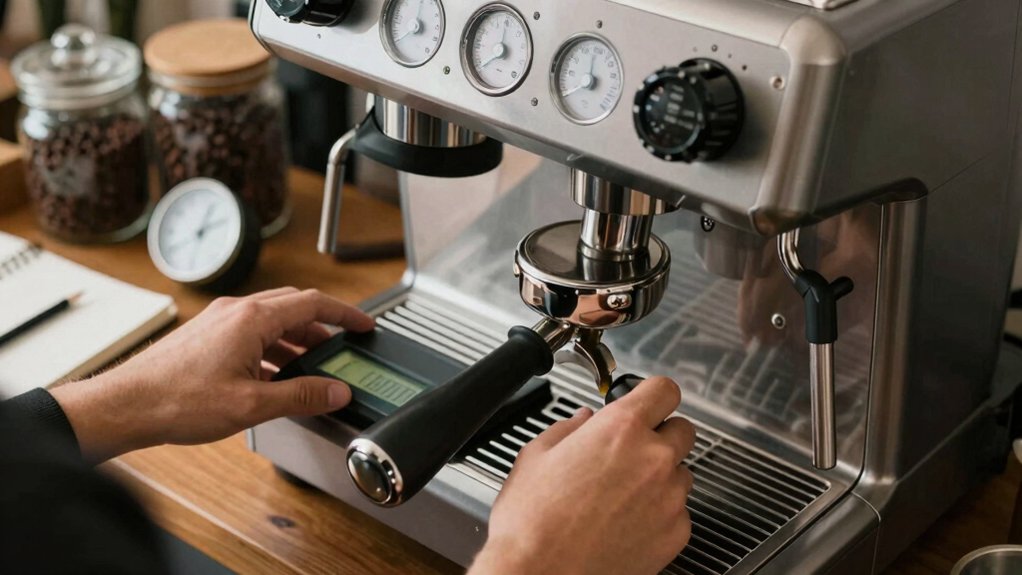
Start by locking dose and confirming your scale and grinder are calibrated; that establishes a reproducible baseline.
Next, adjust grind to hit your target brew time: finer to slow flow, coarser to speed it. After time is stable, use small temperature shifts and minor dose tweaks to refine balance and extraction.
Maintain burr alignment; check seals and brew head flow before major changes. Keep following this sequence and you’ll uncover the detailed checks and adjustments that follow.
Quick Overview
- Verify equipment calibration (grinder, scale, temperature) and inspect brew head/seals before changing brew variables.
- Set and confirm dose first to establish a reproducible baseline for extraction and yield control.
- Lock brew time and adjust Grind Size next to correct flow rate and extraction without altering other variables.
- Use temperature tweaks after grind adjustments to correct under- or over-extraction and balance acidity/bitterness.
- Record settings and perform maintenance (burr alignment, seals, shower screen) regularly to maintain consistent adjustment outcomes.
Grind Size vs Extraction Rate
How does grind size control extraction rate? You adjust grind to change surface area and flow: finer grinds raise surface area, slow flow, and increase extraction; coarser grinds do the opposite. You’ll rely on grind distribution to limit extraction variability. Uniform particles reduce channeling and stabilize yield.
| Property | Effect |
|---|---|
| Surface area | Finer → greater |
| Flow rate | Finer → slower |
| Risk | Finer → channeling/over-extraction |
Methodically, you dial coarser to shorten time or finer to lengthen it, while compensating dose to preserve strength. Monitor TDS/time targets and grinder behavior: bimodal distributions need coarser settings; unimodal allow finer. Maintain puck prep and burr alignment to minimize extraction variability and reach the desired balanced extraction.
Dose, Time, Temperature Cheatsheet
You’ve seen how grind alters extraction rate; now apply that control to a compact cheatsheet linking dose, brew time, and temperature so you can hit target strength and extraction reliably. Use dose accuracy as your baseline: set dose to target, confirm yield, then lock time. Prioritize time consistency during pours. Adjust grind to nudge seconds without changing dose.
Low dose: faster flow, shorten time by coarsening grind. Raise temperature +1–2°C if extraction low.
Medium dose: maintain time window, tweak grind first. Use temperature to correct slight acidity or bitterness.
High dose: slow flow, lengthen time by finer grind. Lower temperature slightly if over-extracted.
Record values, iterate systematically, and change only one variable at a time.
Equipment Calibration and Maintenance
Before you adjust brew variables, verify equipment calibration and perform targeted maintenance. Check grinder burr alignment and dose consistency. Confirm scale accuracy and calibrate water temperature to known references.
Inspect brew head components, seals, and connections for leaks or wear; service them before proceeding.
Grinder Burr Alignment
Why does burr alignment matter? You’ll get consistent particle distribution only when grinder burr alignment is precise. Misalignment creates bimodal grinds that skew grind size vs extraction rate relationships.
Inspect axial and radial concentricity, torque both burrs evenly, and verify mating surfaces are clean. Use a feeler gauge or shim method to detect lateral runout within manufacturer tolerance. After adjustment, produce repeat test grams at a fixed dose and time to confirm extraction stability.
If extraction shifts despite identical settings, recheck burr alignment before altering dose or temperature. Schedule alignment checks by hours of use and after any servicing. Document settings and measured runout so you can revert to proven calibration quickly.
Scale Accuracy Checks
How precise is your scale really, and when should you trust its readout? You verify scale accuracy by performing a three-point check: zero, known mass (e.g., 100 g weight), and a second, different known mass (e.g., 500 g). Record deviation at each point; acceptable drift is typically ±0.5% for dosing. If deviations exceed tolerance, recalibrate or service.
Establish calibration frequency based on usage and environment: daily for high-throughput settings, weekly for regular home use, and monthly if rarely used. Log every check with date, time, ambient conditions, and observed error. Use traceable calibration weights and avoid temperature or airflow that skews results. Consistent checks prevent dosing errors that propagate through brew ratio, grind, and extraction control.
Water Temperature Calibration
Want the water temperature you set to match what reaches the puck? You calibrate the boiler and delivery path with a thermometer probe at the group outlet, recording steady-state readings under typical shot load. Perform water calibration by running consecutive shots until temperature readings converge; log inlet, boiler, and outlet values.
Adjust PID or thermostat offsets in small increments; retest after each change. Verify temp stabilization by measuring variance over 60 seconds: aim for ±0.5°C. Repeat with blind pulls and with typical portafilter mass to include thermal drawdown. Document settings, ambient conditions, and shot cadence so you can reproduce results.
Recalibrate after maintenance, pressure changes, or significant ambient shifts to maintain reproducible extraction temperature.
Brew Head Maintenance
Curious about keeping extraction consistent from puck to cup? You’ll inspect the brew head for wear, seating accuracy, and spray pattern integrity. Remove the group screen, verify gasket compression, and document any portafilter wobble. Use a straightedge and feeler gauges to confirm flange flatness; record millimeter deviations.
Check shower screen holes for clogging; clean or replace per tolerance limits. Verify solenoid operation and pressure stability under load: log inlet and brew pressures during a test shot. Integrate grinder alignment checks into your routine. Misaligned dosing skews puck distribution and flow.
Cross-check scale calibration before and after maintenance to ensure yield measurements reflect true output. Schedule intervals and keep calibrated logs for traceable, repeatable extraction control.
Leak And Seal Inspection
Why does seal integrity matter? You rely on consistent pressure and flow; any breach alters extraction and compromises grind consistency. Inspect all gaskets, O-rings, and mating surfaces visually. Then perform a controlled pressure test at operational temperature.
Note minute seepage or bubble formation: these indicate microleaks that will change flow rate under load. Replace components showing compression set, cuts, or hardening; measure new seals against OEM tolerances. After replacement, torque fittings to specified values and repeat the pressure test.
Log serials, part sizes, and test results for traceability. Recalibrate flow-rate settings if leak remediation alters output. Regular, methodical inspection preserves seal integrity, stabilizes grind consistency impact on extraction, and prevents variable brew profiles.
Frequently Asked Questions
How Do Grind Changes Affect Crema and Crema Retention?
Grind changes alter crema and crema retention by changing particle size distribution, which shifts extraction perception and crema stability. You’ll see finer grinds increase crema density but risk over-extraction. Coarser grinds give thinner crema yet cleaner flavors.
Account for water minerals, altitude pressure, and extraction consistency when making brewing adjustments. Use agitation technique, single origin vs blend dialing, and methodical tamping to optimize foam structure and longevity.
Can Water Chemistry (Minerals) Alter Perceived Extraction?
Yes, water chemistry alters perceived extraction. You’ll see mineral impact on acidity, sweetness and body. Harder water can mute acidity and amplify bitterness. Adjust grind, crema and agitation consistency to compensate for different ionic strengths.
At high altitude, you’ll factor altitude adjustment into temperature and flow expectations. Consider origin vs blends because soluble profiles respond differently to mineral content. Test and tweak dose, grind and brew parameters methodically.
Should I Adjust for Altitude or Ambient Pressure?
Yes, you should adjust for altitude considerations because ambient pressure affects boiling point and extraction kinetics. At higher altitude, lower ambient pressure lowers boiling temperature and slows extraction. You’ll compensate by raising brew temperature slightly, tightening grind, or lengthening contact time.
Systematically test one change at a time; measure taste and extraction yield, and record settings. Small, methodical tweaks preserve balance between strength and extraction for consistent results.
How Does Agitation/Agitation Technique Impact Extraction Consistency?
Agitation technique directly affects extraction consistency by controlling particle suspension and solvent contact time. You’ll use gentler, uniform agitation to reduce channeling and avoid over-extracting fines. Vigorous, uneven stirring increases variability and bitterness.
Standardize scoop, stir rate, and timing for repeatable results; monitor flow and turbidity, and adjust grind or dose if agitation changes. Consistent technique yields predictable extraction curves and tighter cup-to-cup reproducibility.
Are Single-Origin Vs Blends Dialed Differently Beyond Ratio/Time?
Yes, you’ll dial single origin and blends differently beyond ratio/time. Single origin demands precise grind and temperature tweaks to highlight unique acidity and clarity. You’ll favor narrower adjustments and monitor extraction yield closely.
Blends tolerate broader settings, letting you optimize balance by adjusting dose and slight grind shifts for consistency. In practice, you’ll treat single origins like delicate instruments and blends like engineered systems; tuning for nuance versus stability.
Conclusion
You’ll adjust grind size first to control extraction rate. Then tune dose, time, and temperature using the cheatsheet to hit target yield and strength. Keep equipment calibrated: align grinder burrs, verify scale accuracy, and calibrate water temperature regularly.
Maintain brew head seals and check for leaks to ensure consistent flow and pressure. Methodically document each change, measure results, and iterate until extraction and sensory targets are reproducible under controlled conditions.