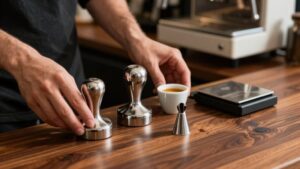
Espresso Shot Checklist
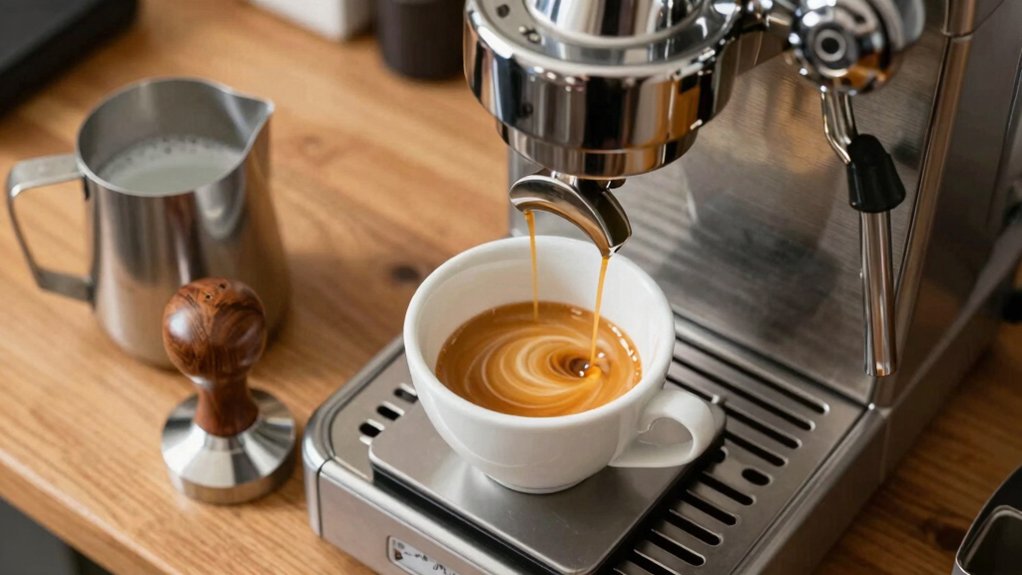
You’ll follow a tight checklist to hit a 1:2–1:2.5 double: wey 18–20 g, zero the scale, and start the timer. wey Grind to reach 36–40 g in 25–35 seconds, and adjust grind only if times drift.
Preheat portafilter and cup, flush the group, use gentle distribution, tamp evenly, control preinfusion and pressure, and log each shot. Keep variables isolated and consistent; you’ll quickly spot patterns that guide further refinement.
Quick Overview
- Confirm dose and basket match (single 7–9 g, double 18–20 g) and weigh with a scale.
- Preheat group, portafilter, and cup; flush group head briefly before locking in.
- Distribute and tamp evenly. Then start shot while timing to hit 25–35 seconds.
- Weigh yield to hit desired brew ratio (double 1:2 → 36–40 g); adjust for preference.
- Record dose, grind setting, time, and yield. Change only one variable at a time.
Shot Yield & Time Chart
Why does yield matter as much as time? You track coffee yield alongside extraction timing to hit consistent brew ratios. Yield tells you what water passed through the puck; time tells you how fast it happened. You’ll target a 1:2 to 1:2.5 ratio for doubles, adjusting grind to move extraction into the 25–35s window.
| Dose (g) | Yield (g) | Time (s) |
|---|---|---|
| 18–21 | 36–40 | 25–35 |
| 18–21 | 54–84 | Extended |
Measure start-to-finish; include preinfusion seconds. Record scale and timer simultaneously, and change one variable at a time to dial toward precise, repeatable shots.
-bar Extraction Rules
How do you keep every shot consistent behind the bar? You monitor bar temperature, lock routine steps, and listen to visual cues so extraction aroma and flavor stay predictable. Stabilize machine temps, preheat portafilter and cup, and flush group heads before each service. Control preinfusion, pressure, and shot time to prevent channeling and uneven flow.
Record adjustments and train teammates to repeat them.
- Maintain bar temperature at specified range and document daily checks.
- Use consistent tamping, dosing, and preinfusion to stabilize flow and extraction aroma.
- Weigh yields, time shots, and tweak grind only when patterns indicate drift.
You act methodically, repeat checks, and treat deviations as data to correct immediately.
Dialed-in Dose Ranges
Start by choosing a standard dose range: typically 7–9 g for a single and 18–20 g for a double. Stick to it when testing. You’ll compare single versus double yields, track how dose affects extraction time and flavor, and adjust grind or dose to reach your target brew ratio and taste.
Use a scale for every shot so your adjustments are precise and repeatable.
Standard Dose Ranges
Wondering what dose you should target for a reliable double shot? You’ll typically aim for 18–20 grams in a standard double basket. That range gives predictable extraction and aligns with common machine and basket capacities. Treat the range as a starting window; some beans or roast levels may call for a gram or two more or less.
Record dose, yield, and time so you can compare adjustments. Avoid slipping into unrelated discussion about single-serve norms here; keep focus on doubles. The subtopic relevance is clear: dosing sets the foundation for grind, tamp, and extraction decisions.
Stay methodical. Weigh every dose, adjust grind before dose, and rerun tests until results are consistent.
Single Versus Double
Curious whether to dial in a single or double dose for a particular bean? You’ll choose based on yield goals, flavor clarity, and beverage use. Singles (typically 8–10 g) concentrate volatile brightness and highlight single origin nuances; they suit tasting shots or small drinks.
Doubles (18–20 g) deliver fuller body, more sweetness, and greater extraction stability for milk drinks. When using dairy alternatives, doubles give you enough intensity to cut through texture and sweetness from oat or almond milk.
Dialing means matching dose to basket and grinder capacity. Then, adjust grind to hit target time and yield. Test both doses, record times and tasting notes, and standardize the one that reliably produces balanced, repeatable shots.
Dose And Extraction
Having chosen between single and double doses, you now match dose ranges to your extraction goals so the coffee hits target weight, time, and flavor. For doubles, aim 18–20 g in the basket; adjust within that window to reach a 1:2 yield (36–40 g) in your target 25–35 second window.
For singles, work proportionally lower while maintaining extraction time. Use systematic grinder calibration to step grind settings, record times and yields, and observe flow. Prioritize consistent dose distribution before tamping to prevent channeling. Uneven beds force compensatory grind changes. Treat each change as one variable at a time: dose, grind, or distribution. Log results and repeat until the shot reliably matches weight, time, and sensory expectations.
Dose Adjustment Tips
Why adjust dose instead of only tweaking the grind? Because dose calibration gives you control over total soluble yield and body without changing particle distribution. Start with your baseline (18–20 g for a double) and change in 0.2–0.5 g increments. After each small change, note extraction time and taste, aiming for your target 36–40 g yield and desired balance.
Keep tamping consistency: same pressure and level. This way, dose is the only variable. If shots taste thin, raise dose slightly; if overly heavy or bitter, reduce dose. Combine dose tweaks with measured grind adjustments only when dose changes plateau.
Log each trial, including dose, tamping consistency, time, and yield. Continue this process until you reliably hit your preferred profile.
Scale And Consistency
How will you lock repeatable results into your shots? Use a reliable scale and controlled workflow: tare the portafilter, dose to your target (commonly 18–20 g), and record both input and output weights every pull. You’ll measure consistency by tracking dose variance, yield, and extraction time across consecutive shots.
If numbers drift, run systematic grind calibration: change one notch, pull two shots, and compare. Keep a log of dose ranges that produce balanced flavor and note environmental factors. Calibrate tamp pressure and distribution so they’re constant; however, prioritize weight and grind as primary variables.
Regularly verify your scale’s accuracy and practice a consistent routine to translate dialed-in dose ranges into repeatable espresso.
Frequently Asked Questions
How Often Should I Descale My Espresso Machine?
You should descale based on water hardness and usage: typically every 3–6 months for home machines. You should descale monthly for high-use or hard-water conditions. Maintain a regular machine maintenance routine; flush after descaling, replace filters, and log dates.
If you see slow heating, odd tastes, or reduced flow, descale sooner. Use manufacturer-approved solutions and follow their cycle instructions to protect boilers, lines, and sensors. This will keep extraction consistent and equipment reliable.
Can I Use Pre-Ground Coffee for Espresso?
Yes, you can use pre-ground coffee, but pre-ground viability is limited compared to freshly ground beans. You’ll sacrifice some aroma and crema. Expect flavor trade-offs like flatter, staler notes and less complexity.
If you must, buy high-quality, recently packaged pre-ground coffee. Store it airtight in a cool, dark place, and grind for espresso-specific consistency when possible. For best results, grind fresh immediately before dosing.
How Long Do Roasted Beans Stay Ideal for Espresso?
Roasted beans stay ideal for espresso about 7–14 days after roast for peak beans freshness. They then remain good up to 3 weeks as roast aging mellows. You’ll get optimal crema and clarity in the first two weeks. After that, flavor complexity declines and extraction becomes less predictable.
Store beans airtight, cool, dark, and use within three weeks. Grind only before brewing to preserve peak espresso results.
What’s the Best Water Type for Espresso Extraction?
Use filtered water with balanced minerals. You want moderate water hardness so the coffee extracts fully without scale buildup. Aim for 70–150 ppm total dissolved solids, containing soil minerals like calcium and magnesium at levels that enhance flavor and crema.
Avoid distilled or overly hard water. Test and adjust with a brewing-specific mineral packet or local lab report so your machine stays healthy and your shots stay consistent and flavorful.
How Do I Clean and Maintain the Steam Wand?
You clean and maintain the steam wand by following a strict steam wand maintenance and cleaning routine. Purge the wand before and after each use. Wipe immediately with a damp cloth, and soak removable tips in hot water and detergent daily.
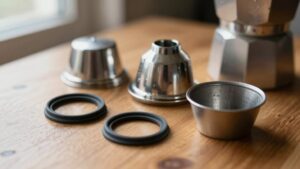
Backflush the machine weekly. Inspect O-rings and joints monthly. Descale per manufacturer intervals. You’ll log maintenance, replace worn parts promptly, and keep records to ensure consistent steam performance.
Conclusion
You’ve got a clear roadmap: measure dose, time, and yield. Then apply the bar extraction rules to dial in shots consistently. Use the chart to choose dose ranges, prefer doubles for stability, and tweak dose or grind to hit target extraction.
Rely on a scale and precise timing for repeatability. Make small, methodical adjustments and record results. With this approach, you’ll consistently produce balanced, predictable espresso and quickly spot when parameters need correction.