How to Reduce Sediment in French Press Coffee
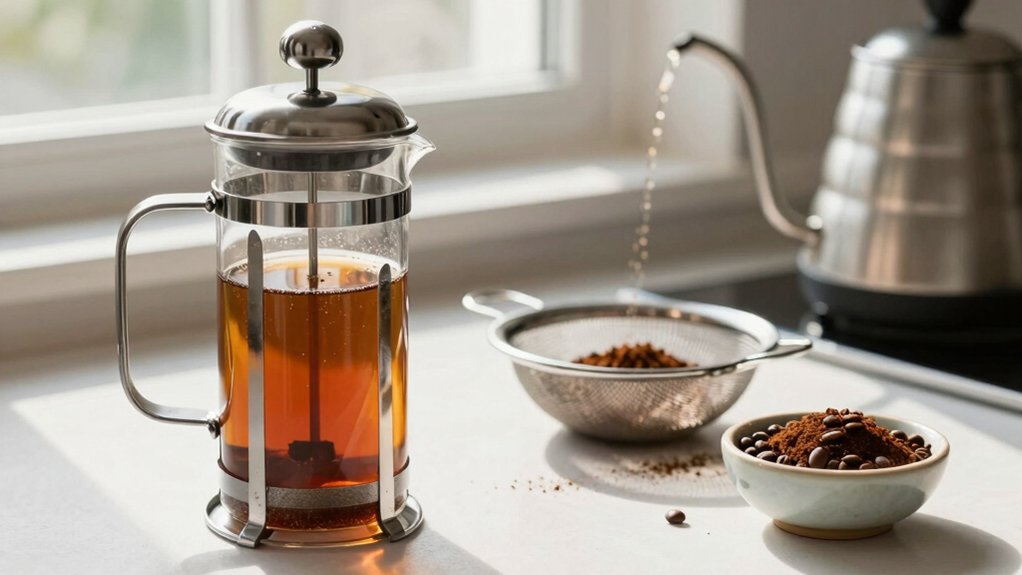
Use a coarser, more uniform grind (think coarse breadcrumbs, not beach sand) so fewer fines slip through the mesh, and preheat the press. Pour 92–96°C water, bloom 30 seconds, then give one gentle spiral stir to wet all grounds without breaking particles.
Wait 30–60 seconds for fines to settle. Add remaining water, then plunge slowly and evenly. Try a finer mesh or a paper double-filter if you need crisper clarity. Keep going for step-by-step tweaks.
Quick Overview
- Use a coarser, uniform grind to reduce fines that slip through the mesh.
- Preheat the press and pour water (93–96°C) immediately after grinding to stabilize extraction.
- Bloom 30 seconds, stir gently once, then wait 30–60 seconds for fines to settle before topping up.
- Plunge slowly and evenly; avoid rapid plunging that forces fines through the mesh.
- Consider a double-screen or paper filter over the mesh for significantly cleaner clarity.
Grind Size vs Sediment
Why does grind size change how much grit ends up in your cup? You notice texture, smell, and clarity shifting with particle size: coarser grounds (sea-salt like) leave a cleaner mouthfeel while fines create a muddy, gritty sip. You control sediment dynamics by choosing grind size and maintaining grind quality. Uniform particles reduce fines that slip through metal mesh.
Plunge gently to limit filtration impact. Let grounds settle before pouring. Test coarser settings if sediment persists; expect weaker extraction and adjust steep time. Visualize particle ranges:
| Texture | Impression |
|---|---|
| Extra coarse | Breadcrumbs, minimal grit |
| Coarse | Sea-salt, cleaner cup |
| Medium-coarse | Gritty, moderate sediment |
| Medium/fine | Beach-sand, high fines |
Prioritize a burr grinder for consistent results.
Press Mesh Size Guide
How fine should the press screen be to give you a clean cup without choking extraction? You want a mesh that traps most fines while keeping flow. Test screens visually and by feel.
Subtopic not relevant idea 1 appears if you over-focus on pore count. Subtopic not relevant idea 2 appears if you ignore material wear.
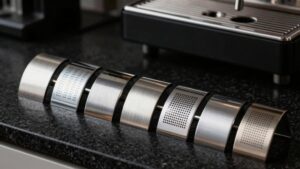
- Fine stainless mesh, smooth, slightly viscous mouthfeel reduction; retains many fines but won’t halt flow.
- Medium woven mesh, balanced clarity and body; you’ll taste more texture, fewer silty grains.
- Double-screen or paper combo, sharply cleaner cup; slightly slower plunge, crisper aroma.
Measure performance: run identical grinds through each. Note clarity, aroma, and plunge resistance. Adjust mesh, not grind, for fine sediment control.
Blooming Time and Agitation
Start with about 30 seconds of bloom using water just off the boil (92–96°C) so you can hear and see the grounds swell and release gases. Gently stir once with a wooden spoon to expose fresh surfaces without breaking particles. Then wait another 30–60 seconds so fines settle before adding the rest of the water.
Time your grind exposure so you add water immediately after grinding for best aroma and minimal extra fines.
Optimal Bloom Duration
When should you let the grounds bloom, and for how long? You’ll start with a short, deliberate bloom duration: 30 seconds is the baseline. The smell should shift; bright acidity rises, oils bloom. Then you’ll add remaining water.
Adjust bloom duration slightly based on grind coarseness: coarser grinds benefit from a touch longer, 40–45 seconds, so water penetrates evenly. Too short leaves dry pockets; too long risks over-extraction of fines. After pouring, give a single gentle stir with a wooden spoon to wet all particles without agitating the bed.
Let the grounds settle calmly for 30–60 seconds before plunging. This methodical rhythm—30–45s bloom, gentle stir, settle—minimizes suspended fines and yields clearer cup texture.
Blooming Water Temperature
Why does the temperature of your bloom water matter? You want bloom water hot enough to release gases quickly, but not so hot it breaks down fragile particles. Aim for 93–96°C if you’re using freshly roasted beans. Drop to 90–92°C for very dark roasts. Temperature control stabilizes early extraction; this reduces particle disintegration that creates fines.
Pour evenly to wet all grounds and start timing. Notice the hiss of CO2 escaping and the domed surface; those sensory cues tell you the bloom’s working. Maintain heat by preheating the press and using a kettle with reliable temperature control. After 30 seconds, continue pouring with the same water temperature. Consistent heat during bloom minimizes agitation-related fines and helps sediment settle later.
Gentle Bloom Agitation
Because the bloom is your chance to release CO2 without breaking delicate particles, pour just enough hot water to create an even, glossy dome and let it sit for 30 seconds while you watch the surface breathe. You’ll hear soft hissing and see the grounds swell; that tells you to avoid stirring vigorously.
After thirty seconds, perform a single, gentle bloom agitation: use a wooden spoon or spatula and draw one slow spiral from edge to center, just enough to submerge dry pockets and equalize saturation. That restrained motion reduces fines creation and aids sediment control by keeping fragile particles intact.
Proceed to add remaining water steadily, preserving the settled bed. Minimal movement now prevents cloudiness and improves clarity.
Grind Exposure Timing
How long you let grounds meet hot water and how gently you move them determines how many fines survive the brew. Aim for a 30-second bloom with minimal motion; then a single slow spiral to equalize saturation. You’ll feel tiny CO2 bubbles release and see the crust soften. That sensory cue tells you the bloom worked.
Maintain strict timing control: 30 seconds bloom, pour remaining water steadily over 10–15 seconds, then stop. Limit agitation to that one deliberate spiral. Avoid scrubbing or repeated stirs that suspend fines. Throughout, monitor grind exposure visually and by touch: a uniformly wet bed with no dry pockets means you’ve balanced extraction and minimized suspended particles.
Be deliberate. Small timing shifts change clarity.
Prepress Stir Technique
Want clearer coffee with less grit? Use a calm prepress technique: pour just enough water to wet grounds and start a 30-second bloom. You’ll see bubbles rise and aromas intensify; that’s degassing and vital for even extraction.
At 30 seconds, give one gentle, wooden-spoon stir: slow, circular, just to break the crust without lifting fines. Add remaining water steadily, avoiding splashes that suspend particles. Let the bed settle 30–60 seconds; observe the surface become still and fragrant.
When you plunge, do so slowly and evenly to prevent forcing fines through the mesh. This methodical sequence—timed bloom, restrained agitation, patient settling—minimizes agitation-created fines and sharpens sediment control in your French press.
Frequently Asked Questions
Can I Use Paper Filters With a French Press?
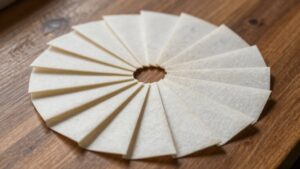
Yes, you can use paper filters with a French press. You’ll notice a cleaner, brighter cup and greatly reduced sediment effects as the paper traps fines and oils.
Fit a disc or cone filter under the plunger; alternatively, pour brewed coffee through a paper cone into your server. You’ll lose some body and aromatics, so taste and adjust grind coarseness and steep time to preserve desired flavor while minimizing grit.
Does Water Mineral Content Affect Sediment?
Yes, water chemistry affects sediment. You’ll notice mineral balance and water hardness change how fines clump and settle. Harder water with higher minerals can bind particles, making them precipitate faster. Meanwhile, very soft water leaves more suspended fines.
Sensory-wise, this alters mouthfeel and grit. Methodically, test brewing with varied mineral balances; record sediment interaction, and choose a balanced water profile to optimize clarity without sacrificing flavor.
How Does Roast Level Influence Sediment Amount?
Darker roast increases sediment impact because beans break down softer, releasing more fines and oily particles that pass the mesh. You’ll notice heavier mouthfeel, muted aromatics, and more grit with dark roasts.
Lighter roasts stay denser, shedding fewer fines and preserving clarity, brightness, and cleaner texture. To test, brew identical grinds and compare: observe sediment volume, taste differences, and tactile sensation to choose the roast level that suits your preference.
Will Refrigerated Coffee Reduce Sediment When Reheated?
No, refrigerated coffee won’t reduce sediment when you reheat it. You’ll notice the same gritty mouthfeel because insoluble fines stay suspended or settle. Chilling can make them clump, creating a clearer top but a denser sediment layer.
When you reheat, convection stirs those particles back into suspension; thus, the reheating impact is minimal. To improve texture, control grind, settle longer, decant carefully, or use finer filtration before chilling.
Can Tamping the Grounds Reduce Sediment?
No, tamping grounds won’t meaningfully reduce sediment in a French press. You’ll compress the bed; however, you’ll also force fines through the metal mesh.
Instead, focus on coarser, uniform grind and filter alternatives like a finer mesh or paper pre-filter. Smell the clean brew as you pour slowly; let grounds settle, and decant carefully. These sensory, methodical steps cut grit far more effectively than tamping ever will.
Conclusion
You can cut sediment by tuning grind, mesh, and your pour. Use a slightly coarser, consistent burr grind so particles settle. Choose a finer but well-made mesh that keeps fines out without choking flow.
Bloom with near-boiling water for 30–45 seconds; gently stir to release gases. Then wait so grounds swell before pressing. Prepress stir and a slow, steady plunge at the end extract cleanly, leaving a smoother, clearer cup.