Over Extracted Coffee Taste Symptoms
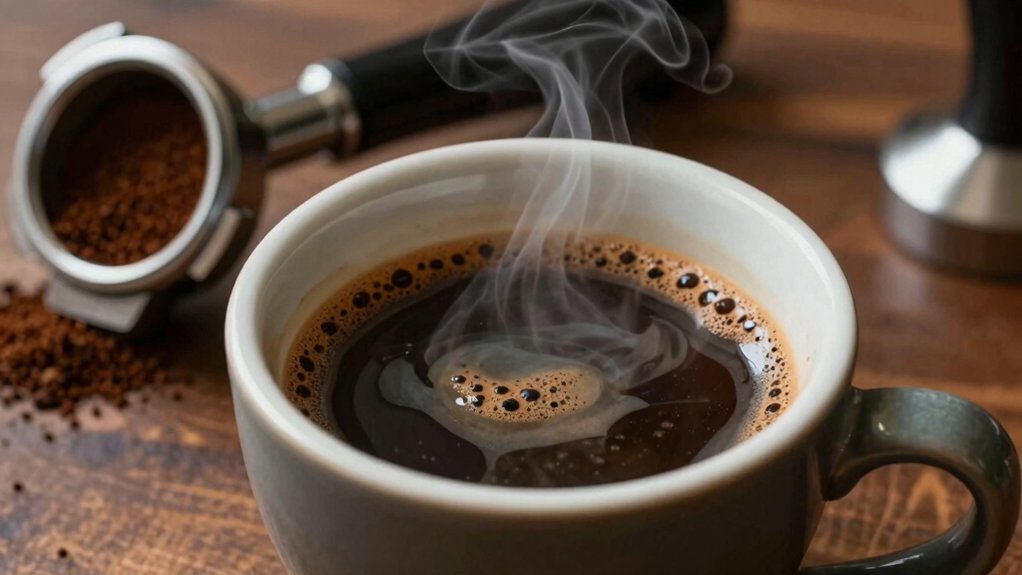
You’ll notice an immediate, persistent bitterness with a drying, sandpapery astringency and a hollow, burnt aftertaste when extraction is too high.
Aromatics and sweetness will be muted despite a strong-looking cup.
That mismatch: high TDS with excessive EXT% pulls tannins and dulls acids, leaving thin body and lingering harshness.
Temperature spikes or overly fine grind often cause it.
Keep sensory cues in mind and you’ll learn how to dial grind, time and temperature to fix it.
Quick Overview
- Bitter, harsh flavors dominate with a dry, sandpapery astringency on the finish.
- Hollow, burnt or overly woody aftertaste often lingers unpleasantly.
- Thin or drying mouthfeel exists despite strong perceived strength; this indicates a mismatch of TDS and EXT.
- Loss of bright aromatics and sweetness occurs; acidity feels flattened or metallic.
- Over-extraction markers often appear when extraction exceeds ~22% or when brew temperature and contact time are too high.
Bitter TDS vs Extraction%
Why does a strong cup still taste bitter? You feel acrid tannins because strength (bitter TDS) isn’t the same as extraction efficiency. TDS measures dissolved solids; extraction% measures how much of the grounds’ soluble mass dissolved. An extraction mismatch occurs when there is high TDS but low or uneven EXT%. This gives you bitter, hollow flavor or bitter plus weak.
Monitor both: use a refractometer and calculate EXT% = (TDS × brew weight)/grounds weight. Sensory signs such as sandpapery astringency and burnt aftertaste track with EXT% >22% more than with absolute TDS. Adjust grind coarser, shorten contact time, or lower temperature to reduce tannin pull. Precision control of particle uniformity prevents localized over-extraction and preserves desirable notes.
| Measure | What it indicates |
|---|---|
| TDS | Strength |
| EXT% | Extraction efficiency |
| High TDS + high EXT% | Bitter |
| High TDS + low EXT% | Bitter + weak |
Target Extraction Range
You’ve seen how strength (TDS) and extraction% interact to create bitter or hollow cups. Now aim for the extraction window that balances soluble flavor compounds without pulling harsh tannins. You target roughly 18–22% extraction to capture acids, sugars, and aromatics while minimizing bitter compounds and excessive tannins.
Measure TDS, adjust grind and contact time, and watch mouthfeel shift from astringent to rounded. Focus on perfume, sweetness, and texture; avoid the sandpapery finish of over-extraction. Calibrate with small dose changes and repeatable technique. Sensory checks confirm technical readings.
- Dial grind to hit contact time that yields 18–22% extraction.
- Use TDS readings to verify taste balance on palate.
- Taste for aroma, sweetness, and absence of harsh tannins.
Brew Temperature Tolerance Range
You should aim for water between about 90–96°C for most brews, since that window pulls desirable acids and sugars without overly extracting bitter polyphenols.
Maintain stable temperature throughout contact time; fluctuations or heat loss change extraction kinetics and can push a balanced cup into a bitter, astringent profile. Cooler water under-extracts key sweet and volatile notes, while hotter water accelerates tannin and charcoal compound release.
Ideal Brewing Temperature Range
How hot should your water be to avoid pulling bitter, astringent compounds out of the grounds? You aim for a narrow band: 92–96°C (197–205°F) for most brewing methods, slightly lower for lighter roasts. This range performs tone mapping of soluble compounds; it prioritizes acids and aromatics before harsh tannins and helps preserve sensory memory of delicate floral and fruity notes.
Below 90°C, you under-extract acids and sweetness. Above 98°C, you accelerate tannin and alkaloid release; this creates sandpapery astringency and burnt aftertaste. Adjust within the range by roast and grind: finer grinds need the cooler end, coarser grinds the warmer. Measure with a calibrated thermometer, note visual bloom and aroma, and dial temperature to reproduce consistent, balanced extraction.
Temperature Stability Importance
Having water in the 92–96°C band matters, but holding that temperature steady throughout extraction matters even more: brief fluctuations change which compounds dissolve at each moment, so you’ll pull different balances of acids, sugars and tannins. You want tight temperature stability—±1–2°C—so soluble rates stay predictable and extraction consistency holds across pours or shots.
If the kettle, heater or portafilter lets the bath droop or spike, you’ll notice shifts: brighter acids can vanish or tannic bitterness can surge, altering mouthfeel and aftertaste. Monitor equipment, preheat vessels, and minimize exposed surface cooling to preserve thermal mass. Precision here yields repeatable sensory profiles: controlled sweetness, restrained astringency and fewer burnt or hollow notes caused by errant heat.
Effect Of Too-Cold
Why does brewing below the optimal 92–96°C band mute and misbalance coffee’s flavor? You extract fewer aromatics and acids when water is too cold; thus, sweet and volatile notes stay trapped in the grounds while heavier, bitter compounds dissolve relatively unchanged. The too cold impact shows as flat, dull cup character. Subtle fruit, floral, and sugar clarity vanish.
You’ll notice a thinner mouthfeel and astringent edges because polyphenols become proportionally more prominent. Temperature lag from vessel or brew method worsens this: initial heat loss prevents reaching target extraction kinetics. This prolongs contact without properly solubilizing desirable compounds.
To diagnose, measure brew temperature at puck contact. Persistent drops indicate equipment or technique issues that create muted, misbalanced results rather than true under-extraction sourness.
Effect Of Too-Hot
Ever wondered what happens when your brew water exceeds the 92–96°C band? You’ll accelerate the extraction tempo; pulling harsh polyphenols and bitter alkaloids faster than desirable soluble oils and aromatics. Your cup darkens visually while flavor balance collapses: sweetness and acidity drop, bitterness and burnt charcoal notes spike.
Texturally, you’ll notice increased astringency — a sandpapery friction across the tongue — and a hollow aftertaste that lingers. Technically, higher temperature raises solubility and diffusion rates, shortening the window where pleasant compounds dominate. That shrunk window means small timing or grind errors push you into over-extraction territory.
To diagnose, compare identical brews at controlled temperatures. If heat correlates with dryness and overpowering bitterness, you’ve exceeded the tolerance range.
Adjusting For Roast
How should you tweak brew temperature to match roast level? You’ll lower temperature for darker roasts and raise it for lighter ones to preserve roast balance and prevent excessive bitter extraction.
Dark roasts already contain more bitter compounds; brewing at 88–92°C (190–198°F) minimizes further solubilizing of harsh phenolics and charcoal-like notes. For light roasts, use 92–96°C (198–205°F) to fully dissolve desirable acids and aromatics without dragging out tannins.
Watch mouthfeel: higher temps amplify body and acidity; lower temps reduce astringency but can cause flavor masking of delicate floral or fruity notes if too cool. Adjust in 1–2°C steps, dial with grind and time, and taste for bitterness, dryness, and hollow aftertaste to confirm proper tolerance range.
Frequently Asked Questions
Why Does Over-Extraction Smell Different From Under-Extraction?
Because over extraction pulls different compounds, you smell harsher, more astringent notes than with under-extraction. Over extraction aroma emphasizes bitter, burnt, tannic volatiles and depleted aromatics; flavor chemistry shifts toward heavier polyphenols, carbonized aromatics and fewer fruity esters.
You perceive darker, hollow, drying scents versus the sharp, bright, acidic fruity aromas of under-extraction. This occurs because varying solubilities and extraction kinetics selectively release distinct volatile and nonvolatile compounds.
Can Dark Roasts Mask Over-Extraction Signs?
Yes, dark roast can mask signs. You’ll notice its inherent bitterness and smoky notes can hide subtle over-extraction cues, making bitterness feel less distinct from roast character.
You’ll still detect dryness, hollow aftertaste, and a sandpapery astringency if extraction’s extreme; however, they’re harder to isolate. Adjust grind, time, and ratio precisely: sensory clarity requires removing roast dominance so extraction faults don’t hide beneath dark roast masking signs.
Does Water Hardness Affect Over-Extraction Taste?
Yes, water hardness alters flavor chemistry and can amplify over-extraction sensations. You’ll notice hardness effects on extraction as calcium and magnesium change solubility of bitter compounds. Mineral interactions with espresso increase extraction efficiency; this pulls harsher tannins and drying polyphenols faster.
You’ll detect stronger bitterness, a sandpapery mouthfeel, and a hollow aftertaste when mineral-rich water accelerates over-extraction. Therefore, adjust grind, dose, or use softer water to balance extraction.
Can Paper Filters Reduce Over-Extracted Bitterness?
Yes, paper filters can reduce bitterness from over extraction by trapping fine particles and some tannin-rich oils. This moderates harsh, astringent mouthfeel and burnt aftertaste. You’ll notice clearer, cleaner cup clarity and less sandpapery dryness. Taste changes include muted bitter edges and preserved brighter notes.
Grind size, brew time, and water temperature still control over extraction; however, paper filtration helps soften the sensory impact of excess extraction.
Is Over-Extracted Espresso Salvageable After Brewing?
Yes, over extraction salvageability is limited, but you can use post brew remedies to improve drinkability. You’ll dilute the espresso with hot water (Americano) or steamed milk to mask bitterness and reduce astringency.
Cold milk or sugar can blunt harsh tannins. Brief aeration or stirring disperses volatile burnt notes. These technical fixes won’t restore lost complexity, but they’ll tame bitterness, soften dry mouthfeel, and make the shot usable.
Conclusion
When your coffee tastes over-extracted and bitter, dial back extraction toward the 18–22% target and aim for 195–205°F (90–96°C). Keep temperature steady; fluctuations amplify harsh solubles.
If brew’s too cold, you’ll under-extract sour acids. If brew’s too hot, you’ll pull extra bitter tannins and harshness. For lighter roasts, raise temperature slightly; for darker roasts, lower it and shorten contact time.
Taste, tweak grind and time, and trust measured TDS and extraction to restore balance.