Pour Over Pulse Pouring Technique
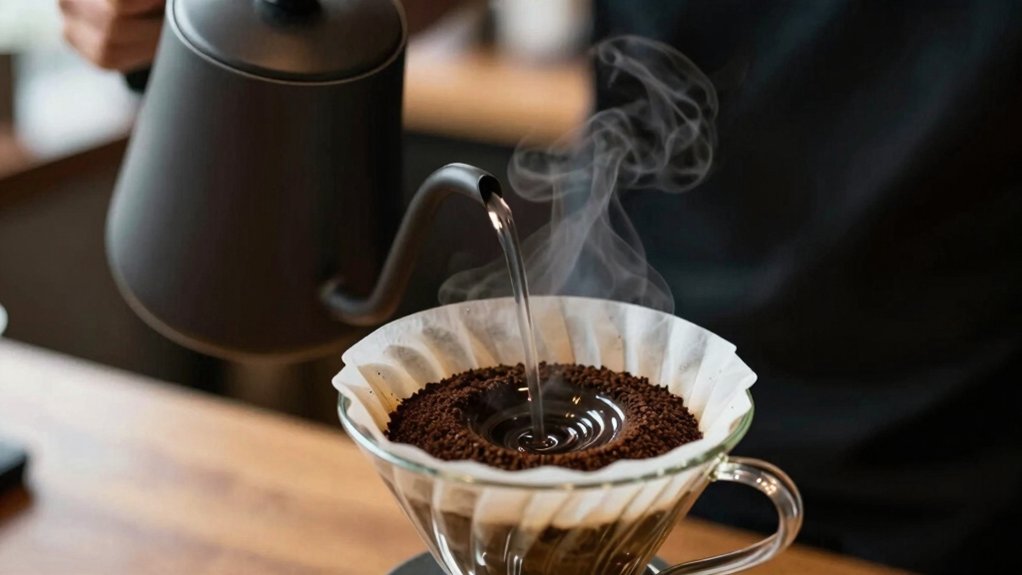
You’ll start with a 2:1–3.3:1 bloom using 90–96°C water. Weigh the dose precisely and let the bloom rest for 30–45 seconds while you watch for tiny pops, a silvery CO2 sheen, and a glossy collapse toward the center.
Begin measured pulses as bubbling slows; keep volumes and intervals steady to control drawdown and avoid channeling. Adjust grind finer with cooler water or coarser with heat. Follow this methodical cueing and timing to refine extraction and flavor. Keep going for full technique specifics.
Quick Overview
- Start a 30–45s bloom (2:1–3.3:1 water:coffee) to degas before beginning measured pulses.
- Begin pulses when bubbling slows and the surface shows a thin silvery sheen or slow glossy collapse.
- Use measured fraction pours and steady, centered pulses to maintain even drawdown and minimize channeling.
- Keep water at 90–96°C (92–94°C often optimal); adjust grind finer with cooler water or coarser with hotter.
- Shorten inter-pulse intervals or reduce pulse volumes at higher temperatures to prevent over-extraction.
Bloom Ratio Comparison Chart
Why choose a 2:1 bloom instead of 3:1? You’ll notice quicker, even saturation and clearer aroma release with a 2:1 bloom ratio, preserving pour precision and avoiding overcrowding during pulse pours. A 3:1 bloom yields fuller expansion and can suit very fresh roasts or V60 tweaks; however, it risks skewing total brew ratio.
| Variant | Bloom Water | Result |
|---|---|---|
| 2:1 | 30–40g | Clean cup, even degassing |
| 3:1 | 45–50g | Fuller bloom, denser bed |
| 3.3:1 | ~50g+ | Precise V60 control |
Weigh your dose. Use 90–96°C water, spiral slowly, observe uniform bubbling, and start pulses at 30–45s for consistent extraction.
0s Bloom Time Rule
Curious how long you should let the bloom breathe before starting pulse pours? You’ll time the bloom to manage bloom gas release and set precise pulse timing. Letting 30–45 seconds stabilize aroma and microbubbles gives predictable flow for your first pulse. Visual and tactile cues guide you.
- Surface doming with tiny popping sounds.
- Thin silvery sheen of escaping CO2.
- Slow glossy collapse toward center.
- Fragrant steam lifting, brighter acidity.
- Settled crust with evenly dark color.
Start pulses once bubbling slows and surface tension eases. Begin with measured fractions of total water so each pulse maintains steady drawdown. This rule minimizes channeling, preserves clarity, and lets you control extraction by aligning pulse timing with the end of active degassing.
Water Temperature Tolerance Range
Keep your water between about 90–96°C as your baseline: that range extracts sugars and acids cleanly without harshness. If you push hotter, expect faster extraction, increased bitterness and shorter contact time. If you go cooler, flavors will be muted and under-extracted unless you compensate.
Adjust grind size finer with cooler water or coarser with hotter water. Scale temperature down slightly for larger brews to maintain consistent drawdown.
Ideal Brewing Range
A precise water temperature range keeps pulse pours predictable and lets you dial extraction without guessing: aim for 90–96°C (194–205°F) for most beans, with 92–94°C often optimal when using pulse pouring to reduce acidity and encourage balanced sweetness. You’ll monitor temperature because pulse timing interacts with thermal profile. Each pause lets grounds cool slightly; so target the lower end for delicate, lighter roasts and the higher end for denser, darker beans.
Match bloom ratio to grind and temperature: slightly warmer water shortens perceived acidity during bloom. Use a thermometer or kettle with stable output, and note ambient and vessel heat loss. Consistent temperatures yield repeatable sensory results: clarity, acidity control, and sweetness balance across successive pulse pours.
Effects Of Higher Heat
Although higher brew temperatures speed extraction and intensify solute solubility, they also amplify bitterness and mute delicate aromatics. You’ll need to adjust pulse timing and grind to prevent over‑extraction.
With higher heat, you’ll notice faster bloom collapse, quicker flow rates, and more pronounced body. Sensory cues shift toward bitter, astringent notes while floral and fruity top‑notes recede. To compensate, shorten inter‑pulse intervals, reduce pulse volumes slightly, or coarsen grind by one notch to slow contact time and counter aggressive extraction shifts.
Monitor drawdown: aim for slightly longer total time than you’d expect at lower temperatures. Taste and adjust methodically; small, single-variable changes let you isolate how higher heat alters solute balance and preserve desired aromatics.
Cooler Water Impacts
How cool can you go before extraction slows too much? You’ll notice immediate changes as water temp drift moves downward: sweetness and volatile aromatics mute, acidity flattens, and body can feel thinner. Cooler water reduces solubility; extraction rates drop. Therefore, pulse timing and total contact become critical.
Measure cooling impact by tracking drawdown time and tasting for under-extracted sourness or vegetal notes. Compensate methodically: shorten intervals between pulses, slightly increase total water, or extend final drawdown. However, avoid finer grind changes (covered later). Use a thermometer during trials and log temperatures at bloom and subsequent pours to quantify drift.
Within a modest tolerance range (roughly 85–94°C start), you’ll preserve balance. Beyond that, expect pronounced under-extraction signatures.
Grind And Temperature Interaction
When you lower brew temperature to chase clarity or tame acidity, grind size becomes far more influential because solubility drops and extraction kinetics slow. You’ll notice finer grinds compensate for cooler water by increasing surface area and accelerating soluble yield. Coarser grinds preserve sweetness but risk under‑extraction.
Measure extraction by tasting: thin, underdeveloped flavors indicate you need finer grind or slightly warmer pour within your tolerance. Track grind temperature interaction variance by keeping brew variables constant: dose, pulse timing, total water; and changing only grind and kettle temperature in small increments. Use methodical adjustments: change grind one notch, alter temperature 1–2°C, observe body, acidity, and clarity.
Record each trial; the sensory differences guide your optimal tolerance range.
Scaling Temperature Adjustments
Curious how small temperature shifts change your brew? You monitor brew temperature closely and make scaling adjustments in 1–2°C increments. If extraction tastes underdeveloped, raise water by 2°C; if over-extracted or bitter, lower it. Record ambient and kettle start temps since thermal loss during pulse intervals alters effective temperature at the bed.
Aim for a tolerance range: typically 90–96°C for medium roasts and 88–92°C for light roasts. Then refine by tasting. During pulses, account for cumulative cooling: longer rests drop temperature more, so shorten rests or start a degree higher. Use a thermometer or calibrated kettle; log results per 10g coffee changes.
Systematic adjustments yield repeatable clarity, balanced acidity, and consistent body.
Frequently Asked Questions
Can I Pulse Pour Without a Gooseneck Kettle?
Yes, you can pulse pour without a gooseneck kettle. You’ll use pourover techniques with kettle alternatives like a narrow-spout thermos, squeeze bottle, or steady pour from a regular kettle.
Focus on controlled small pours, circular spirals, and timed rests to mimic pulse intervals. You’ll feel steady resistance in the bed, hear gentle gurgles, and watch drawdown rates. Adjust grind and pour speed methodically for consistent extraction.
How Does Grind Age Affect Pulse Pouring?
Grind aging alters extraction speed; so you’ll adjust pulse timing to compensate. Older grinds lose volatile aromatics and extract faster due to fines oxidation. You’ll shorten pulses and reduce total contact to avoid overextraction and muted flavors.
Fresher grinds hold brighter acids and need slightly longer, gentler pulses to bloom flavors. Smell and visual bed texture guide you: stale aroma or rapid drawdown means tighten timing; vibrant scent allows relaxed pulses.
Can I Pulse Pour for Cold Brew?
Yes, you can adapt pulse pouring for cold brew. You’ll use longer pulse duration and coarser grind consistency to control extraction and avoid over-extraction.
Pour in measured increments, feeling the slurry temperature and aroma change. Note clarity and sweetness. Methodically stagger pulses over hours or use staged pre-wet and top-ups while monitoring drawdown and body.
Adjust pulse duration and grind consistency until you achieve the desired balance and mouthfeel.
Does Pulse Pouring Change Crema in Espresso?
Yes, you’ll notice changes. Pulse pouring alters crema stability by affecting extraction texture: intermittent water contact can produce slightly thicker, more granular crema with varied bubble structure.
You’ll taste clearer mid-note clarity, reduced bitterness, and a silkier mouthfeel when extraction texture is balanced. To optimize crema stability, control pulse timing, temperature, and pressure consistency so oils and colloids emulsify evenly, yielding a more enduring, textured crema.
How Do Altitude and Humidity Alter Pulse Timing?
Altitude effects: You’ll shorten pulse intervals and slightly coarsen grind at high altitudes because lower air pressure speeds extraction and increases boil point variance.
Humidity effects: You’ll slow pulses and tighten grind when humidity’s high since beans absorb moisture, slowing flow.
Methodically taste for brightness and body. Adjust pulse volume by 5–10% and timing by 10–20 seconds, noting tactile drain rate and audible gurgle to calibrate repeatable results.
Conclusion
You’ve seen how bloom ratios, bloom time, and water temperature interact with pulse pouring to shape extraction. Use the 0s bloom rule for quick clarity; stay within the ideal brewing range for balance. Adjust up or down when you want brighter acidity or fuller body.
Remember grind size and temperature work together: finer grinds need cooler water; coarser grinds tolerate heat. Methodically tweak one variable at a time and taste to refine your pour-over craft.