Pour Over Recipe Chart
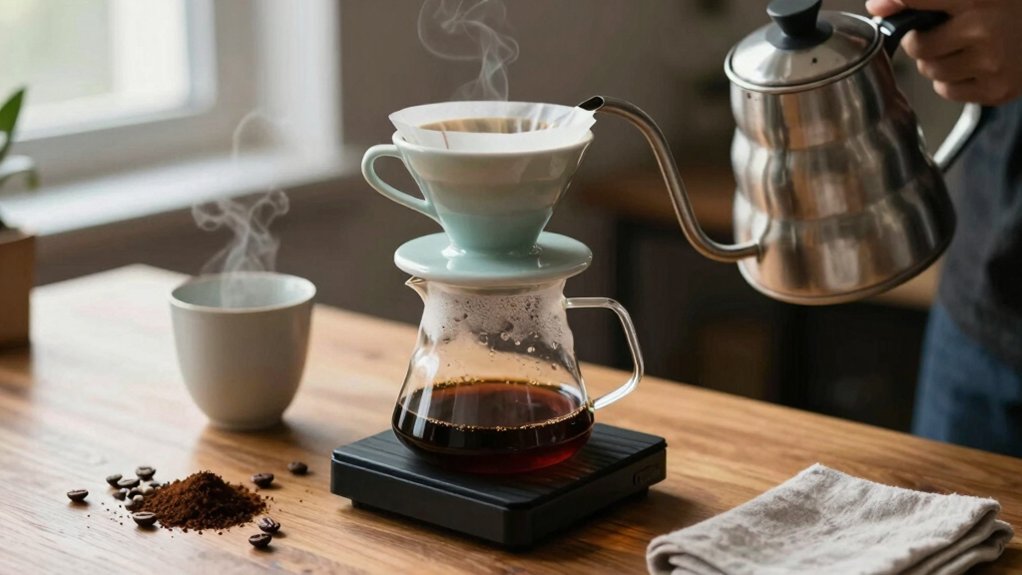
Choose a ratio (1:14–1:16 bold, 1:16–1:19 mild), weigh coffee and water, and target 2:30–3:30 total brew time. Use medium–medium-fine grind. Raise temperature for darker roasts (95–99°C) and lower for light ones (90–94°C).
Bloom with 2–3× the dose for 30–60 seconds. Then pour in slow spirals; stir or swirl gently to avoid channeling. Note adjustments: sour means finer or hotter; bitter means coarser or cooler. Keep going to refine technique.
Quick Overview
- Choose a brew ratio based on strength: 1:14–1:16 bold, 1:15–1:17 balanced, 1:16–1:19 milder.
- Calculate water precisely: Water (g) = Coffee (g) × chosen ratio; weigh all ingredients.
- Use medium–medium-fine grind and adjust finer for sour or coarser for bitter.
- Bloom with 2–3× dose for 30–60 seconds (30–45s light roast, 45–60s dark roast). Then resume pours.
- Target total brew time 2:30–3:30 minutes; split pours and finish with a slow draw-down.
Brew Ratios & Times
How strong do you want your cup? You choose a ratio to set strength: 1:14–1:16 for bold, 1:15–1:17 for balance, 1:16–1:19 for milder. Use the formula Water = Coffee × Ratio and weigh precisely.
Target total brew time 2:30–3:30 minutes; adjust grind size finer to speed extraction, coarser to slow it. Bloom with 2–3× dose for ~30–45 seconds. Then split remaining pours to maintain steady flow.
Match water temperature (95–99°C typical) to roast: slightly cooler for lighter, hotter for darker. Taste and tweak ratio and time iteratively until extraction, TDS, and overall balance meet your goal.
| Ratio Range | Typical Outcome |
|---|---|
| 1:14–1:16 | Strong |
| 1:15–1:17 | Balanced |
| 1:16–1:19 | Milder |
| 1:17–1:20 | Drip-like |
Grind Size & Water Temperature
Why does grind size matter as much as water temperature? You control extraction by balancing grind size with water temperature: finer grind speeds extraction, hotter water amplifies it, coarser grind slows extraction, cooler water restrains it. Match them to roast and desired clarity.
Use medium to medium-fine for balanced clarity and body. Lower water temperature (90–94°C) tames bright acids on light roasts. Higher water temperature (95–99°C) extracts more from darker roasts without overdoing bitterness.
If brew tastes sour, make grind finer or raise water temperature slightly. If brew tastes bitter or over-extracted, coarsen grind or lower water temperature.
Dial in one variable at a time; note changes and iterate until cup reflects your intent.
Bloom Time and Technique
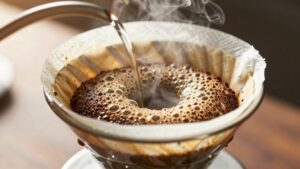
Start your bloom with a clear timing plan: aim 30–45 seconds for lighter roasts and 45–60 seconds for darker roasts. Adjust within that window by grind and roast. Pour just enough water to fully saturate the grounds (typically 2–3× the coffee weight). Use a controlled spiral or center-to-outward motion.
Consider gentle stirring or a brief wrist swirl to release trapped gases. Keep bloom water near your brew temperature (about 90–96°C). Remember finer grinds speed degassing; they often need shorter, more attentive blooms.
Bloom Duration Guidelines
When you pour the bloom, aim for 45–60 seconds of active degassing to let trapped CO2 escape and guarantee even extraction. For a 20 g dose, that means saturating the grounds with roughly 60 g of water and waiting about 45 seconds before continuing.
You’ll monitor bubbles and surface tension: a steady reduction in bubbling signals readiness. Choose a bloom duration within that window based on roast and freshness: longer for very fresh or light roasts; shorter for older or darker beans.
During this phase, keep your pour steady and minimal to avoid channeling. Record pour variations so you can reproduce results. Time precisely with a stopwatch, note water weight, and resume your planned pours once visible agitation subsides to preserve consistency across brews.
Water Pour Technique
Having let the bloom settle, focus your pouring technique to maintain even saturation and controlled flow for the remainder of the brew. You’ll split the remaining water into measured pours, keeping kettle height steady so stream width and velocity stay consistent.
Pour in slow spirals from center outward, then inward. Avoid abrupt motions that cause channeling or uneven extraction. Time each pour and pause briefly to let water draw down to near the coffee bed level before adding more.
Use gentle, deliberate wrist movement to limit disturbance; this reduces the need for post-bloom agitation and preserves clarity. Watch for overflow risk and angle the kettle to prevent spills: spill prevention is part of rhythm. Finish with a final slow draw-down to reach target weight.
Bloom Agitation Methods
Why stir or swirl the bloom instead of leaving it be? You want even degassing and full saturation: bloom agitation breaks trapped CO2 pockets and lets water contact grounds uniformly.
Begin with a 30–45 second bloom using roughly 3x coffee weight. Then choose a light stir or gentle swirl. Stirring lifts and redistributes grounds; swirling shifts the slurry with less disturbance. Match your movement to extraction goals: short, confident stirs for speed, smooth swirls for evenness.
Maintain a consistent swirl cadence: slow, steady circles about once every 2–3 seconds during the bloom’s final 10–15 seconds. Stop when the surface calms. Finish with centered pours to preserve the bed.
Record results and adjust agitation intensity and timing for repeatable clarity.
Grind Size Effects
How does grind size change what you do during the bloom and the techniques you use afterward? You’ll adjust bloom time and agitation methods based on particle distribution: coarser grinds need longer bloom duration and firmer agitation to wet larger particles. Finer grinds require shorter bloom time and gentler technique to avoid over-extraction.
Match your pour method and pour rate to grind size; slower, segmented pours for fine grinds and quicker, more voluminous pours for coarse. Keep water temperature and temperature range consistent with roast and grind: slightly cooler for fine and warmer for coarse within your preferred temperature range.
Throughout, monitor extraction visually and by timing. Adapt bloom time, agitation strength, and pour method methodically to maintain balance and clarity.
Bloom Temperature Range
Wondering what temperature is best for the bloom? You’ll target a bloom temperature that promotes rapid degassing without extracting bitterness. Aim for a narrow range: 85–96°C (185–205°F) as your practical bloom temperature range guidelines.
For lighter roasts, use the upper end to release trapped CO2. For darker roasts, favor the lower end to avoid over-extraction during early contact. Heat water, let it rest for about 30 seconds after boiling, then pour bloom water equal to about 2.5–3× coffee weight (60g for 20g grounds).
Bloom for 30–45 seconds, stirring gently to ensure full saturation. Keep kettle control steady; consistent temperature and timing during bloom yield cleaner, more predictable pours.
Frequently Asked Questions
Which Filters Work Best for Flavor and Clarity?
Paper filters give the cleanest clarity and highlight bright acids, while metal or cloth preserve oils and fuller body. You’ll pick based on filters vs bloom trade-offs.
Use finer grind size contrast with paper to avoid overextraction; use coarser with metal to prevent sediment. Pre-wetting paper reduces papery taste and improves bloom.
Adjust grind and pour timing methodically to balance clarity, body, and flavor extraction for your preferred cup.
How Do I Scale Recipes for Multiple Cups?
Use ratios to scale: multiply coffee and water by the number of cups, keeping your chosen ratio (1:15–1:16 standard). For example, two cups at 20g base becomes 40g coffee to 640g water at 1:16.
Apply cup by cup adjustments for strength preference or roast: add 1–2g coffee per extra cup for bolder brew. Keep bloom and pour timing proportional. Maintain grind, kettle height, and consistent technique for repeatable results.
Can I Reuse Coffee Grounds for Second Brew?
You can, but you shouldn’t expect equal flavor: Reusing grounds for a second brew yields weaker, more bitter extraction. If you try a second brew, use finer grind, hotter water, and shorter contact time to pull remaining soluble solids. Use about a 1:12 ratio and 30–45 seconds fewer than the first brew.
Taste frequently; discard when the cup tastes flat or overly astringent. Reusing grounds is more for frugality than quality.
What’s the Best Way to Store Roasted Beans?
Store roasted bean storage best by keeping beans in an airtight, opaque container at a cool, stable temperature. Don’t refrigerate or freeze daily-use beans. You’ll buy small batches, grind just before brewing, and seal immediately after use to maximize bean aroma preservation.
Keep the container away from light, heat, and moisture. Use a one-way valve bag for short-term storage, and rotate stock so oldest beans get used first.
How Often Should I Descale My Kettle?
You should descale your kettle every 1–3 months depending on water hardness. That’s the ideal descale frequency for good kettle maintenance. Check monthly if you have hard water; otherwise, every 2–3 months works.
Use a vinegar or citric acid solution, heat gently, let sit, then rinse thoroughly. Wipe exterior, clean the spout and kettle filter, and dry fully. Keep a simple schedule and note mineral buildup.
Conclusion
You’ve now got a clear, methodical map for dialing in your pour-over: match grind, ratio, and temperature. Time the bloom, and control pour patterns and agitation. Start with the recommended bloom duration and temperature. Adjust grind to correct extraction, and tweak pour speed to influence flow and clarity.
Keep notes on each variable change. Taste carefully, and iterate systematically until your cup consistently reflects the balance and flavors you want.