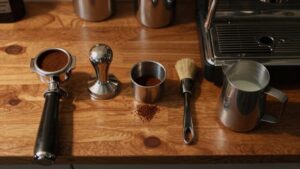
Under Extracted Coffee Taste Symptoms
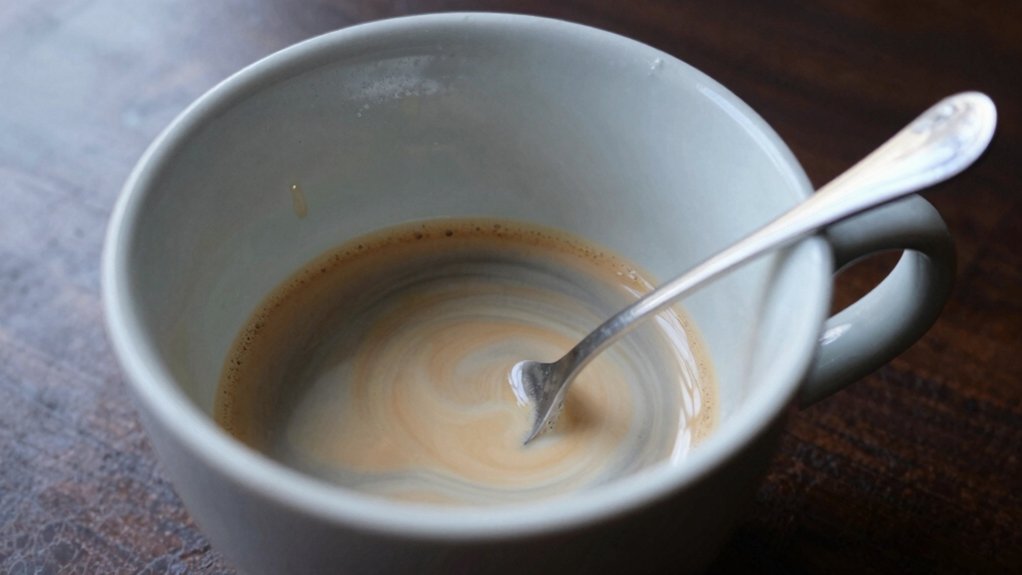
If your coffee tastes sharp, thin, or overly acidic, you’re likely under-extracting: the sugars and oils haven’t dissolved enough, so acids dominate and edges feel astringent.
You’ll notice a hollow body, bright citrus notes that sting on the sides of the tongue, and fleeting aroma with little sweetness. Under-extraction often comes from too coarse a grind, low brew temp, short contact time, or too high a brew ratio; the next steps will show how to fix it.
Quick Overview
- Tastes sharp, sour, or bright with muted sweetness and fruity top-notes lacking balance.
- Thin, watery mouthfeel with low body and little syrupy or oily texture.
- Short, puckery finish with pronounced acidity and little aftertaste complexity.
- Underdeveloped flavor profile lacking sweetness, caramelization, and roasted notes.
- Often caused by coarse grind, low brew temperature, short contact time, or low brew ratio.
Brew Strength vs Extraction
How do strength and extraction actually shape what you taste? You feel sour, thin, or flat when extraction and strength aren’t aligned.
Strength (TDS) measures concentration; extraction yield (%EY) measures how much coffee dissolved. Low %EY with low TDS gives weak, sour cups; high TDS with low %EY gives an acid punch: strong but under. Low TDS with high %EY tastes thin, and over dilution masks bitterness.
| Strength (TDS) | Extraction (%EY) |
|---|---|
| Low (weak) | Low ( |
| High (strong) | Low ( |
Adjust grind, ratio, time, or temperature to balance sweetness, body, and acidity so under mixed faults and over dilution don’t rob complexity.
Dose, Yield, Time Chart
Curious what happens when you adjust dose, yield, or brew time? You’ll see how subtopic scope clarifies the balance between coffee mass, extracted liquid, and contact duration. Use a Dose–Yield–Time chart to predict sensory outcomes and guarantee procedure relevance for each adjustment. Read the numbers, then taste.
A heavier dose with short time results in concentrated coffee; it is still sharp and underdeveloped with thin sweetness. High yield with brief contact produces watery coffee that is sour, lacking body and complexity. A moderate dose with a longer time yields a fuller mouthfeel, with sugars drawn out and acidity tempered.
You’ll rely on precise metrics to diagnose sourness, saltiness, or astringency. The chart turns abstract tasting notes into actionable steps you can reproduce and refine.
Water Temperature Tolerances
You’ll want to keep your brewing water in a narrow temperature band: typically about 90–96°C to coax sweetness and body without overextracting bitter edges. Too cool, and the cup will taste sharp, thin, and sour. Too hot, and you’ll pull harsh, metallic notes and an astringent finish.
Use a reliable thermometer or thermal carafe and simple heat-stability techniques. Preheat equipment and control bloom temperature to hold the range and hear exactly what the beans can sing.
Ideal Brewing Range
What temperature do you reach when you want coffee to extract evenly and taste complete? You aim for 92–96°C (197–205°F), a narrow window that minimizes under extraction impact while unlocking sweetness and oils.
At this range, you’ll notice syrupy body, rounded acidity, and fuller aroma; flavors bloom rather than shriek. Too cool and volatile acids dominate; too hot and bitter compounds rush out. Trust a stable kettle and quick thermometer checks so water hits grounds without long cooldown.
Sensory cues—mellow citrus, gentle caramel, clean finish—tell you flavor balance is achieved. Dial within the range for roast and grind: lighter roasts need the upper end; darker roasts slightly lower, always watching brew time and agitation.
Low Temperature Effects
Keeping water in the 92–96°C window helps release sweetness and oils; drop below that range and extraction slows so acids and lighter compounds dominate. When you brew with low heat, the water struggles to dissolve heavier sugars and oils. As a result, your cup tastes thin, sharp, and sour. You’ll notice bright lemon-like acidity on the tongue’s sides and a lack of sweetness to balance it. The body feels weak, almost watery, and flavor layers don’t develop. Origin notes stay muted.
In quick brew scenarios at lower temperatures, contact time can’t compensate for sluggish extraction; thus, salty or metallic edges and astringent dryness appear. Adjusting temperature upward or lengthening proper contact time restores balance, richness, and complexity.
High Temperature Issues
Why does brewing with water hotter than 96°C punish a cup? You’ll notice immediate assault: bright acids sharpen into biting, lemon-like edges that pucker your lips. High temperature accelerates extraction of harsh, volatile acids and solubles before sugars and oils balance them. So sourness sits on the sides of your tongue and the body feels thin and watery. Sweet, rounded notes fail to emerge, leaving salty or metallic hints and astringent drying on your mouth.
Flavor degradation happens quickly; delicate floral or fruit complexity collapses into one-dimensional tang. You can smell cooked, overdrawn aromas and taste a brittle finish. In short, excessive heat rushes extraction toward imbalance, ruining texture and muting real character.
Heat Stability Techniques
After a scorchingly hot brew can strip a cup to bright, biting acids and thin body, controlling and stabilizing water temperature becomes the tool that brings balance back. You dial tolerances to keep water within a narrow band so acids don’t dominate and oils extract steadily. You feel the difference as a fuller mouthfeel and tempered brightness.
Use gradual heating, insulated kettles, and timed pours to avoid spikes; these heat stability techniques pitfalls usually come from impatience or uneven equipment. If a batch runs hot, employ rapid cooling strategies like brief resting or mixing with a measured cooler fraction to bring extraction back on track without shocking the grounds.
Listen, watch, and adjust. Small thermal moves change flavor decisively.
Temperature Measurement Tools
How hot should your water really be when you’re dialing in extraction? You want a narrow band, typically 90–96°C, where acidity, sweetness and body balance. Use a reliable thermometer and aim for temperature stability during bloom and pour. Even small dips make sour, thin cups.
Digital probes with fast response reveal real-time shifts, while infrared guns let you spot surface variations before contact. Regular sensor calibration keeps readings honest; verify probes in boiling water and ice baths so your setpoint matches reality. Hold water in insulated kettles or PID-equipped boilers to preserve heat between pours.
As you taste, note how a few degrees alter brightness and mouthfeel. Precise measurement turns guesswork into repeatable, balanced extraction.
Frequently Asked Questions
Why Does Under-Extracted Coffee Taste Metallic Sometimes?
Because under extraction concentrates sharp acids and unbalanced salts, you’ll sometimes notice a metallic aftertaste. You’ll detect it alongside under extraction indicators like sourness, thin body, and salty edges.
Your tongue gets a bright, biting sensation and a faint metal note as acidic compounds dominate without sugars and oils to buffer them. The result feels dry, puckering, and unnaturally metallic rather than rounded or sweet.
Can Grind Size Cause Sourness Even With Proper Brew Time?
Yes, your grind size can cause sourness even with proper brew time. If your grind’s too coarse, water extracts acids quickly but misses sugars and oils. As a result, you’ll taste sharp, lemony sourness and thin body despite correct brew time.
Adjusting the grind finer improves extraction balance; it draws out sweetness and body and calms the biting acidity. Trust texture and flavor; aim for a grind that yields full, rounded extraction balance.
Do Light Roasts Show Under-Extraction Differently Than Dark Roasts?
Yes, you’ll notice roast specific differences: light roasts reveal under extraction dynamics as brighter, sharper acidity and thin body. Sour, tart notes jump forward and sweetness stays buried.
Dark roasts mask some under-extracted faults with roasted bitterness and heavier mouthfeel; this makes thinness less obvious, but metallic or astringent edges still emerge. You’ll rely more on sensory cues: acidity placement, sweetness absence, and tactile thinness to diagnose issues.
Can Water Composition (Minerals) Worsen Under-Extracted Flavors?
Yes, water chemistry can worsen under-extracted flavors. If mineral balance is too low, acids extract faster than sugars, intensifying sharp, sour notes and thin body. Hard, imbalanced water can mute sweetness or highlight metallic edges.
You’ll notice more astringency and flatness when grind size vs extraction isn’t matched to your water: too coarse speeds flow, leaving underdeveloped sugars and oils. Proper balance smooths and rounds the cup.
How Does Tamping Pressure Affect Under-Extraction in Espresso?
You’ll affect under-extraction by changing tamping pressure: too light gives channeling and poor extraction uniformity. Too heavy can compact grounds and slow flow unevenly. You’ll notice sour, thin notes when tamping mismatches grind size impact. Finer grinds need firmer tamps.
Water mineral influence alters perceived acidity and extraction rate; therefore, adjust tamping and grind together to balance flow, mouthfeel, and flavor clarity.
Conclusion
You can taste under-extraction as thin, sour, or grassy notes; so focus your brew variables to pull sweeter, fuller flavors. Increase dose or grind finer to boost strength. Raise temperature or extend time to lift soluble sweetness and body.
Watch water temp closely (195–205°F ideal), and stabilize heat with preheated vessels. Use a reliable thermometer or probe. Adjust one variable at a time, taste deliberately, and aim for balanced sweetness, clarity, and pleasant mouthfeel.