Pour Over Bloom Time
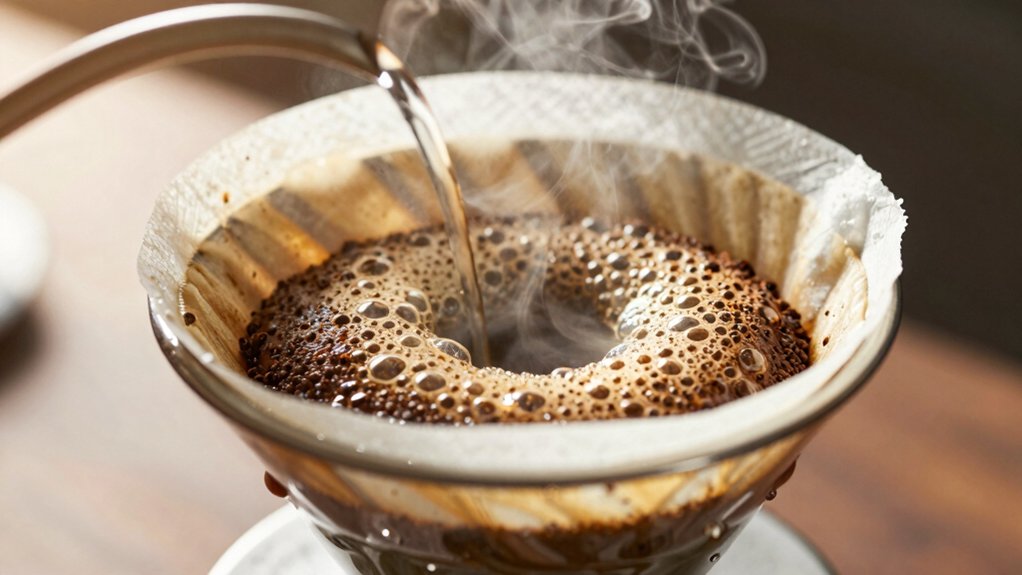
For a clean pour-over start with a lively bloom: pour about twice the coffee weight in 90–96°C water and let it bloom 30–45 seconds (45–50s for Chemex or at higher altitudes).
Watch the bed swell, bubbles surface and aroma sharpen; adjust grind, slightly finer at altitude, if bloom’s too fast or flat.
Keep slow concentric pours and a scale for consistency.
Keep going to learn practical tweaks for grind, temperature and bloom water.
Quick Overview
- Start bloom immediately with ~2× your dose (e.g., 15 g → 30 g) and watch for bubbling and bed swell for 30–45 seconds.
- Use 90–96°C water, slow concentric pours, a scale, and a timer to keep bloom consistent and controlled.
- Adjust bloom time by grind: finer grinds shorten bloom; coarser grinds and higher ratios lengthen or weaken it.
- At high altitude, slightly increase bloom water (≈10–20%); shorten bloom toward the low end, and slow your pour.
- If bubbles linger, extend bloom. If bloom is flat, check coffee freshness, grind size, or increase bloom water.
Bloom Time Chart
How long should you let the grounds bloom? You follow a bloom time chart to hit 30–45 seconds for most pours, 45s for V60, and 50s for Chemex. You’ll watch bubbles, smell toast and caramel, and feel the bed swell under gentle pressure.
| Dose (g) | Bloom water (g) | Time |
|---|---|---|
| 15 | 30 | 30–45s |
| 20 | 40–60 | 30–50s |
| 30 | 60 | 30–45s |
Use a consistent pour technique: slow concentric spirals, 90–96°C water, scale and timer. If bubbles linger, extend slightly; if flat, check freshness or grind.
This methodical, sensory approach primes the bed for clear extraction.
Grind Size & Ratio Quicklist
Want a reliably clear, balanced pour-over? You’ll match grind size and ratio to bloom time like following a small chart in your head: Coarser for faster drainage, finer for slower extraction. Use a scale and timer. Watch the bed swell, and note aroma and bubbling as feedback.
- Fine: 16–18 on espresso-like grinders; 1:15–1:16 ratio; shorter bloom time
- Medium-fine: typical pour-over setting; 1:16–1:17 ratio; 30–45s bloom time
- Medium: faster flow; 1:17–1:18 ratio; brisk bloom, less surface tension
- Medium-coarse: brighter clarity; 1:18–1:20 ratio; light, quick bloom
- Coarse: experimental; 1:20+ ratio; minimal bloom, open channel risk
Adjust methodically. Record results on your chart.
Altitude-Adjusted Bloom Times
At higher elevation, you’ll notice water boils at a lower temperature. This changes how quickly grounds release CO₂ and extract. Adjust your grind finer, slow your pour, or add a few grams of bloom water to compensate. This will help the bed swell evenly and aromas open fully.
Use a thermometer and timer to test small changes methodically until the bloom looks lively, level, and balanced.
Altitude Effects On Extraction
Notice how coffee behaves differently at altitude: lower air pressure means CO₂ escapes faster, so your bloom will look more vigorous but also finish sooner. You’ll notice altitude challenges immediately; larger, quicker bubbles, a louder hiss, and a bed that settles fast.
Because pressure changes reduce gas solubility, you should shorten bloom time slightly and pour with a steadier, gentler hand to avoid uneven channeling. Measure by seconds and weight: trim the usual 30–45s toward the lower end, watch for complete degassing, then continue.
Sensory cues matter: stronger early aromatics, thinner crema, and faster clearing of bubbles signal readiness. Adjust grind and pour tempo methodically; record results and refine until extraction balances clarity, sweetness, and body at your elevation.
Boil Point And Temperature
Having seen how lower air pressure speeds CO₂ release, you’ll also need to account for a lower boiling point. Water boils earlier as elevation rises; that changes how heat extracts flavors during the bloom. You’ll notice steam, sharper aromatics, and a faster initial rise in bubbles. Those cues tell you extraction is accelerating.
Control temperature stability by heating slightly higher than usual off boil. Then let the kettle settle to your target so the bloom gets consistent warmth without pushing into a rolling boil. That reduces boiling risk: violent agitation that strips delicate aromatics. Measure with a thermometer, adjust for altitude, and shorten or cool bloom water incrementally until the sensory profile stays balanced: sustained sweetness, clear acidity, and a calm, even degassing.
Grind Size And Altitude
How should you adjust bloom when grind and elevation change? You notice quicker bubbling and faster bed collapse at higher altitude because lower air pressure releases CO₂ faster. Taste and texture shift if you don’t compensate.
If your grind size is coarser, water moves faster and bloom looks brief; make the bloom slightly longer to let gases escape and beds level. If grind is finer, expect slower drainage and fuller bubbling; keep bloom short to avoid over-extraction.
At high altitude, trim bloom time by a few seconds compared with sea level. At low altitude, allow the standard 30–45 seconds. Always watch the sensory signs: bubble rate, bed swell, aroma. Then adjust grind size or trim bloom seconds until the bloom feels balanced and even.
Pour Rate Adjustments
Why does your pour feel different at altitude, and how should you fine-tune bloom timing with pour rate? You’ll notice faster bubbling, thinner crema, and quicker drainage as air pressure drops.
Make altitude adjustments by slowing your pour during the bloom: deliver bloom water more deliberately to maintain a full, even swell and prolong degassing for the standard 30–45 seconds. Use a narrow, steady stream and watch the bed rise. If bubbles dissipate too fast, pause briefly between micro-pours to preserve contact time.
Conversely, at lower elevations you can move a touch quicker without losing saturation. Rely on your scale and timer, observe sensory cues—bubble activity, aroma, bed level—and adjust pour rate incrementally until bloom timing consistently yields an even, fragrant bed.
Water Volume Compensation
What changes when you’re brewing at altitude is not just the feel of the pour; it is also the way water and gas interact with the grounds. You’ll want to compensate bloom volume to keep saturation and degassing consistent. You’ll increase bloom water slightly: about 10–20% more. This is because lower air pressure speeds CO₂ release; that extra volume maintains a wet bed and visible bubbling without overfilling.
Measure by weight, not eye. A modest pulse pour to reach the adjusted bloom mass lets you observe even swell and steady aroma. Note vessel impact: narrow cones concentrate flow and need less compensation than wide beds. Make water adjustment part of your routine. Document results and refine until bloom appearance and timing match sea-level behavior.
Frequently Asked Questions
How Does Bloom Affect Crema in Espresso?
Bloom impact on crema is indirect but meaningful: You’ll notice fresher beans with good degassing create more lively crema formation because trapped CO₂ helps emulsify oils during high-pressure extraction. You’ll pull richer, denser crema when grounds were recently roasted and allowed appropriate degassing. Stale or over-degassed coffee yields thinner, pale crema.
Adjust grind, dose, and distribution to maximize crema formation and preserve delicate aromatic oils for a fuller mouthfeel.
Can I Bloom With Flavored or Decaf Beans?
Yes, you can bloom with flavored beans and decaf beans. You will still wet grounds for 30–45 seconds; watch grounds swell and CO₂ bubble. Aromas may change. Flavored beans release added oils and scents that can overpower natural bloom aromas. Therefore, pour gently to avoid scattering flavor.
Decaf often degasses less; expect weaker bubbling and subtler scent. Use a 2:1 bloom ratio, timer, and even spiral pour for consistent saturation and extraction.
Does Bloom Vary With Roast Profile (Light Vs Dark)?
Yes, bloom timing shifts with roast variance. You’ll notice light roasts foam longer and more vigorously because they retain more CO₂ and denser cell structure. Aim for 30–45 seconds. Dark roasts degas faster and show weaker blooms; so you can shorten bloom timing toward 20–30 seconds.
Smell brightness and watch bubbly activity. Use a timer, consistent pour, and adjust water for even saturation to match roast characteristics.
Can I Bloom Using Kettle-Poured Cold Water?
You can, but you shouldn’t if you want a proper bloom technique. Cold kettle-poured water won’t release CO₂ effectively. Use water temperature around 195–205°F to see lively bubbles, even bed swell, and sweet aromas.
If you must use cold water, expect muted bloom, slower degassing, and flatter flavors. Compensate by increasing bloom time and agitation; however, results won’t match a hot-water bloom for clarity and extraction control.
Will Blooming Twice Improve Extraction?
Yes, doing a second bloom can help; however, it’s subtle. You’ll use a short initial 30–45s bloom, pour again briefly after degassing, and note extraction impact: slightly sweeter clarity, fewer channels, gentler solute release.
Be methodical: keep bloom frequency low (one extra pulse), use the same water temp, and maintain a consistent pour. Rely on scale and timer; overdoing it risks over-extraction and bitterness rather than improvement.
Conclusion
You’ve dialed your bloom by sight and sound: watch the coffee swell, smell the fresh aromatics, and time the first 30–45 seconds for the smell to peak. At altitude, account for lower boil points by slightly longer blooms and finer grinds. At sea level, keep blooms brisk.
Adjust pour rate and water volume to maintain steady agitation and saturation. Trust sensory cues: aroma, bubble activity, and bed movement to refine each pour.