How Often Should You Descale an Espresso Machine?
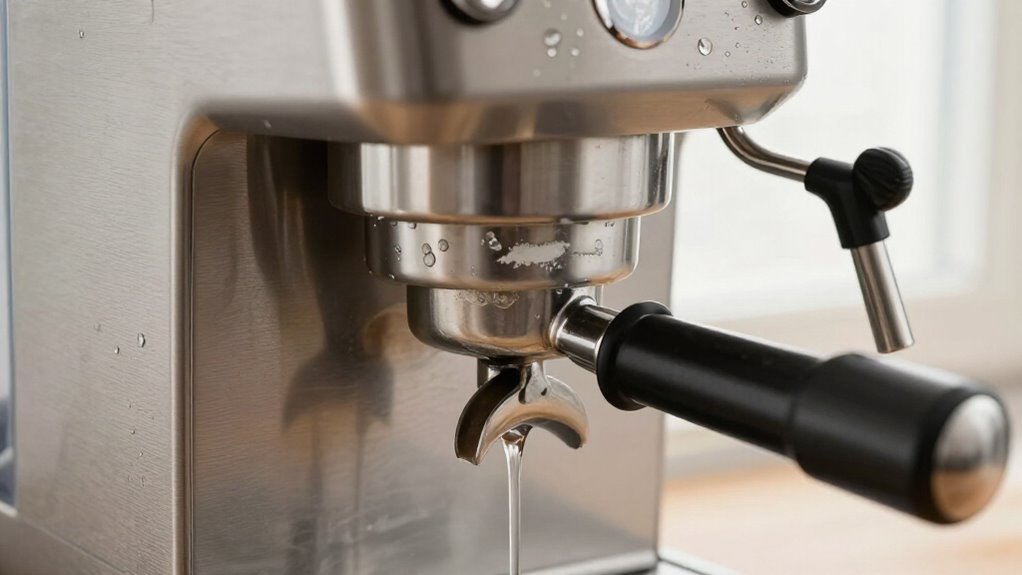
You’ll typically need to descale your espresso machine every two to four months, but adjust the schedule to your water and usage.
With hard water, daily brewing, or frequent steaming, descale every one to two months; softer water may allow three to four months.
Test your water hardness first, and descale sooner if brewing slows, steam weakens, the pump gets louder, or coffee tastes metallic.
Remove portafilter, follow your manual, and flush afterward. Continue below.
For Frequent Espresso Brewers
If you brew espresso daily or several times a day, descale more frequently because repeated heating accelerates mineral buildup. With hard water, schedule descaling about every two to three months; frequent heating and mineral loading can clog passages and disrupt water flow. With soft water, plan on roughly every three to four months, while recognizing that heavy use pushes maintenance toward shorter intervals.
Use changes to refine the schedule. Longer brew times, louder pump operation, cooler coffee, or sputtering flow indicate that scale may be restricting the hydraulic or thermal system.
Check your manual for usage milestones, too; some manufacturers recommend descaling after approximately 100 filter cycles, or after consuming a box of filters. Record service and adjust the interval when symptoms appear earlier than expected.
Test Your Water Hardness
How hard is your water? Test it before setting the machine’s hardness control or evaluating mineral exposure. Use a hardness strip for calcium and magnesium; a TDS meter measures all dissolved solids, so it’s supplemental.
- Collect tap water after 30 seconds of continuous flow.
- Dip the strip for 1–2 seconds, then wait 15–60 seconds.
- Match its color with the manufacturer’s chart; record °dH or ppm.
- Classify results: soft, 0–60 ppm; moderately hard, 61–120; hard, 121–180; very hard, above 180 ppm CaCO₃.
- Record the source and date; retest after changing filters, suppliers, or treatment.
For precision, check municipal results in mg/L CaCO₃. Retest every three to six months, or sooner if flow, heating, pressure, or flavor changes. Follow reagent directions, and rinse contacted skin immediately.
Descale Every 1–2 Months
Descale your espresso machine every 1–2 months when you use hard water or brew heavily each day, because calcium and magnesium accumulate quickly under those conditions.
Use performance changes to confirm the interval: slower heating, longer brew times, sputtering, louder operation, or less piping-hot coffee indicate accumulating scale. If coffee tastes bitter or metallic, schedule descaling sooner. Machine alerts and white limescale film provide additional evidence, but alerts may track cycles rather than potential mineral load.
| Condition | Action | Reason |
|---|---|---|
| Hard water | Descale every 1–2 months | Faster mineral buildup |
| Heavy daily use | Keep the same cadence | Greater heated-water volume |
Follow manufacturer’s solution and program; complete all rinse cycles to protect seals and preserve temperature control. Record each date and adjust the schedule as needed.
Remove Portafilter Before Descaling
Remove the portafilter before descaling so the solution flows directly through the group head and internal passages without trapping coffee residue. This helps prevent contamination, protects the basket and portafilter components from extended acid exposure, and ensures appropriate water flow during the cycle.
Afterwards, rinse the portafilter, basket, and removable shower screen thoroughly with clean water.
Why Remove the Portafilter
Before starting the descaling cycle, take out the portafilter so the solution can reach the group head, shower screen, and internal water passages without restricted flow or residue trapped in the basket.
With the portafilter removed, the descaler can circulate through the group head and dispersion area, improving contact with limescale. Leaving it installed may restrict flow and reduce the solution’s effectiveness.
The basket can also retain mineral deposits and coffee oils, so remove it and clean or soak it separately in warm soapy water, or follow your manufacturer’s cleaning instructions. After descaling, reinsert the portafilter only when the manual permits it, then run every recommended clean-water flush cycle. This clears residual descaler from the group head and connected pathways. Always check your machine’s manual.
Preventing Coffee Contamination
Always take out the portafilter and any filter basket before starting the descaling cycle. Turn the machine off, unplug it, and let it cool completely. Wipe loose coffee grounds from around the group before you reinstall any parts. If your machine permits, run a short plain-water flush with the portafilter removed.
This clears trapped coffee and reduces the risk of grounds or old coffee mixing with the descaling solution.
Keep the portafilter out throughout the descaling program. Don’t brew through it during the cycle; the solution should travel only through the internal plumbing being cleaned. After descaling, run multiple cycles of clean water through the group to remove residual solution.
Reattach the portafilter only after rinsing is complete, then resume normal brewing as intended.
Protecting Portafilter Components
To protect the portafilter, basket, spouts, and seals, take the portafilter off before starting the descaling cycle. Follow your machine’s manual, because many models require removal before you run descaler through the boiler and lines.
Don’t soak the portafilter, basket, or spouts in descaler unless the manufacturer explicitly approves it; acids can degrade finishes and damage gaskets over time.
After descaling, rinse the grouphead, then reinstall the portafilter and run multiple clean-water flush cycles to remove acid residue around the seal. Inspect the portafilter area periodically for white mineral deposits around the seal. Set descaling intervals according to water hardness and usage, limiting scale exposure.
Remove and rinse components during routine cleaning, but keep descaler confined to the machine’s approved circuit at all times.
Ensuring Proper Water Flow
Start by removing the portafilter and leaving the brewing group clear, so the descaling solution can circulate through the machine’s water path without contacting coffee oils trapped in the basket.
Run the machine’s descaling program according to your model’s instructions. Watch the group outlet: a slow stream, sputtering, or reduced pressure can indicate scale restricting passages. These symptoms may improve as loosened minerals move through the circuit.
After descaling, rinse with fresh water through the group while keeping the portafilter removed. Continue until discharged water no longer smells or tastes like descaler, because residue can interfere with flow and shot consistency. Confirm a steady, even group discharge. If your machine displays a descaling reminder, you’ll use it as a baseline, but visually verify flow quality.
Cleaning After Descaling
Before you begin descaling, remove the portafilter, basket, and any blind-basket insert so the solution can pass through the group without pooling or leaving residue on coffee-contact surfaces. If your machine has a drip tray or blind-basket setup, remove those inserts as well, following the manual, so descaling liquid can flush cleanly through the group.
Clean the portafilter and basket separately with warm water; use mild detergent only when necessary, then rinse thoroughly. This prevents detergent or dissolved scale from affecting taste and aroma.
After descaling, don’t reinstall the portafilter immediately. Run multiple plain-water flushes through the group and outlets as directed. Discard the first rinse runs as instructed. Reinstall the clean portafilter only when water runs clear and has no remaining acidic odor.
Frequent Steam Wand Use
Frequent steam-wand use accelerates mineral buildup in the boiler and steam pathways, so you’ll need shorter descaling intervals. With hard water and daily steaming, descale about every 2–3 months; softer water and lighter use may allow 3–4 months.
Monitor steam performance and act on weaker pressure, sputtering, longer heat-up times, or white residue.
Increased Mineral Buildup
If you use the steam wand frequently, its repeated heating cycles can accelerate calcium and magnesium scale buildup inside the machine, restricting water passages and reducing steam performance.
Frequent steaming heats water, allowing dissolved minerals to precipitate and coat thermoblock channels, valves, and the wand’s pathway. As deposits accumulate, they insulate heating surfaces and impede water movement, so you may notice slower steam recovery, sputtering or noisy operation, and less piping-hot output. Scale can alter temperature control and contribute to an odd or metallic taste.
Inspect areas for white mineral residue and monitor steam behavior during use. Use your machine’s descaling reminder as a guide, but confirm performance changes rather than relying on its cycle-based alert. Select the manufacturer-approved solution and follow the model-specific procedure.
Shorter Descaling Intervals
Those steam-performance changes also justify shorter descaling intervals. If you use your steam wand frequently, repeated heating can harden calcium and magnesium deposits inside the boiler and steam pathways. That mineral load can accumulate faster than it does during brewing alone, so you should shorten your schedule.
In a hard-water area, descale every 2–3 months instead of following a 3–6-month interval. Even with soft or filtered water, heavy steaming supports choosing the quicker end of your range, near every three months. Base the interval on your water hardness, steam workload, and manufacturer’s instructions.
Use the descaler and complete the machine’s rinse procedure; don’t substitute vinegar. Shorter intervals help protect temperature-control and flow components, but don’t descale excessively, because unnecessary acid exposure can accelerate seal wear.
Monitor Steam Performance
Monitor steam performance as part of your descaling routine, especially when you use the wand daily. Frequent use accelerates mineral settling in internal steam paths, so schedule descaling every 2–3 months with hard water or every 3–4 months with softer water. In moderately soft-water areas, quarterly service may still be appropriate.
Treat slower recovery, weaker or hissing steam, delayed steaming temperature, or changed steam pitch as warning signs. Inconsistent output, including unexpectedly wet or dry steam, can indicate deposits near delivery points or temperature sensors. Descale promptly using the manufacturer’s solution and procedure; don’t wait for an alert, because counters may track cycles rather than mineral load. Afterward, run the specified rinse cycles and verify strong, stable steam before returning to normal daily use.
Consistent Crema, No Spurts
Descale your espresso machine roughly every 3–6 months to keep mineral scale from restricting internal flow paths, destabilizing pressure, and reducing crema quality. If you’ve got hard water, shorten the interval to every 2–3 months because calcium and magnesium accumulate faster. When your machine spits, sputters, or produces uneven spurts, descale sooner: scale can disrupt water delivery and temperature control, causing thinner, less uniform crema.
Match the schedule to usage. Heavy daily brewing warrants the shorter interval, while lighter use may allow three to four months, or longer with soft water. After descaling, run at least two clean-water cycles and rinse the brew path according to the manufacturer’s instructions. This removes residual solution that could interfere with extraction and crema appearance. Flow normalizes afterward.
Stop at Metallic Tastes
A metallic or unusually bitter espresso often signals mineral scale disrupting water flow and extraction, so you should descale promptly. Treat this flavor change as a diagnostic warning. Scale can restrict passages, alter pressure, and prevent stable contact between water and grounds.
If brewing becomes inconsistent, takes longer, or produces less-hot, less-aromatic coffee, stop use and follow your machine’s manufacturer descaling procedure.
Set your schedule according to water hardness and usage. In hard-water areas, descale every two to three months; frequent brewing may require earlier service. In soft-water areas, plan on every three to four months.
Use filtered water to reduce mineral loading, but don’t ignore metallic notes. If flavor remains abnormal after descaling, investigate the water source or contact a technician before continuing regular operation.
Rinse Until Water Runs Clear
Run fresh water through the machine after descaling, discarding the initial flushes until the discharge is clear and free of cloudiness or white film. Discard those flushes; don’t use them for brewing. Continue until repeated output remains transparent and odor-free.
If your machine has steam or hot-water functions, rinse each circuit separately, because residual solution can remain in dispensing lines. Skipping this step can leave an acidic aftertaste.
- Fill the reservoir with fresh water before each rinse cycle.
- Route water through the group, then discard it.
- Open the hot-water outlet and flush that path.
- Activate steam briefly, then purge the wand thoroughly.
- Repeat cycles until no haze, film, or off-odor remains.
Your final rinse should taste neutral before you prepare coffee or evaluate extraction again.
Check Your Machine’s Manual
Your machine’s manual should determine the descaling interval, because manufacturers account for its boiler or thermoblock design, water paths, and scale-prone components. Don’t substitute a generic schedule, such as every three to six months, when your model specifies another interval. If the machine has a descaling reminder or warning light, start the procedure when it activates.
Treat that alert as a maintenance trigger, especially on models with sensors, because scale can restrict heating and water flow.
If the manual gives no timeframe, use its water-hardness and usage guidance. Test your water, estimate your brew volume, and shorten the interval for hard water or heavy use. Before starting, confirm the approved descaler, concentration, and procedure. Follow the required rinse-through steps to purge acid residue safely.
Conclusion
Descale your espresso machine according to your water hardness, brewing frequency, and manufacturer’s instructions. If you brew daily, start with a one- to two-month interval, then adjust based on flow, crema, taste, and scale buildup.
Remove the portafilter, complete the descaling cycle, and rinse thoroughly until the water runs clear. Don’t ignore metallic flavors, spurting, or restricted flow. Consistent maintenance protects internal components and keeps every shot balanced, clean, and reliable, and consistently delicious.