Ceramic vs Steel Grinder Burrs: Which Lasts Longer?
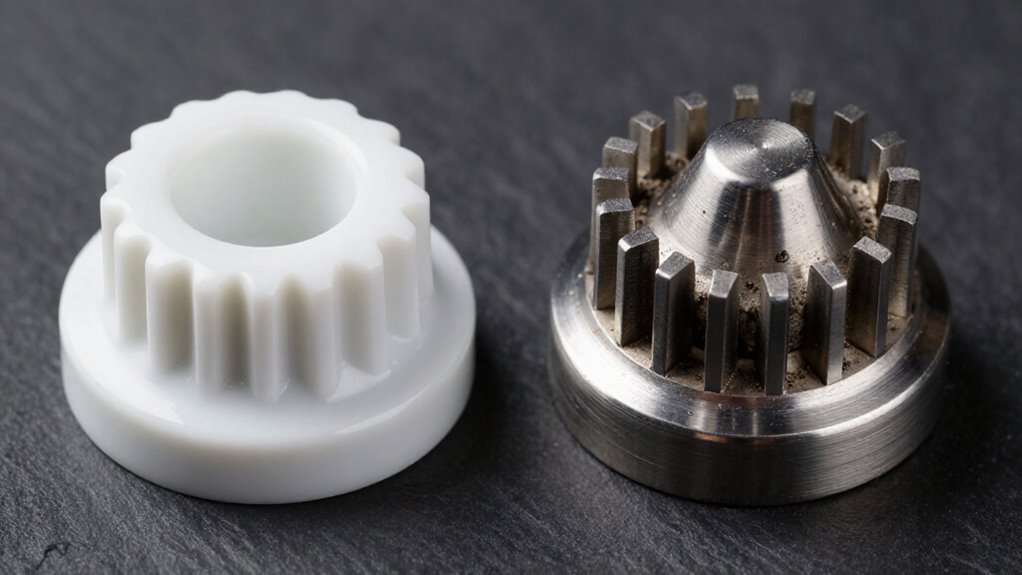
You’ll usually get longer wear life from ceramic burrs because they resist abrasive blunting and corrosion.
However, steel burrs often last longer in real-world use because they tolerate stones, impact, and torque spikes without catastrophic failure.
Choose ceramic for clean, dry, careful grinding, especially at fine settings; choose steel for heavy use, camping, or uncertain beans.
Track edge sharpness, particle consistency, and extraction—not calendar age.
The comparisons below clarify geometry, heat, cleaning, and damage risks.
Burr Wear Resistance Compared
While ceramic burrs typically resist abrasive wear better than steel, that advantage doesn’t make them universally more durable. You’ll usually see ceramic retain its edge against abrasive coffee particles, while hardened steel cuts faster initially and tolerates impact, torque spikes, and accidental stones better. Ceramic’s hardness slows blunting, but its brittleness makes one contaminant capable of chipping an edge.
| Factor | Practical implication |
|---|---|
| Abrasion | Ceramic generally blunts more slowly. |
| Impact | Steel tolerates foreign particles better. |
| Service | Inspect edges and track extraction changes. |
Dense light-roast beans can reduce either material’s life by roughly 20–40%. You should clean regularly, keep steel dry to prevent corrosion, and inspect for rounded steel edges or ceramic chips. Replace burrs when grind time, fines, or extraction consistency noticeably worsens, not solely by calendar age. For frequent fine grinding, steel’s toughness often outweighs ceramic’s superior abrasion resistance under demanding, high-throughput conditions and repeated daily use.
Conical Versus Flat Designs
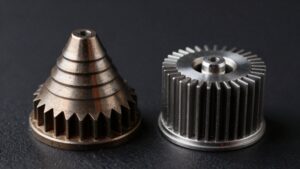
Conical and flat burrs use different geometries that affect grind consistency, heat, and long-term operation. A conical set pairs a rotating cone with a stationary burr, so its gradually changing gap handles multiple grind sizes forgivingly. Gravity also helps evacuate grounds, which can reduce clumping and support cleaner operation as you’ll use the grinder.
That design suits brewing and coarse settings.
Flat burrs use parallel discs, creating a consistent cutting zone that appeals when you want precise, repeatable results. At espresso-like fineness, tight tolerances and alignment matter; otherwise, distribution can suffer. Flat designs may depend more on grounds evacuation.
Choose conical geometry for versatility or flat geometry for focused precision. Whichever you select, inspect alignment and replace worn burrs when extraction consistency declines.
Heat Retention During Grinding
Ceramic burrs generate less heat during grinding, which helps preserve coffee oils and flavor during fine, espresso-style grinding. When you grind slowly or at espresso-fine settings, reduced friction limits temperature rise and protects volatile compounds. Steel transfers heat more readily, so you’ll notice sensory changes during prolonged, high-speed grinding.
However, burr geometry, motor speed, bean hardness, and dose size also influence thermal behavior. Some advanced steel burrs use AlTiN coatings to reduce heat transfer and improve control.
- Choose ceramic when flavor preservation at fine settings matters most.
- Choose coated steel when you need thermal control with greater toughness.
- Grind at a moderate speed and avoid repeated, back-to-back cycles.
You can compare results by measuring grind temperature and tasting for muted aromatics or flatter acidity. Heat differences matter less at coarse settings, where friction and exposure time are lower.
Single-Dose Workflow Simplicity
Heat management also affects how simple a single-dose routine feels in practice. Ceramic burrs transfer less heat, so you’ll grind batches repeatedly without frequent adjustments. Their long-lasting sharpness may also reduce burr touch-ups and replacement frequency, simplifying upkeep.
Ceramic resists rust, which helps in humid kitchens, though you should brush away fines and inspect for chips.
Steel burrs remain a choice when you value impact resistance and tougher hardware. They tolerate hard particles better, but abrasive wear rounds their edges. Under heavy use, you may need earlier replacement or, where supported, sharpening.
For the simplest routine, weigh ceramic’s cooler operation and slower apparent dulling against its brittleness; either material works well when you single-dose, clean regularly, and monitor grind performance over its lifespan.
Espresso Versus Filter Suitability
For espresso, steel burrs generally provide more precise, stable particle sizing across the fine range, while ceramic burrs run cooler and may better preserve volatile aromas during extended grinding. Choose steel when you prioritize repeatable shot flow, tight distributions, and frequent fine grinding; choose ceramic when heat control matters most and you accept greater chipping risk from hard contaminants.
For filter coffee, both materials perform well at medium-to-coarse settings. Steel often makes practical sense because it maintains consistency across pour-over, drip, and French press use, while ceramic resists corrosion and can retain sharpness in ordinary home conditions.
- Select steel for espresso precision and high throughput.
- Select ceramic for cooler grinding and aroma preservation.
- Inspect either burr set regularly; dense beans accelerate wear during use.
Replacement Burr Availability
When replacement time comes, steel burrs are usually easier to source because many home and commercial grinders use standardized steel designs. You’ll often find compatible sets through the manufacturer, retailers, or upgrade suppliers such as SSP. Confirm diameter, mounting pattern, and model before ordering; compatibility matters more than material.
Ceramic replacements can be harder to locate because manufacturers use model-specific dimensions and fewer grinders include ceramic burrs. Check original part number and verify stock with manufacturer before assuming a replacement exists.
For premium steel options, such as LeBrew’s 64-millimeter HyperBurrs, availability depends on support for your exact grinder. Before buying, compare the replacement price, expected service life, and any resharpening option. A widely available steel burr can reduce downtime and lower long-term ownership costs.
Foreign Object Damage Risks
Replacement availability matters, but the type of damage that prompts replacement also depends on burr material. Foreign-object breakage is less common than ordinary wear, yet one hidden stone can change your replacement timeline. Ceramic is brittle: an impact may crack or chip its cutting edges, causing sudden, catastrophic failure. Steel usually absorbs the same event with a dent or localized deformation, so you can often continue grinding, although performance may suffer. Protect either burr set by checking beans for debris and loading only known, clean material into the hopper.
- Choose ceramic for low-risk, careful use, not debris-prone batches.
- Choose steel when impact tolerance matters more than corrosion resistance.
- Stop and inspect after unusual noise, vibration, or a jam.
An impact can erase ceramic’s advantage.
Cleaning Difficulty by Material
You’ll find ceramic burrs easier to clean in humid conditions because they resist corrosion and sticky residue. Steel burrs require dry-first cleaning, since moisture can promote rust and make oily buildup harder to remove.
Use gentle tools on ceramic to avoid chips, while inspecting steel for corrosion and contamination.
Ceramic Burr Cleaning
Ceramic burrs resist rust, so they’re easier to maintain in humid kitchens than steel burrs, but their brittle teeth require gentler cleaning. You should prioritize dry brushing: it removes fines and loose grounds without creating clumping residue or moisture-related buildup. Disconnect the grinder and follow its manual before accessing the burrs.
- Use a soft, clean brush to sweep particles from the teeth and chamber.
- Inspect the burrs under light for chips, cracks, or lodged hard particles.
- Clean regularly, especially when oils or fines begin affecting grind consistency.
Don’t pry at stuck debris with metal tools, and don’t strike the burrs. If contamination remains, use an approved method, then let each part dry completely before reassembly.
Replace ceramic burrs when you find damage or persistent performance changes; their rust resistance won’t prevent impact-related failure.
Steel Burr Cleaning
Steel burrs demand more care than ceramic burrs because moisture can cause rust and corrosion. For routine maintenance, switch off and unplug your grinder, remove parts, and use a brush and vacuum to lift oils, fines, and trapped grounds. Dry cleaning prevents residue from clumping and avoids moisture-related damage.
If you rinse a removable hopper or other steel-adjacent component, dry it completely before reassembly. Don’t let water sit near the burr chamber, where moisture can promote oxidation and make grounds adhere. Clean regularly because oil buildup can reduce feeding efficiency and contribute to inconsistent particle size.
In a humid kitchen, you’ll need stricter drying discipline than with ceramic burrs. Inspect steel edges for rounded surfaces, but don’t scrub aggressively enough to alter the cutting geometry. Follow your grinder manufacturer’s cleaning instructions for approved products and disassembly.
Best for Camping Trips
For lightweight travel, you’ll often prefer a compact ceramic grinder that resists rust in humid campsites. On the trail, ceramic stays sharp but can crack if debris enters, while steel better tolerates impacts.
For easy maintenance, keep ceramic burrs clean and dry beans free of grit; choose steel for rougher handling.
Lightweight Travel Design
On camping trips, ceramic burrs suit lightweight travel grinders because they resist rust and stay clean in humid conditions, helping preserve performance. Their heat generation also benefits espresso-focused brewing, while hand-grinder designs keep your pack light. However, ceramic’s brittleness means you should protect the grinder from drops and exclude stones or other hard particles before grinding. Choose based on your brew target and carrying conditions:
- Select ceramic for humid camps, cooler grinding, and occasional fine brewing.
- Select stainless steel when a lighter, knock-resistant mechanism matters more than corrosion resistance.
- Pack a dry brush, and never rinse burrs inside the grinder.
After cleaning, let components dry and store the grinder ventilated. Ceramic may retain sharpness well, but steel often suits frequent fine grinding. A practical travel design balances mass, moisture control, impact protection, and grind requirements.
Durability On The Trail
Ceramic burrs are often the better choice for camping trips because they resist rust, stay sharp with occasional use, and generate less heat during grinding. Moisture and temperature swings on the trail won’t corrode them, and their slower wear can provide dependable performance over outings. That makes ceramic a set-it-and-forget-it option when you value longevity and moderate use.
However, ceramic is brittle. A stone or grain of grit entering the hopper can chip or crack the burr, so you need clean beans and careful handling. Steel burrs offer impact tolerance; they may deform rather than shatter when debris gets through. Choose steel if your campsite conditions are unpredictable or your beans may contain particles.
In short, ceramic prioritizes corrosion-free, long-term longevity, while steel prioritizes toughness.
Easy Camp Maintenance
When you’re camping, ceramic burrs simplify maintenance because they resist rust and stay sharp with occasional use, often far longer than stainless-steel burrs. Ceramic’s corrosion resistance suits humid camps, but its brittleness demands careful handling. Inspect beans before grinding; one stone can crack a burr. Stainless steel tolerates impacts better, yet it wears faster and needs dry storage to prevent rust.
For field care:
- Brush out grounds and fines after each session; avoid water on steel burrs.
- Check ceramic burrs for chips and steel edges for rounding.
- Carry a soft brush.
Clean burrs reduce buildup, helping preserve flavor and grind speed overall. Choose ceramic for coarse, occasional camp use; choose steel when you grind frequently. If extraction changes noticeably, service or replace the burrs.
Humidity and Rust Resistance
Humidity exposes a key durability difference between burr materials: ceramic won’t rust or corrode, while steel can oxidize when moisture and coffee residue remain on its surfaces. If you keep a steel grinder in a humid kitchen, store it dry and remove oily grounds promptly. Moisture trapped in residue can encourage rust around cutting edges, causing buildup that traps more particles and may affect alignment or grinding performance.
Steel usually works well in normal household humidity, but it demands more maintenance than ceramic. Ceramic stays chemically inert and generally cleaner in damp conditions, with less humidity-related deterioration and no rust-like deposits. It also generates less heat, so it won’t thermally drive moisture into the burr surface. However, inspect ceramic for chips after impacts or shocks.
Conclusion
Ultimately, you’ll choose based on your workflow, not durability alone. Steel burrs usually give you stronger impact resistance, easier cleaning, and better espresso versatility, while ceramic burrs resist rust and retain sharpness in dry, low-volume use.
If you travel, grind slowly, and protect the mechanism from stones, ceramic can serve you well. For daily grinding, humid conditions, or demanding espresso, steel remains the more practical long-term choice. Match material, design, and maintenance to your priorities.