How Often Should You Clean and Descale a Coffee Maker?
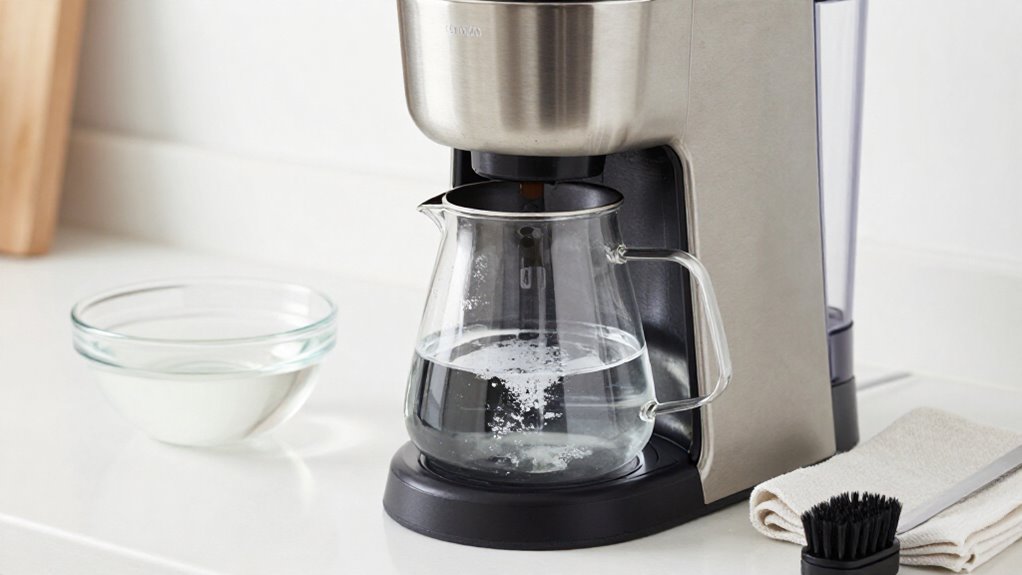
Clean your coffee maker weekly: run a hot-water cycle, wash the carafe and reservoir, and use a cleaning powder as directed to remove oils.
Descale it every three months without coffee or a filter, using the label’s dilution; hard water may require descaling every one to two months. Run two or three water-only cycles afterward.
If brewing slows, sprays unevenly, or tastes bitter, repeat maintenance sooner.
The steps below explain how to keep scale controlled.
Prevent Mineral Scale Buildup
If you have hard water, descale your coffee maker about every one to two months because calcium and magnesium deposits accumulate quickly during flash-heated brew cycles. Don’t wait for a blockage: slower brewing, weaker output, or a spray head that seems clogged indicates that scale is restricting water flow.
Use a pre-portioned descaler, such as Urnex Dezcal, according to its label. For the specified dose, dissolve it in 32 ounces of warm water, run a full cycle, and then run multiple water-only cycles to remove residue. Follow your machine’s manual if it requires a different concentration or procedure.
Periodically run a cleaning-powder cycle separately from descaling. Coffee oils can combine with mineral deposits, increase staining, and create grime that becomes more difficult to remove.
Check Local Water Hardness
How hard is your tap water? Your hardness determines how quickly calcium carbonate and magnesium scale form inside your coffee maker. Find a baseline before choosing a maintenance interval or water-treatment option.
- Check your utility’s Consumer Confidence Report (CCR), or contact customer service. For a private well, request a laboratory test. You can also use a hardness strip.
- Interpret the result as calcium carbonate: 1 mg/L equals 1 ppm, while 1 gpg equals 17.1 ppm. Soft water measures 0–60 ppm; moderately hard, 61–120; hard, 121–180; very hard, above 180.
- Recheck annually, or after well work or installing a filter or softener. Verify treated water immediately, then quarterly during the first year. Monthly strips can reveal changes, such as scale or slower flow.
Clean Weekly, Descale Quarterly
A weekly hot-water cycle helps flush coffee oils and residue from the spray head, carafe, and internal passages, while cleaning powder can break up stubborn buildup. Run this cycle without coffee, and use cleaning powder as directed. For oil-stained carafes, soak with powder for about 1 hour, or 20–30 minutes when you’re short on time, then rinse thoroughly.
Descale about every three months. Hard-water calcium and magnesium deposits can clog internal passages, reduce heat transfer, and cause uneven brewing. Use your machine’s recommended solution and concentration. Afterward, run several full tanks of plain water before brewing.
| Schedule | Task |
|---|---|
| Weekly | Hot-water cycle |
| Weekly | Powder treatment |
| Quarterly | Descale |
| As needed | Increase frequency for hard water or slower flow |
Wipe, Descale, Rinse, Repeat
Wipe the carafe, reservoir, and exterior after each use to remove oils and residue. Descale every three months, or sooner if you notice mineral buildup or restricted flow.
Rinse through multiple water-only cycles, repeating the cleaning process until the machine and components are clean.
Wipe After Each Use
After each brew, quickly wipe the exterior and remove and rinse any removable filter basket or spray head to clear grounds and prevent coffee-oil buildup. Wipe the hotplate and drip tray after spills, then empty and rinse the water reservoir to limit stagnant moisture.
Air-dry each component completely before reassembly; trapped water encourages microbial growth and can leave stale flavors. Use a soft cloth or manufacturer-approved brush around the spray opening, seals, and crevices, but don’t force debris deeper into the brewer.
For daily use, inspect the basket, reusable filter, carafe lid, and pod tray for residue; wash removable parts with hot, soapy water when a quick rinse isn’t enough. Rinse thoroughly, leave parts separated to air-dry, and reassemble only when they’re fully dry.
Descale Every Three Months
Every three months, descale your coffee maker to remove calcium and magnesium buildup that can restrict water flow and cause uneven brewing. First, check your manual for the approved descaler and concentration. Wipe the exterior, then dissolve descaling powder completely in 32 ounces of warm water. Pour the solution into the reservoir and run a complete cycle without coffee or a filter.
Hard water, changing water quality, slower flow, spray-head blockage, or inconsistent extraction may require earlier treatment. Don’t use an overly concentrated solution; it can damage heating elements, seals, or plastic components. Descaling addresses mineral scale, not stubborn coffee oils. If oily residue persists, run a manufacturer-approved cleaning-powder cycle separately. Schedule the next treatment three months later, or sooner if performance declines noticeably.
Rinse After Descaling
Once the descaling cycle ends, don’t brew coffee immediately.
Wipe out the reservoir to remove loosened scale and any remaining descaling solution. Refill it with clean water, then run a complete water-only cycle through the machine. Discard that water and repeat the rinse with fresh water.
Continue until the discharged water runs clear and no vinegar, citric acid, or chemical odor remains. Taste or odor indicates residual solution, so don’t brew coffee yet. After the final flush, wipe the reservoir again, especially around corners, seams, and the outlet, where loosened mineral particles can collect.
Rinse removable components separately if descaler contacted them, and let everything drain before reassembly. Use the manufacturer’s rinse procedure and water volume when available. This prevents residual flavor and protects.
Repeat Cleaning Cycles
Start by wiping the machine’s exterior, then dissolve the descaler in 32 oz of warm water, fill the reservoir, and run the solution through the machine.
After the descaling cycle, run multiple water-only rinse cycles, using several reservoir refills, until no descaling solution remains.
If coffee oils cling to the carafe, add cleaning powder, pour in extra-hot water, and let it soak for about one hour. When time is limited, soak it for 20–30 minutes, then rinse thoroughly.
Repeat the wipe, descale, and rinse sequence when the machine’s performance indicates that another cycle is needed. Complete each step in order, and don’t brew coffee until rinsing is finished. Finally, wipe out the reservoir to remove remaining residue before reassembly. This keeps every cycle consistent.
Watch for Buildup
Watch for slow dripping, uneven spray, or bitter-tasting coffee: these signs indicate mineral scale or coffee-oil buildup. Wipe the exterior and inspect the spray head, basket, and carafe for residue. Descale first: dissolve coffee-maker descaling powder, such as Urnex Dezcal, fully in 32 ounces of warm water. Run a full brew cycle, then run water-only cycles to flush dissolved minerals.
Next, run a cleaning-powder cycle to remove oils that can turn rancid, clog spray heads, and stain the carafe. For stubborn stains, dissolve powder in the carafe, add extra-hot water, and soak for about one hour, or 20–30 minutes when necessary. Rinse thoroughly.
Repeat this wipe, descale, rinse, and repeat routine as needed, especially after changing water sources or moving from soft to hard water.
After Extended Storage
After extended storage, inspect the reservoir, brew area, and carafe for residue, stains, or stagnant water. If water remained inside, descale the machine before brewing to remove mineral buildup. Then run one or two full water-only cycles, or more after descaling, until the water is clear and odor-free.
Inspect For Residue
Before brewing, inspect the spray head, tubing, and carafe for dusty film, rancid coffee oils, or crusty mineral deposits that may have formed during storage. Inspect the carafe interior for stubborn brown staining; coffee oils can cling to stainless steel and become harder to remove over time.
Check seals, reservoir edges, and crevices for sticky film, dust, or biofilm. Don’t assume a dry exterior means internal passages are clean.
Run a water-only brew cycle before adding coffee. Watch the stream and listen for uneven flow; a gunked-up spray head can restrict circulation and produce incomplete saturation.
If water flow appears weak or irregular, stop using the machine and clean the affected components according to the manufacturer’s instructions. For visible coffee residue, use approved cleaning powder through the brewer, soak the carafe as directed, and complete multiple rinse-only cycles.
If you find hard, crusty deposits, note them; don’t brew yet.
Descale Before Brewing
A dormant coffee maker can accumulate calcium and magnesium scale that restricts water flow and impair brewing. After extended storage, don’t brew coffee immediately. Dissolve an Urnex Dezcal-style powder in 32 oz of warm water, fill the reservoir, and run a full cycle.
If your manual specifies a different concentration or procedure, follow it to protect heating elements, seals, and plastic components. Descaling removes mineral scale, but stored coffee residue requires separate attention: oils can turn rancid and cling to stainless or metal carafes. Clean those surfaces before brewing.
After the treatment, inspect the reservoir, spray head, and brew path. Wipe accessible areas, and repeat the descaling or cleaning procedure if deposits still obstruct flow. This reset helps restore consistent heating and extraction performance.
Run Multiple Rinse Cycles
Once descaling is complete, run at least two or three water-only cycles with a full reservoir or carafe each time to flush residual descaler, mineral deposits, and stale coffee oils from the spray head and internal lines.
After storage, use fresh water for every cycle, and discard each output; a full fill helps water reach the flash-heating path, where scale accumulates. If the first rinse smells stale or appears cloudy, continue running cycles until the water looks clear and smells neutral.
After the final cycle, empty and wipe the reservoir to remove residual film. Let removable components air-dry before reassembly, then brew coffee only when the machine’s output is clean and odor-free. This prevents aromas affecting your next brew and won’t promote buildup.
Water Flows Without Gurgling
Smooth, quiet water flow usually means your coffee maker doesn’t have an active scale blockage, but mineral deposits can still accumulate silently on internal hot-water components.
Even when brewing sounds normal, schedule descaling according to water hardness and use: every one to three months in hard-water areas or about monthly for daily brewing. Use a manufacturer-approved descaling powder such as Urnex Dezcal dissolved completely in roughly 32-ounce warm water. Run the cycle as directed, then complete multiple water-only rinse cycles. Check the reservoir and spray head afterward and remove all residue.
If flow performance begins to drift without gurgling, inspect the spray head for coffee oils or grounds. Run a dedicated cleaning powder cycle when needed to clear restricted paths.
This preventive schedule keeps internal water passages clear and supports consistent operation.
Stop at Metallic-Tasting Coffee
Metallic-tasting coffee often signals mineral scale from hard water, especially calcium and magnesium deposits coating the machine’s internal metal components. Because brewers flash-heat water, deposits can accumulate quickly and alter flavor. Run a complete cycle with a coffee-machine descaler, such as Urnex Dezcal, following your model’s instructions.
Then run several water-only cycles; residual descaler or loosened minerals can continue affecting taste. If the metallic note remains, use a coffee-equipment cleaning powder to dissolve stubborn rancid oils on the spray head and carafe. Clean the carafe thoroughly, since oils cling more readily to metal interiors than glass.
After rinsing, wipe out the reservoir and reassess the next brew. If hard water or changing water quality accelerates buildup, repeat the cleaning procedure sooner when necessary promptly.
Neglecting the Filter Basket
If descaling doesn’t resolve weak or uneven extraction, inspect the filter basket next. Spent grounds and coffee oils can clog openings, restrict water flow, and produce under-extraction or channeling. Rancid oils may also stain the carafe and transfer stale flavors.
- Rinse the basket whenever you change a paper filter or empty grounds. Scrub its openings with a brush, especially after repeated use.
- Give reusable filters extra attention: they retain more oils than paper and require washing after every brew. Check for blocked perforations before reinstalling.
- On your descaling schedule, run manufacturer-approved cleaning powder through the brewer. Clean the carafe separately, then rinse components completely.
Don’t treat rinsing as sufficient; residue can collect near the spray head and channeling areas.
Dry parts.
Check Reservoir for Film
After descaling or cleaning, inspect the water reservoir for a dull or cloudy film left by mineral scale or coffee oils. This coating can affect water flow and introduce stale flavors. If you see residue, run one or two water-only rinse cycles, then wipe the reservoir with a microfiber cloth.
Rinse again if the surface still feels slick, and let it air-dry before refilling.
Hard water accelerates film formation because flash-heated water deposits calcium and magnesium. Check the reservoir more often after switching cities or water sources, since hardness may change. Persistent film indicates that carafe rinsing isn’t enough; follow your manufacturer’s procedure for a more thorough descaling to address internal accumulation. Include reservoir checks in your cleaning routine, especially if you brew daily.
Conclusion
Clean your coffee maker weekly and descale it about every three months, adjusting that schedule for hard water or heavy use. You’ll protect the heating system, maintain steady flow, and preserve flavor.
Rinse every component thoroughly, remove residue from the filter basket and reservoir, and don’t return the machine to service until no cleaning solution remains. If coffee tastes metallic or water sputters, act sooner. Consistent maintenance keeps each brew safe, balanced, and reliable, too.