Grind Size for Pour Over Coffee
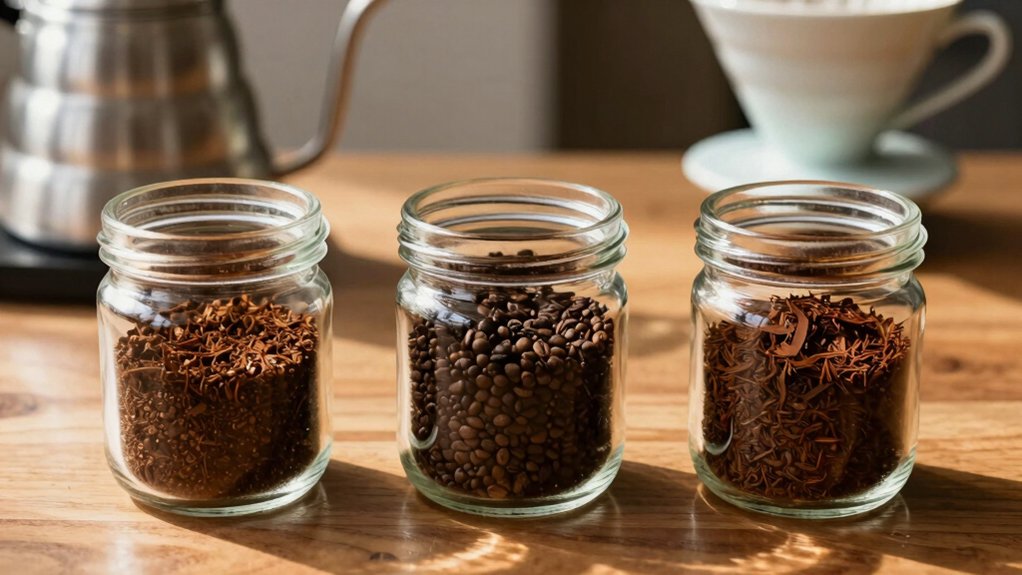
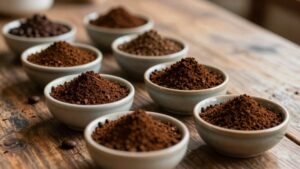
You’ll want a medium grind, about 18–22 clicks on many grinders, roughly the texture of granulated sugar. This is because it hits the typical 2–3 minute pour-over window for balanced clarity, body, and extraction.
Finer grinds speed extraction and can taste bitter. Coarser grinds slow it and can taste sour or thin. Adjust a click or two for water temperature or pour technique. Use a thermometer for repeatable results; keep going to learn practical tweak steps.
Quick Overview
- Use a medium grind (about 18–22 clicks; texture like granulated sugar) as the starting point for most pour-over drippers.
- Adjust grind finer to speed extraction when brew time is over 3 minutes. Adjust coarser to slow extraction when under 2 minutes.
- Change grind in small steps (≈50–100 μm or 1–2 clicks) because small particle shifts noticeably affect taste.
- Match grind to water temperature: finer for hotter water, coarser for cooler water to keep extraction balanced.
- Maintain high grind consistency and log grind, temperature, and brew time for repeatable, predictable results.
Grind Size vs Brew Time
How quickly do grind changes show up in your pour-over? You’ll notice that finer grinds speed extraction and shorten brew time, while coarser grinds slow flow and lengthen it. Small shifts of 50–100 microns change contact time enough to move a cup from sour to balanced or from balanced to bitter.
Keep grind consistency high so one tweak gives predictable results. Use thermometer use to keep water temperature steady; temperature and grind interact, so log both. Target 2–3 minutes for most V60/Kalita brews, adjusting grind to hit time and taste.
| Adjustment | Effect |
|---|---|
| Finer (50–100 μm) | Faster extraction, shorter brew |
| Coarser | Slower extraction, longer brew |
Medium Grind: 18–22 Clicks
Want a reliable starting point that works across most pour-over drippers? Use a medium grind around 18–22 clicks on many manual grinders to get grain size near granulated sugar: balanced for clarity and body. You’ll monitor consistency measurements to avoid fines or boulders, which skew extraction rate.
Keep temperature control steady while you pour, since it interacts with grind to influence solubles. Pay attention to pour over technique and filtration impact: paper filters and flat-bottom drippers slow flow, while conical shapes need slight tweaks.
- Target 18–22 clicks for balanced flow and 2.5–3:30 minute brew times.
- Check grind uniformity with a quick visual sieve.
- Maintain stable water temp for predictable extraction.
- Adjust finer/coarser to correct under- or over-extraction.
Adjust for Water Temperature
If your water runs hotter, you’ll usually grind a bit finer to compensate for the faster extraction. If it’s cooler, go coarser to slow things down. Watch how brew time shifts with each change and adjust grind in 50–100 micron steps until extraction balances.
Use a thermometer every brew to keep water temperature consistent and make repeatable tweaks.
Hotter Water, Finer Grind
Ever notice your brew tastes flat on chilly mornings? When water’s hotter, it pulls soluble compounds faster; you’ll want a finer grind to keep the extraction rate balanced.
Finer particles increase surface area, letting hot water extract sugars and acids before bitterness dominates. Start by nudging your grind toward medium-fine: think sand rather than table salt.
Watch brew time: if it runs too quickly, go a touch finer; if it drags and tastes harsh, coarsen slightly. Keep grind consistency high to avoid pockets of over-extraction.
Small adjustments (50–100 microns or one to two grinder clicks) make a measurable difference. Match filter, dripper, and dose to maintain clarity and sweetness when you raise water temperature.
Cooler Water, Coarser Grind
How should you adjust when your water’s cooler? You’ll want a coarser grind to compensate: cooler water extracts more slowly, so larger particles help maintain balanced contact time without dragging out the brew. Move a notch or two coarser than your usual setting and watch flow rate and total brew time.
Pay attention to grind size vs brew time: coarser equals faster flow but less extraction per second. You might lengthen the pour slightly or use a bit more agitation to equalize extraction. Taste for brightness and sweetness. If the cup tastes thin, dial finer in small steps.
Consistent particle size prevents pockets of under-extraction; make adjustments deliberately and record settings for repeatable results.
Temperature And Extraction Rate
Wondering how water temperature changes extraction? You’ll notice temperature sensitivity immediately: hotter water speeds solute dissolution, and cooler water slows it. Think of grind water interaction as a handshake. Finer particles expose more surface area, so they react faster to higher temperatures.
In practical brewing dynamics, raise temperature slightly for denser, darker roasts to pull more soluble flavors. Lower it for delicate, light roasts to avoid harsh compounds. You’ll adjust grind accordingly: if you bump temperature up, you can coarsen a touch to prevent over-extraction. If you drop temperature, dial finer to maintain strength without stretching brew time.
Monitor flavor extraction by tasting. Brightness, body, and bitterness tell you what to tweak.
Adjusting For Brew Time
Why would you change grind when you tweak brew time or water temperature? If you shorten brew time or lower temperature, you’ll need a finer grind to keep extraction in range. Lengthen time or raise temperature and coarsen it to avoid bitterness.
Aim for small, measured adjustments—about 50–100 microns—so you don’t overshoot. Maintain grind consistency to prevent fines or boulders from masking the effect of your change. Use thermometer usage during trials to confirm water temperature, so you know whether a grind tweak or a temp tweak produced the result.
Taste after each controlled change, log the settings, and iterate: small, deliberate shifts plus consistent grind deliver predictable improvements without guessing.
Consistency With Thermometer
Curious about how a thermometer fits into dialing your grind for pour over? You’ll use a consistency thermometer to stabilize water temperature, which directly affects extraction speed and how your grind size performs. Measure temperature at pour: aim 92–96°C for medium roasts and 88–92°C for lighter roasts.
If water’s cooler, grind finer to compensate for slower extraction. If hotter, coarsen slightly to avoid over-extraction. Make one change at a time: adjust temperature or grind size, not both. Record readings and results so you build a repeatable profile.
Small shifts—50–100 microns or 2–4°C—produce noticeable taste differences. Using a thermometer gives you predictable control, so your grind size choices translate reliably into the cup.
Frequently Asked Questions
How Does Grind Consistency Affect Taste and Extraction?
Grind consistency directly controls extraction impact: you’ll get cleaner, balanced flavors when particles are uniform. Inconsistent grinds create fines and boulders; you’ll taste bitterness from over-extracted fines and sourness or thinness from under-extracted large bits.
Consistent grind size gives predictable flow, steady extraction and repeatable results. This lets you dial sweetness, acidity and body precisely. Aim for even particles to avoid uneven extraction and flavor defects.
Can Grind Size Vary by Coffee Origin or Processing?
Yes, you should tweak grind size by origin and processing impact. If origin flavor is bright, fruity, or delicate (Ethiopia, washed), you’ll go slightly coarser to preserve clarity and avoid over-extracting acids.
For dense, chocolatey, or fermented profiles (Central/South America, natural/experimental processing), you’ll grind a touch finer to extract sweetness and balance body. Taste and adjust in 50–100 micron steps until it sings.
Should I Adjust Grind for High-Altitude Brewing?
Yes, at high altitude you should make a grind adjustment. Because water boils lower and extraction slows, you’ll usually grind a touch finer to speed extraction and maintain balance.
Start by moving one step finer (about 50–100 microns), brew, and taste for under-extraction (sour) or bitterness. Adjust incrementally, also tweaking brew time and temperature, until clarity and sweetness are restored for your preferred cup.
How Often Should I Clean My Grinder for Consistent Grinds?
You should clean your grinder every 1–2 weeks for regular use and after every bag or roast change to maintain grinder cleanliness. Wipe hopper and burrs weekly; deep-clean burrs and chute monthly. Use a brush or grinder cleaner pellets to remove oils and fines. Consistent cleaning prevents buildup that ruins consistency, preserves flavor, and keeps grind size stable.
Adjust frequency if you brew less or use oily beans more often.
Can Iced Pour-Over Require Different Grind Settings?
Yes, iced pour over often needs coarser grind settings to avoid over-extraction when chilled or diluted. You’ll dial coarser if brew cools quickly or you plan heavy ice; this keeps extraction balanced and flavors bright.
Start slightly coarser than your hot pour-over setting. Taste, then adjust in 50–100 micron or one-to-two grinder-click increments. This keeps clarity and sweetness while preventing bitter extraction from slower cold flow.
Conclusion
You’ve learned how grind size, brew time, and water temperature work together to shape your pour-over. Use a medium grind (about 18–22 clicks) as your starting point. Then tweak finer with hotter water or coarser with cooler water to hit your target extraction.
Monitor brew time and adapt grind to keep flavors balanced. Use a thermometer to ensure consistency. With small, deliberate adjustments, you’ll dial in a cleaner, more repeatable cup.