
Coffee Carafe Replacement Sizing Guide
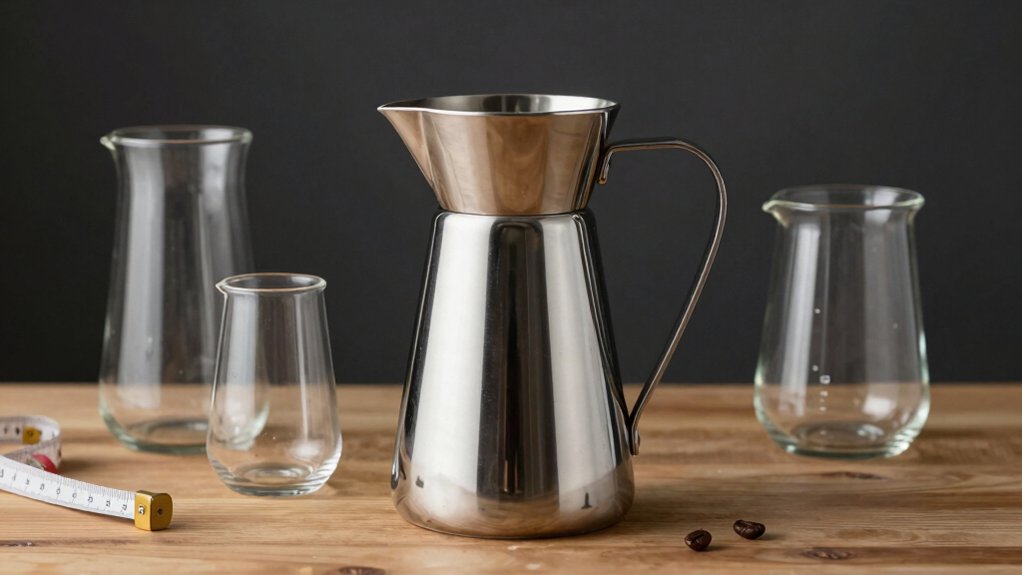
You’ll save fit problems by sizing replacements to actual volume (oz/ml) and key dimensions, not just “cups.” First, check the brewer’s max fluid capacity (12-cup often means 60–72 oz).
Measure carafe height, rim/lid diameter, and spout clearance so the lid seals and pause and serve works.
Also, verify handle thread major diameter, pitch and direction (use a caliper or gauge). Match specs within ±0.1–0.2 mm to avoid leaks. The next sections explain how.
Quick Overview
- Check total capacity in ounces or milliliters first. Cup counts vary by maker and can be misleading.
- Measure carafe height and base width to ensure the lid seals and pause-and-serve activates correctly.
- Match rim/sealing-lip diameter within ±1 mm so replacement lids and spouts fit without leaks or misalignment.
- Record handle thread major diameter and pitch (TPI or mm) to match replacement handles and prevent cross-threading.
- Verify full-pot water fill (oz) against brewer specs. Use markings or grams ≈ ounces for dosing accuracy.
Carafe Capacity vs. Dimensions
How much coffee you get depends more on total ounces than the cup count on the label. You’ll check capacity (oz/ml) first, since a “12-cup” drip often means 60–72 oz. Use carafe lid compatibility and drip compartment sizing to confirm fit: base width and height determine if the lid seals and pause-and-serve works.
Measure glass height and test with a 2-cup brew to verify pause-and-serve activation. Remember glass height tolerance ±1mm can matter. Match diameter for French press replacements and cage height if similar. Use markings for dosing: full-pot grams equal oz (e.g., 12 cups ≈72g). If unsure, measure max fill with water and compare to brewer specs.
| Model | Ounces | Height (in) |
|---|---|---|
| 4-cup | 24 | 6–8 |
| 12-cup | 72 | 10–12 |
Lid Diameter and Spout Fit
Wondering if a replacement lid will seal and pour correctly? You’ll match lid diameter to the carafe rim first; a tight tolerance prevents leaks and maintains proper spout fit. Consider capacity vs. dimensions: larger 12-cup carafes often need wider lids even when height is similar.
- Measure lid diameter at the sealing lip; record glass tolerance (±1mm) for fit decisions.
- Inspect spout fit: runway width and angle control pour rate and drip prevention.
- Note handle thread pitch only as reference for integration; review thread pitch basics without changing lid fit.
If needed, use measuring thread pitch tools. Common pitch standards and matching pitch to carafe affect assembly. Observe thread pitch tolerances for reliable sealing and ergonomic pouring.
Handle Thread Pitch
You’ll want to check handle thread pitch because the number of threads per inch (or millimeter) and their angle determine a secure fit. Measure pitch with a caliper or thread gauge, compare to common standards (e.g., 16 TPI, 20 TPI, or M5/M6 metric), and note acceptable tolerances (±0.1–0.2 mm for diameter, ±1 TPI).
Matching pitch to the carafe ensures the handle seats flush and prevents leaks or loosening during use.
Thread Pitch Basics
Why does thread pitch matter for a carafe handle? You need secure, wobble-free attachment; mismatched thread pitch causes looseness or stripped threads. Thread pitch defines threads per inch or millimeter and determines engagement strength and alignment. You’ll prioritize common pitches used by major manufacturers to match replacements.
Focus on measurable criteria: pitch value, thread form (metric vs. imperial), and tolerances. Use simple measurement methods to identify pitch class before ordering. Do not assume compatibility from appearance alone. Data-driven selection reduces returns and prevents handle failure with hot liquid.
When you select a replacement, confirm pitch spec against the original handle and the manufacturer’s listing. That ensures safe, repeatable performance and proper torque without damaging the carafe.
Measuring Thread Pitch
After confirming thread pitch matters for secure, wobble-free handle attachment, you’ll need a simple, repeatable method to measure it accurately. Start by cleaning the thread and using a caliper to measure the distance across several threads. Record the distance and divide by the number of thread peaks to get pitch in millimeters. Alternatively, use a thread gauge to match teeth directly; this method is faster and less error-prone.
Note thread pitch basics: count peaks per unit length, confirm direction (right- or left-hand), and measure multiple points for consistency. Log your result and compare to manufacturer pitch standards before ordering. If measurements vary beyond ±0.1 mm, re-check fit or consult vendor specs to avoid mismatched replacements.
Common Pitch Standards
What thread pitches should you expect when replacing a carafe handle? You’ll commonly see coarse and fine metric threads: M6×1.0 and M8×1.25 are frequent on glass carafes. Some smaller models use M5×0.8.
Imperial options turn up less often; 1/4″-20 is a typical UNC fastener on older or budget units. Measure pitch with a gauge or count threads per 10 mm for accuracy.
Don’t assume compatibility from handle shape alone. A random thread in a parts picture can mislead you. If a seller lists an unrelated topic like “universal fit” without pitch data, request specific pitch and diameter.
Record pitch, major diameter, and thread form before ordering replacements to avoid returns.
Matching Pitch To Carafe
Wondering how to ensure a replacement handle threads into your carafe without stripping or wobble? You’ll match pitch by measuring thread count per inch (TPI) or millimeter pitch on the removed handle and comparing to replacement specs. Use a ruler or thread gauge; common standards from the prior section help narrow choices.
Confirm diameter and thread direction: right- vs left-hand; since pitch alone won’t guarantee carafe fit. When buying, pick replacements listing exact TPI/mm and diameter. Manufacturers often note compatible models and reduce trial error.
Install gently, hand-starting threads, then torque to manufacturer torque spec if provided. If you feel resistance or cross-threading, stop and recheck pitch and alignment to avoid stripping the carafe.
Thread Pitch Tolerances
How closely do replacement handle threads need to match the original? You should match thread pitch within one tolerance band: ±0.1 mm for metric pitches or one thread per inch for imperial to avoid play or binding.
Thread pitch vs. fit matters more than material; a correct pitch ensures even load distribution and leak-free seating. Check compatibility standards from manufacturers or ISO/ASME tables when available. If specs are missing, measure with a gauge or count threads over a known length. Document pitch and major diameter before ordering.
When you can’t match exactly, choose the closer pitch and confirm the thread form (V, trapezoidal). Finally, test under load: fill to capacity and pour to validate function and safety.
Frequently Asked Questions
Is This Carafe Dishwasher-Safe and Microwave-Safe?
Yes, you’re safe using this carafe in both the dishwasher and microwave: dishwasher safety is specified, and top-rack is recommended. Microwave compatibility is confirmed for glass models like DURAN and borosilicate.
You should avoid damaged carafes, remove lids if rubber parts aren’t microwave-rated, and follow manufacturer guidance. Test fit and function first; heat-resistant construction reduces risk. However, always handle with care to prevent burns from hot liquids.
What Material Is the Glass Made From?
The glass is made from borosilicate (DURAN) borosilicate glass, giving you high thermal resistance and low expansion. You’ll get clear material composition data: German-made DURAN borosilicate, BPA-free.
Safety certifications and handling notes emphasize heat resistance and dishwasher safety. The ergonomic handle and knuckle guard reduce burn risk. You can rely on documented durability for household use; however, replace any damaged carafe to avoid scald hazards.
How Do I Adjust the Lid Height for Pause-And-Serve?
You adjust lid height by raising the lid, pressing the side tabs to remove the insert, and realigning it to a new numbered setting. The two lid inserts give six height positions.
After reinstalling, test pause and serve compatibility by brewing two cups of water and ensuring the carafe triggers the pause-and-serve mechanism. Repeat adjustments until the carafe reliably activates the pause-and-serve at the desired height.
Will This Carafe Fit My Mr. Coffee 12-Cup Maker?
Yes, it should fit your Mr. Coffee 12-cup maker. The universal drip carafe is sized for 12-cup models, offering size compatibility with Mr. Coffee.
Use the lid adjustment feature (two inserts, six settings) to align the carafe with your machine’s pause-and-serve height. Test by brewing 2 cups to confirm activation. Note glass height tolerance ±1mm. If pause-and-serve fails, tweak the insert setting until it works.
Are Replacement Lids and Inserts Sold Separately?
Yes, replacement lids are commonly sold, and separate inserts are often available too. You’ll find universal lids for 12-cup models and dual lid inserts that provide six height settings.
When buying, confirm compatibility with your brand (Mr. Coffee, Cuisinart, etc.); check listed insert settings; and verify return policies. If unsure, test-fit by brewing two cups to ensure the pause-and-serve activates with the chosen insert setting.
Conclusion
You’ve got the measurements you need: capacity, lid diameter, spout fit, handle thread pitch, and acceptable tolerances. Use a caliper for diameter and height, a pitch gauge for threads, and compare against common standards (metric 0.5–1.0 mm, imperial 8–16 TPI).
Pick a replacement carafe that matches both volume and thread pitch within tolerance to avoid leaks or loose handles. Confirm fit with the lid and spout before finalizing your purchase.