How to Store Coffee Beans for Freshness
Buy by roast date and plan to use beans within 7–21 days for peak complexity. Shelf-life labels aren’t reliable.
Store in an opaque, nonreactive airtight container sized to your weekly use and fitted with a good silicone seal or vacuum vent. Keep storage RH steady between 40–60% to protect oils and aromatics. Avoid >60% for mold and
You’ll learn practical setup tips next.
Quick Overview
- Buy beans with a clear roast date and plan to use them within 1–2 weeks of roast for peak flavor: 7–21 days post-roast.
- Store beans in an opaque, airtight container with a reliable seal and CO₂ venting or vacuum option. Keep container size matched to weekly use to minimize headspace and oxygen exposure.
- Maintain storage relative humidity between 40–60% using desiccants or humidity control and monitor with a calibrated hygrometer. Protect beans from light, heat, and rapid humidity swings; avoid porous containers and high (>60%) or low (
Roast-Date vs. Shelf-Life
Why does the roast date matter more than the printed “best by” on the bag? You rely on roast date because it marks when degeneration begins. Shelf life labels are arbitrary retail windows. Use roast date to time peak extraction (7–21 days) and plan purchases within 1–2 weeks of roasting for optimal complexity.
| Stage | Window | Effect |
|---|---|---|
| 0–3 days | Degassing | CO₂ disrupts extraction |
| 7–21 days | Peak | Bright, aromatic, complex |
| 3–6 weeks | Oxidation | Flattening, loss of nuance |
Track roast date to manage inventory. Grind only what you need and store under cool, dark conditions. That precision preserves brightness and extends practical shelf life.
Airtight Container Checklist
Knowing the roast date helps you buy and plan, but storing those beans correctly is what locks in the flavors you want. Airtight containers are the single most impactful control you can apply once beans are rested and ready. You’ll prioritize an airtight container that minimizes oxygen ingress, blocks light, and allows controlled CO2 venting or vacuum extraction for maximal flavor preservation.
Choose materials and mechanisms that match your consumption rhythm and storage duration:
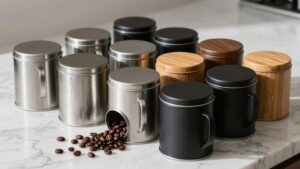
- Opaque, non-reactive material (ceramic, stainless steel)
- Reliable seal (silicone gasket or vacuum lock)
- One-way CO2 valve or vacuum capability
- Size matched to weekly use to limit headspace
- Clear labeling area for roast/use dates
Inspect seals regularly and replace compromised containers immediately.
Humidity Limits (40–60%)
Aim for 40–60% relative humidity to keep your beans chemically stable and flavor compounds intact. Above 60% promotes mold and clumping; below 40% accelerates dry-out and volatile loss. You need to measure humidity with a calibrated hygrometer and act on the readings.
Use desiccants, sealed containers, or small humidifiers as precise controls to maintain that band.
Ideal Relative Humidity Range
How humid should your storage environment be to keep coffee at peak flavor? Aim for a stable relative humidity of 40–60%: that band minimizes moisture-driven chemical changes while preventing excessive drying that robs volatile aromatics. You’ll extend measurable shelf life when you store beans within that window after the roast date. This is because humidity governs hydrolysis and microbial risk without accelerating oxidation.
Use hygrometers to monitor conditions in cupboards or sealed canisters. Adjust with desiccants or small humidifying packs if levels drift. Maintain the range consistently; daily swings undo benefits. Combine humidity control with temperature and light management for precise preservation. If you follow these parameters, you’ll protect the nuanced compounds that define peak-tasting coffee.
Effects Of High Humidity
High humidity levels above the recommended 40–60% accelerate hydrolysis and promote microbial activity in stored coffee beans. You’ll see faster loss of volatile aromatics, muted acidity, and a greater risk of mold or off-flavors. In such environments, you must control water activity because high humidity drives moisture migration from the ambient air into bean pores. This swelling of cell walls facilitates enzymatic breakdown.
That increases susceptibility to microbial colonization and lipid oxidation gradients within the bean. You should monitor relative humidity with calibrated sensors and use desiccant-buffered, airtight containers to maintain the 40–60% window. Avoid porous storage media that permit humidity flux. Managing RH precisely preserves aromatic volatiles, acid integrity, and the intended roast profile.
Risks Of Low Humidity
While high humidity forces moisture into bean pores and raises mold risk, too little humidity presents a different set of problems you need to manage. You’ll find that overly dry storage desiccates oils and volatile aromatics. This accelerates staling through increased vapor pressure gradients and faster oxidative reactions.
Maintain humidity within 40–60% to prevent brittle beans that chip during grinding and release fewer flavor compounds. In environments with low rooftop humidity or in rooms flushed with dry, heated air, seal beans in airtight, opaque containers to stabilize microclimate and limit exposure to humid air fluctuations during door openings.
Monitor storage conditions and choose materials with low water vapor transmission rates; proactive control preserves crema potential, aroma richness, and extraction consistency.
Measuring Humidity Accurately
Why measure humidity rather than guess it? You need precise control because coffee beans stay optimal between 40–60% relative humidity. Small deviations accelerate staling or mold. Start by measuring humidity with reliable instruments: digital hygrometers and calibrated humidity sensors provide real-time relative humidity readings accurate to ±2–3%.
Place sensors at bean-storage height, away from walls or vents. Log values over several days to capture cycles. Use multiple sensors if you store beans in separate containers or rooms. Calibrate devices periodically against a salt-solution standard or a known-reference hygrometer.
Interpret trends, not single readings: transient spikes matter less than sustained deviations outside 40–60%. Accurate measuring humidity lets you make informed choices without guessing. This preserves aroma and flavor.
Controlling Humidity Levels
Having measured and logged relative humidity accurately, you can now control it to keep coffee beans within the optimal 40–60% range. You’ll prioritize humidity control because moisture swings accelerate staling and microbial risk.
Use desiccant packs or calibrated dehumidifiers in your storage room to prevent excursions above 60%. Humidifiers with accurate hygrostats can raise levels if they fall below 40% in overly dry climates.
Select container materials that buffer minor fluctuations: ceramic and stainless steel offer thermal and moisture stability. Opaque, airtight vessels with one-way valves minimize external exchange.
Monitor continuously with a digital hygrometer placed near stored containers. Adjust HVAC, ventilation, and room sealing based on readings. Systematic control preserves volatile aromatics and extends usable shelf life precisely and reliably.
Frequently Asked Questions
Can I Mix Different Roast Levels in One Container?
Yes, you can mix roast levels in one container, but mixing roast and storage compatibility demands care. You’ll homogenize aroma and accelerate staling of lighter roasts due to oils from darker beans.
For short-term use (days), it’s acceptable if stored in an airtight, opaque container at stable temperature. For optimal flavor separation, keep roast levels separate. Label dates and only blend immediately before brewing to preserve clarity.
Will Flavored Beans Absorb Nearby Odors?
Yes, flavored beans will absorb nearby odors if exposed to air. You should store flavored beans in airtight, opaque containers with tight seals or one-way valves to prevent volatile flavor compounds from diffusing and external scents from permeating.
Keep them separate from strong-smelling foods. Avoid open storage near spice jars or refrigerators. Proper isolation preserves intended flavor profiles and prevents cross-contamination that degrades sensory quality.
How Long Can Coffee Grounds Sit in My Grinder Hopper?
You shouldn’t leave grounds in your grinder hopper for more than a few hours. Ideally, you’ll empty it after each use. Grinder hopper storage accelerates staling and exposes grounds to oxygen, heat, and residual oils. This shortens the freshness timeline to hours rather than days.
For consistent flavor, grind only what you need. Purge trapped grounds between doses. If you must keep it longer, store surplus in an airtight, opaque container.
Do Coffee Beans Lose Caffeine as They Age?
Yes, caffeine stability means beans barely lose caffeine as they age; chemical loss is minimal. You’ll still get essentially the same stimulant from aging beans.
Though perceived strength can drop because volatile aromatics and acids degrade. Oxidation and moisture alter flavor and extraction; thus, aged beans brew flatter, not significantly lower in caffeine.
Store beans properly to preserve flavor and extraction efficiency, keeping measurable caffeine nearly constant.
Are Single-Serve Pods Shelf-Stable Without Special Storage?
Yes, single serve pods are generally shelf-stable without special storage. You’ll rely on factory-sealed foil or plastic barriers and desiccants to block oxygen and moisture; this preserves flavor and prevents spoilage.
Store pods in a cool, dark place away from heat and strong odors to maintain shelf stability. Don’t refrigerate or expose them to sunlight. Extended heat accelerates degradation even with sealed packaging.
Conclusion
To keep coffee at peak flavor, prioritize roast date over vague shelf-life claims. Store beans in an airtight container that blocks oxygen, light, and odors. Maintain relative humidity between 40–60% using calibrated hygrometers and desiccants or humidifiers as needed. High humidity invites mold and staling; low humidity accelerates volatile loss.
Monitor conditions frequently and adjust proactively. Document changes: your disciplined control of humidity and sealing will preserve aromatic compounds and deliver consistent, vibrant brews.